Skip to content
All 50 states + Washington, DC
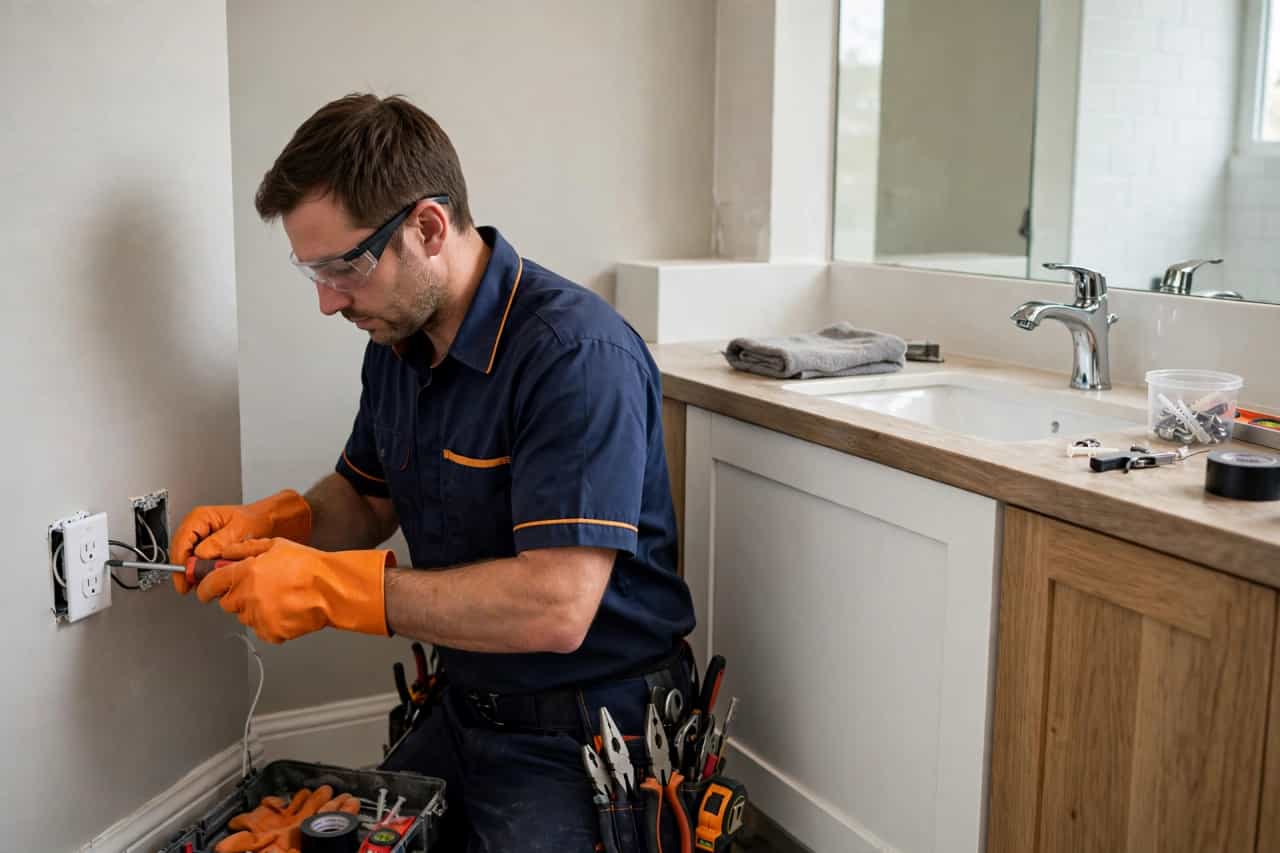
Licensed electrician at work
Panels, power & EV

EV Charger Installation by Licensed Local Electricians

A Level 2 EV charger runs on a dedicated 240-volt circuit and adds roughly 20–40 miles of range per hour. A load calculation decides whether your panel can support it as-is.

Call About an EV Charger: (855) 679-2483

Free to call · Independent licensed electricians

By calling, you agree to be connected with an independent electrician, who may call or text you back about your request at the number you call from. Calls may be recorded for quality and routing. Consent is not a condition of any purchase, and you can opt out at any time; message and data rates may apply. Privacy policy.

  • Free to call
  • Price before work starts
  • Permits handled when required

EV Charger Installation at a glance

Circuit
Dedicated 240V
Typical duration
Half a day to a day
Permit
Usually required

Independent licensed electricians in all 50 states + DC

Overview

What ev charger installation involves

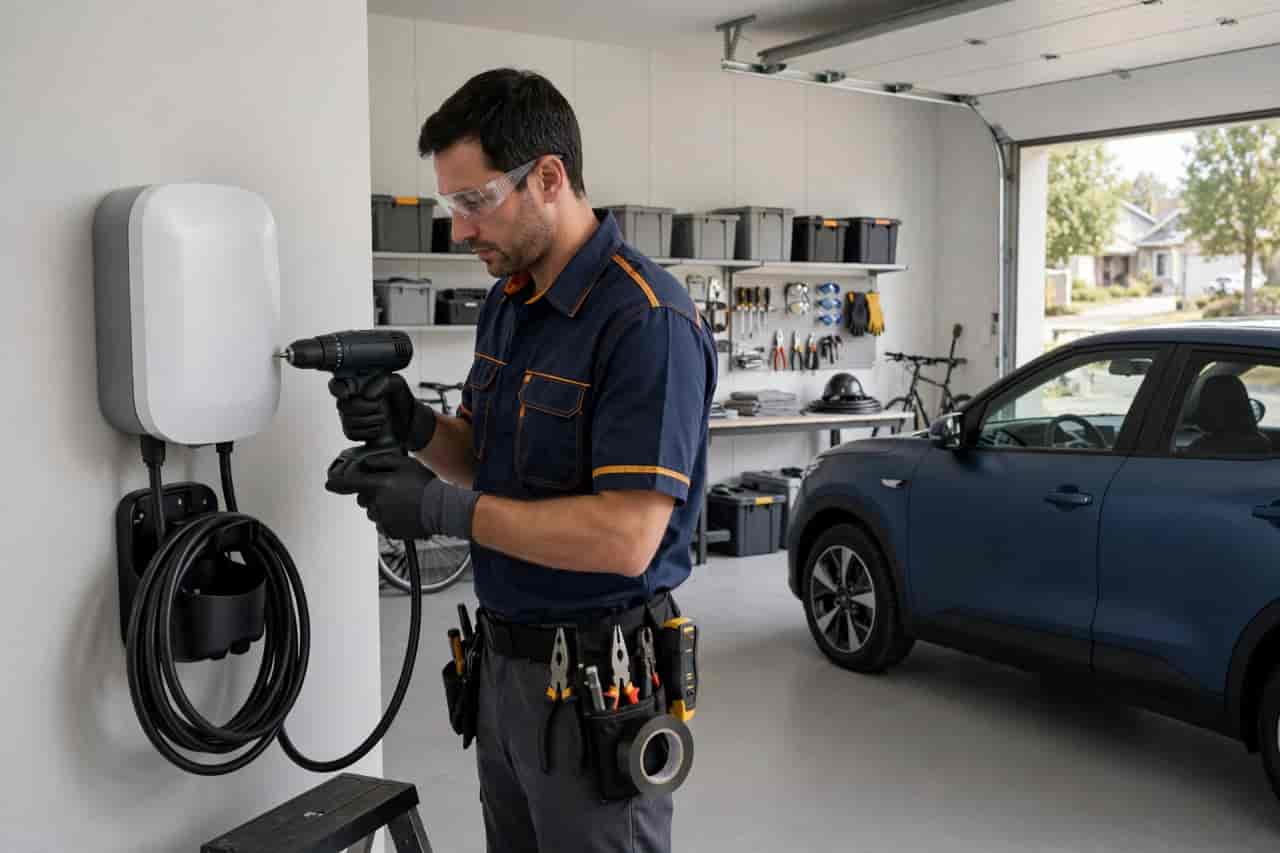
A Level 2 charger adds roughly 20–40 miles of range per hour of charging compared with about 3–5 on a standard outlet. The installation depends on your panel capacity, the distance to the parking spot, and whether the charger is hardwired or plug-in. Many utilities and states offer rebates that require a permitted installation.

EV Charger Installation illustration

Safety first

Do not use extension cords or adapters for EV charging. A dedicated, correctly sized circuit is essential for a continuous load.

Warning signs

Signs you need ev charger installation

Common reasons people call about ev charger installation. If one matches what you are seeing, a licensed electrician should check it.

  • 1

    You bought or are buying an electric vehicle or plug-in hybrid

  • 2

    Charging on a standard outlet is too slow

  • 3

    You want a charger at a rental property or business

How it works

How ev charger installation is done, step by step

The usual sequence for ev charger installation, from the first visit to sign-off.

  1. 101

    Load calculation and panel assessment

  2. 202

    Charger selection: hardwired vs. 240V receptacle, amperage

  3. 303

    Permit, circuit installation and mounting

  4. 404

    Commissioning and Wi-Fi setup if the charger supports it

  5. 505

    Paperwork for utility or state rebates where available

Pricing

What affects the cost of ev charger installation

The electrician sets the price after seeing the job. For ev charger installation, these factors change it most.

Get a real number

A short visit lets the electrician see your panel, wiring and access, so the quote reflects your actual job.

Call to discuss your job
  • 01

    Distance from panel to parking spot

  • 02

    Hardwired vs. plug-in charger

  • 03

    Charger amperage

  • 04

    Panel capacity or load-management device

  • 05

    Trenching for detached garages or driveways

DIY vs. pro

EV Charger Installation: what you can do yourself, and when to stop

Safe for homeowners

  • Check your vehicle’s maximum AC charging rate
  • Look up utility or state rebates
  • Decide where the cable needs to reach

Stop and call a pro

  • Using extension cords for charging
  • Installing a 240V circuit yourself
  • Using an existing dryer outlet with adapters

Safety: Do not use extension cords or adapters for EV charging. A dedicated, correctly sized circuit is essential for a continuous load.

Explained

EV Charger Installation: common questions answered

Level 1 or Level 2: which does a home need?

Level 1 uses an ordinary 120-volt outlet and adds only a few miles of range per hour, which suits plug-in hybrids and drivers with short commutes. Level 2 runs on 240 volts and can recharge most battery-electric cars overnight.

Most homeowners asking about an installation want Level 2, either a hardwired wall unit or a plug-in charger on a 240-volt receptacle such as a NEMA 14-50.
How big does the circuit need to be?

EV charging is a continuous load, so the circuit is sized at 125% of the charger’s rated current. A charger set to 48 amps needs a 60-amp circuit; one set to 32 amps needs a 40-amp circuit. Many wall units can be configured to a lower current to suit the available capacity.

The electrician also checks wire length and size, GFCI requirements for receptacles, and the charger manufacturer’s installation instructions, which are part of what the inspector checks.

What if the panel does not have room for an EV charger?

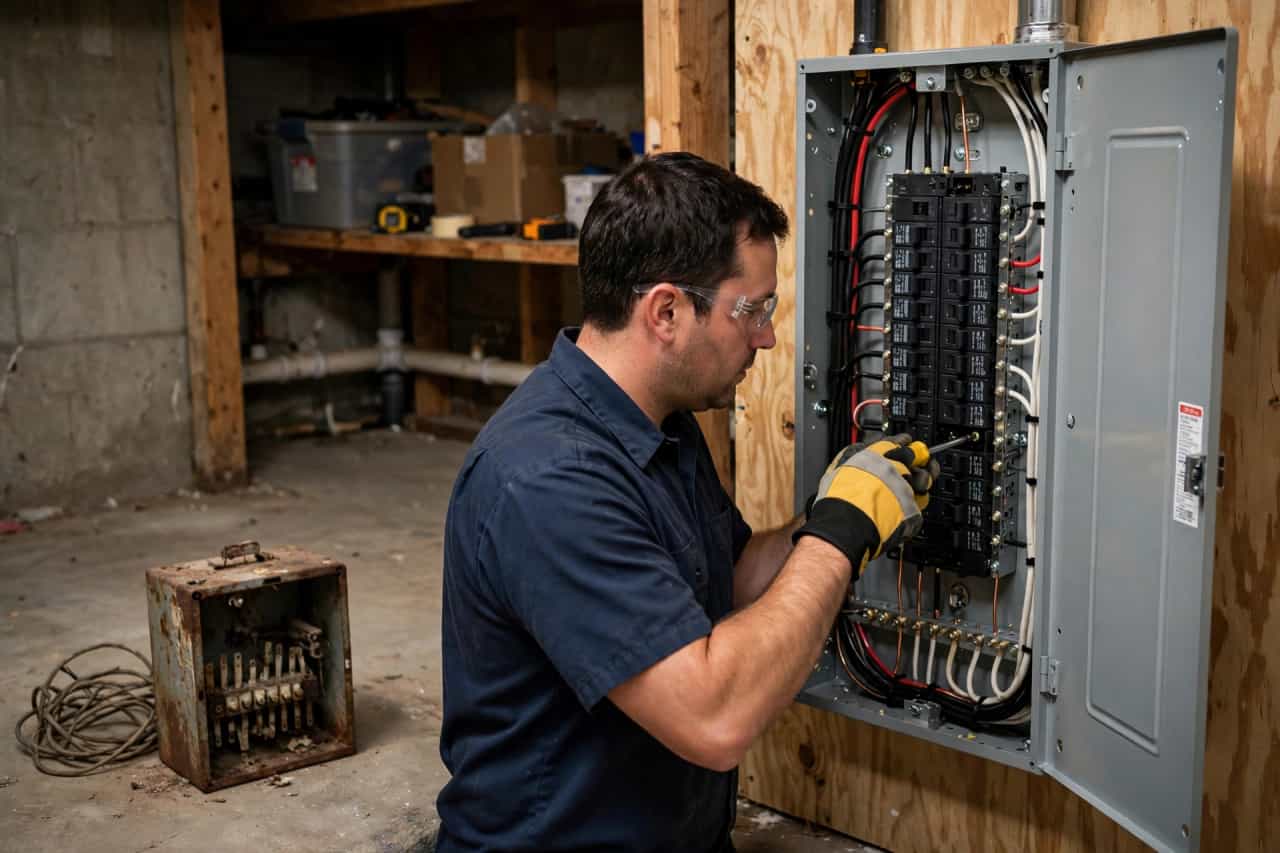
A full or undersized panel does not always mean a service upgrade. Options include setting the charger to a lower current, an energy management system that limits charging when the house is busy, or a circuit-sharing device that alternates between the charger and another large appliance.

A load calculation shows which option fits. A panel upgrade is the right answer when the home is also adding other large electric loads.

Questions

EV Charger Installation questions

Hardwired or plug-in charger?

Hardwired units allow higher amperage and avoid receptacle wear. Plug-in units make replacement easy. Both must be on a dedicated circuit sized for continuous load.

Can I charge on a regular outlet?

Yes, Level 1 charging works on a 120V outlet but adds only about 3–5 miles of range per hour.

What amperage charger should I choose?

Match it to your vehicle’s onboard charger and your panel capacity. Higher is not useful if the car cannot accept it.

How long does a home EV charger installation take?

A straightforward install near the panel is usually done in a single visit. Long cable runs, a detached garage, trenching or a panel upgrade make it longer, and permit inspections add a separate visit.

Do I need a permit for an EV charger?

Most jurisdictions require an electrical permit for a new 240-volt circuit. Utility rebate programs often require proof of a permitted installation as well.

Can an EV charger be installed outside?

Yes, as long as the charger is rated for outdoor use and the wiring and boxes are suitable for wet locations. Mount it where the cable reaches the car’s charge port without stretching across walkways.

Are there rebates for home EV chargers?

Many utilities and some states offer rebates or special EV charging rates, and a federal tax credit has applied to home charging equipment in some years. Programs change often, so check your utility and current IRS guidance.

What should I know before buying an EV charger?

Check where the car’s charge port is, how far it is from the panel, whether you want Wi-Fi scheduling, and whether your utility requires a specific listed charger for its rebate. Ask the electrician about panel capacity before buying.

Can two EVs share one charger circuit?

Yes, with chargers that support load sharing. Two compatible units split the current of one circuit between both cars, which avoids adding a second large circuit.

Does charging at home damage the car’s battery?

Level 2 home charging is what most manufacturers expect for daily use. Follow the car’s settings for charge limits; the charger itself only supplies what the car requests.

Same-day help often available

Call about ev charger installation

Call (855) 679-2483

By calling, you agree to be connected with an independent electrician, who may call or text you back about your request at the number you call from. Calls may be recorded for quality and routing. Consent is not a condition of any purchase, and you can opt out at any time; message and data rates may apply. Privacy policy.

  • Free to call
  • Explain the problem in plain words
  • Connect with an independent licensed electrician near you

Smoke, flames or sparking? Leave the building and call 911 first.

Pronto Electrician is a free referral service. The electricians you are connected with are independent contractors, not employees or agents of Pronto Electrician. Pronto Electrician does not perform electrical work, and the electrician you choose sets the price, schedule, permits and warranty.

Same-day help often available

Prefer to talk it through?

Your call is answered by an independent licensed electrician who serves your area.

(855) 679-2483

By calling, you agree to be connected with an independent electrician, who may call or text you back about your request at the number you call from. Calls may be recorded for quality and routing. Consent is not a condition of any purchase, and you can opt out at any time; message and data rates may apply. Privacy policy.

Free to call · All 50 states + DC

Talk to a licensed electrician

Describe the problem and get connected with an independent licensed electrician who serves your area.

Call (855) 679-2483

By calling, you agree to be connected with an independent electrician, who may call or text you back about your request at the number you call from. Calls may be recorded for quality and routing. Consent is not a condition of any purchase, and you can opt out at any time; message and data rates may apply. Privacy policy.

Call (855) 679-2483

Free referral to independent electricians. By calling you consent to a callback or text and call recording. Details