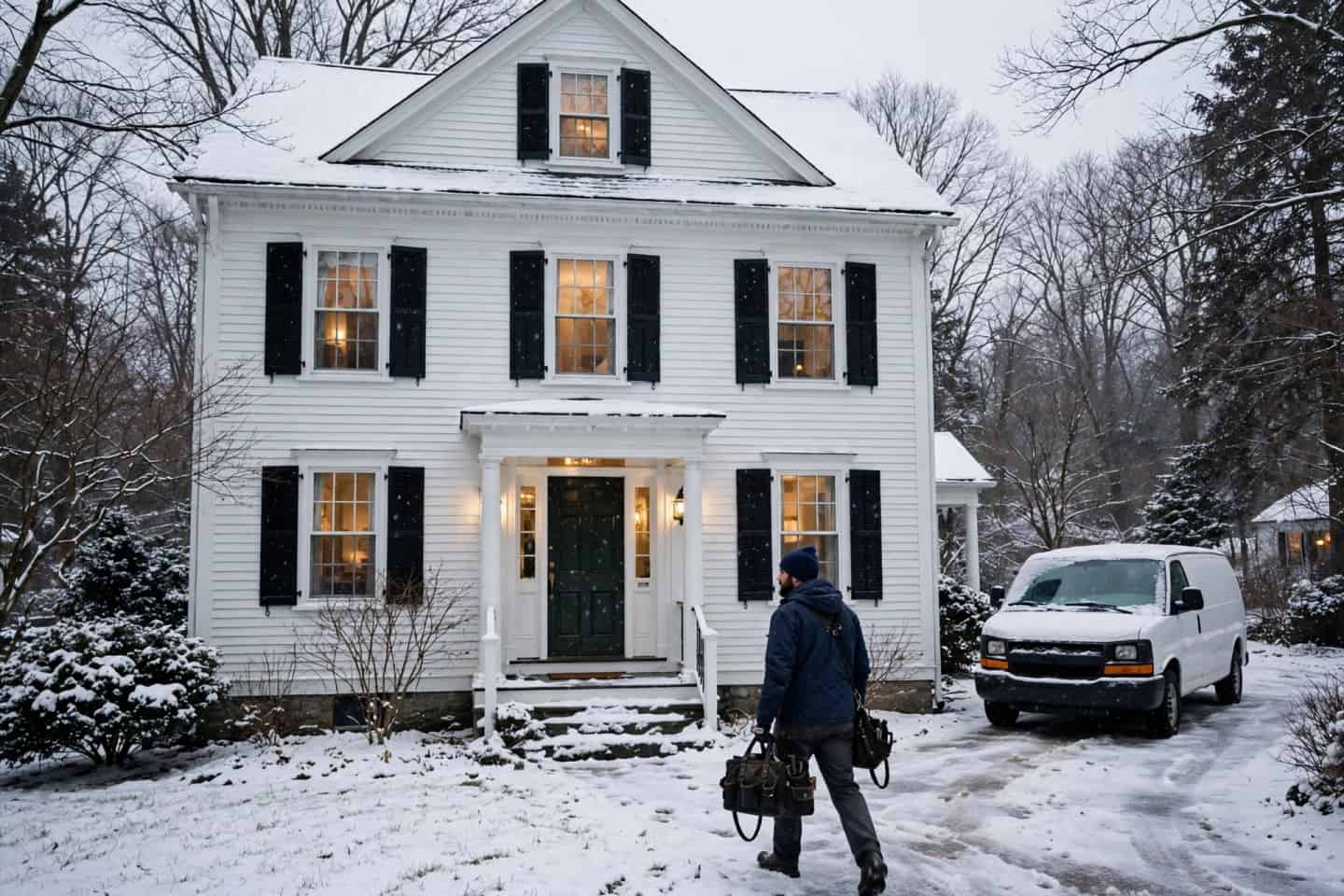
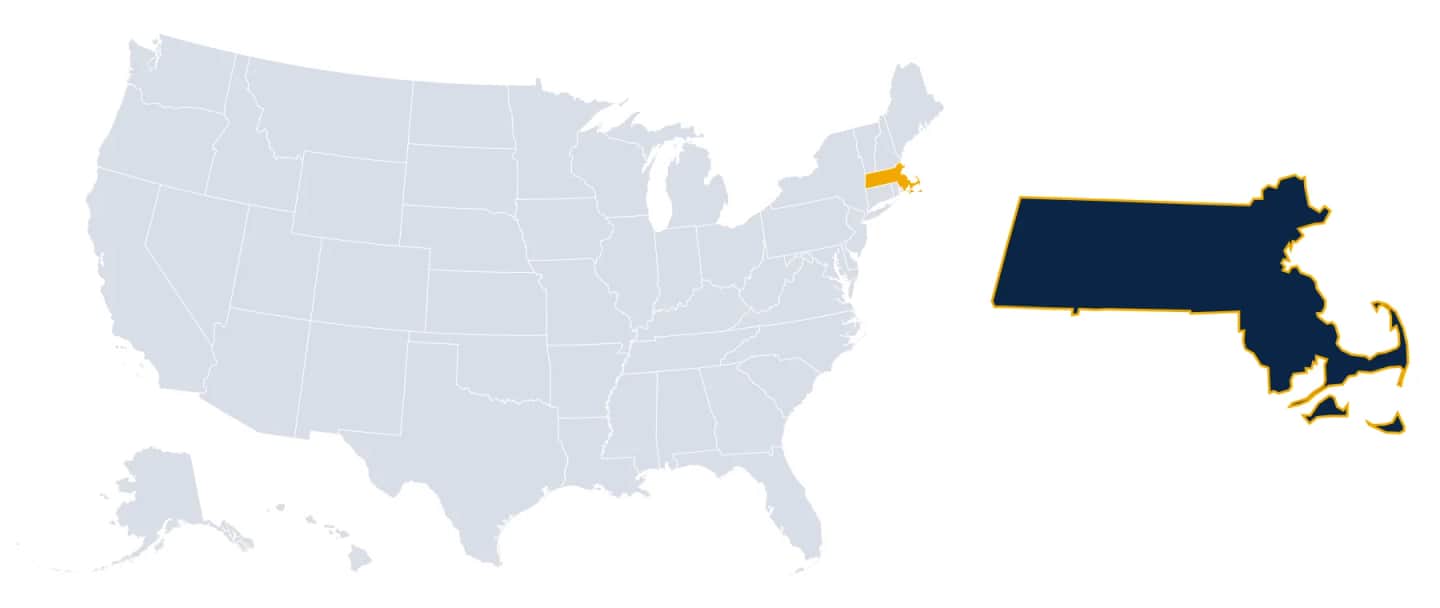
Massachusetts has some of the oldest homes in the country and some of the most ambitious electrification programs. Triple-deckers, colonials and capes built a century or more ago are being fitted with heat pumps and EV chargers, while nor’easters and coastal storms test the grid every winter. Electricians are licensed by the state, and every job is inspected by a local wiring inspector.
What Massachusetts weather does to electrical systems
The hazards that drive the most electrical calls here, and how homeowners prepare for them.
Winter storms and cold
Heavy snow and wind cause outages when heating demand is highest. Generators, dedicated circuits for space heaters, and heat-tape circuits with GFCI protection are common winter projects. Avoid running heaters through extension cords or power strips.
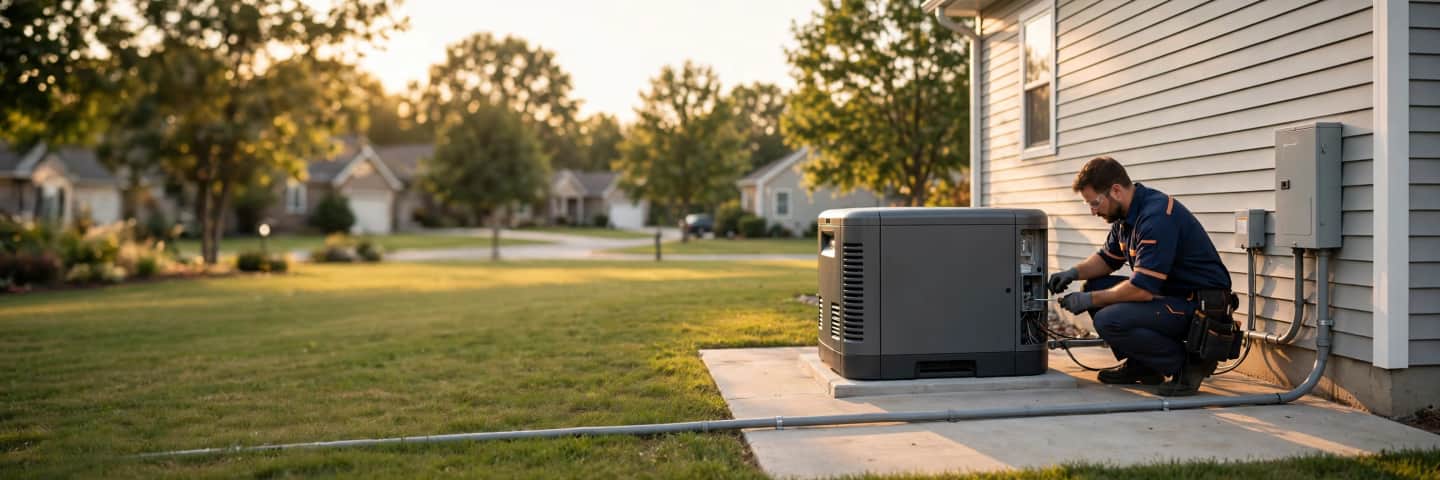
Long outages make backup power a priority. Standby generators with automatic transfer switches, or portable generators connected through a listed interlock, keep refrigeration, sump pumps and medical equipment running. Any equipment that was submerged must be inspected before re-energizing.
Salt air corrodes exterior meter bases, disconnects, outdoor receptacles and AC disconnects faster than inland. Corrosion-resistant enclosures and periodic inspection of exterior connections extend their life.
Eversource and National Grid serve most of the state, with Unitil serving the Fitchburg area. Massachusetts also has about forty municipal light plants, serving towns such as Braintree, Concord, Wellesley, Belmont, Reading and Taunton. Many cities and towns run municipal aggregation programs that choose the electricity supplier on behalf of residents.
Your distribution utility or municipal light plant sets the requirements for service upgrades, meter changes and storm reconnection, and many offer their own incentives for heat pumps and EV chargers.
Licensing and wiring inspections
Electricians in Massachusetts are licensed by the Board of State Examiners of Electricians, with journeyman and master licenses. Electrical work must be performed by licensed electricians, and licenses can be verified online.
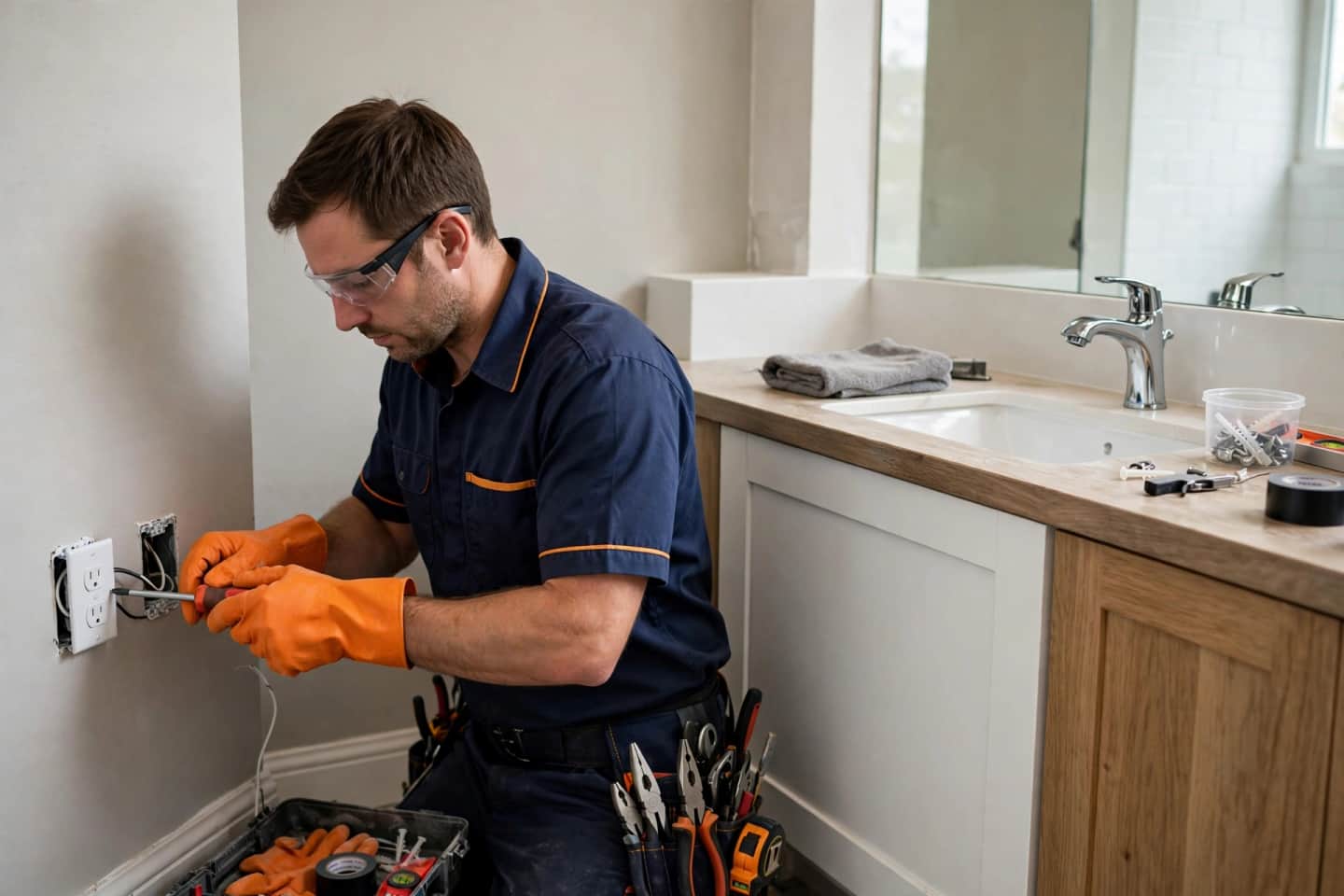
Massachusetts adopts its own Massachusetts Electrical Code, based on the National Electrical Code. Permits are issued and work is inspected by the local wiring inspector in each city or town. Panel upgrades, new circuits, heat pumps, EV chargers, generators and solar require permits.
Triple-deckers and old housing
Triple-deckers — three-family wood houses with one unit per floor — were built by the tens of thousands in Boston, Worcester, Somerville, Cambridge, Lowell and other cities between about 1880 and 1930. Each unit usually has its own meter and small panel. Colonials, capes and Victorians fill older suburbs, and many homes contain knob-and-tube wiring, fuse panels and services of 60 amps or less.
Renovations often uncover old wiring hidden behind plaster, and insurers may ask about knob-and-tube and fuse panels when a home is sold.
Heat pumps and Mass Save
Through the Mass Save program and municipal light plant incentives, Massachusetts offers some of the most generous heat pump incentives in the country, and cold-climate heat pumps are rapidly replacing oil and gas heating. Each heat pump system adds load, and converting a triple-decker means planning for three separate units and services.
A load calculation shows whether a 100-amp service can carry heat pumps, a heat pump water heater and an EV charger, or whether a service upgrade or load-management device is needed. Utilities and municipal light plants may need to upgrade transformers when many homes on a street electrify.
Nor’easters, snow and coastal storms
Nor’easters bring heavy snow, ice and coastal flooding. The Blizzard of 1978 remains the benchmark storm in the state’s memory, and the October 2011 snowstorm, which hit while leaves were still on the trees, left hundreds of thousands of customers without power for days. Coastal communities face storm surge and salt air.
Backup power that can run a heating system, sump pump and refrigeration is a practical upgrade, and generators must be connected through a listed interlock or transfer switch.
Cape Cod and the Islands
Cape Cod, Martha’s Vineyard and Nantucket have many seasonal homes and rentals exposed to salt air and wind. Exterior equipment corrodes quickly, outdoor showers and decks need wet-location wiring, and homes left empty for long periods benefit from inspection before reopening. Long supply chains and limited contractor availability on the Islands make planning ahead important.
EVs and solar
Massachusetts has strong EV adoption and incentive programs for home chargers. In dense neighborhoods where residents park on the street, home charging may not be possible, while suburban homes with garages often need only a dedicated circuit if panel capacity allows. Rooftop solar has grown through state incentive programs, and batteries are increasingly paired with it for backup.
Western Massachusetts and rural towns
The hill towns of the Berkshires and Pioneer Valley have older farmhouses, wells and wooded rural lines that make outages longer. Backup power for wells and heating is especially valuable, and older rural wiring deserves inspection.
Regional differences
Greater Boston focuses on triple-deckers, condos, heat pump conversions and limited parking for EV charging. The North and South Shores deal with coastal storms and older colonials. Central Massachusetts, including Worcester, has triple-deckers and mill-era housing. Cape Cod and the Islands face salt air and seasonal homes. Western Massachusetts is rural, hilly and prone to longer outages.
Electrifying a triple-decker
Converting a three-family house from gas or oil heat to heat pumps usually starts with a load calculation for each unit, since each typically has its own meter and small panel. Many projects upgrade all three services at once, replace the shared meter bank and add a house panel for common lighting, laundry and smoke alarms. Outdoor condensers need space on porches, roofs or side yards, and line sets must be routed up three stories. Coordinating with the utility and the local wiring inspector early keeps the building’s power interruption short.
Condominiums and shared services
Many older Massachusetts buildings have been converted to condominiums, where each unit owns its panel but the service entrance, meter bank and feeders are common property. Adding EV chargers, heat pumps or larger panels may require association approval and sometimes building-wide service upgrades. Associations increasingly plan shared EV charging with load management rather than individual circuits.
Coastal flooding in Boston
Parts of Boston, including East Boston, Charlestown, the Seaport and the waterfront, are exposed to coastal flooding during nor’easters and extreme high tides; the January 2018 nor’easter sent seawater into downtown streets. Electrical equipment in basements and ground-floor utility rooms is vulnerable. Raising panels and equipment during renovation, and backup power for sump pumps, reduce damage.
Insurance and knob-and-tube
Massachusetts has one of the highest shares of pre-1940 housing in the country, and some insurers decline or surcharge homes with active knob-and-tube wiring or fuse panels. Buyers often negotiate rewiring before closing, and an electrician’s written assessment helps define exactly which circuits are still active and what replacement will involve.
Smoke and CO certificates when selling
Before a home in Massachusetts can be sold, the seller generally must obtain a certificate from the local fire department showing that smoke and carbon monoxide alarms meet state requirements. Requirements depend on the age of the home and any renovations, and newer or renovated homes may need hardwired, interconnected alarms. Sellers often call an electrician to install or replace alarms ahead of the fire department inspection so the sale is not delayed.
Basements and sump pumps
Many Massachusetts homes have fieldstone or block basements that take on water during spring thaws and heavy rain, and sump pumps keep them dry. Because nor’easters bring both rain and outages, a battery backup pump or generator circuit is one of the most practical upgrades. Panels, furnaces and water heaters in wet basements should be checked for corrosion.
Generators and fuel choices
Homes with natural gas service often choose standby generators, while homes heated with oil or propane may use propane-fueled standby units or portable generators with an interlock. Massachusetts towns may have setback and noise rules for generator placement, and the installation requires an electrical permit and, for gas connections, a separate gas permit.
Common electrical calls in Massachusetts
Frequent requests include heat pump circuits and service upgrades, EV charger installations, knob-and-tube replacement, fuse panel upgrades, generator and interlock installations, storm repairs and solar-related panel work. Smoke and carbon monoxide alarm installations before home sales are another steady source of calls.
Working with an electrician in Massachusetts
Verify the electrician’s state license, confirm that a permit will be filed with your local wiring inspector, and get a written scope. For heat pumps and EV chargers, ask about Mass Save or municipal light plant incentives and whether a load-management device could avoid a service upgrade. In triple-deckers and condos, coordinate with other owners about shared services.
Electrical licensing and permits in Massachusetts are set by state and local authorities. The electrician confirms what applies to your project.
Services
Most requested in Massachusetts
Ranked by how many of this state’s climate risks each service addresses.
Connect with an independent licensed electrician near you
Smoke, flames or sparking? Leave the building and call 911 first.
Pronto Electrician is a free referral service. Calls are answered by independent licensed electricians in your area. Pronto Electrician does not perform electrical work, and the electrician you choose sets the price, schedule, permits and warranty.
Free to call · All 50 states + DC
Talk to a licensed electrician in Massachusetts
Describe the problem and get connected with an independent licensed electrician who serves your area.