Short answer
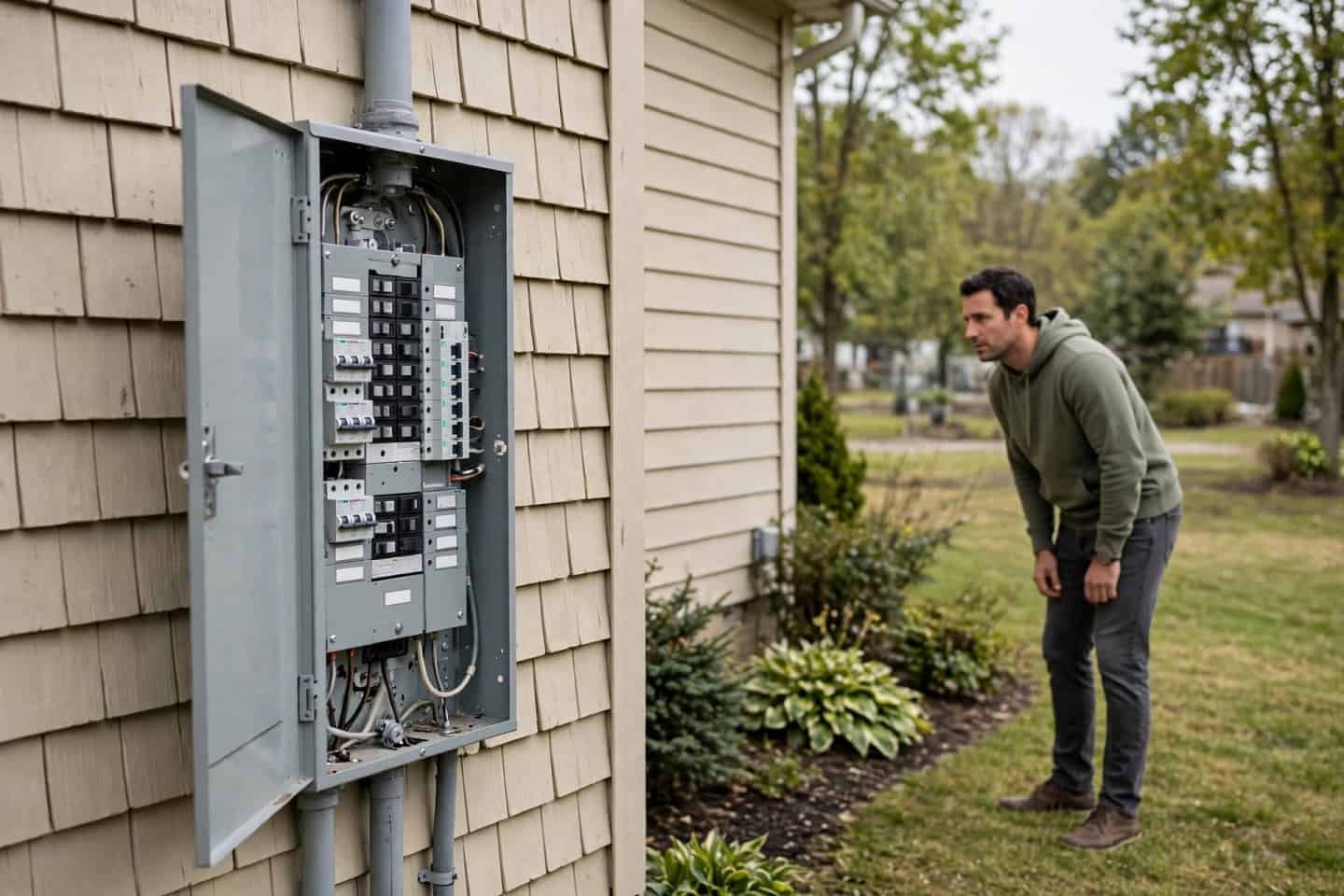
A faint hum can be normal, but a loud buzz, crackle or sizzle from the panel often means a loose connection, a failing breaker or arcing. These conditions generate heat. Keep the panel cover closed, do not touch it, and have an electrician inspect it soon.Electrical components involved: Buzzing Electrical Panel
- Circuit breaker
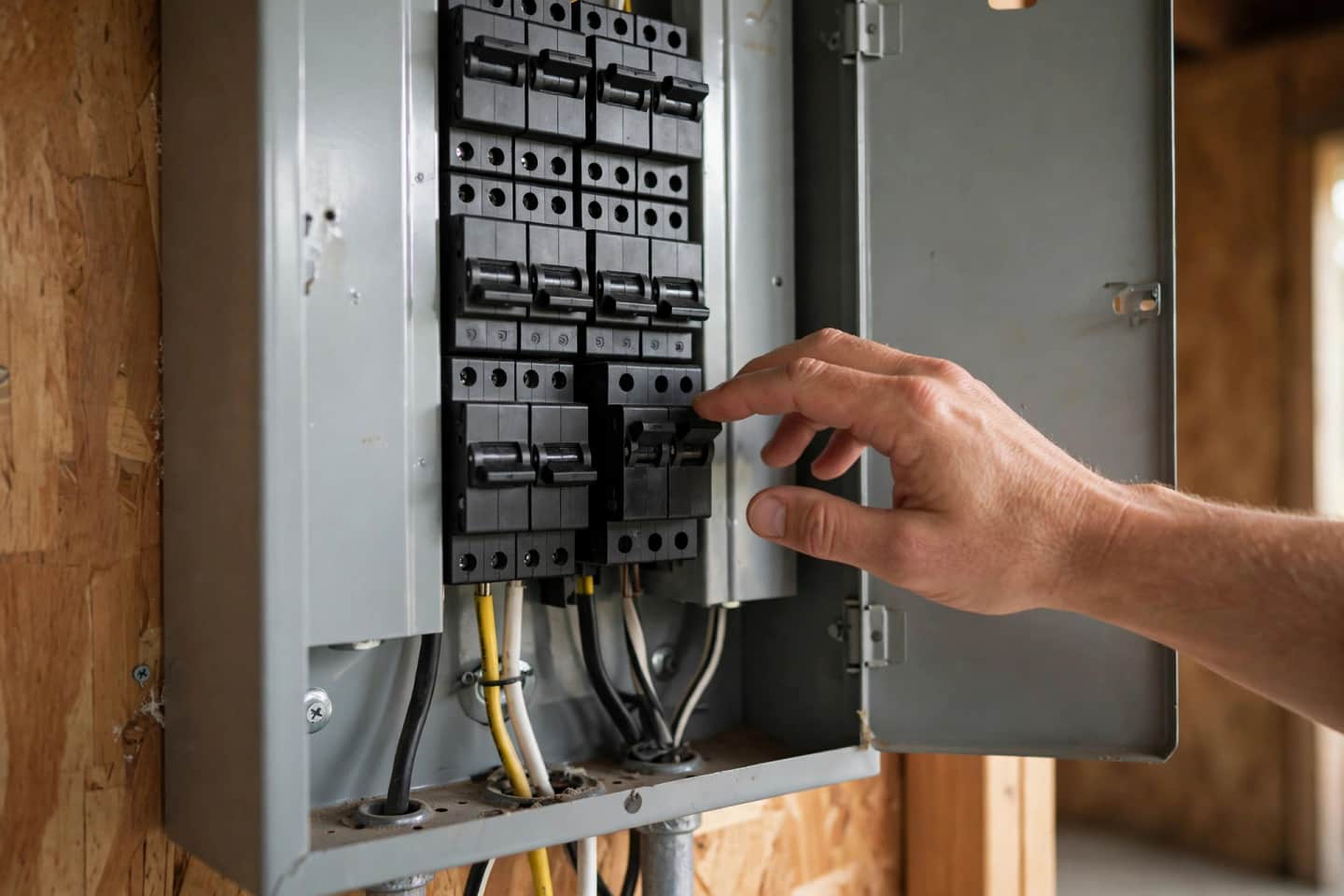
- Clips onto the bus bar and opens the circuit on overload or fault; a worn or failing breaker can chatter or buzz when its internal contacts or trip mechanism no longer hold firmly.
- Bus bar
- The metal bars that carry power from the main to each breaker; a loose or pitted breaker connection here can arc and buzz.
- Main breaker and service conductors
- Bring utility power into the panel; a loose lug at the main can buzz under load and affect the whole house.
- Neutral bar and service neutral
- Returns current to the utility; a loose neutral can cause buzzing, flickering lights and uneven voltage between circuits.
- Branch circuit wiring
- Wires landing on breaker terminals; a loose terminal screw or damaged conductor can heat and buzz at the connection.
Common causes
- Loose breaker on the bus bar
- Failing breaker
- Loose service or neutral connection
- Overloaded circuits
What you can safely check
- 1Do not remove the panel cover
- 2Note which breakers seem warm from the outside
Stop and call an electrician when
- Buzzing is loud or new
- Any burning smell or warmth
What you are seeing, what it likely means, what to do
| What you notice | Likely meaning | Next step |
|---|---|---|
| Very faint, steady hum heard only up close | Possibly normal vibration from AC current | Monitor it; call if it gets louder or changes |
| Loud buzz that grows when large appliances run | Likely a loose connection or overloaded breaker | Reduce load and call an electrician soon |
| Crackling, sizzling or popping sounds | Likely arcing at a breaker or bus connection | Keep clear and call an electrician right away |
| Buzzing with warm cover or burning smell | Connection is overheating | Shut off the main only if safe to reach; call 911 if smoke, then an electrician |
| Buzzing plus flickering or uneven lights house-wide | Possible loose main or neutral connection | Call an electrician promptly; the utility may also be needed |
Normal Hum Versus a Warning Buzz
Alternating current makes some metal parts vibrate slightly, so a very quiet, constant hum that you can only hear with your ear close to the panel may be harmless. What is not normal is a buzz you can hear from across the room, one that grows louder when a large appliance runs, an intermittent crackle or sizzle, or any sound that started recently. Those changes suggest something inside the panel has stopped making a tight, clean connection and is now resisting current, which creates heat.
Loose Breaker on the Bus Bar
Breakers are held to the bus bar by spring clips or bolts. Over time, heat cycles, a poorly seated breaker, or a breaker that does not match the panel can leave a weak connection. Current then jumps across a tiny gap, producing a buzz and, eventually, pitting and scorching on both the breaker and the bus. A damaged bus stab can keep causing problems even after a new breaker is installed, which is why an electrician inspects the bus as well as the breaker.
Failing or Overloaded Breakers
A breaker that is carrying close to its rated load for long periods, or one that is simply wearing out, may buzz before it trips. Sometimes the breaker hums because the circuit is overloaded, such as a space heater and a microwave on the same kitchen circuit. Other times the breaker itself is defective and fails to trip when it should. A breaker that buzzes, feels warm through the cover, or trips repeatedly is a candidate for testing and replacement.
Loose Service, Main or Neutral Connections
The large conductors that land on the main breaker and neutral bar carry the combined load of the whole house. If a lug loosens, it can buzz loudly and run hot. A loose service neutral often shows up with other symptoms: lights that brighten and dim when appliances start, electronics failing, or some rooms getting higher voltage than others. Problems on the utility side of the meter belong to the power company, so an electrician will tell you when the utility needs to be called as well.
How an Electrician Diagnoses a Buzzing Panel
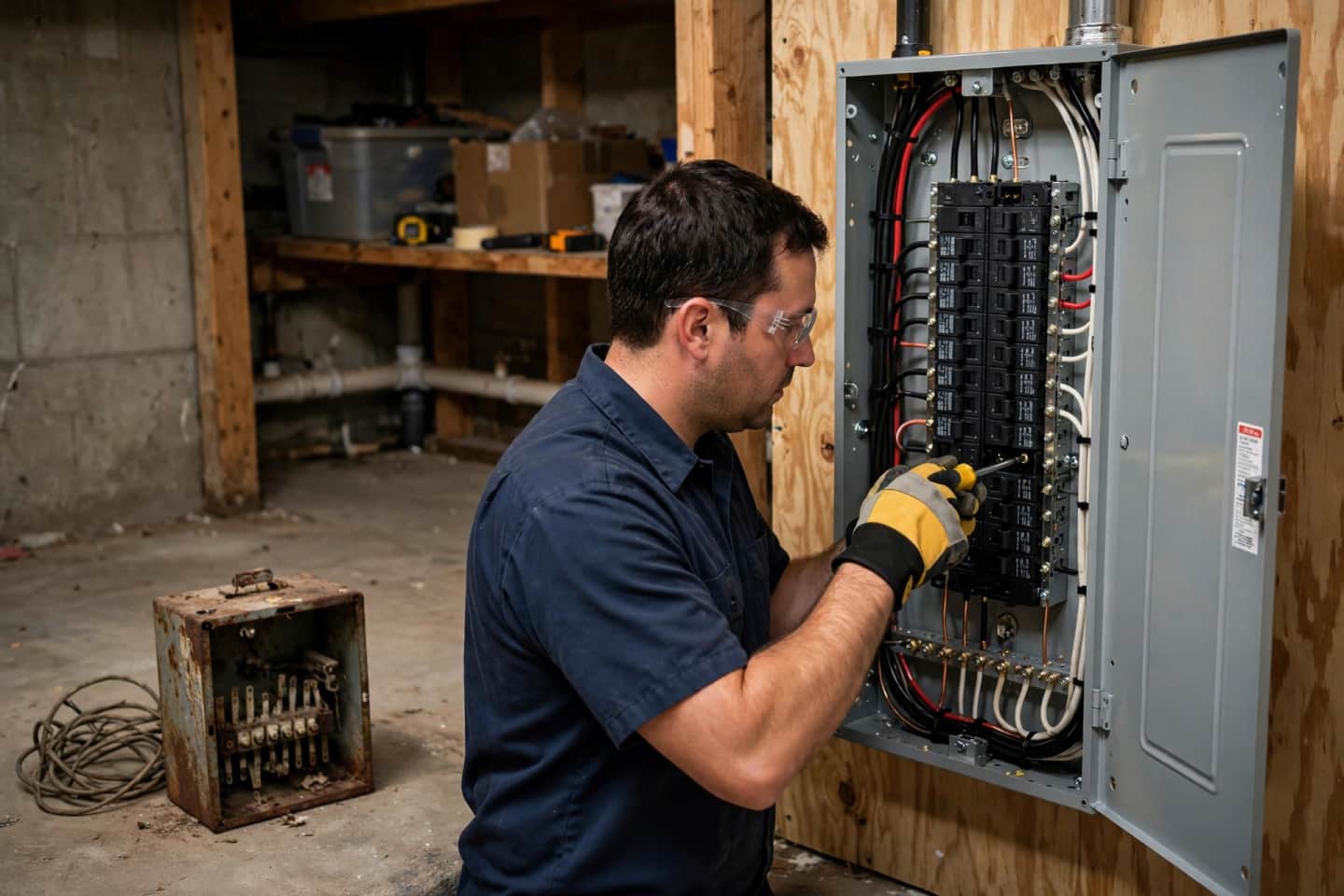
A licensed electrician wearing proper protective equipment removes the dead front cover and looks for discoloration, melted insulation, pitted bus stabs and loose terminals. They may use a thermal camera or infrared thermometer to find hot spots under load, a clamp meter to check current on each circuit, and a multimeter to compare voltage across both legs and the neutral. Turning circuits off one at a time can isolate which breaker or connection is making the noise.
Safety Implications of Ignoring the Sound
Arcing and loose connections generate heat at a point that a breaker is not designed to sense, because the current itself may be within normal limits. That heat can damage insulation and nearby components over time. If you smell burning, see smoke, notice scorch marks on the cover or feel heat on the panel, keep everyone away. Switch off the main only if you can reach it safely without touching hot or damaged parts. Call 911 for smoke or fire, then call an electrician. Never remove the cover yourself.
Repair or Replace the Panel?
Many buzzing panels are fixed with a targeted repair: tightening and correcting terminations, replacing one breaker, or cleaning up a neutral connection. Replacement makes more sense when the bus bar is burned, multiple breakers show heat damage, replacement breakers are hard to source, or the panel has no room for the circuits the home now needs. An electrician can explain which situation applies and whether the work requires a permit and inspection in your area.
What Happens When You Call
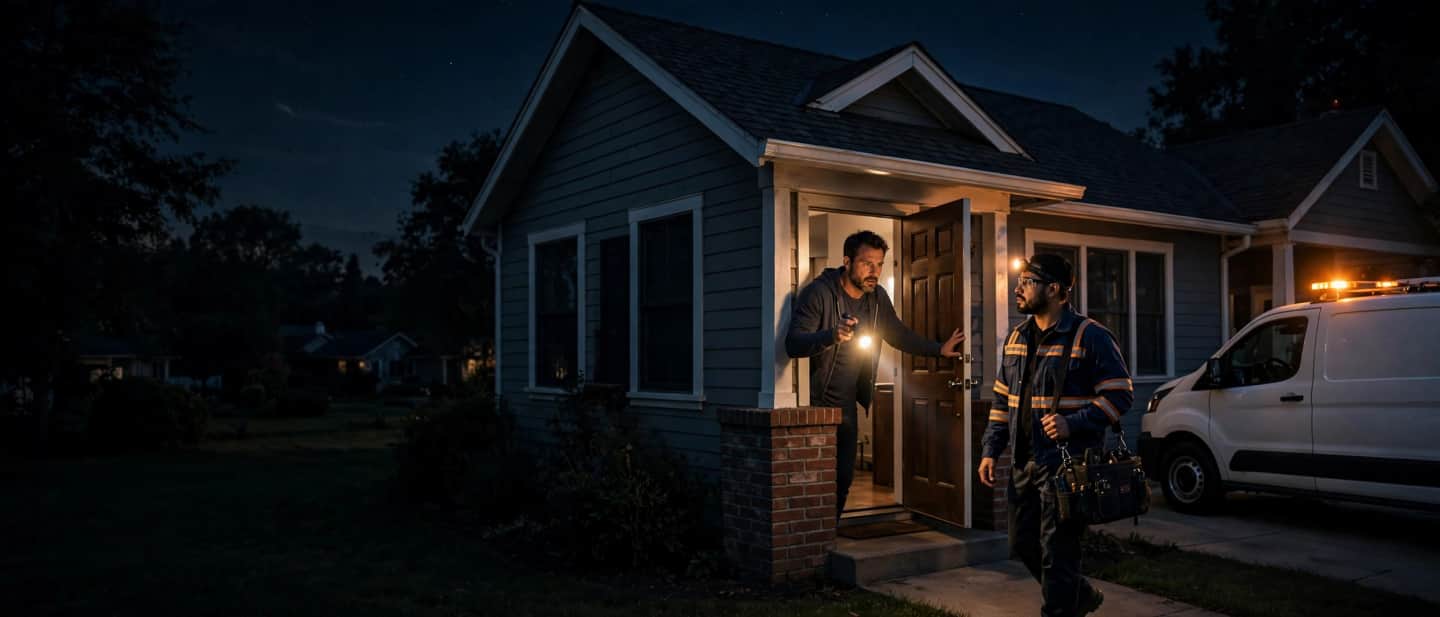
Call (855) 679-2483 and describe what you hear and notice: when the buzz started, whether it changes with appliance use, and any warmth, smell or flickering. You are connected with an independent licensed electrician who can advise whether to shut off power before they arrive. On site, they will open and inspect the panel, test under load, explain what they found and give you the repair options before starting work.
Prevention and Related Warning Signs
Spread heavy loads across circuits instead of stacking them on one, use breakers listed for your panel, and have an older or heavily loaded panel inspected periodically. Pay attention to related symptoms, because a buzzing panel often appears alongside a breaker that keeps tripping, flickering lights or partial power loss in the house. Any of those together with a buzz is a reason to get the panel looked at promptly rather than waiting.
Questions people ask about buzzing electrical panel
Why is my electrical panel buzzing?
A faint hum can be normal, but a loud buzz, crackle or sizzle from the panel often means a loose connection, a failing breaker or arcing. These conditions generate heat. Keep the panel cover closed, do not touch it, and have an electrician inspect it soon.
Is it dangerous if my breaker box is buzzing?
It can be. A faint hum may be normal, but a loud, new or crackling buzz usually means a loose connection or arcing that produces heat. Keep the cover closed, do not touch the panel, and have an electrician inspect it soon, or immediately if there is warmth or a smell.
Who do I call if my electrical panel is buzzing?
Call a licensed electrician. You can call (855) 679-2483 to be connected with an independent licensed electrician who can inspect the panel. If you see smoke or fire, call 911 first.
Can a buzzing breaker cause a fire?
Yes, it can contribute to one. Arcing and loose connections create heat that a breaker may not detect, and over time that heat can damage insulation and nearby parts. That is why a loud or changing buzz should be checked rather than ignored.
Should I turn off the main breaker if my panel is buzzing?
Only if you can reach it safely and the panel is not hot, smoking or visibly damaged. If there is smoke, a burning smell or heat, keep away, call 911 for smoke or fire, and call an electrician. Do not open the panel cover.
Why does my panel buzz when the air conditioner turns on?
A buzz that appears with a large load usually means a connection or breaker is struggling to carry current, often a loose lug or a breaker that is wearing out. An electrician can measure the load and find the hot spot with the panel opened safely.
Can I just replace the buzzing breaker myself?
It is not recommended. Working inside a panel exposes energized parts even with the main off, and the bus bar may be damaged too. A licensed electrician can confirm the cause and use a breaker listed for your panel.
Editorial note: general safety information, not a substitute for an on-site evaluation by a licensed electrician.