Oklahoma lives with the most violent weather in the country. Moore was struck by EF5 tornadoes in 1999 and 2013, ice storms have left Oklahoma City and Tulsa dark for days, and during the February 2021 winter storm the regional grid ordered rolling outages. Storm shelters, generators and sturdy service equipment are everyday electrical concerns here.
The hazards that drive the most electrical calls here, and how homeowners prepare for them.
Severe storms and tornadoes
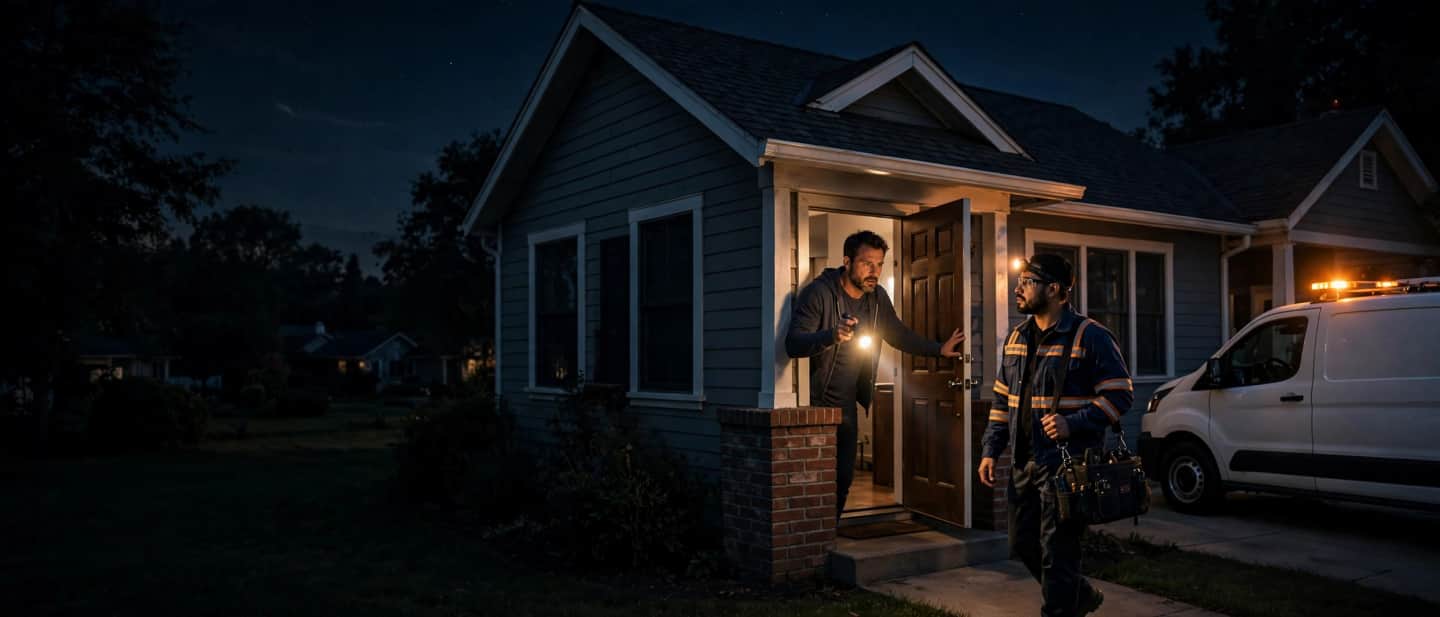
Storm damage can tear service masts and meter bases from the home. After a storm, look for a leaning mast or pulled service cable and keep clear — the utility side stays energized. Repairs to the mast and meter base are usually the homeowner’s responsibility.
Ice accumulation brings down lines and trees across wide areas, often for days. Backup power planning matters, and overhead service drops near trees should be checked for damage after ice events.
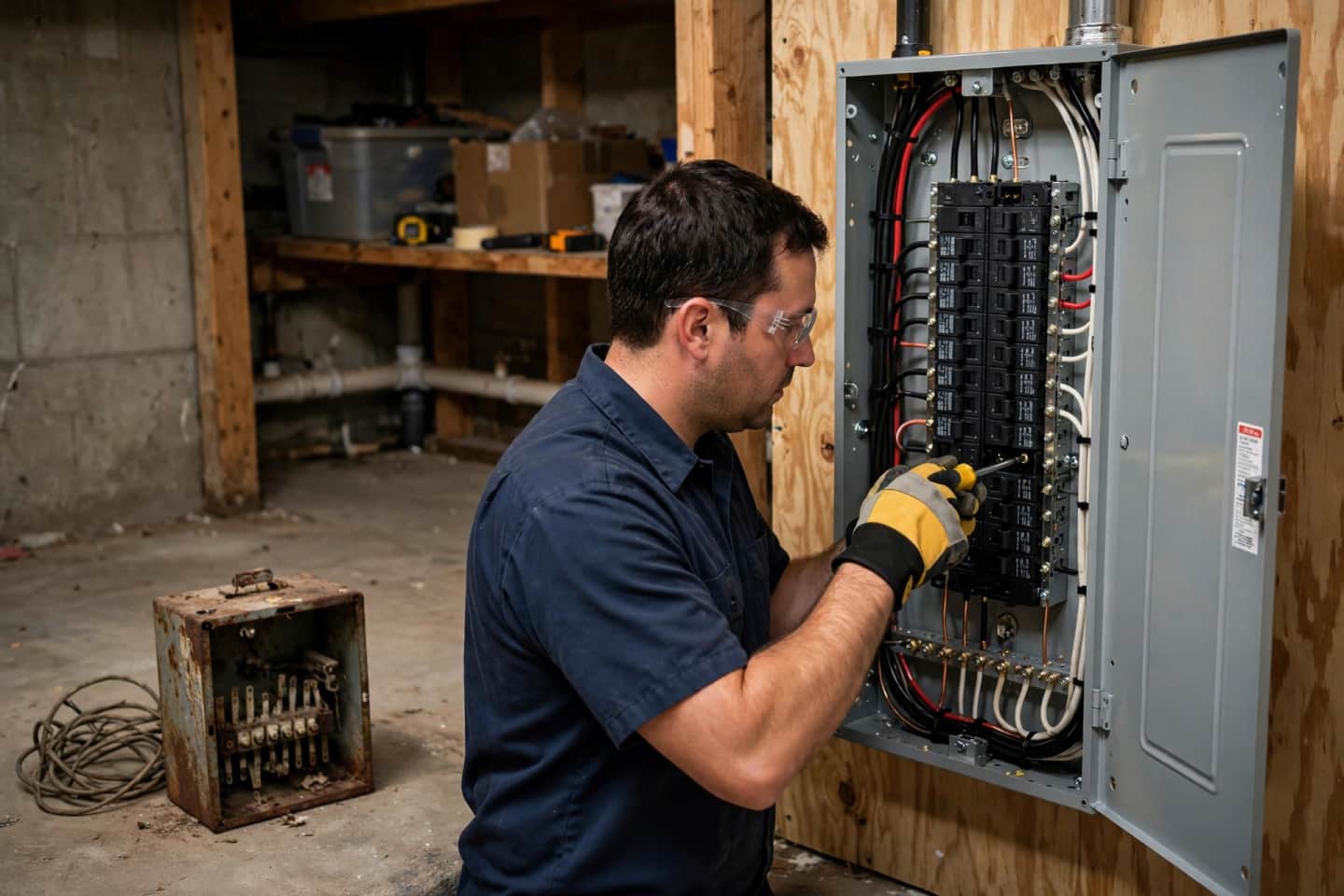
Nearby strikes send surges through power and communication lines. A whole-home surge protective device at the panel, a sound grounding system and point-of-use protection for electronics reduce damage to appliances and HVAC controls.
Air conditioning runs near continuously, stressing panels, breakers and connections. Heat pumps, pool equipment and EV chargers add to the load, making load calculations and panel capacity checks important before adding equipment.
Oklahoma Gas and Electric serves Oklahoma City and much of central and western Oklahoma. Public Service Company of Oklahoma, part of AEP, serves Tulsa and much of eastern Oklahoma. Electric cooperatives serve large rural areas and growing suburbs, and cities such as Edmond and Stillwater run their own electric utilities. The Grand River Dam Authority supplies power to many municipal systems.
Oklahoma homes cannot choose a retail supplier. Your utility sets the rules for service upgrades, generator connections and reconnection after storms.
Licensing and permits
The Oklahoma Construction Industries Board licenses electrical contractors and electricians statewide, including journeyman and contractor licenses. You can verify a license through the board’s online lookup.
Cities issue electrical permits and inspect work under their adopted codes. Panel upgrades, new circuits, generators, EV chargers and storm repairs require permits, and some rural areas have limited local inspection.
Tornadoes and storm damage
Central Oklahoma has been hit repeatedly by violent tornadoes, including the May 3, 1999 tornado through Bridge Creek and Moore and the May 20, 2013 EF5 tornado that destroyed much of Moore. Tornadoes and severe thunderstorms tear service drops off houses, bend masts and break meter bases.
After a storm, stay away from downed lines. The utility repairs its line, but the mast, weatherhead and meter base on the house must be repaired by an electrician, and often inspected, before reconnection. Rebuilding after a direct hit means a new service, panel and wiring throughout.
Storm shelters and safe rooms
Many Oklahoma homes have in-ground storm shelters or above-ground safe rooms, and the state has offered rebate programs to help homeowners build them. Shelters benefit from a properly installed light, an outlet for a weather radio and phone charging, and sometimes ventilation. These circuits should be permanent and protected, not run with extension cords through the door.
Ice storms
Ice storms are one of the most damaging hazards in Oklahoma. In December 2007, a massive ice storm left hundreds of thousands of customers in Tulsa and Oklahoma City without power, and in October 2020 an early-season ice storm struck Oklahoma City while trees still had their leaves, bringing down limbs across the metro and causing outages that lasted more than a week for some.
Ice-laden limbs fall on service drops and pull masts from roofs. Backup power for heating, wells and refrigeration, and prompt repair of damaged masts and meter bases, are the main preparations.
The 2021 winter storm
In February 2021, extreme cold across the Southwest Power Pool led to rolling outages in Oklahoma, at the same time that heat pumps and electric heat were running at full output. Many homes discovered that their backup heat strips stressed their panels and that they had no plan for heat during an outage. Generators connected through listed interlocks or transfer switches have been a popular upgrade since.
Hail, wind and lightning
Large hail damages roofs, solar panels, outdoor AC units and exterior lighting, and straight-line winds damage service equipment. Frequent lightning sends surges through home wiring that destroy HVAC control boards and electronics. A whole-home surge protective device at the panel is an inexpensive layer of protection.
Heat and air conditioning loads
Oklahoma summers bring long stretches of triple-digit heat, and air conditioners run for months. Older panels and connections degrade under constant load, and warm breakers, burning smells or AC circuits that trip repeatedly should be checked before the next heat wave.
Earthquakes
Oklahoma experienced a dramatic increase in earthquakes in the 2010s linked to wastewater injection from oil and gas operations, including a magnitude 5.8 earthquake near Pawnee in 2016. Regulators have since reduced injection and earthquake rates have dropped, but homeowners in affected areas should check for damage to service equipment after any felt quake.
Oklahoma housing
Oklahoma City neighborhoods such as Heritage Hills, Mesta Park and the Paseo, and Tulsa neighborhoods such as Maple Ridge, Brady Heights and the Swan Lake area, have homes from the 1910s through the 1940s with original or partially updated wiring. Much of both metros is post-war and newer suburban construction, with many homes on slab foundations.
Manufactured homes are common in rural Oklahoma and are especially vulnerable to tornadoes and wind.
Heat pumps and electric heat
Heat pumps and electric furnaces are common in Oklahoma. During hard freezes, backup electric heat strips draw large currents, and older panels may not be sized for them. Checking those circuits and connections, and making sure the panel can carry the full winter load, reduces the risk of overheating during cold snaps.
Rural properties and wells
Rural Oklahoma homes often rely on wells, and pumps stop during outages. Ranches have barns, shops and stock tank heaters with significant loads on long service runs. Backup power for the well and properly sized feeders for outbuildings are common needs.
Lakes and docks
Grand Lake, Lake Eufaula, Lake Texoma, Keystone Lake and other reservoirs have thousands of docks. Faulty dock wiring can energize the water and create a risk of electric shock drowning. Docks need ground-fault protection, correct bonding and wet-location wiring.
Wind energy and the grid
Oklahoma is one of the country’s leading wind power states, and transmission lines carry that power across the plains. For homeowners, the practical effect is a grid that relies heavily on wind and natural gas, and the reliability lessons of 2021 have made backup power a common household investment.
Regional differences
Central Oklahoma around Oklahoma City faces the most frequent violent tornadoes and ice storms. Tulsa and Green Country combine older neighborhoods, lakes and ice. Western Oklahoma and the Panhandle are windy, dry and rural, with wildfire and blizzard risk. Southeastern Oklahoma is wooded and hilly, with cooperatives and longer outages.
Common electrical calls in Oklahoma
Frequent requests include storm repairs to masts and meter bases, generator and interlock installations, storm shelter wiring, surge protection, panel upgrades for heat pumps and EV chargers, rewiring older homes and dock wiring.
Generators and fuel choices
Oklahoma City and Tulsa suburbs with natural gas service often choose standby generators with automatic transfer switches, which start on their own during an ice storm or tornado outage. Rural homes on propane use propane-fueled units or portable generators connected through a listed interlock. Every generator needs to sit outdoors, away from windows, doors and storm shelter vents, and should be sized for heat or air conditioning depending on the season you are most worried about.
Buying an older Oklahoma home
Inspections of older Oklahoma homes often find fuse panels, ungrounded outlets, storm-damaged masts that were never fully repaired, aluminum wiring in some 1960s and 1970s homes, and amateur garage or shop wiring. An electrician’s written evaluation helps buyers separate urgent hazards from items that can wait, and gives a firm number to negotiate with before closing.
Ranch shops and oil-patch properties
Many rural Oklahoma properties have large metal shops, welders, air compressors and equipment barns, sometimes on properties that also host oil and gas leases. Shops need properly sized feeders, disconnects and grounding, and 240-volt welder and compressor circuits must match the equipment. Long overhead runs across pastures are exposed to wind and ice and deserve periodic inspection.
Working with an electrician in Oklahoma
Verify the electrician’s and contractor’s licenses with the Construction Industries Board, ask who will pull the permit, and get a written scope. For storm repairs and service upgrades, ask how the electrician will coordinate with OG&E, PSO, your cooperative or your city utility. After major storms, repair demand surges, so a damaged mast may need temporary make-safe work before the permanent repair.
Electrical licensing and permits in Oklahoma are set by state and local authorities. The electrician confirms what applies to your project.
Services
Most requested in Oklahoma
Ranked by how many of this state’s climate risks each service addresses.
Connect with an independent licensed electrician near you
Smoke, flames or sparking? Leave the building and call 911 first.
Pronto Electrician is a free referral service. Calls are answered by independent licensed electricians in your area. Pronto Electrician does not perform electrical work, and the electrician you choose sets the price, schedule, permits and warranty.
Free to call · All 50 states + DC
Talk to a licensed electrician in Oklahoma
Describe the problem and get connected with an independent licensed electrician who serves your area.