Short answer
A breaker trips to stop overheating. Repeated trips usually mean the circuit is overloaded, a device or appliance has a short or ground fault, or the breaker itself is worn. If it trips instantly on reset, a short circuit is likely and the circuit should stay off until checked.Electrical components involved: Breaker Keeps Tripping
- Circuit breaker
- Opens the circuit when current exceeds its rating for long enough (thermal trip) or spikes suddenly (magnetic trip), protecting the wire from overheating.
- Branch circuit wiring
- The conductors from the panel to outlets and fixtures; damaged insulation, loose connections or undersized wire can cause the faults that trip the breaker.
- AFCI breaker
- Detects arcing patterns typical of damaged cords, loose terminals or nicked wires and trips even when total current is normal.
- GFCI protection
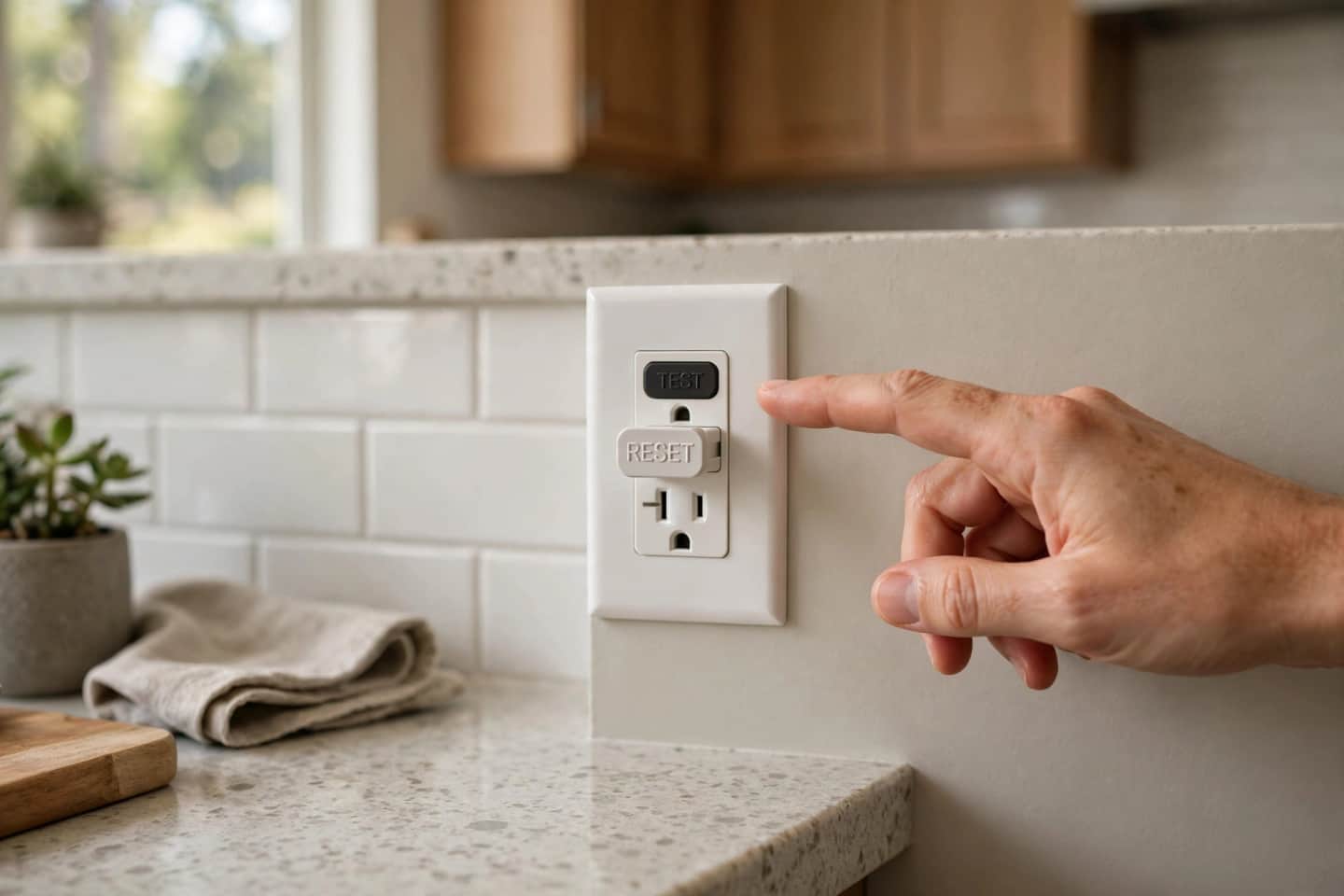
- Compares current on the hot and neutral conductors and trips when a small amount leaks to ground, often through moisture or a faulty appliance.
- Neutral conductor
- Carries current back to the panel; a shared or miswired neutral can cause nuisance trips on AFCI and GFCI breakers.
- Equipment grounding conductor
- Gives fault current a low-resistance path back to the panel so the breaker trips quickly when a hot wire touches metal.
Common causes
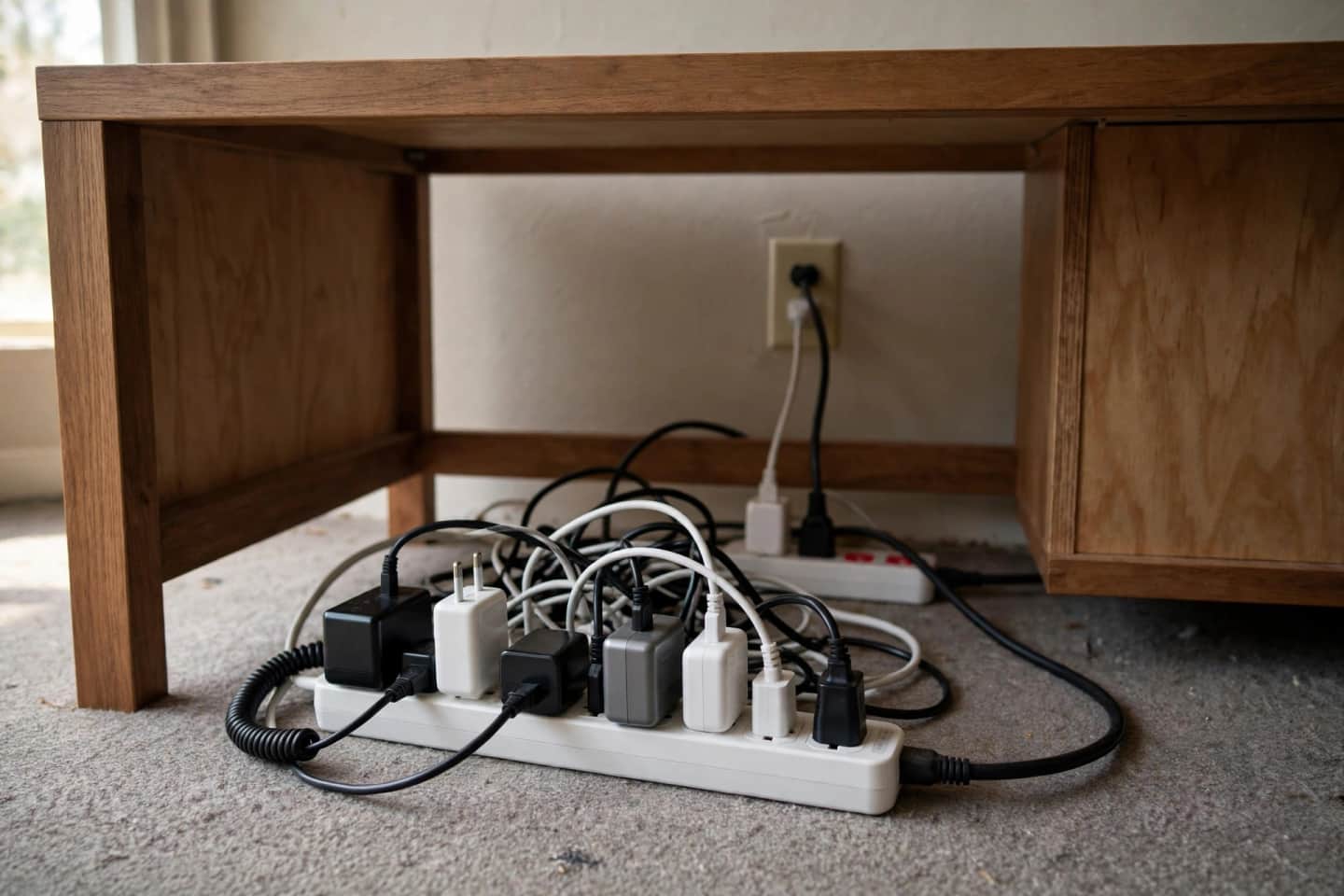
- Too many high-draw appliances on one circuit
- A short circuit in wiring or an appliance cord
- A ground fault, often in damp locations
- An aging or damaged breaker
- Arc faults detected by AFCI breakers
What you can safely check
- 1Unplug everything on the circuit and reset once
- 2Plug devices back in one at a time to find a faulty appliance
- 3Note whether it trips immediately or after minutes of use
Stop and call an electrician when
- It trips immediately with nothing plugged in
- The breaker or panel feels hot or smells burnt
- It happens on several circuits
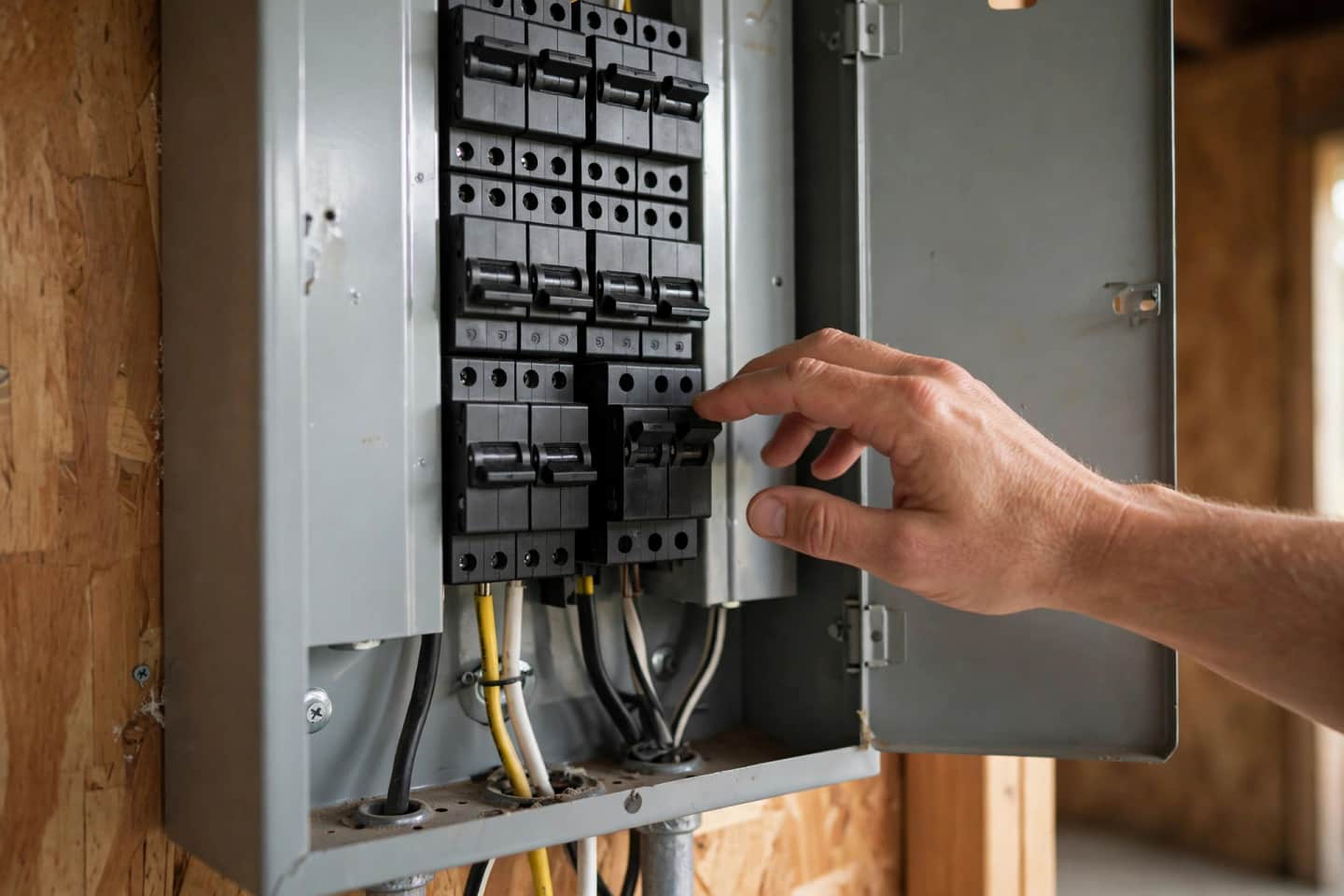
What you are seeing, what it likely means, what to do
| What you notice | Likely meaning | Next step |
|---|---|---|
| Trips the instant you reset it, with nothing plugged in | Likely a short circuit or ground fault in the wiring | Leave it off and call an electrician |
| Trips a few minutes after a heater or microwave starts | Likely an overload on that circuit | Move the appliance to another circuit; call if it continues |
| Trips only when one specific appliance is plugged in | The appliance or its cord may be faulty | Stop using the appliance and have it checked |
| AFCI or GFCI breaker trips at random times | Possible arcing, moisture, leakage or a wiring issue | Call an electrician to test the circuit |
| Burning smell, scorch marks, buzzing or a hot panel | Overheating connection or failing breaker | Keep clear, call 911 if smoke or fire, then call an electrician |
| Breaker will not stay reset or feels loose | The breaker or its connection may be failing | Do not force it; call an electrician |
Overloaded circuit: the most common reason a breaker trips
An overload happens when the devices running on one circuit draw more current than the breaker is rated for. Space heaters, hair dryers, microwaves, window air conditioners and vacuum cleaners are frequent culprits, especially when two run at once on the same circuit. The breaker’s thermal element heats up and trips after a short delay, often several seconds or minutes into use. If the trip lines up with turning on a particular appliance and resetting works once that load is moved to another circuit, overload is the likely cause. The lasting fix may be redistributing loads or adding a dedicated circuit.
Short circuits and ground faults that trip instantly
A short circuit occurs when a hot conductor touches a neutral, and a ground fault when it touches a ground wire, metal box or other grounded surface. Both send a surge of current that trips the breaker almost immediately, sometimes with a pop or a visible flash. Causes include a damaged appliance cord, a loose wire inside a box, a nail or screw driven through a cable, or water inside a fixture or outlet. A breaker that trips the moment it is reset, with nothing plugged in, strongly suggests a fault in the wiring itself. Leave it off and have an electrician trace it.
Arc faults, AFCI breakers and worn-out breakers
Arc-fault breakers trip when they detect the electrical signature of arcing, which can come from a frayed cord, a loose terminal screw, or a cable pinched behind furniture. These trips can seem random because total current is low. Some trips are nuisance trips caused by certain motors or shared neutrals, but an electrician should confirm that before anyone assumes so. Breakers also wear out: a breaker that has tripped many times, feels loose on the bus, or trips well below its rating may need replacement. A breaker should never be swapped for a larger size to stop trips.
What you can safely check before calling
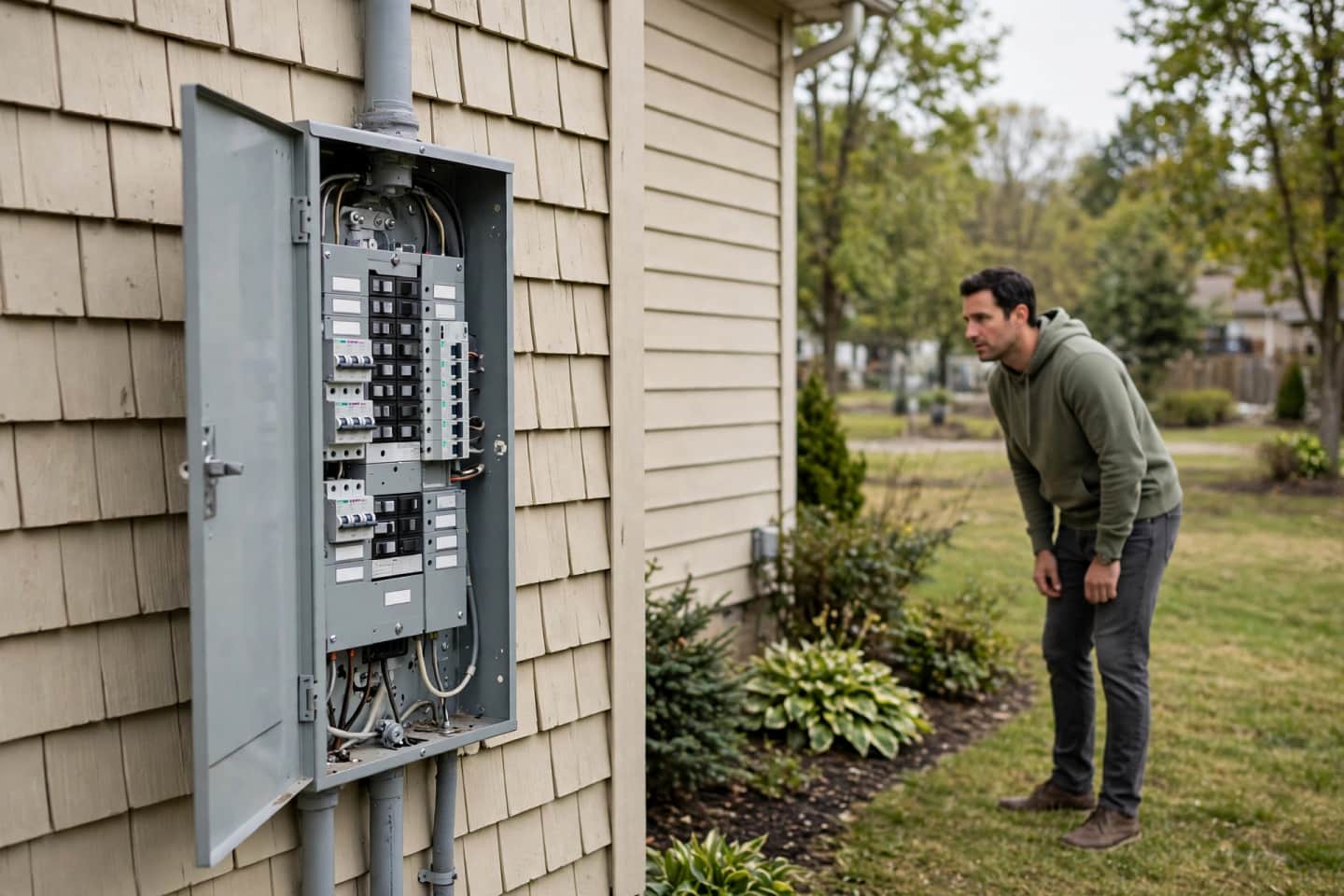
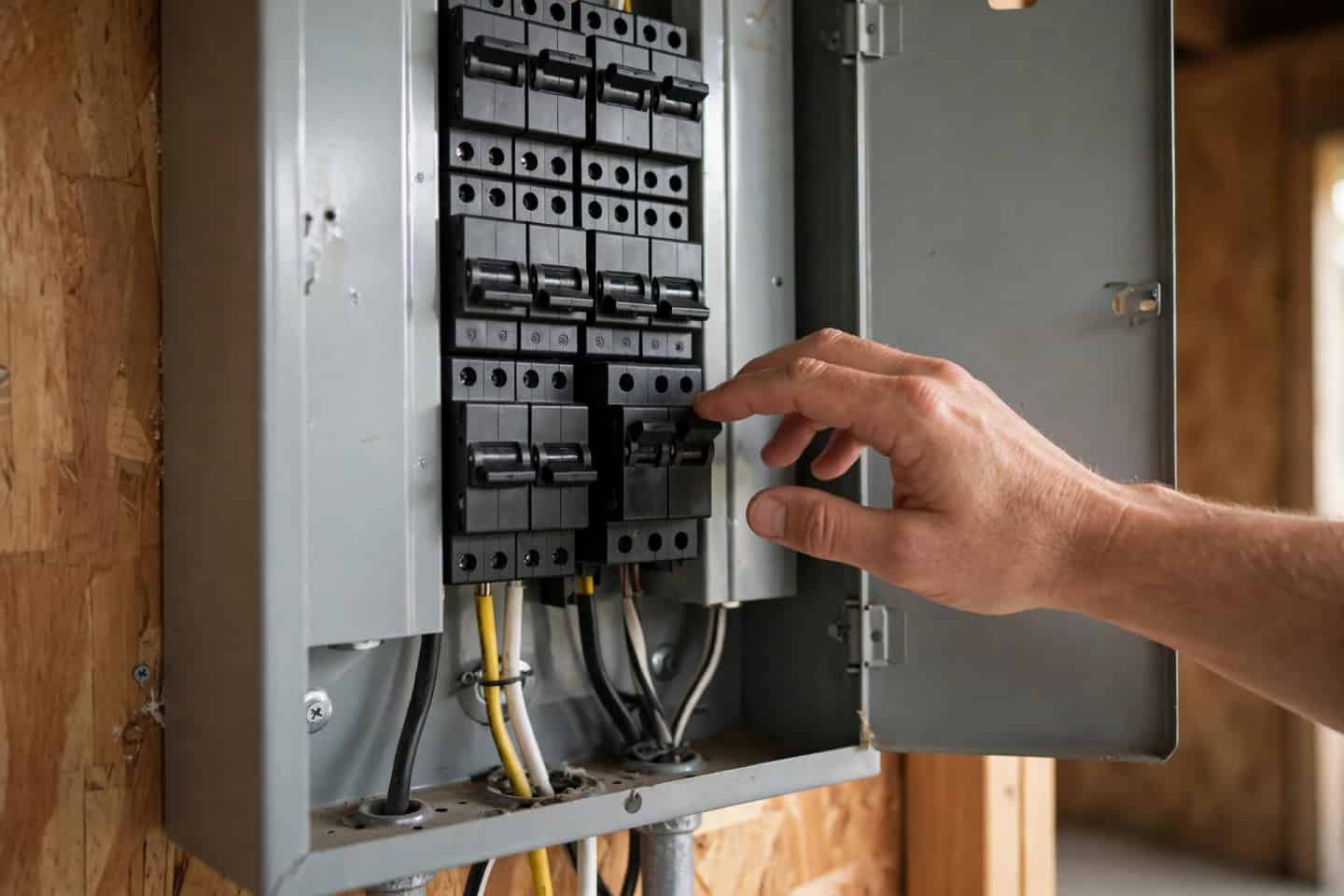
Note which breaker tripped and what was running at the time. Unplug or switch off everything on that circuit, then firmly push the handle fully to off and back to on. Plug items back in one at a time; if one appliance causes the trip, keep it unplugged and have it checked. Do not remove the panel cover, do not hold a breaker on, and do not keep resetting a breaker that trips again immediately. If you smell burning, see scorch marks, hear buzzing from the panel, or the panel feels hot, keep clear and call an electrician; call 911 if there is smoke or fire.
How an electrician diagnoses a tripping breaker
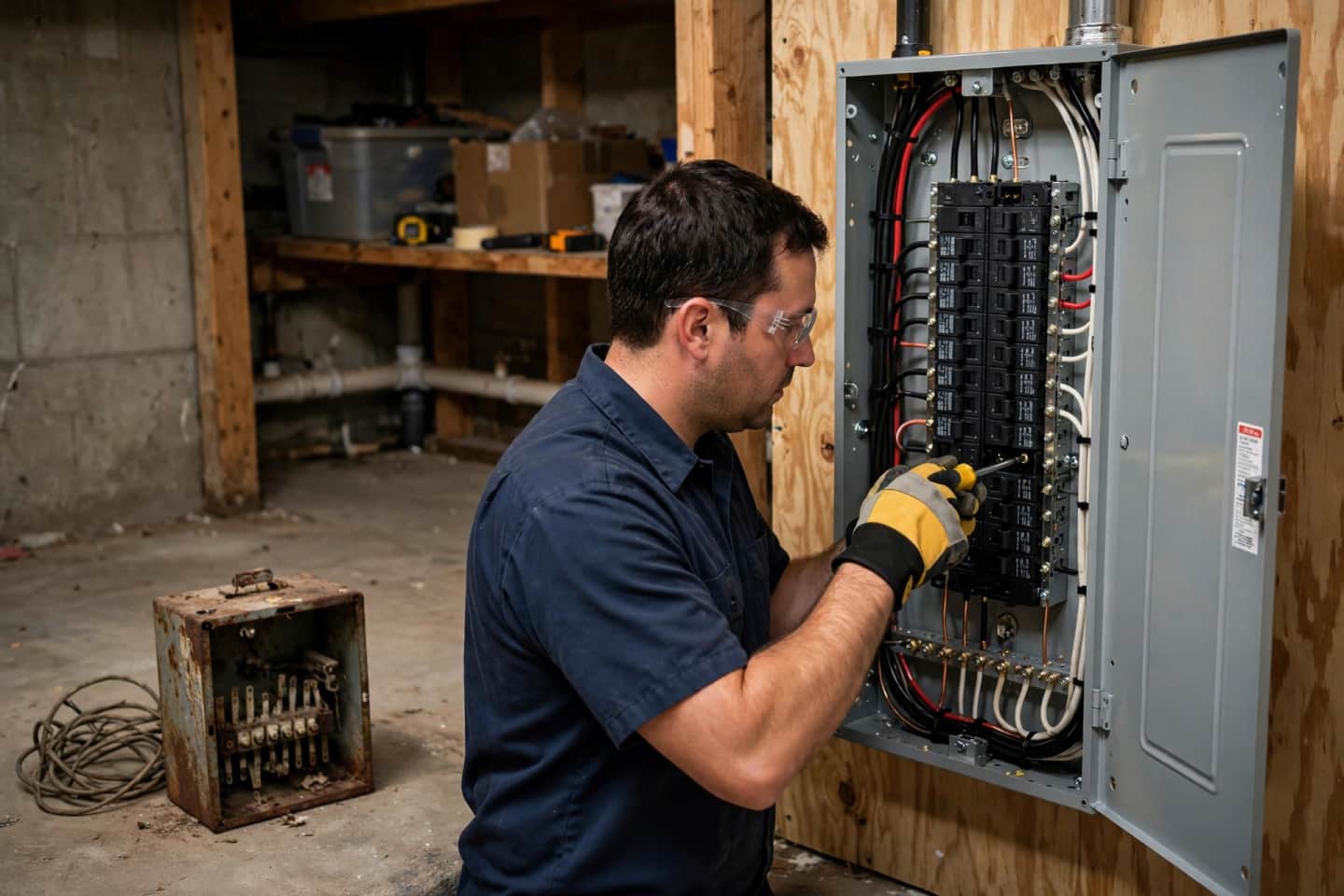
An electrician starts by asking when the trips happen and which loads are involved, then identifies every outlet and fixture on the circuit. With the circuit de-energized they inspect the breaker, its terminal and the panel bus for heat damage, and may measure the load current with a clamp meter while the circuit runs. To find shorts and ground faults they test insulation resistance and isolate sections of the circuit, opening boxes along the run until the fault is located. For AFCI and GFCI trips they look for shared neutrals, miswiring and leaking appliances.
Safety implications of ignoring repeated trips
Each trip means the breaker interrupted a condition that could have overheated wiring. Resetting repeatedly without finding the cause can stress already damaged insulation and connections, and a loose connection can keep heating even at normal loads. Bypassing the problem with a larger breaker is especially dangerous because the wire is then no longer protected at its own rating, which can let it overheat inside walls. Treat frequent tripping as a warning, not an inconvenience to work around.
Repair or replacement: what the fix usually involves
The fix depends on what is found. An overloaded circuit may be solved by moving appliances or by adding a new dedicated circuit for a heater, microwave or air conditioner. A short or ground fault is repaired by replacing the damaged section of cable, device or connection. A worn or damaged breaker is replaced with the correct type and rating listed for the panel. If inspection shows heat damage to the panel bus, an obsolete panel, or a panel without room for needed circuits, the electrician may recommend panel repair or replacement and explain why.
What happens during the service call
When you call (855) 679-2483 you are connected with an independent licensed electrician serving your area. Tell them which breaker trips, how quickly, and what was running. On site they will confirm the panel and circuit are safe to work on, test the circuit, locate the cause and explain the options before doing the repair. Pricing and timing are set by the electrician, so ask about them on the call. Keep the breaker off until they arrive if it trips immediately.
Preventing future trips and related problems
Spread high-wattage appliances across different circuits, avoid running heaters on the same circuit as other large loads, and do not chain power strips. Replace damaged cords promptly and keep cables from being pinched behind furniture. Label your panel so you know which breaker controls which rooms. Related symptoms worth watching include flickering lights, warm switches or outlets, a buzzing panel and power loss in part of the house; any of these alongside tripping makes an inspection more urgent.
Questions people ask about breaker keeps tripping
Why does my circuit breaker keep tripping?
A breaker trips to stop overheating. Repeated trips usually mean the circuit is overloaded, a device or appliance has a short or ground fault, or the breaker itself is worn. If it trips instantly on reset, a short circuit is likely and the circuit should stay off until checked.
Who do I call if my breaker keeps tripping?
Call a licensed electrician, and you can reach one by calling (855) 679-2483. If unplugging the appliances on that circuit does not stop the trips, or the breaker trips the instant you reset it, the cause is likely in the wiring or the breaker itself, which needs proper testing.
Is it dangerous if my breaker keeps tripping?
It can be, because each trip means the breaker stopped a condition that could overheat wiring. The breaker is protecting you, but repeated trips point to an overload, a damaged wire, or a failing breaker. Do not keep resetting it, and never replace it with a larger breaker.
Why does my breaker trip when I use my space heater?
Most often the heater plus everything else on that circuit draws more current than the breaker allows. Try the heater on a circuit with little else running. If it still trips, the heater, the outlet or the circuit may have a problem, and an electrician can check it or add a dedicated circuit.
Can a circuit breaker go bad?
Yes, breakers can wear out after many trips, age, or heat damage at their connection. A worn breaker may trip below its rating or fail to stay reset. An electrician can test it and replace it with the correct type and size listed for your panel.
How many times should I reset a tripped breaker?
Reset it once after unplugging the loads on that circuit, and if it trips again right away, stop. Repeatedly resetting a breaker on a fault can worsen damage to wiring and connections. Leave it off and call an electrician to find the cause.
Should I call 911 if my breaker trips and I smell burning?
Call 911 if you see smoke or fire, and keep everyone away from the panel. If it is safe to reach, leave the breaker off or switch off the main. Once the immediate danger is handled, call an electrician to inspect the panel and the affected circuit.
Editorial note: general safety information, not a substitute for an on-site evaluation by a licensed electrician.