Indiana sits in the path of the Midwest’s most violent weather — tornadoes, derechos, ice storms and floods — and its homes range from century-old houses in Indianapolis, Fort Wayne and Gary to fast-growing suburbs around Indianapolis. The state has no statewide electrician license, so who can do the work, and who inspects it, depends on where you live.
The hazards that drive the most electrical calls here, and how homeowners prepare for them.
Severe storms and tornadoes
Storm damage can tear service masts and meter bases from the home. After a storm, look for a leaning mast or pulled service cable and keep clear — the utility side stays energized. Repairs to the mast and meter base are usually the homeowner’s responsibility.
Heavy snow and wind cause outages when heating demand is highest. Generators, dedicated circuits for space heaters, and heat-tape circuits with GFCI protection are common winter projects. Avoid running heaters through extension cords or power strips.
Ice accumulation brings down lines and trees across wide areas, often for days. Backup power planning matters, and overhead service drops near trees should be checked for damage after ice events.
AES Indiana serves Indianapolis. Duke Energy Indiana serves large parts of central and southern Indiana. NIPSCO serves the northern part of the state, including Gary, Hammond and much of the region near Lake Michigan. Indiana Michigan Power, part of AEP, serves Fort Wayne, Muncie and the South Bend area, and CenterPoint Energy serves Evansville and Southwestern Indiana. Rural electric membership corporations serve much of the countryside, and dozens of municipal utilities serve individual cities.
Indiana homes cannot choose a retail supplier, so the utility sets both rates and the requirements for service upgrades and reconnection.
Licensing and codes
Indiana does not issue a statewide electrician license. Licensing is handled locally: Indianapolis and many other cities and counties license or register electrical contractors, while some rural areas have no local license requirement. Ask any electrician which local licenses they hold, and check with your city or county building department.
The Indiana Fire Prevention and Building Safety Commission adopts statewide building codes, including an electrical code based on the National Electrical Code. Local building departments issue permits and perform inspections where they have programs in place.
Tornadoes and derechos
Indiana has a long history of destructive tornadoes, including the March 2012 outbreak that devastated Henryville in Southern Indiana. Derechos with hurricane-force straight-line winds, like the June 2012 storm that swept across the Midwest, also cause widespread outages.
Storms tear service drops off houses and damage masts and meter bases. Utilities reconnect only after the house-side equipment is repaired, and where required, inspected.
Ice, snow and cold
Ice storms bring down limbs across Indiana’s wooded neighborhoods and rural roads, and Northwest Indiana gets lake-effect snow off Lake Michigan. Furnaces need electricity to run, and sump pumps must keep running during thaws. A generator plan should include the furnace, sump pump and refrigeration, and space heaters and heat tape belong on dedicated circuits.
Flooding and basements
Many Indiana homes have basements that depend on sump pumps. River flooding is common along the Wabash, White, Ohio and their tributaries, and the June 2008 floods inundated Columbus and other central Indiana towns. Electrical equipment that has been underwater should be replaced, and backup power for sump pumps is one of the most valuable upgrades in the state.
Indiana housing
Indianapolis neighborhoods such as Irvington, Fountain Square, Herron-Morton Place and Woodruff Place have homes from the late 1800s and early 1900s with original or partially updated wiring. Fort Wayne, South Bend, Gary, Evansville and Terre Haute have similar older neighborhoods. Knob-and-tube wiring, fuse panels and 60-amp services are common in these homes.
Suburbs around Indianapolis — Carmel, Fishers, Noblesville, Westfield and Greenwood — have grown rapidly and are dominated by newer construction with 200-amp services. Farmhouses and manufactured homes are common in rural counties.
Northwest Indiana and the Region
Lake County and Porter County, known locally as the Region, combine steel-mill-era housing in Gary, Hammond and East Chicago with newer suburbs to the south. Older homes often need panel and wiring upgrades, and lakeshore communities face lake-effect snow and wind. Many residents commute to the Chicago area, and EV ownership is growing.
Farms and rural service
Indiana farms have grain bins, dryers, livestock barns and shops with large electrical loads, often on long services from rural electric cooperatives. Dust, moisture and rodents damage farm wiring, making periodic inspection important for fire safety. Wells and livestock watering systems need backup power during outages.
EVs and growing demand
Indiana has attracted EV battery and auto plants, and EV ownership is rising around Indianapolis. Large data center projects are also being planned in the state. At home, a load calculation decides whether an older 100-amp service can support a Level 2 charger, heat pump or other new loads.
Lightning and surges
Indiana’s summer thunderstorms bring frequent lightning, and surges damage furnace boards, sump pump controllers and electronics. A whole-home surge protective device at the panel is an inexpensive addition, especially during other panel work.
Lakes and docks
Northern Indiana has hundreds of natural lakes, such as Lake Wawasee and Lake Maxinkuckee, and southern Indiana has reservoirs such as Lake Monroe and Patoka Lake. Lake homes with docks and boat lifts need ground-fault protection and wet-location wiring to prevent shock hazards in the water.
Regional differences
Central Indiana focuses on Indianapolis renovations and fast-growing suburbs. Northern Indiana has lake-effect snow, lakes and the industrial Region. Southern Indiana has hills, river flooding, tornado exposure and rural cooperatives. Western Indiana around Terre Haute and Lafayette combines farmland and older cities.
Common electrical calls in Indiana
Frequent requests include sump pump backup and generators, storm repairs to masts and meter bases, fuse panel and service upgrades, rewiring older homes, EV charger installations, surge protection and farm wiring inspections. Spring storm season brings the biggest surge in repair calls.
Historic districts in Indianapolis
Indianapolis has many locally designated historic districts, including Lockerbie Square, Old Northside, Fletcher Place and Irvington. Interior rewiring follows normal permits, but exterior changes such as relocating a meter or adding visible conduit may need approval from the city’s historic preservation commission. Rewiring Victorian and early-1900s homes usually means working around plaster and original trim, routing new circuits through basements and attics.
Problem panels and aluminum wiring
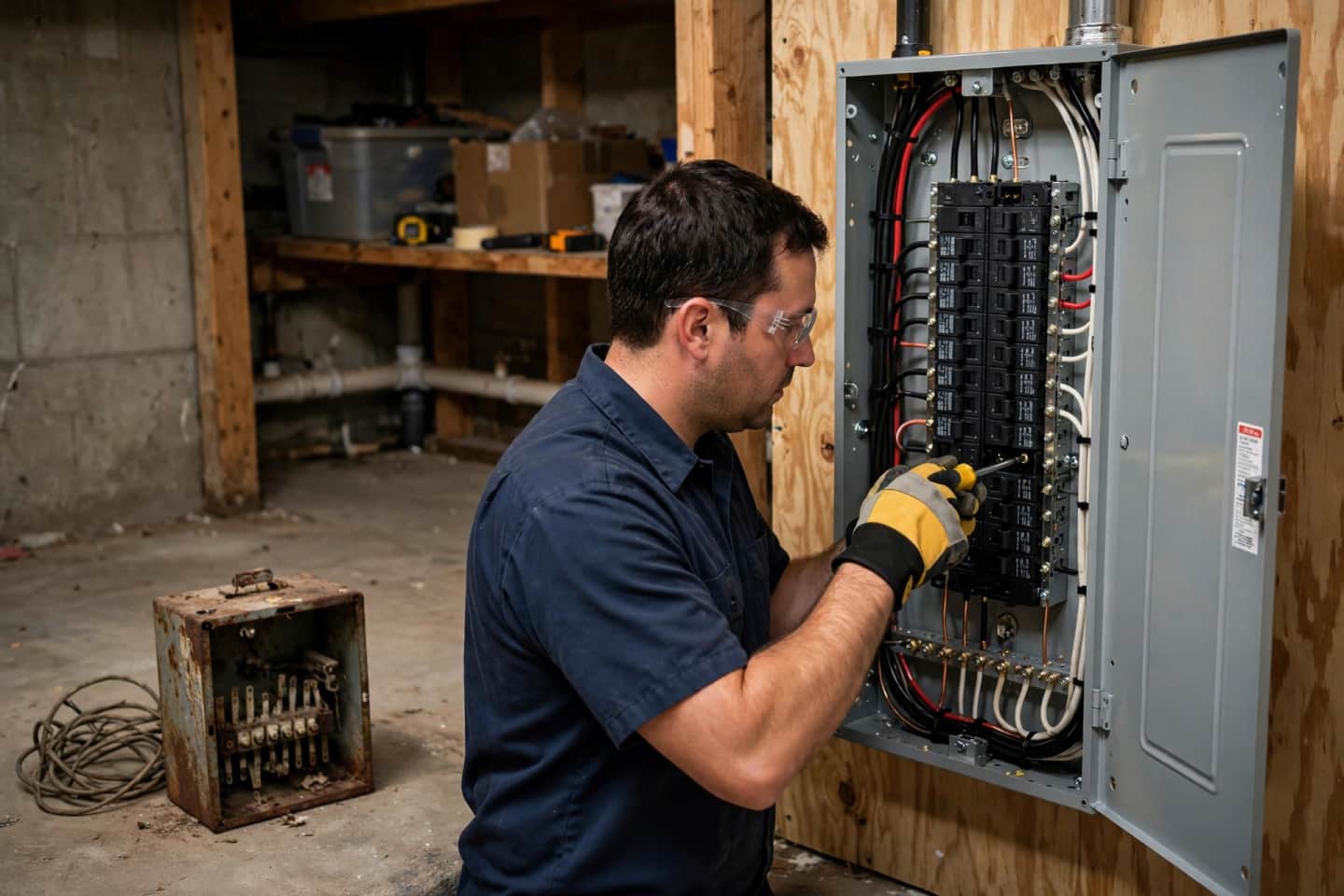
Indiana home inspections commonly flag fuse panels, older panels with known reliability concerns such as Federal Pacific Stab-Lok and Zinsco, and aluminum branch wiring in some homes built in the late 1960s and early 1970s. Aluminum connections can overheat at outlets and switches not rated for it. Repairs range from pigtailing with listed connectors to replacing circuits or the panel.
Generators and fuel choices
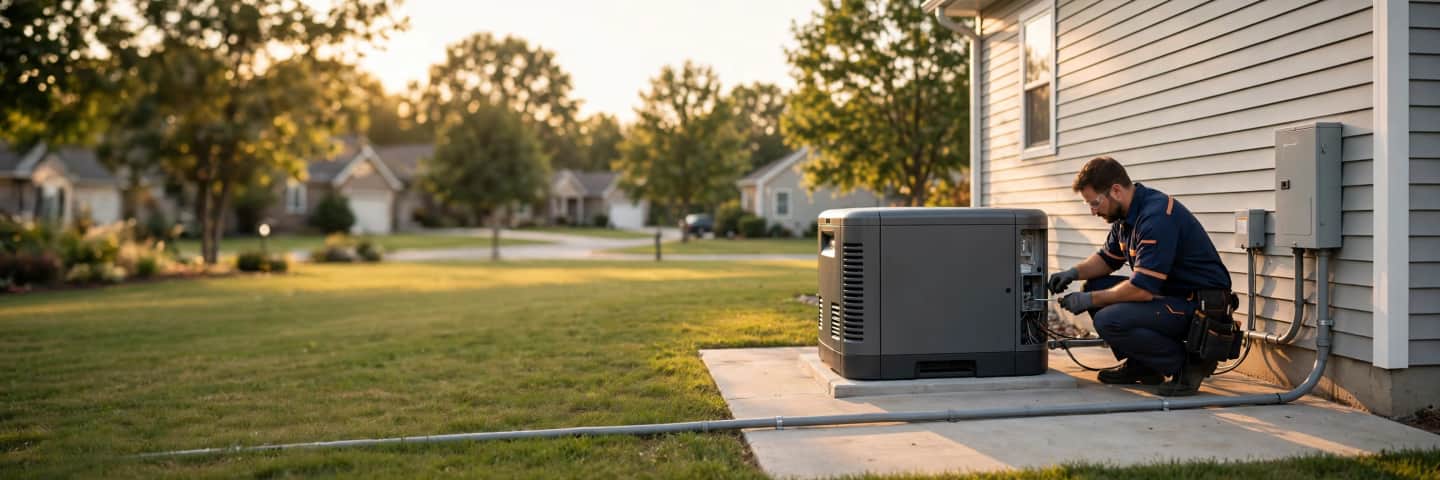
Suburban homes with natural gas often choose standby generators with automatic transfer switches, while rural homes on propane may use propane-fueled units or portable generators connected through an interlock. Generators must sit outdoors with proper clearances from windows and doors, and installation requires an electrical permit and, for fuel connections, the appropriate gas work.
Lakeshore and dunes cottages
Along Lake Michigan near the Indiana Dunes, cottages and beach homes face wind, sand and lake-effect snow. Many are decades old and used seasonally. Outdoor outlets need weather-resistant devices and in-use covers, and homes left empty through winter benefit from an electrical check before reopening.
Heat pumps and backup heat
Heat pumps are increasingly common in Indiana, often paired with a gas furnace for the coldest days. All-electric systems rely on resistance backup heat during cold snaps, which draws heavy current. The panel, breakers and wiring must be sized for the coldest day, and older 100-amp services may need an upgrade.
Manufactured homes
Manufactured homes are common in rural Indiana. They are usually fed from an outdoor meter pedestal through a feeder that can be damaged by storms, settling or equipment, and older units may have outdated panels and wiring. After severe weather, the pedestal, feeder and connection at the home should be inspected.
Crawl spaces and older ranch homes
Many Indiana ranch homes built in the 1950s and 1960s sit over crawl spaces, where moisture, insulation that has fallen loose and rodents can damage wiring that no one sees for years. A crawl-space inspection often turns up open splices and damaged cable that should be corrected.
Working with an electrician in Indiana
Because licensing is local, ask which licenses or registrations the electrician holds for your city or county, who will pull the permit, and who will inspect the work. Get a written scope. For service upgrades, ask how the electrician will coordinate with AES Indiana, Duke Energy, NIPSCO, Indiana Michigan Power, CenterPoint or your REMC.
Electrical licensing and permits in Indiana are set by state and local authorities. The electrician confirms what applies to your project.
Services
Most requested in Indiana
Ranked by how many of this state’s climate risks each service addresses.
Connect with an independent licensed electrician near you
Smoke, flames or sparking? Leave the building and call 911 first.
Pronto Electrician is a free referral service. Calls are answered by independent licensed electricians in your area. Pronto Electrician does not perform electrical work, and the electrician you choose sets the price, schedule, permits and warranty.
Free to call · All 50 states + DC
Talk to a licensed electrician in Indiana
Describe the problem and get connected with an independent licensed electrician who serves your area.