Short answer
Dimmer switches can feel slightly warm in normal operation. A standard on/off switch should not. Heat at a regular switch, or a dimmer that is hot to the touch, suggests a loose connection or an overloaded dimmer and should be checked before it damages the wiring.Electrical components involved: Warm Light Switch
- Standard toggle or rocker switch
- Opens and closes the hot conductor to the light. Its internal contacts and terminal screws should carry current with almost no heat; warmth here suggests resistance at a contact or connection.
- Dimmer switch
- Controls brightness electronically and releases some energy as heat through its faceplate or fins. It has a maximum rated load, and exceeding it, or pairing it with incompatible LED lamps, makes it run hot.
- Terminal screws and push-in (backstab) connections
- Where the branch-circuit wires attach to the switch. A loose screw or a worn push-in contact creates resistance, and resistance under current produces heat.
- Branch circuit wiring
- Carries current from the breaker to the switch and fixtures. Heat at a bad connection can harden or char the insulation on the conductors inside the box.
- Circuit breaker
- Protects the wiring from overcurrent and short circuits. A loose connection can overheat while drawing normal current, so the breaker may never trip even though the switch is heating.
- Lighting fixtures and bulbs
- Make up the load the switch or dimmer controls. The combined wattage and the bulb type determine whether a dimmer is working within its rating.
Common causes
- Loose terminal screws
- Dimmer overloaded by too many fixtures
- Incompatible dimmer for LED loads
What you can safely check
- 1Turn the lights off and let it cool
- 2Check the total wattage on the dimmer
Stop and call an electrician when
- A standard switch is warm
- Any discoloration or buzzing
What you are seeing, what it likely means, what to do
| What you notice | Likely meaning | Next step |
|---|---|---|
| Dimmer faceplate is mildly warm while lights are on | Likely normal heat from the dimmer electronics | Confirm the load is within its rating and bulbs are dimmable; monitor it |
| Dimmer is hot to the touch or buzzes | Possible overload or LED incompatibility | Turn the lights off and call an electrician to check the load and dimmer |
| Standard on/off switch feels warm | Likely a loose connection or worn switch | Leave the lights off and call an electrician soon |
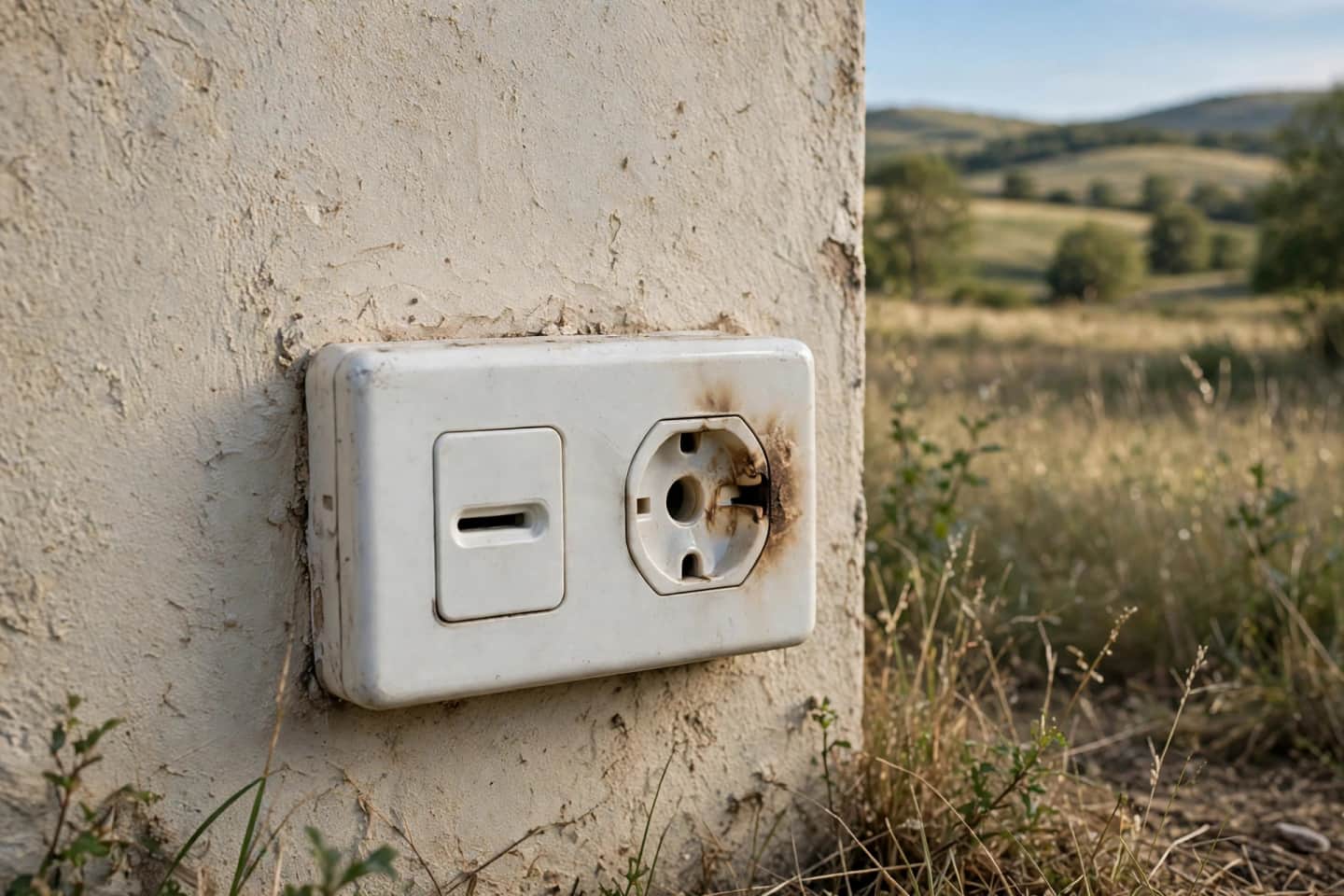
| Faceplate is discolored or melted | The connection has already overheated | Turn off the breaker if safe to reach and call an electrician |
| Lights flicker when you touch the switch | Loose terminal or failing contacts | Stop using the switch and have it inspected |
| Smoke, sparks or a burning smell | Active overheating or arcing | Keep clear, cut power only if safe, call 911 for smoke or fire, then an electrician |
Why a dimmer feels warm but a standard switch should not
A dimmer regulates power with electronic components that give off some heat while the lights are on, which is why many dimmer instructions mention that the faceplate can feel warm. That warmth should be mild and even. A standard switch is a simple mechanical contact, and when it is in good condition it carries current with so little resistance that you should not notice any temperature change. If a regular switch feels warm, or a dimmer feels hot enough that you pull your hand away, the heat is coming from something that is not supposed to be there.
Loose terminal screws and worn push-in connections
The most common cause of a warm standard switch is a poor connection where the wire meets the device. Screws can loosen over years of heating and cooling, and push-in connections, where the wire is pressed into a hole on the back of the switch, can lose their grip. A loose connection adds resistance, and resistance turns current into heat right at that point. The heat can then make the connection worse over time, which is why a switch that was only slightly warm can progress to discoloration, crackling or a burning smell.
Overloaded dimmers and LED compatibility problems
Every dimmer carries a maximum load rating printed on the device or its packaging. Adding fixtures, or using several dimmers side by side in one box, can push it past what it can comfortably handle, and the result is extra heat. LED lighting adds another variable: some older dimmers were designed for incandescent loads and do not pair well with LED bulbs or drivers. Mismatches can show up as flicker, buzzing, limited dimming range or a dimmer that runs warmer than expected.
Safe checks you can do and what to leave alone
Turn the lights off and let the switch cool. Note whether it is a dimmer or a standard switch, and roughly how many fixtures and what bulbs it controls, so you can describe them on the phone. Look at the faceplate without removing it: brown or melted spots, a buzzing sound, flickering or a burning smell all raise the urgency. Do not unscrew the cover or pull the switch from the box while the circuit is energized.
If you see smoke, sparks or flame, or smell burning, keep clear of the switch, switch off the breaker or main only if you can reach the panel safely, and call 911 for any fire or smoke. Then call an electrician.
How an electrician diagnoses a warm switch
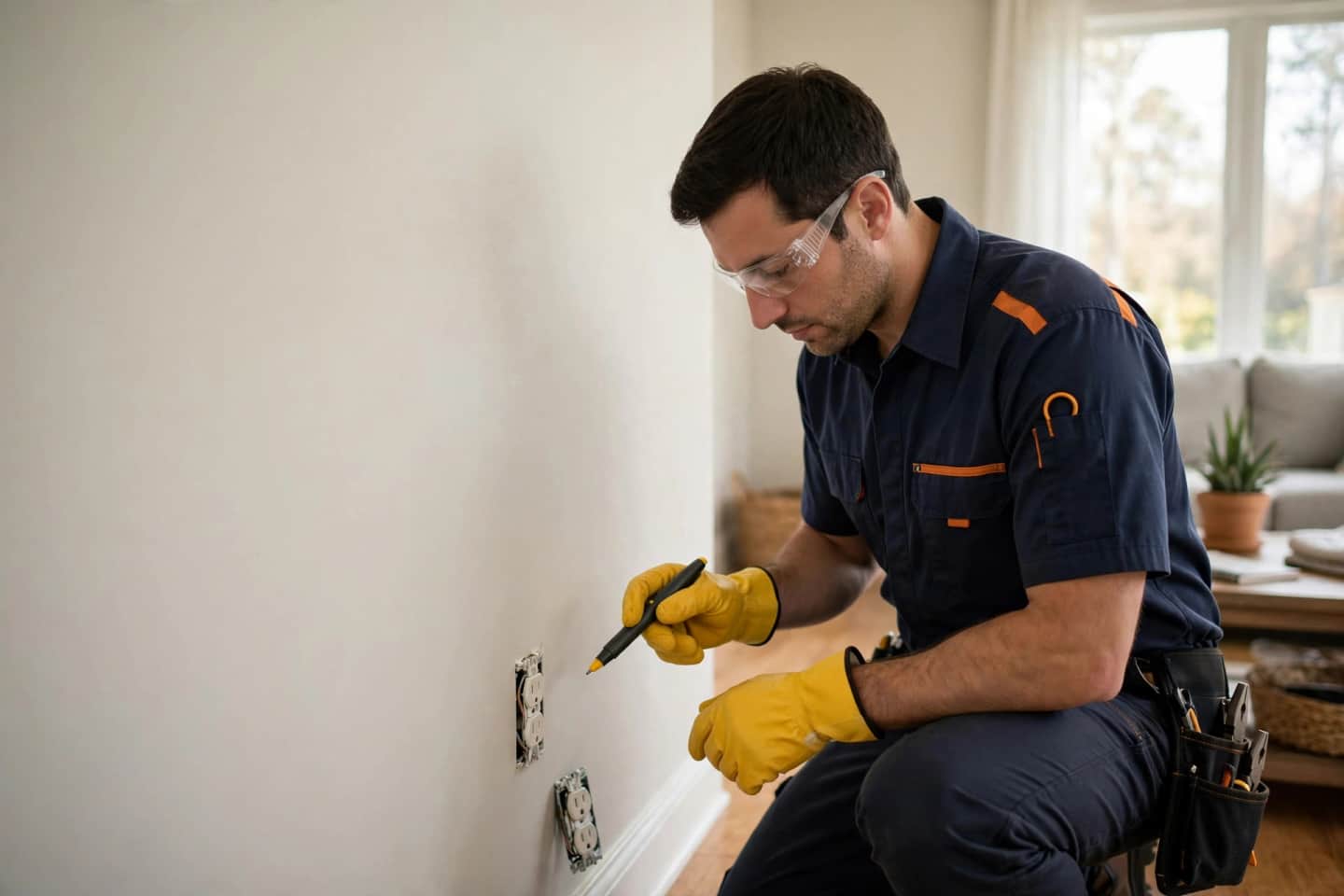
An electrician turns off the circuit, confirms it is de-energized with a tester, and removes the switch to inspect the terminals, the wire ends and the insulation in the box. Signs of overheating include darkened screws, brittle or discolored insulation and melted plastic on the device. They will check whether the wires were attached with screws or push-in holes, compare the connected lighting load with the dimmer rating, and confirm that the dimmer is suited to the bulbs in use. Some also check other devices on the same circuit.
Repair or replace the switch?
Switches are inexpensive devices, so one that has overheated is usually replaced rather than reused. If the wire ends are damaged, the electrician typically trims back to clean copper before reconnecting, assuming there is enough length in the box. For an overloaded dimmer, the fix may be a higher-rated model, a dimmer listed for LED loads, or redistributing the lighting. If heat has damaged insulation further into the wall, or similar problems appear at other switches, a broader wiring repair may be the right call.
What to expect when you call
When you call (855) 679-2483, you are connected with an independent licensed electrician serving your area. It helps to explain whether the device is a dimmer or a standard switch, how warm it gets, how long it has been happening, and whether you have noticed buzzing, flicker, discoloration or a smell. The electrician will advise whether to keep the circuit off until the visit and will explain the findings and the repair options once the switch has been inspected.
Preventing switches from overheating
Respect dimmer load ratings when adding fixtures, and check that new LED bulbs are labeled dimmable and suited to the dimmer you have. When switches are replaced, terminal-screw connections tightened to the manufacturer’s specification are generally preferred to push-in holes. Pay attention to early warning signs such as a switch that starts to feel warm, a faint buzz or lights that flicker when the switch is touched; acting at that stage is far simpler than dealing with a charred box later.
Related problems that share the same causes
Loose connections rarely limit themselves to one device. The same kind of failing connection that warms a switch can cause flickering lights on that circuit, a scorched or warm outlet, or a burning smell from a receptacle. If the switch is on a circuit that also has dead outlets or trips its breaker, mention that when you call so the electrician can trace the whole circuit rather than just the switch.
Questions people ask about warm light switch
Is it normal for a light switch to feel warm?
Dimmer switches can feel slightly warm in normal operation. A standard on/off switch should not. Heat at a regular switch, or a dimmer that is hot to the touch, suggests a loose connection or an overloaded dimmer and should be checked before it damages the wiring.
Is it normal for a light switch to feel warm?
It is normal for a dimmer to feel slightly warm, but not for a standard on/off switch. Dimmers release a little heat while they work. A regular switch should stay at room temperature, so warmth there usually means a loose connection or a worn device that should be checked by an electrician.
Is a warm light switch dangerous?
It can be, because heat at a switch often comes from a loose connection that can worsen over time. Left alone, it may damage wire insulation or the switch itself. If it is warm, discolored or buzzing, leave the lights off and have an electrician inspect it. For smoke or burning smells, call 911 first.
Who do I call about a hot light switch?
Call a licensed electrician. You can call (855) 679-2483 to be connected with an independent licensed electrician in your area. If you see smoke, sparks or flames, keep away from the switch, switch off power only if it is safe to reach the panel, and call 911 first.
Why does my dimmer switch get hot?
A dimmer usually gets hot when it controls more wattage than it is rated for or when it is mismatched with LED bulbs. Mild warmth is expected, but real heat is not. An electrician can compare the load with the dimmer rating and suggest a properly rated or LED-compatible replacement.
Can I keep using a warm switch until the electrician comes?
It is safer not to. Turning the lights off removes the current that produces the heat. If the switch is discolored, buzzing or smells of burning, turning off its breaker, if you can reach the panel safely, is a sensible precaution until an electrician inspects it.
Why is my light switch warm when the lights are off?
A standard switch that is warm with the lights off may be heated by a connection carrying current to other devices in the same box. That still points to a loose or overloaded connection. Leave the switch alone and have an electrician open the box and inspect the wiring.
Editorial note: general safety information, not a substitute for an on-site evaluation by a licensed electrician.