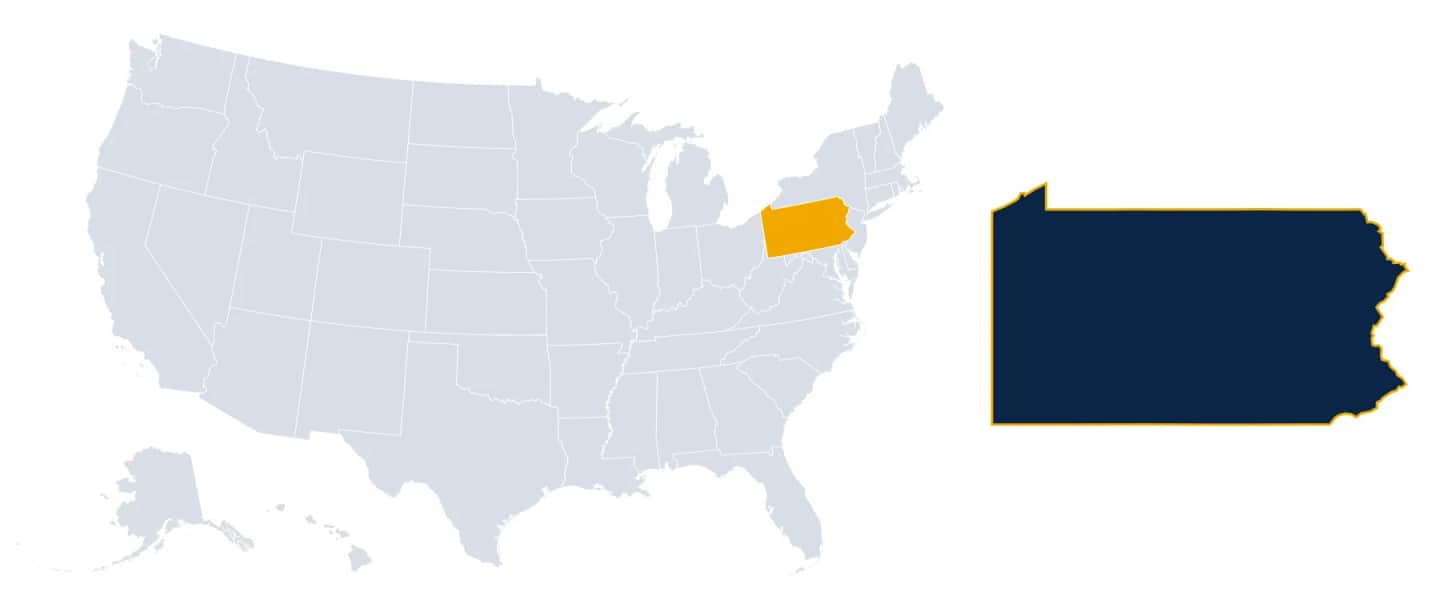
Pennsylvania’s electrical work is shaped by old houses and local rules. The state has a large share of homes built before 1940 — rowhomes in Philadelphia, hillside houses in Pittsburgh, brick twins in the coal region and farmhouses across the countryside — and there is no statewide electrician license, so who can do the work and who inspects it depends on your municipality.
What Pennsylvania weather does to electrical systems
The hazards that drive the most electrical calls here, and how homeowners prepare for them.
Winter storms and cold
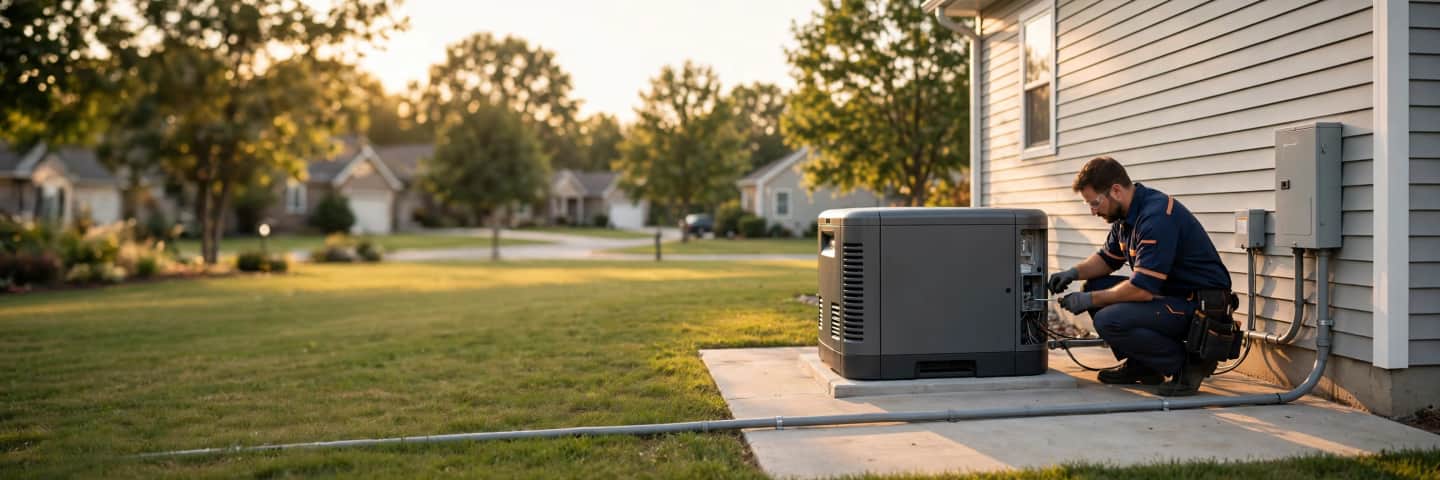
Heavy snow and wind cause outages when heating demand is highest. Generators, dedicated circuits for space heaters, and heat-tape circuits with GFCI protection are common winter projects. Avoid running heaters through extension cords or power strips.
Electrical equipment that has been underwater — panels, outlets, breakers, appliances — generally must be replaced, not dried and reused. Do not re-energize a flooded home until an electrician has inspected it.
Ice accumulation brings down lines and trees across wide areas, often for days. Backup power planning matters, and overhead service drops near trees should be checked for damage after ice events.
PECO serves Philadelphia and its suburbs. PPL Electric Utilities serves much of eastern and central Pennsylvania, including Allentown, Harrisburg, Lancaster and Scranton. Duquesne Light serves Pittsburgh and much of Allegheny and Beaver counties. FirstEnergy’s Pennsylvania company serves large areas around Reading, Erie, Johnstown, Altoona and the western part of the state. Rural electric cooperatives and a number of municipal systems serve the rest.
Pennsylvania has retail electric choice, so you can buy supply from a competitive supplier, but your distribution utility still owns the wires and meter and sets the requirements for service upgrades, meter relocations and storm reconnections.
Licensing and the Uniform Construction Code
Pennsylvania does not license electricians at the state level. Cities including Philadelphia, Pittsburgh, Allentown and others license electrical contractors locally, and some municipalities require contractor registration. In Philadelphia, the Department of Licenses and Inspections issues electrical permits and licenses.
Since 2004, building work has been governed by the statewide Uniform Construction Code, which adopts the National Electrical Code through the international codes. Municipalities either enforce the code themselves or rely on certified third-party code agencies, and electrical inspections are frequently performed by third-party inspection agencies. Ask who will inspect your job and make sure the electrician pulls the permit before starting.
Rowhomes, twins and century-old wiring
Philadelphia’s rowhomes, Pittsburgh’s brick houses on steep lots, and the twins and rowhouses of Reading, Allentown, Scranton and Wilkes-Barre often date to the late 1800s and early 1900s. Knob-and-tube wiring, fuse panels, 60-amp services and decades of add-on circuits are common. Party walls, tight basements and plaster make routing new wiring a careful job.
Renovation is usually the best time to deal with old wiring, while walls and ceilings are open. Many homeowners also discover old wiring when an insurer asks about it or a home inspector flags it during a sale.
Storms, ice and flooding
Pennsylvania sees heavy snow, ice storms and severe summer thunderstorms. Ice accumulation brings down limbs onto service drops across wooded suburbs and rural areas, and summer storms knock out power to large areas each year. Tropical systems have caused some of the worst flooding in state history, from Agnes in 1972 to Tropical Storm Lee along the Susquehanna in 2011 and the remnants of Hurricane Ida in 2021, which flooded neighborhoods in the Philadelphia suburbs.
Basements flood frequently in older river towns. Electrical equipment that has been underwater should be inspected and usually replaced. Backup power for sump pumps is one of the most practical upgrades for Pennsylvania basements.
Heating, heat pumps and electrification
Many Pennsylvania homes heat with natural gas or heating oil, and rural homes often rely on propane, oil or electric baseboard. Heat pumps are growing as an alternative, especially in homes replacing oil systems. Adding a heat pump, heat pump water heater or EV charger to a home with a 100-amp service often requires a load calculation and sometimes a service upgrade.
Electric baseboard heat in older homes runs on 240-volt circuits whose connections and thermostats should be checked for heat damage, especially in rooms where heaters run hard all winter.
Rural properties and farms
Across central and northern Pennsylvania, many homes have wells, septic systems, barns and outbuildings. Well pumps need power to deliver water, so backup power plans should include the pump circuit and its starting load. Barns and detached buildings need properly sized feeders, their own disconnects and grounding electrodes. Older farm wiring exposed to moisture, dust and rodents deserves periodic inspection because it is a common fire source.
Regional differences
Southeastern Pennsylvania combines dense rowhome neighborhoods with fast-growing suburbs and flood-prone creeks. The Lehigh Valley and Northeast have older industrial-era housing and heavy snow. Central Pennsylvania has river towns along the Susquehanna, college towns and farms. Pittsburgh and the southwest have hillside homes, old brick housing and steep lots that complicate service runs. The northern tier is rural, cold and wooded, with long restoration times after storms.
Pittsburgh hillsides and service runs
Pittsburgh’s steep streets create electrical challenges found in few other cities. Houses sit above or below the street on retaining walls, garages are tucked under homes, and overhead service drops often cross long yards or stairways to reach the house. Masts and weatherheads on hillside homes take a beating from wind and falling limbs, and running a new underground service on a slope requires careful trenching and conduit planning.
When upgrading service on a hillside property, ask the electrician how the new service will reach the house, whether the meter location will change, and what Duquesne Light will require for clearances and attachment points.
EV charging without a driveway
In Philadelphia and many older Pennsylvania towns, rowhomes have no driveway and residents park on the street or in rear alleys. That makes home EV charging harder than in the suburbs: chargers usually need a garage, a rear parking pad or an approved route from the house to the parking spot, and running cables across public sidewalks is generally not allowed. Homes with rear garages off an alley often need a new circuit run from the basement panel through the yard.
In suburban homes with attached garages, the more common question is panel capacity, especially in houses still on 100-amp service.
Space heaters and winter loads
Drafty older houses lead many Pennsylvanians to rely on space heaters in winter, often plugged into old outlets on shared circuits. A 1,500-watt heater uses most of a 15-amp circuit by itself, which overheats worn outlets and loose connections. If outlets feel warm, plugs fit loosely or breakers trip when a heater runs, a dedicated circuit or a permanent heating solution is safer than another extension cord.
Coal region and small-town housing
In the anthracite region around Scranton, Wilkes-Barre, Hazleton and Pottsville, and in former steel and mill towns across the west, many neighborhoods are made up of attached rowhouses and twins more than a century old. Shared walls mean electrical problems in one unit can affect the neighbor, and older properties that have sat vacant often need a full electrical evaluation, new service and new wiring before they can be safely occupied again.
Problem panels, aluminum wiring and home sales
Pennsylvania home inspections commonly flag fuse panels, Federal Pacific Stab-Lok and Zinsco panels, aluminum branch wiring from the late 1960s and early 1970s, ungrounded outlets and knob-and-tube. Insurers may ask about them, and buyers often request repairs before closing. Some municipalities also require use-and-occupancy or resale inspections when a property changes hands, which can bring electrical deficiencies to light.
An electrician’s written evaluation separates urgent hazards — overheating, damaged insulation, missing protection near water — from items that can be planned over time.
Common electrical calls in Pennsylvania
The most frequent requests are replacing fuse panels and small services, rewiring knob-and-tube during renovations, adding dedicated circuits for kitchens, laundry and air conditioning, backup power for sump and well pumps, storm repairs to masts and meter bases, and panel upgrades for heat pumps and EV chargers.
Working with an electrician in Pennsylvania
Because licensing is local, ask the electrician which licenses or registrations they hold for your municipality, who will pull the permit and which agency will perform the inspection. For service upgrades, ask how they will coordinate with PECO, PPL, Duquesne Light, FirstEnergy or your cooperative. Get a written scope that lists the panel, breakers and wiring to be replaced. If the home has old wiring, ask whether the quote includes patching plaster or drywall after rewiring, since that work is often handled by a separate trade.
Electrical licensing and permits in Pennsylvania are set by state and local authorities. The electrician confirms what applies to your project.
Services
Most requested in Pennsylvania
Ranked by how many of this state’s climate risks each service addresses.
Connect with an independent licensed electrician near you
Smoke, flames or sparking? Leave the building and call 911 first.
Pronto Electrician is a free referral service. Calls are answered by independent licensed electricians in your area. Pronto Electrician does not perform electrical work, and the electrician you choose sets the price, schedule, permits and warranty.
Free to call · All 50 states + DC
Talk to a licensed electrician in Pennsylvania
Describe the problem and get connected with an independent licensed electrician who serves your area.