
Short answer
Yes. A burning plastic or fishy smell near an outlet, switch or panel indicates overheating insulation and is a fire risk. Turn off the breaker for that area if it is safe to do so. If you see smoke or flames, leave and call 911; otherwise contact an emergency electrician.Electrical components involved: Burning Smell From Outlet
- Receptacle (outlet)
- Its internal contacts grip plug blades; when they wear loose, resistance rises and the device heats up and gives off odor.
- Terminal screws and push-in connections
- Where branch circuit wires attach to the receptacle; a loose or backstabbed connection is a common hot spot.
- Branch circuit wiring
- Carries current from the panel; overheated or damaged insulation on these conductors produces the burning smell.
- Circuit breaker
- Protects the wire from overload and short circuits, but generally does not trip on a loose, heating connection.
- AFCI protection
- Arc-fault circuit interrupters are designed to detect arcing patterns from damaged wiring or loose connections and cut power.
- Plugged-in cords and appliances
- A failing plug, adapter or appliance can be the true heat source rather than the outlet itself.
Common causes
- Overheating connection
- Overloaded circuit
- Failing device or appliance
What you can safely check
- 1Switch off the affected breaker
- 2Unplug devices in the area
- 3Leave and call 911 if there is smoke
Stop and call an electrician when
- Immediately
What you are seeing, what it likely means, what to do
| What you notice | Likely meaning | Next step |
|---|---|---|
| Smoke, flames or glowing at the outlet | Active fire or ignition risk | Leave the home and call 911; do not try to unplug anything |
| Burning or fishy smell with no visible smoke | Insulation or a device is overheating | Switch off the breaker if safe to reach, stop using the outlet, call an electrician |
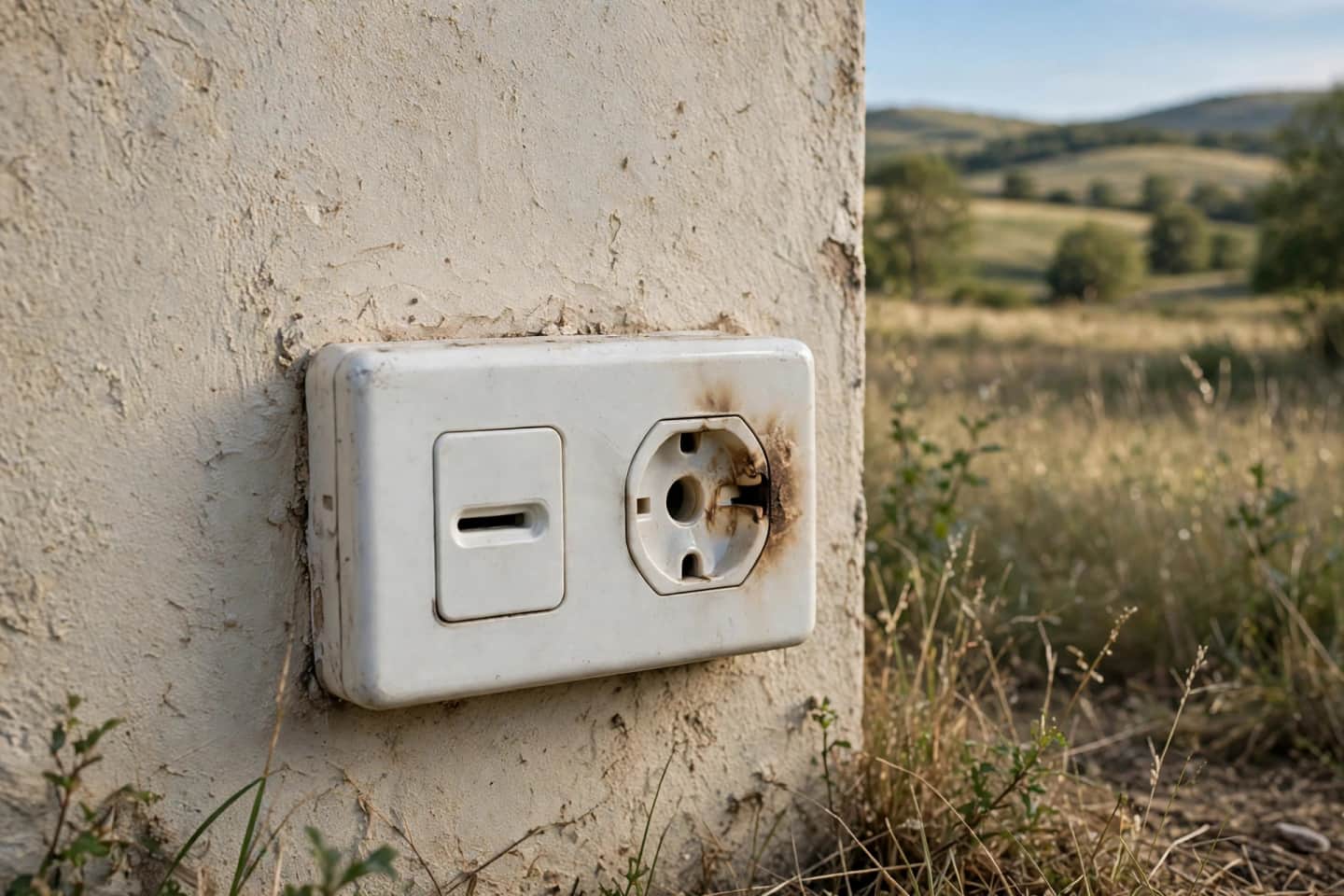
| Outlet face or plug is brown, black or melted | Heat damage has already occurred | Leave it unused and powered off, and have the outlet and wiring inspected |
| Smell only when one appliance is plugged in | Overload or a failing plug or appliance | Stop using that appliance there and have the outlet and circuit checked |
| Outlet feels warm and plugs fall out easily | Worn receptacle contacts creating resistance | Stop using it and arrange receptacle replacement by an electrician |
| Smell comes and goes or can’t be traced | Possible hidden connection problem elsewhere on the circuit | Turn off the suspected circuit and call an electrician to trace it |
Why a Burning Smell at an Outlet Is a Warning Sign
Wire insulation, receptacle bodies and plug housings are made of plastics that give off a sharp odor when they overheat. Many people describe it as burning plastic, while others notice a fishy or urine-like smell. Either way, the smell means a component has already been hot enough to begin breaking down. Heat at a connection tends to feed on itself: the hotter it runs, the more the metal oxidizes and the worse the contact becomes. That is why an odor that comes and goes should never be dismissed as a one-time event.
Cause 1: Loose or Corroded Wire Connections
The most frequent source is a poor connection where a wire meets the receptacle, either at a terminal screw or at a push-in (backstab) hole. Years of thermal expansion, plugging and unplugging, or a screw that was never fully tightened can leave a small gap. Current crossing that gap meets resistance and turns into heat, sometimes with tiny arcs. Aluminum branch wiring, found in some homes built in the 1960s and 1970s, can be especially prone to this at devices not rated for it. Because the breaker sees normal current, it usually stays on while the connection cooks.
Cause 2: Worn Receptacles and Failing Plugs
Inside a receptacle, spring contacts hold each plug blade. After heavy use, those contacts lose tension, and a plug that falls out easily is a sign of it. Weak contact means less metal touching and more heat. The problem can also start on the plug side: a damaged cord cap, a cheap adapter or a bent blade can overheat and scorch the face of an otherwise healthy outlet. An electrician checks both sides, because replacing the receptacle will not help if the appliance plug is the real culprit.
Cause 3: Overloaded Circuits and High-Draw Appliances
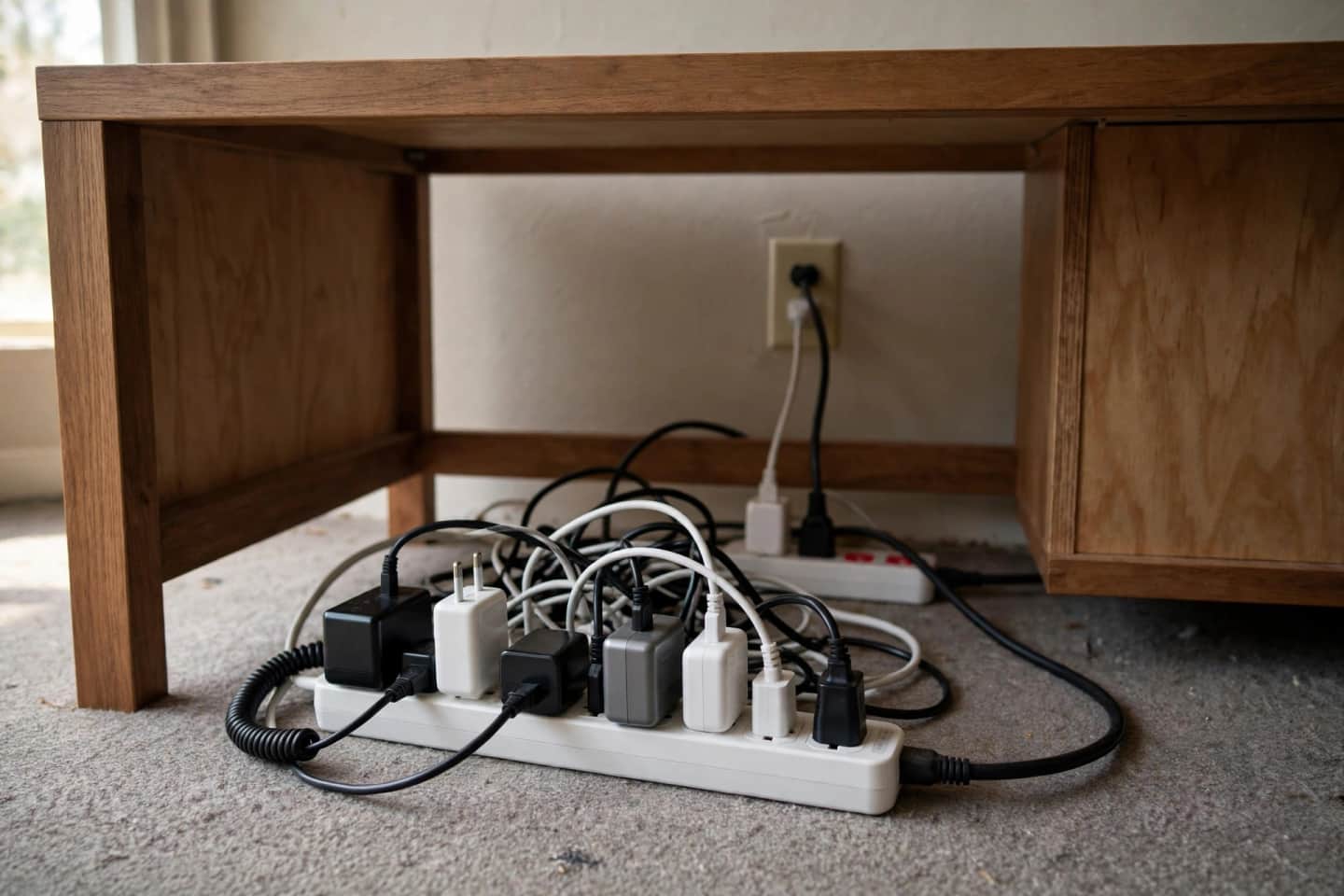
Space heaters, hair dryers, window air conditioners and similar loads draw a large, steady current. Plugged into a worn outlet, a daisy-chained power strip or a circuit already shared with other heavy appliances, they push every weak point toward its limit. A breaker is sized to protect the wire, not to catch a single overheating connection, so a circuit can run hot for long periods without tripping. If the smell appears only when a particular appliance runs, that pattern is useful information to share when you call.
What to Do Right Now: Safe First Steps
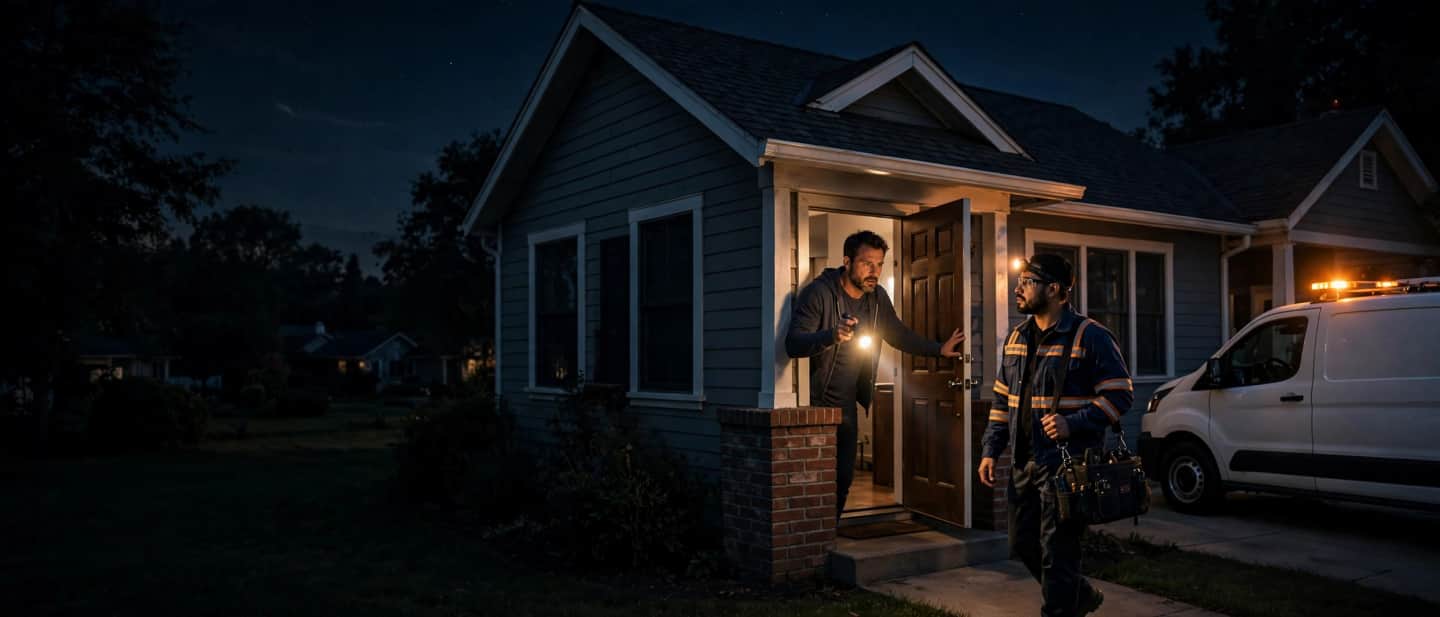
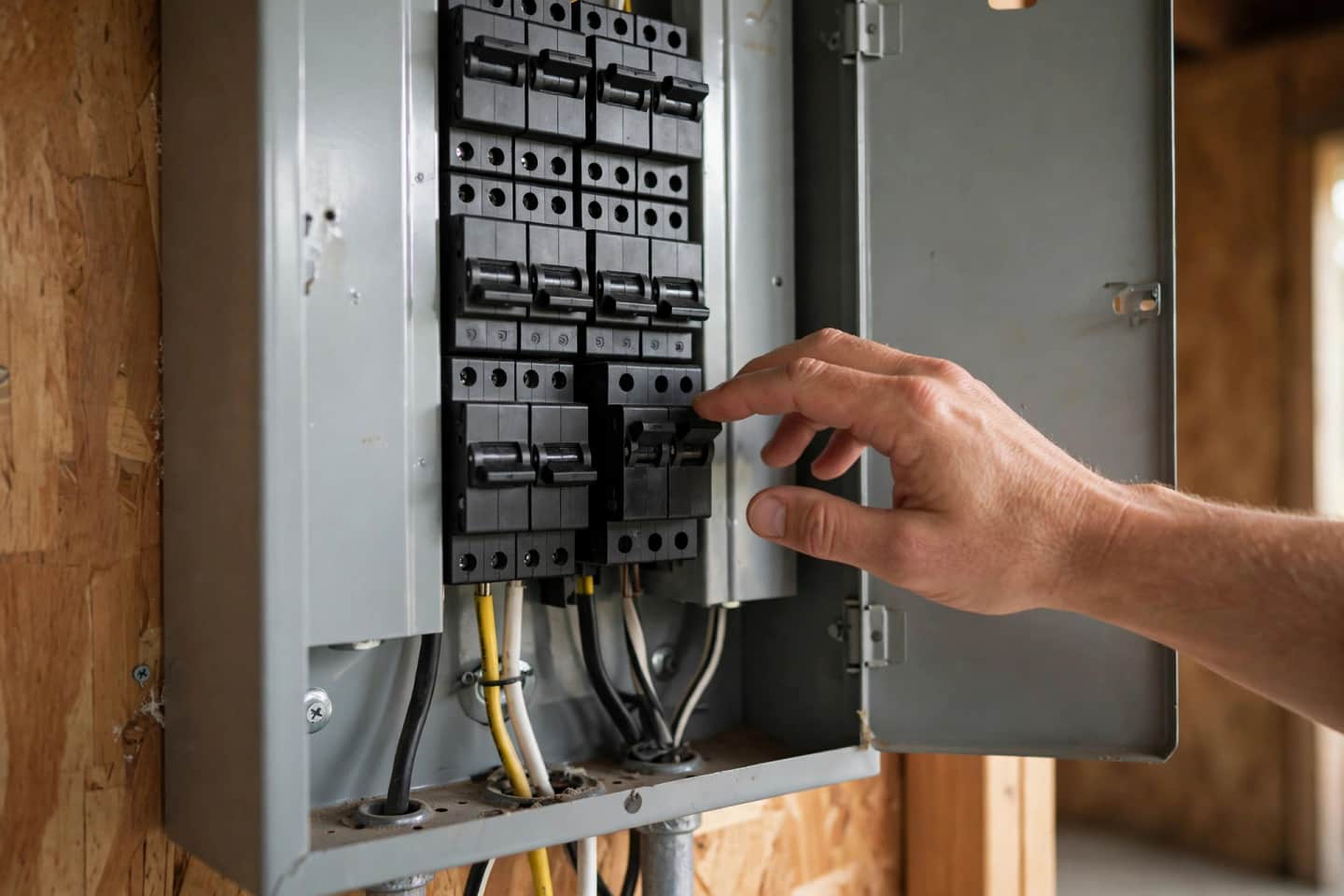
If you see smoke, flames or glowing, get everyone out and call 911. If there is only an odor, stop using the outlet and unplug items from it only if the plug and cover are not hot, discolored or sparking; otherwise leave them alone. If you can reach the electrical panel safely and without standing in water, switch off the breaker for that area, or the main if you are unsure which circuit it is. Do not remove the outlet cover or the panel cover, and do not reset the circuit to "test" it. Then call (855) 679-2483 to be connected with a licensed electrician.
How an Electrician Diagnoses the Source
With power controlled, the electrician inspects the outlet face and plugged-in cords for melting or discoloration, then opens the box to look at terminals, wire insulation and the receptacle body. They typically check other outlets on the same circuit, since a bad connection upstream can heat a different box than the one you smelled. Testing tools such as a voltage tester, a multimeter or a thermal camera may be used to confirm tightness and spot hidden hot spots. They also look at the breaker and its wiring in the panel for signs of heat.
Repair or Replace: What the Fix Usually Involves
A receptacle that has overheated is generally replaced rather than reused, because heat weakens its contacts and plastic. If the wire ends are darkened or brittle, the electrician trims back to clean copper when there is enough length, or adds a proper splice inside the box. Where heat damage runs deeper into the cable, a section of wiring may need replacement. Depending on local code and the age of the circuit, the electrician may also recommend upgrading to AFCI or combination AFCI/GFCI protection. The exact scope depends on what is found once the box is open.
Preventing Overheated Outlets
Replace outlets that no longer hold plugs firmly, and avoid running space heaters or other high-wattage appliances through power strips or extension cords. Spread heavy loads across different circuits, and unplug chargers and adapters that feel warm. Pay attention to faceplates that are discolored, outlets that feel warm to the touch, or lights that flicker when an appliance starts; these are early clues of a heating connection. In older homes, especially those with aluminum branch wiring or original receptacles, a periodic inspection by a licensed electrician can catch weak connections before they produce a smell.
Related Problems That Share the Same Root Causes
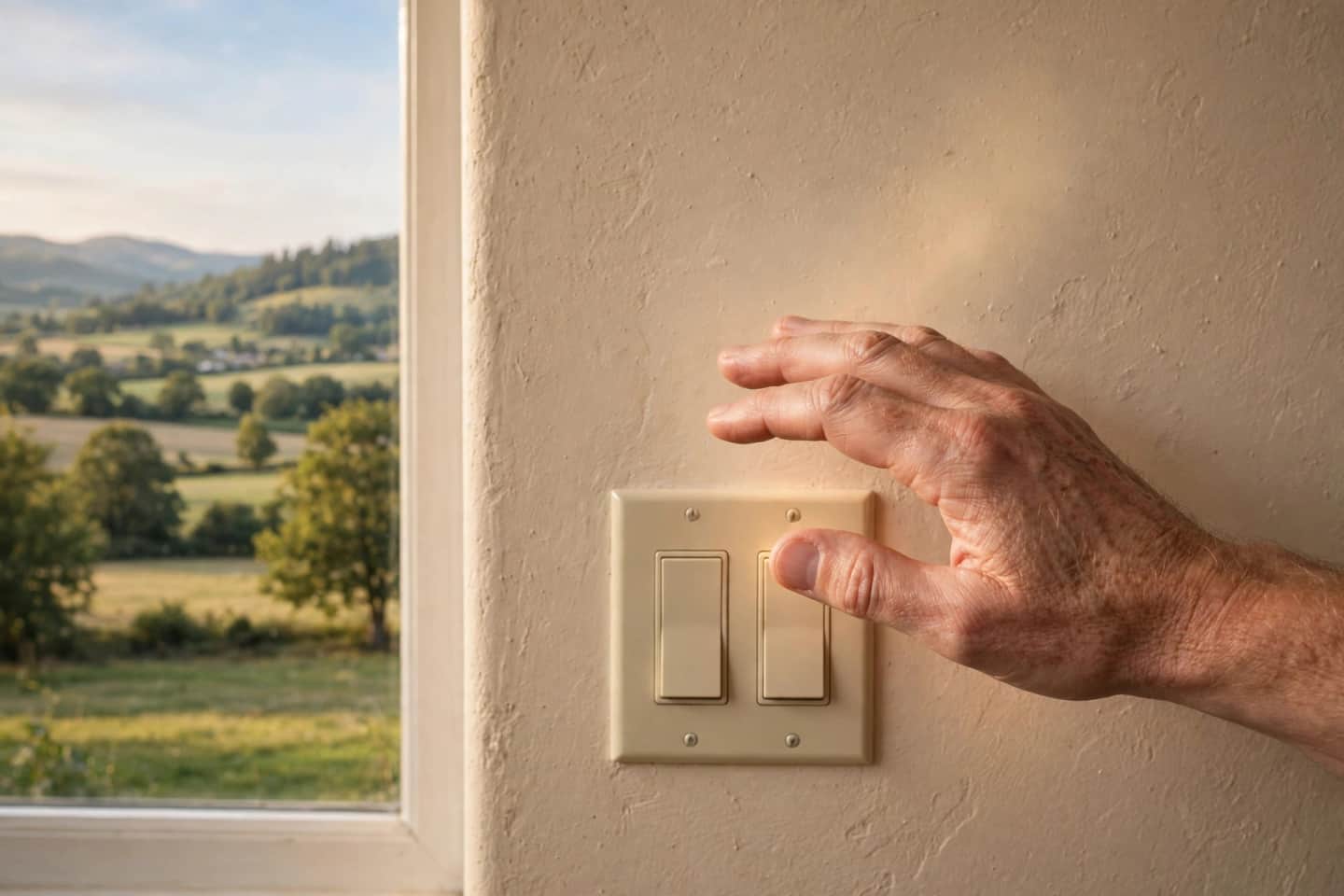
A burning smell often appears alongside other symptoms. A scorched or blackened outlet is the visible result of the same heat. A warm light switch can point to a loose connection on the same circuit. Flickering lights and outlets that suddenly go dead can be caused by a connection that has burned open upstream. If more than one of these shows up together, mention all of them when you call, since they help the electrician trace the circuit faster.
Questions people ask about burning smell from outlet
Is a burning smell from an outlet dangerous?
Yes. A burning plastic or fishy smell near an outlet, switch or panel indicates overheating insulation and is a fire risk. Turn off the breaker for that area if it is safe to do so. If you see smoke or flames, leave and call 911; otherwise contact an emergency electrician.
Who do I call if my outlet smells like burning?
Call 911 first if there is smoke or fire; otherwise call a licensed electrician. If it is safe, switch off the breaker for that outlet before you call. You can reach independent licensed electricians by calling (855) 679-2483. Describe the smell, whether anything is discolored, and what was plugged in.
Is it dangerous if my outlet smells like burning plastic?
Yes, it is a fire risk and should be treated as urgent. The smell means insulation or the receptacle body has already overheated. Stop using the outlet, cut power to that circuit if you can reach the panel safely, and have an electrician inspect it rather than waiting to see if the odor returns.
Why does my outlet smell like fish?
A fishy odor is commonly reported when electrical plastics and insulation overheat. It is not usually an actual fish or animal smell. Because it signals heat damage at an outlet, switch, cord or panel, treat it the same as a burning plastic smell: turn off power to the area if safe and call an electrician.
Can I keep using the outlet if the smell went away?
No, you should not keep using it. The odor fading does not mean the problem is gone; a loose or damaged connection can heat again the next time a load is plugged in, and it may get worse each time. Keep the outlet out of use until an electrician has opened and inspected it.
Why didn’t my breaker trip if the outlet was burning?
Breakers mainly respond to overloads and short circuits, not to a single loose connection. A connection can overheat while the circuit draws a normal amount of current, so a standard breaker sees nothing wrong. Arc-fault protection is designed to catch some of these arcing conditions, which is one reason electricians may recommend it.
Should I turn off the power if an outlet smells hot?
Yes, if you can reach the panel safely. Switch off the breaker for that area, or the main if you are not sure which one it is. Do not go near the panel if it is hot, smoking, or if you would be standing in water; leave and call 911 in that case.
Editorial note: general safety information, not a substitute for an on-site evaluation by a licensed electrician.