California asks more of a home electrical system than almost any other state. Wildfire season brings planned power shutoffs, earthquakes can loosen connections and damage service equipment, and the state’s push toward all-electric homes means heat pumps, induction ranges, EV chargers, solar and batteries are being added to houses whose panels were sized for a refrigerator and a few lamps.
What California weather does to electrical systems
The hazards that drive the most electrical calls here, and how homeowners prepare for them.
Wildfire and public safety power shutoffs
Utilities may shut off power during high fire-risk weather. Battery backup or generator systems with proper transfer equipment keep essential circuits running. Exterior electrical equipment and connections should be kept clear of vegetation.
Ground movement can loosen connections and damage service entrances. Securing water heaters and appliances, checking panel connections after significant quakes, and having backup power plans are practical steps.
Air conditioning runs near continuously, stressing panels, breakers and connections. Heat pumps, pool equipment and EV chargers add to the load, making load calculations and panel capacity checks important before adding equipment.
Most Californians are served by one of three investor-owned utilities regulated by the California Public Utilities Commission: Pacific Gas and Electric across Northern and Central California, Southern California Edison across much of Southern California outside the city of Los Angeles, and San Diego Gas & Electric in the San Diego region. Large public utilities serve some of the biggest cities — the Los Angeles Department of Water and Power inside LA city limits and the Sacramento Municipal Utility District in the capital region — along with smaller municipal systems in places like Anaheim, Riverside, Pasadena, Burbank, Glendale, Palo Alto, Roseville and Redding.
Which utility you have matters for electrical work. Each one sets its own requirements for meter locations, service upgrades, solar interconnection and battery systems, and its own scheduling for disconnects and reconnects. An electrician who regularly works in your utility’s territory will know the paperwork and lead times before quoting a panel upgrade or solar-plus-storage job.
Licensing and permits
Electrical contracting in California is licensed by the Contractors State License Board, and the license classification for electrical contractors is C-10. Individual electricians who work for a C-10 contractor generally must also hold a state electrician certification through the Department of Industrial Relations. You can look up a contractor’s license status, bond and workers’ compensation coverage on the CSLB website before signing anything.
Permits are issued by the city or, in unincorporated areas, the county building department. California adopts its own California Electrical Code, based on the National Electrical Code, as Part 3 of Title 24, and the state energy code in Part 6 of Title 24 adds requirements that affect electrical design — including solar on most new homes and, in recent code cycles, readiness for heat pumps, EV charging and batteries. Panel upgrades, new circuits, EV chargers, generators, solar and battery systems almost always need a permit and inspection.
Wildfire and public safety power shutoffs
Since 2019, California’s utilities have used public safety power shutoffs, cutting power to lines in high fire-risk areas during dry, windy weather. Outages can last from hours to several days, and they most often affect foothill, mountain and wildland-edge communities in the Sierra Nevada foothills, the North Bay, the East Bay hills and parts of Southern California.
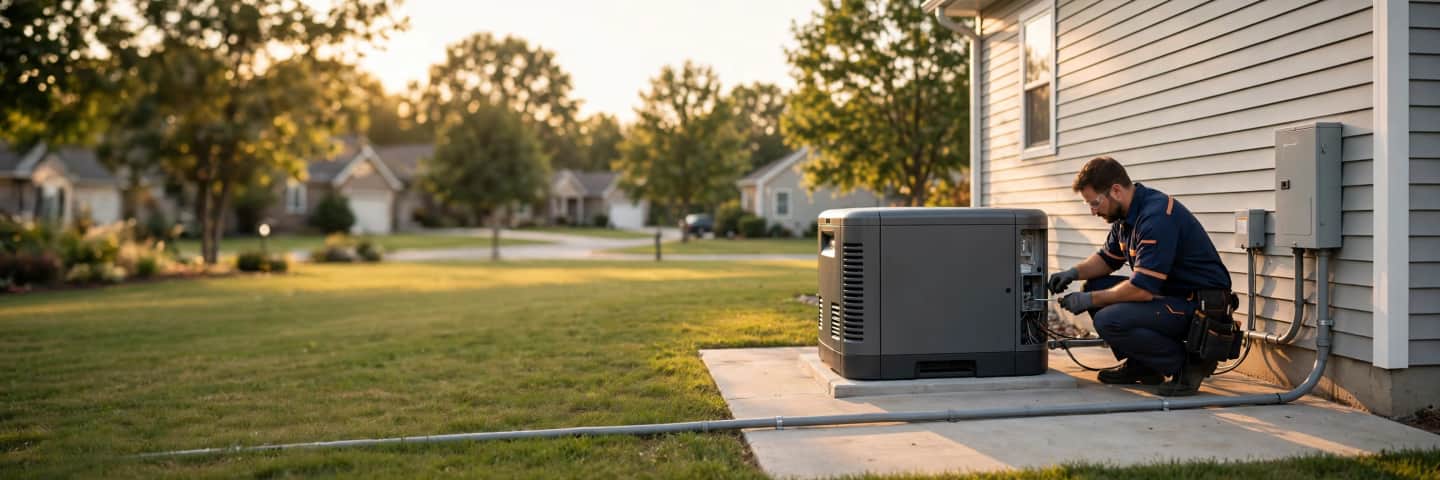
For homes in these areas, backup power is no longer a luxury. The common options are a portable generator connected through a listed interlock kit or transfer switch, a permanently installed standby generator, or a battery system, often paired with solar. Whatever you choose, it must be connected so it cannot back-feed utility lines. Wildfire risk also makes exterior electrical maintenance more important: keep vegetation away from service drops and outdoor equipment, and have damaged or loose exterior connections repaired promptly.
Homes rebuilt after fires, including after the January 2025 Palisades and Eaton fires in Los Angeles County, are being designed with all-electric systems, larger services and battery readiness from the start.
Earthquakes and electrical systems
Earthquakes rarely damage wiring inside walls, but they can shift appliances, loosen connections at panels and meter bases, and damage service masts and underground service entrances. After a significant quake, look for a meter base pulled away from the wall, a leaning mast, burning smells or flickering lights, and keep clear of any damaged equipment until it has been checked.
Practical preparation includes securing water heaters and large appliances, knowing where your main breaker is and how to switch it off, and having backup power for refrigeration and medical devices. Some homeowners add seismic gas shutoff valves; electrical systems themselves should be inspected after any quake that causes visible damage.
California housing and its wiring
California’s housing stock spans every era. San Francisco, Oakland, Berkeley, Los Angeles and Pasadena have large numbers of pre-1940 homes with knob-and-tube wiring, ungrounded outlets and 30- to 60-amp services. The post-war boom filled the San Fernando Valley, Orange County, the South Bay and the Santa Clara Valley with ranch homes that often still have their original 100-amp panels. Some homes from the late 1960s and early 1970s have aluminum branch wiring, which needs special connectors.
Some older panels are worth a closer look. Many electricians recommend replacing Federal Pacific Stab-Lok and Zinsco panels, and insurers may ask about them. An electrician can tell you whether your panel has a known reliability concern and whether replacement makes sense.
Electrification, ADUs and solar in California
California has the highest EV adoption in the country, and state and local policy encourage replacing gas furnaces, water heaters and stoves with electric heat pumps and induction. Each of those appliances adds load. A whole-home load calculation shows whether your existing service can handle them; when it cannot, the options are a service upgrade, load-management devices that prevent large loads from running at the same time, or right-sized equipment.
State laws passed since 2017 have made accessory dwelling units much easier to build, and garage conversions and backyard ADUs are now among the most common reasons for panel upgrades and subpanels. An ADU usually needs its own subpanel fed from the main service, and sometimes a larger service or a separate meter, depending on the utility.
Solar economics also changed in April 2023, when the state’s net billing tariff replaced the older net metering structure for new customers of the big three investor-owned utilities. Because exported solar is now credited at lower rates, more homeowners are pairing solar with batteries to use their own power in the evening. Battery systems involve their own electrical design, including critical-load panels and utility interconnection approval.
Regional differences across the state
Coastal cities deal with salt air that corrodes meter bases, disconnects and outdoor outlets faster than inland. The Central Valley and Inland Empire see long stretches above 100°F, which stresses air conditioning circuits and older panels during heat waves and statewide grid emergencies. Mountain and foothill communities face snow load on service masts, longer outages and the highest wildfire shutoff risk. Dense older cities face the challenge of fitting modern loads into small services in historic homes, apartments and condos where building rules may limit what each unit can draw.
Heat waves and grid emergencies
During extended heat waves, the state grid operator can call Flex Alerts asking customers to cut use in the late afternoon and evening, when solar output drops and air conditioning demand is still high. In September 2022, statewide demand reached record levels during a heat wave. Homes with batteries, smart thermostats and load-management devices can ride through these peaks more comfortably, and older panels running near capacity are more likely to show warm breakers and nuisance trips on the hottest days.
Common electrical calls in California homes
Across the state, the most frequent requests are panel and service upgrades for EVs, heat pumps and ADUs; replacing knob-and-tube and ungrounded wiring in pre-war homes; adding dedicated circuits for kitchens and home offices; backup power for shutoff-prone areas; and inspections after earthquakes or before buying a home. Many of these jobs are connected — a heat pump project often turns into a panel upgrade, and a panel upgrade is the best time to add a battery-ready critical-loads panel.
Working with an electrician in California
Before work starts, confirm the contractor’s C-10 license, ask whether the job needs a permit and who will pull it, and ask for a written scope that lists the panel, breakers, wire sizes and any utility coordination. For panel and service upgrades, ask how long you will be without power and whether the utility must schedule a disconnect. For solar and battery projects, ask who handles interconnection paperwork with your utility. A good electrician will explain the problem and options in plain language before quoting.
Electrical licensing and permits in California are set by state and local authorities. The electrician confirms what applies to your project.
Services
Most requested in California
Ranked by how many of this state’s climate risks each service addresses.
Connect with an independent licensed electrician near you
Smoke, flames or sparking? Leave the building and call 911 first.
Pronto Electrician is a free referral service. Calls are answered by independent licensed electricians in your area. Pronto Electrician does not perform electrical work, and the electrician you choose sets the price, schedule, permits and warranty.
Free to call · All 50 states + DC
Talk to a licensed electrician in California
Describe the problem and get connected with an independent licensed electrician who serves your area.