Short answer
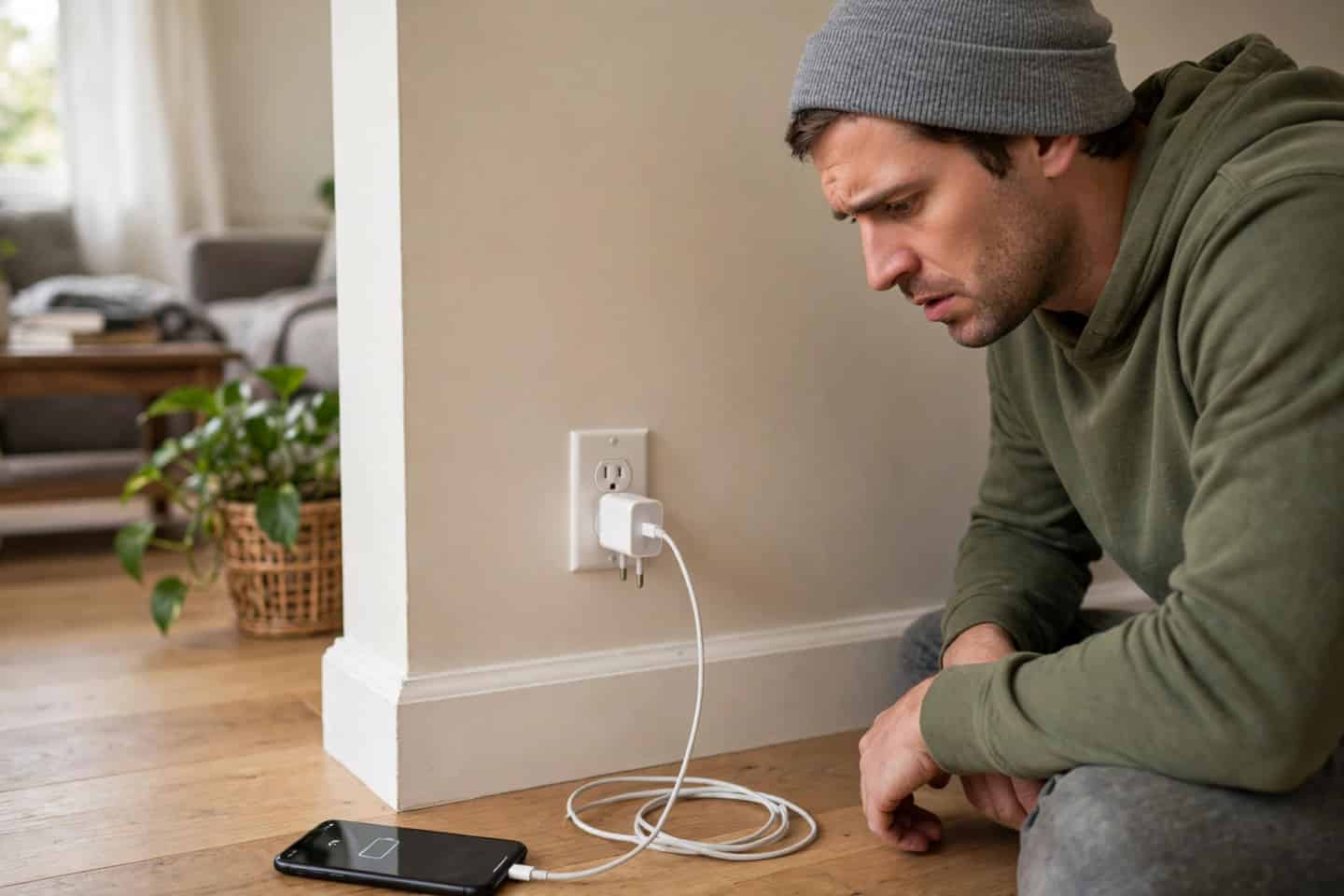
Most dead outlets are caused by a tripped GFCI somewhere on the same circuit, a tripped breaker, or a loose connection in an outlet upstream. Check for a GFCI in nearby bathrooms, kitchen, garage or outdoors and press RESET before assuming the outlet itself has failed.Electrical components involved: Outlet Not Working
- GFCI receptacle
- Protects itself and every outlet wired after it on the circuit; when it trips, downstream outlets in other rooms can go dead with no visible sign.
- Circuit breaker
- Opens the whole branch circuit on overload or fault, cutting power to every outlet and light it feeds.
- Branch circuit wiring
- Carries power from outlet to outlet in a chain, so one failed connection can kill everything beyond it.
- Receptacle terminals and back-stab connections
- Where wires attach to the outlet; push-in back-stab connections can loosen over time and interrupt power.
- Neutral conductor
- Completes the circuit; a loose or broken neutral leaves an outlet dead or erratic even when the hot wire is energized.
- Wall switch
- In many rooms one half of a receptacle is switched to control a lamp, so a switched-off outlet can look dead.
Common causes
- Tripped GFCI upstream
- Tripped breaker
- Loose back-stab connection
- Failed receptacle
- Switched outlet controlled by a wall switch
What you can safely check
- 1Press RESET on nearby GFCI outlets
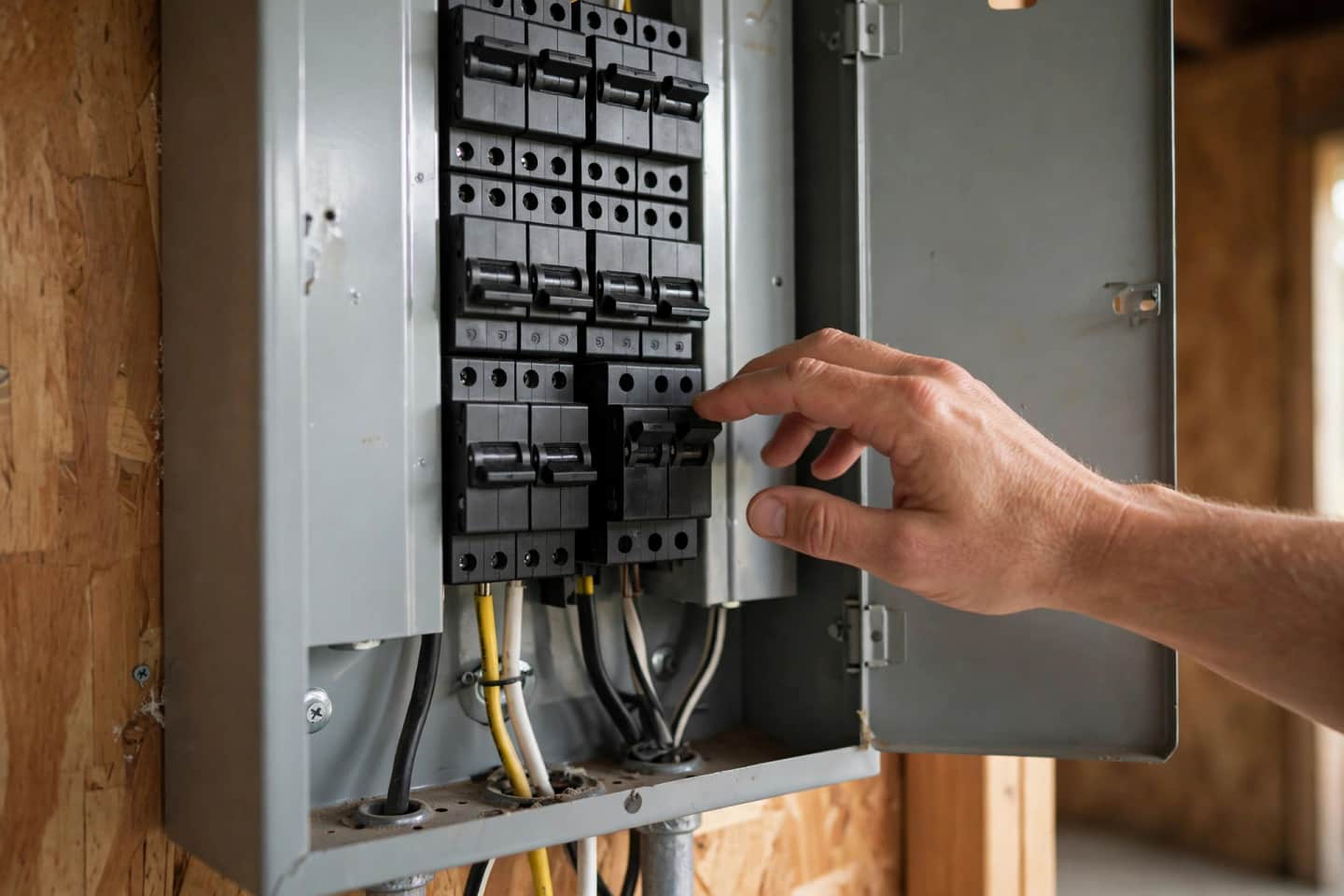
- 2Check the panel for a tripped breaker
- 3Try nearby wall switches
Stop and call an electrician when
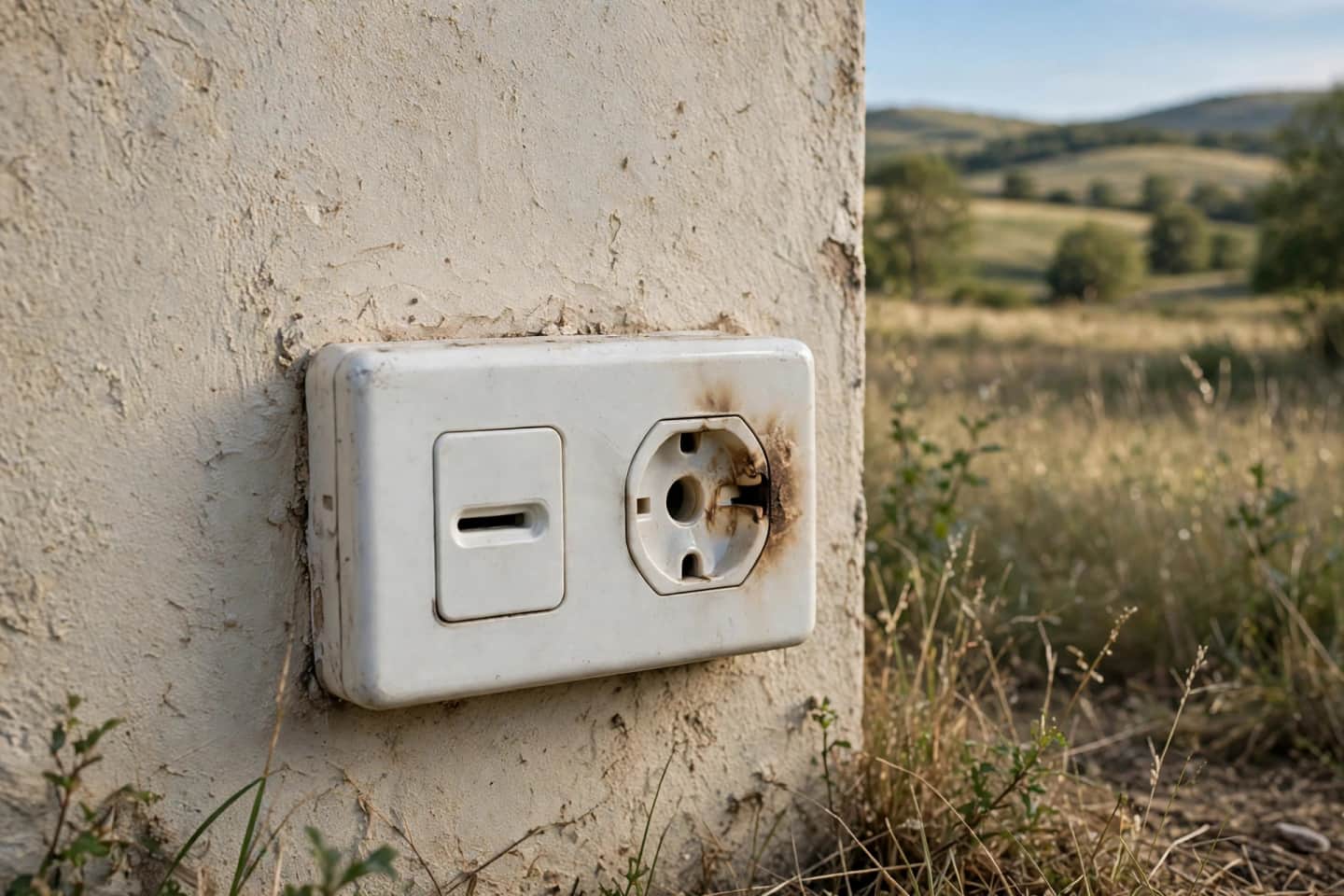
- The outlet is warm, discolored or smells burnt
- Several outlets died at once without a tripped breaker
What you are seeing, what it likely means, what to do
| What you notice | Likely meaning | Next step |
|---|---|---|
| Outlet dead, a GFCI elsewhere shows tripped | GFCI is protecting this outlet downstream | Press RESET; call if it will not stay reset |
| Breaker handle sits in the middle position | Breaker tripped on overload or fault | Reset once if the panel is safe; call if it trips again |
| Breaker trips the instant you reset it | Likely a short or ground fault | Leave it off and call an electrician |
| Only one half works, or it works with a wall switch | Switched receptacle | Use the switch; no repair needed |
| Several outlets dead, nothing tripped | Loose connection or open neutral upstream | Call an electrician to trace the circuit |
| Outlet warm, discolored or smells burnt | Overheating connection and fire risk | Stop using it, cut the breaker if safe, call now (911 if smoke) |
Tripped GFCI Upstream: The Most Common Cause
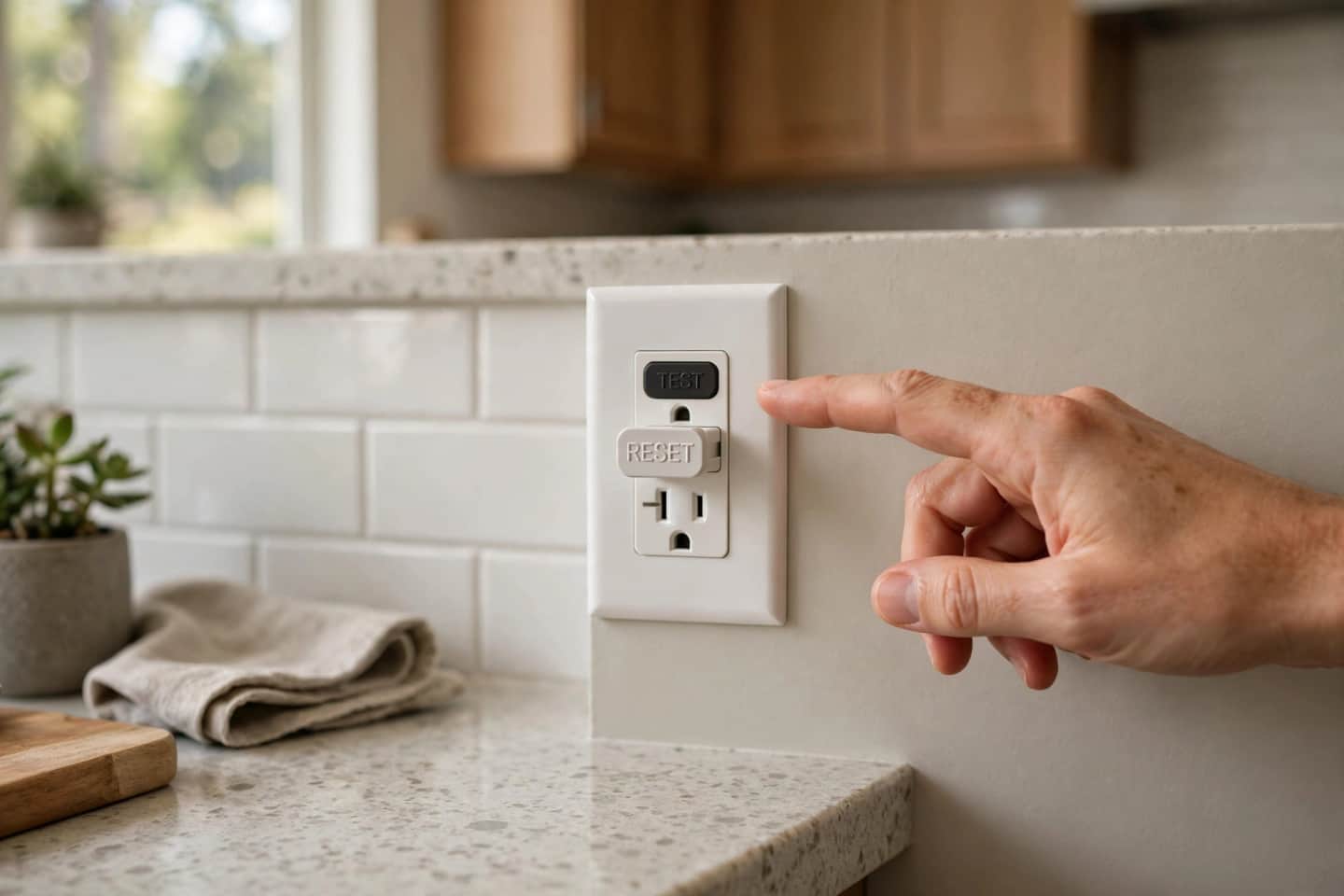
GFCI receptacles in bathrooms, kitchens, garages, basements and outdoors are often wired to protect outlets further along the same circuit. When the GFCI trips, it cuts power downstream too, so a bedroom or patio outlet can go dead while the tripping device sits in a bathroom or garage. Look for any outlet with TEST and RESET buttons and press RESET firmly. If the dead outlet comes back, the GFCI did its job. If the GFCI trips again right away, something on that circuit is leaking current to ground and should be checked.
Tripped Breaker or Half-Tripped Handle
A tripped breaker often rests in a middle position rather than fully off, which makes it easy to miss. At the panel, look for a handle out of line with the others. Push it firmly to OFF, then back to ON. Only do this if the panel is dry, the area is clear, and there is no heat, buzzing or burning smell; never remove the panel cover. If the breaker trips again immediately, leave it off. That pattern points to a short or ground fault that needs an electrician.
Loose Connections and Worn Back-Stab Terminals
When resets do not help, the cause is often a loose wire in the dead outlet or in the last working outlet before it. Many receptacles use push-in back-stab connections, which can lose grip over years of expansion, contraction and plug use. A loose connection can also create heat, which is why a dead outlet next to a warm, discolored or crackling one is a warning sign. Diagnosing this means opening boxes on the circuit, a job for a licensed electrician rather than a homeowner.
Failed Receptacles and Switched Outlets
Receptacles do wear out. Contacts lose tension, plugs fall out, and internal parts can crack or fail outright. Before assuming failure, flip nearby wall switches: in many living rooms and bedrooms, one half of an outlet is controlled by a switch meant for a lamp. If one half works and the other does not, a switch is the likely explanation. If neither half works and nothing upstream is tripped, a failed receptacle or broken connection is likely.
How an Electrician Diagnoses a Dead Outlet
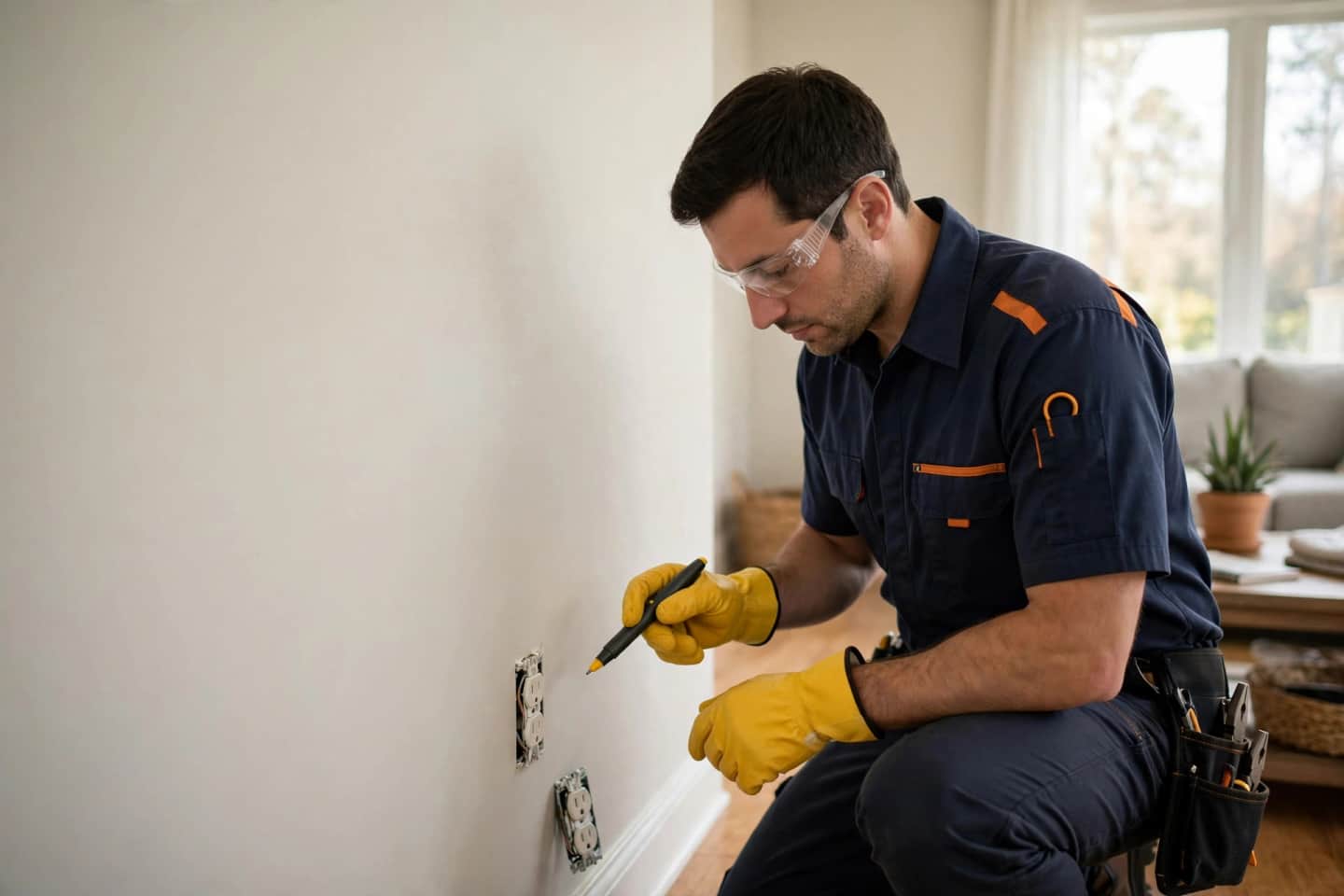
An electrician starts by mapping the circuit: which breaker feeds the outlet, which other outlets and lights share it, and where any GFCI or AFCI protection sits. With a tester they check for voltage between hot, neutral and ground at the dead outlet and at neighboring outlets. A reading of hot-to-ground without hot-to-neutral, for example, suggests an open neutral. They then de-energize the circuit and open boxes to find the loose splice, burned terminal or failed device.
Safety Implications of Ignoring It
A dead outlet is usually a routine repair, but the cause can be a connection that is overheating. Stop and call if you notice warmth at the cover plate, brown or black marks, melted plastic, a burning or fishy smell, buzzing, or sparks. Unplug what you can safely reach, and switch off the breaker if the panel is safe to approach. If you see smoke or fire, leave the home and call 911 first. Avoid running extension cords from other rooms as a long-term workaround.
Repair vs Replacement
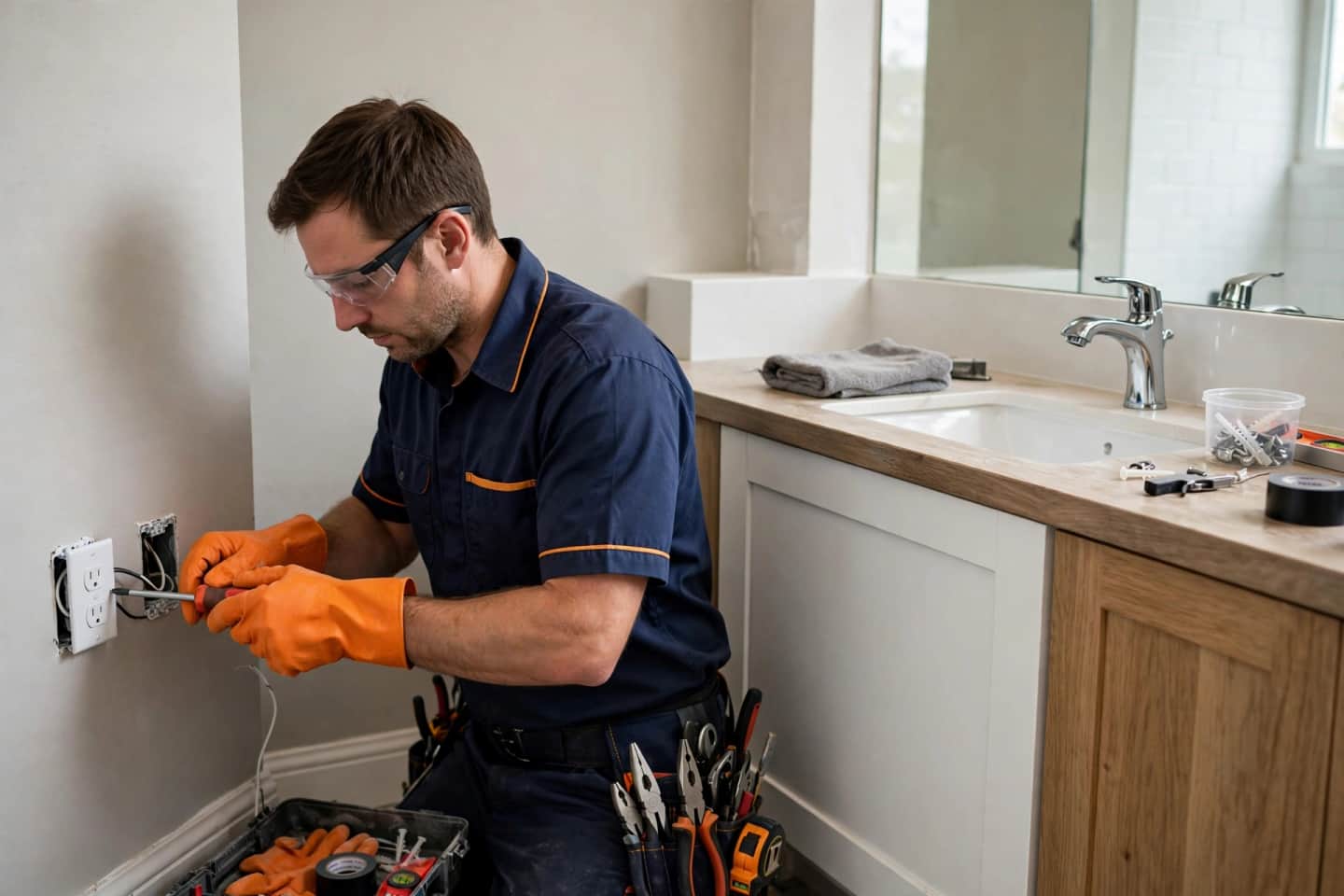
If the problem is a loose connection, the electrician typically remakes it on the screw terminals or with proper splices and reuses a sound receptacle. If the outlet is worn, cracked or heat-damaged, it is replaced, and current code may require GFCI or AFCI protection or a tamper-resistant receptacle in that location. Damaged wire ends are trimmed back to clean copper. Aluminum branch wiring, ungrounded two-prong circuits or knob-and-tube wiring may call for a broader conversation about upgrades.
What Happens During the Service Call
When you call (855) 679-2483, you are connected with an independent licensed electrician who serves your area. Tell them which outlets are dead, whether anything tripped, whether you already pressed GFCI resets, and whether you noticed heat or smells. On site they trace the circuit, test, isolate the fault and explain what they found before making the repair. Pricing and scheduling are set by the electrician, so ask them directly when you call.
Preventing Dead Outlets and Related Problems
Press TEST and RESET on GFCI outlets periodically so you know they work and where they are. Avoid heavy loads such as space heaters on worn outlets, and replace receptacles that no longer grip plugs firmly. Do not daisy-chain power strips. If outlets in part of the house die at once, compare with power outage in part of the house; frequent trips point to breaker keeps tripping; and any heat or marks point to scorched outlet guidance.
Questions people ask about outlet not working
Why did my outlet suddenly stop working?
Most dead outlets are caused by a tripped GFCI somewhere on the same circuit, a tripped breaker, or a loose connection in an outlet upstream. Check for a GFCI in nearby bathrooms, kitchen, garage or outdoors and press RESET before assuming the outlet itself has failed.
Why did my outlet suddenly stop working?
Most often a GFCI outlet somewhere else on the circuit has tripped, or a breaker has opened. Check bathrooms, the kitchen, garage and outdoor outlets for a RESET button, then check the panel. If neither restores power, a loose connection in this outlet or one upstream is the likely cause, and an electrician should trace it.
Who do I call if an outlet is not working?
Call a licensed electrician once the basic resets fail. You can call (855) 679-2483 to be connected with an independent licensed electrician in your area. Mention which outlets are dead, what you already reset, and whether you noticed any heat, buzzing or burning smell so they can prioritize the visit.
Is a dead outlet dangerous?
A dead outlet by itself is usually not an emergency, but the cause can be a loose connection that heats up. If the outlet or cover plate is warm, discolored, smells burnt or crackles, stop using it, switch off its breaker if the panel is safe to reach, and call an electrician. For smoke or fire, leave and call 911.
Why are several outlets dead but no breaker is tripped?
That usually means a tripped GFCI upstream or a failed connection in the last working outlet in the chain. Outlets are wired in series, so one loose wire or open neutral can kill everything after it. If no GFCI reset helps, an electrician needs to open and test the boxes on that circuit.
Can I just replace the outlet myself?
Replacing the receptacle often does not fix it, because the fault is frequently upstream. Opening outlet boxes also means working near wiring that may still be energized from another circuit. A licensed electrician can confirm the real cause, make secure connections and install the protection current code requires for that location.
Editorial note: general safety information, not a substitute for an on-site evaluation by a licensed electrician.