Maryland packs Baltimore rowhouses, Washington suburbs, Chesapeake Bay waterfront and Appalachian mountain towns into one small state. Derechos, tropical storms and flash floods regularly knock out power or damage homes, and Montgomery County and the state have set some of the country’s most ambitious building electrification policies.
The hazards that drive the most electrical calls here, and how homeowners prepare for them.
Hurricanes and tropical storms
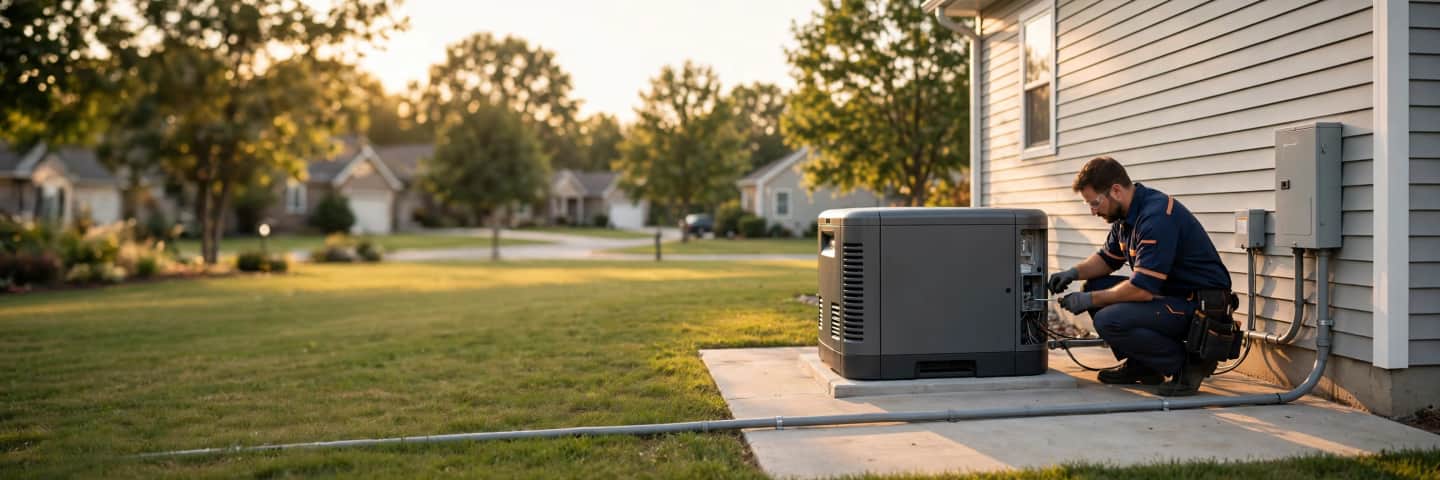
Long outages make backup power a priority. Standby generators with automatic transfer switches, or portable generators connected through a listed interlock, keep refrigeration, sump pumps and medical equipment running. Any equipment that was submerged must be inspected before re-energizing.
Heavy snow and wind cause outages when heating demand is highest. Generators, dedicated circuits for space heaters, and heat-tape circuits with GFCI protection are common winter projects. Avoid running heaters through extension cords or power strips.
Electrical equipment that has been underwater — panels, outlets, breakers, appliances — generally must be replaced, not dried and reused. Do not re-energize a flooded home until an electrician has inspected it.
Baltimore Gas and Electric serves Baltimore City and much of central Maryland. Pepco serves Montgomery and Prince George’s counties. Delmarva Power serves much of the Eastern Shore, Potomac Edison serves Western Maryland and parts of Frederick County, and the Southern Maryland Electric Cooperative serves Charles, St. Mary’s and parts of Calvert and Prince George’s counties. Choptank Electric Cooperative and several municipal utilities serve other areas.
Maryland has retail electric choice, but your distribution utility owns the wires and meter and sets the rules for service upgrades and reconnection.
Licensing and permits
Maryland licenses master electricians statewide through the State Board of Master Electricians, and counties and Baltimore City also license electricians and register contractors. Requirements differ by jurisdiction, so ask your electrician which licenses they hold for your county.
Counties and Baltimore City issue electrical permits and inspect work, often through county inspection staff or approved third-party agencies. Panel upgrades, new circuits, generators, EV chargers and solar require permits.
Baltimore rowhouses
Baltimore has tens of thousands of rowhouses, many built between the 1880s and 1930s, from Federal Hill and Canton to Hampden and Charles Village. Many are covered in Formstone and have narrow basements where the panel and meter sit. Knob-and-tube wiring, fuse panels, 60-amp services and decades of add-on wiring are common, and vacant rowhouses returning to use usually need complete rewiring.
Shared party walls mean electrical problems or fires in one house can affect neighbors, so safe wiring matters for the whole block.
Aluminum wiring in the suburbs
Montgomery and Prince George’s counties, Howard County and the Baltimore suburbs have many townhouses and single-family homes built in the late 1960s and early 1970s, a period when aluminum branch wiring was common. Aluminum connections can loosen and overheat at outlets, switches and splices not rated for it. Repairs involve pigtailing with connectors listed for aluminum-to-copper connections or replacing circuits.
Derechos and summer storms
The June 2012 derecho swept across Maryland with hurricane-force winds during a heat wave, knocking out power to well over a million customers, many for a week. Summer thunderstorms regularly bring down trees on lines in wooded suburbs. Service drops and masts damaged by falling limbs must be repaired by an electrician before reconnection.
Flash floods and Ellicott City
Historic Ellicott City was devastated by flash floods in July 2016 and again in May 2018, when torrents of water tore through Main Street. Flash flooding affects stream valleys across central Maryland. Electrical equipment that has been underwater must be replaced, and raising panels and equipment during renovation reduces damage.
The Chesapeake and coastal flooding
Hurricane Isabel in 2003 pushed a record storm surge up the Chesapeake Bay, flooding Fells Point, Annapolis and waterfront communities. Annapolis and other bay towns now see frequent tidal flooding. Salt air corrodes meter bases, disconnects and outdoor outlets, and waterfront homes with piers and boat lifts need ground-fault protection and wet-location wiring.
Electrification in Maryland
Montgomery County passed a law in 2022 requiring most new construction to be all-electric, and the state has adopted building energy performance standards for large buildings. Heat pumps are already common across Maryland, and EV ownership is high in the Washington suburbs.
A load calculation decides whether an older 100- or 150-amp service can carry a heat pump, heat pump water heater and EV charger. In townhouse communities, panel space and HOA rules often shape the plan.
Heat pumps and backup heat
Many Maryland homes heat with heat pumps that rely on electric backup strips in cold snaps. Those strips draw large currents, so their breakers, wiring and connections should be checked, especially in older homes. Cold-climate heat pumps reduce reliance on backup heat.
Western Maryland
Garrett and Allegany counties in Western Maryland get heavy snow and some of the coldest weather in the Mid-Atlantic. Wooded mountain roads mean longer outages, and many homes rely on wells. Backup power for heat and well pumps is especially valuable, and vacation homes around Deep Creek Lake need dock wiring and winterization checks.
Townhouses and condominiums
Maryland’s suburbs have large numbers of townhouses and condominiums, often with grouped meters and limited panel space. EV chargers in shared garages require association approval and a billing plan. Planning approvals early keeps projects on schedule.
Regional differences
Baltimore focuses on rowhouse rewiring and vacant-home rehabilitation. The Washington suburbs focus on aluminum wiring, townhouses, electrification and EV charging. Annapolis and the bay face tidal flooding and salt air. The Eastern Shore is rural and low-lying. Southern Maryland is served largely by a cooperative. Western Maryland is mountainous and snowy.
Common electrical calls in Maryland
Frequent requests include rowhouse rewiring, aluminum wiring repairs, panel upgrades for heat pumps and EV chargers, generator and interlock installations, storm repairs, surge protection and flood-damaged equipment replacement.
Smoke alarm requirements
Maryland’s smoke alarm law requires that battery-only smoke alarms be replaced with long-life sealed-battery units, and homes with hardwired alarms must keep them hardwired, replacing them at the end of their service life — generally ten years. Renovations can trigger requirements for interconnected alarms. Electricians can replace aging hardwired alarms and add interconnection where required.
Eastern Shore farms and poultry houses
The Eastern Shore is part of the Delmarva poultry industry, and poultry houses depend on fans, heaters, lights and controls running around the clock. Generators with automatic transfer switches are essential, because a long outage can be catastrophic for the flock. Farm wiring in dusty, humid poultry houses needs periodic inspection to prevent fires.
Historic Annapolis and Frederick
Annapolis and Frederick have historic districts with 18th- and 19th-century buildings. Rewiring these homes means working around plaster, masonry and original trim, and exterior changes may need approval from historic preservation commissions. In Annapolis, flood-prone streets near the City Dock add the challenge of keeping electrical equipment above rising tidal water.
Generators in the suburbs
After the 2012 derecho, standby generators became common in Montgomery, Howard and Anne Arundel counties. Natural-gas units with automatic transfer switches run the whole house or essential circuits, while portable generators should be connected through a listed interlock. Counties have setback rules for generator placement, and installation requires permits.
Lightning and surge protection
Maryland summers bring frequent thunderstorms, and surges damage heat pump boards, appliances and electronics. A whole-home surge protective device at the panel is an inexpensive layer of protection, easy to add during a panel upgrade.
Basements and sump pumps
Many Maryland homes, especially in Baltimore County, Howard County and the Washington suburbs, have finished basements with sump pumps. Because storms bring both heavy rain and outages, a battery backup pump or generator circuit is one of the most practical upgrades, and panels or water heaters in damp basements should be checked for corrosion.
EV charging in rowhouse neighborhoods
In Baltimore rowhouse neighborhoods, most residents park on the street, which makes home EV charging difficult without a rear parking pad or garage off an alley. Running cords across public sidewalks is generally not allowed. Homes with rear parking usually need a new circuit run from the basement panel through the yard.
Waterfront homes and piers
Thousands of Maryland homes along the Chesapeake, the Severn, the Magothy and the Eastern Shore rivers have piers, boat lifts and pier lighting. Pier wiring sits in a wet, salty environment, and faults can energize the water around it. Ground-fault protection, correct bonding and corrosion-resistant equipment reduce the risk, and older pier wiring should be checked before boating season.
Working with an electrician in Maryland
Confirm the electrician’s state and county licenses, ask who will pull the permit and inspect the work, and get a written scope. For service upgrades and storm repairs, ask how the electrician will coordinate with BGE, Pepco, Delmarva Power, Potomac Edison, SMECO or your cooperative.
Electrical licensing and permits in Maryland are set by state and local authorities. The electrician confirms what applies to your project.
Services
Most requested in Maryland
Ranked by how many of this state’s climate risks each service addresses.
Connect with an independent licensed electrician near you
Smoke, flames or sparking? Leave the building and call 911 first.
Pronto Electrician is a free referral service. Calls are answered by independent licensed electricians in your area. Pronto Electrician does not perform electrical work, and the electrician you choose sets the price, schedule, permits and warranty.
Free to call · All 50 states + DC
Talk to a licensed electrician in Maryland
Describe the problem and get connected with an independent licensed electrician who serves your area.