Short answer
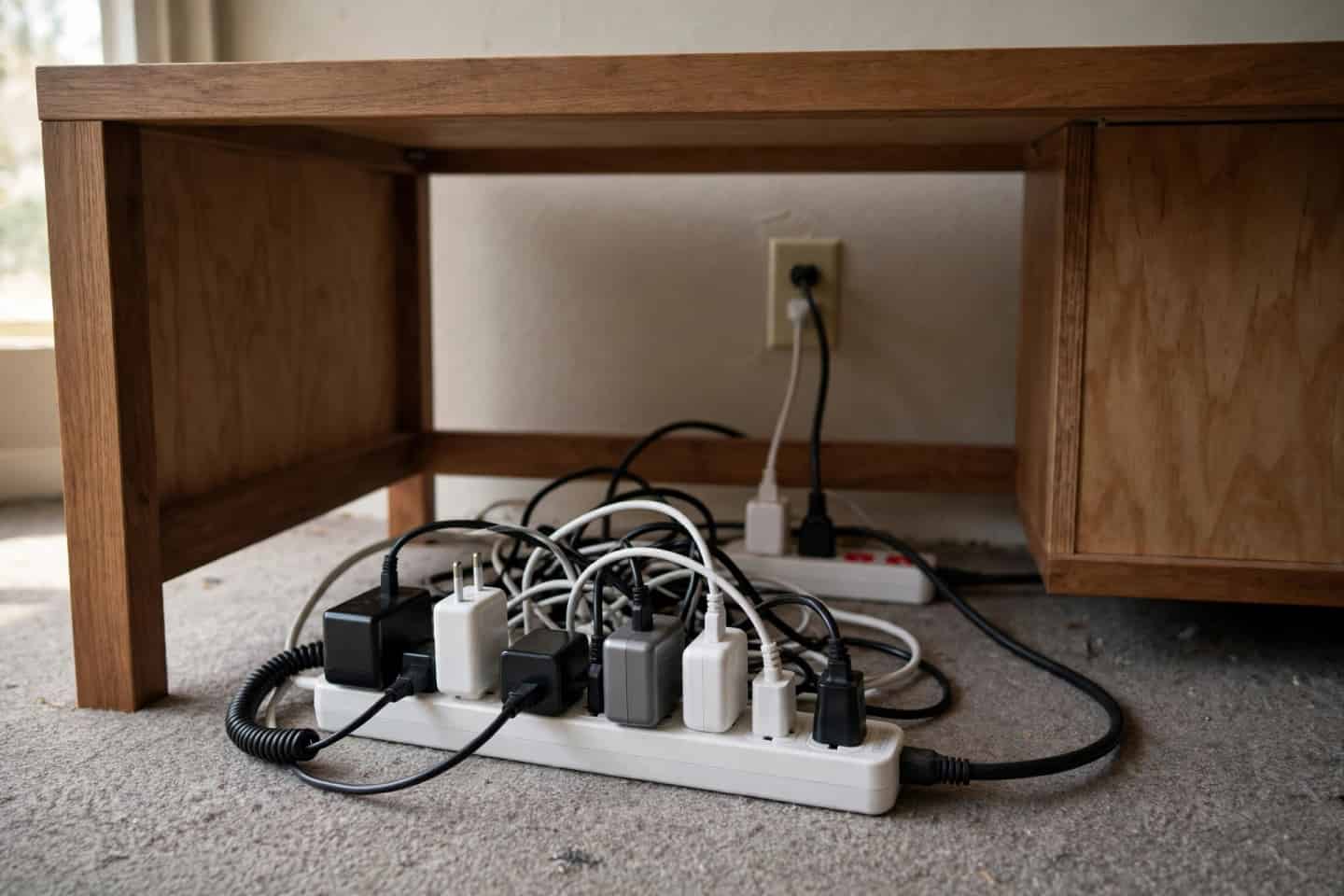
Yes. Daisy-chaining power strips can overload the first strip and the outlet, causing overheating. It is also a sign the room needs more outlets. Use a single strip for low-power electronics and have additional outlets or circuits installed where you need them.Electrical components involved: Overloaded Power Strips
- Power strip (relocatable power tap)
- Spreads one outlet across several plugs but adds no capacity; its cord, switch and internal contacts have their own rating, printed on the label, that chained or high-draw loads can exceed.
- Wall receptacle
- Every load on the strip flows through this one outlet’s contacts. Worn or loose contacts heat up under heavy, continuous draw and can scorch the face or the wiring behind it.
- Branch circuit
- The wiring from the panel that feeds that outlet and usually several others; its total capacity is shared by everything plugged in along it, not just the strip.
- Circuit breaker
- Trips when the whole circuit draws too much current for too long. It protects the building wiring, but it does not watch the temperature of a strip, a cord or a single loose plug.
- Surge suppressor components
- Many strips include parts that absorb voltage spikes; these wear out over time and are not designed to make up for overloading or poor connections.
Common causes
- Too few outlets
- High-draw devices on strips
What you can safely check
- 1Unplug heaters and appliances from strips
- 2Remove chained strips
Stop and call an electrician when
- Strips or plugs feel warm
What you are seeing, what it likely means, what to do
| What you notice | Likely meaning | Next step |
|---|---|---|
| Strip plugged into another strip, nothing feels warm | Overload risk without visible damage yet | Remove the chain and use a single strip; plan for more outlets if you need them |
| Space heater or appliance running on a strip | High continuous draw beyond what strips are meant for | Move it to a wall outlet; call an electrician if the breaker then trips |
| Plug, strip or wall plate feels warm | A connection is overheating under load | Unplug the loads and call (855) 679-2483 to have the outlet checked |
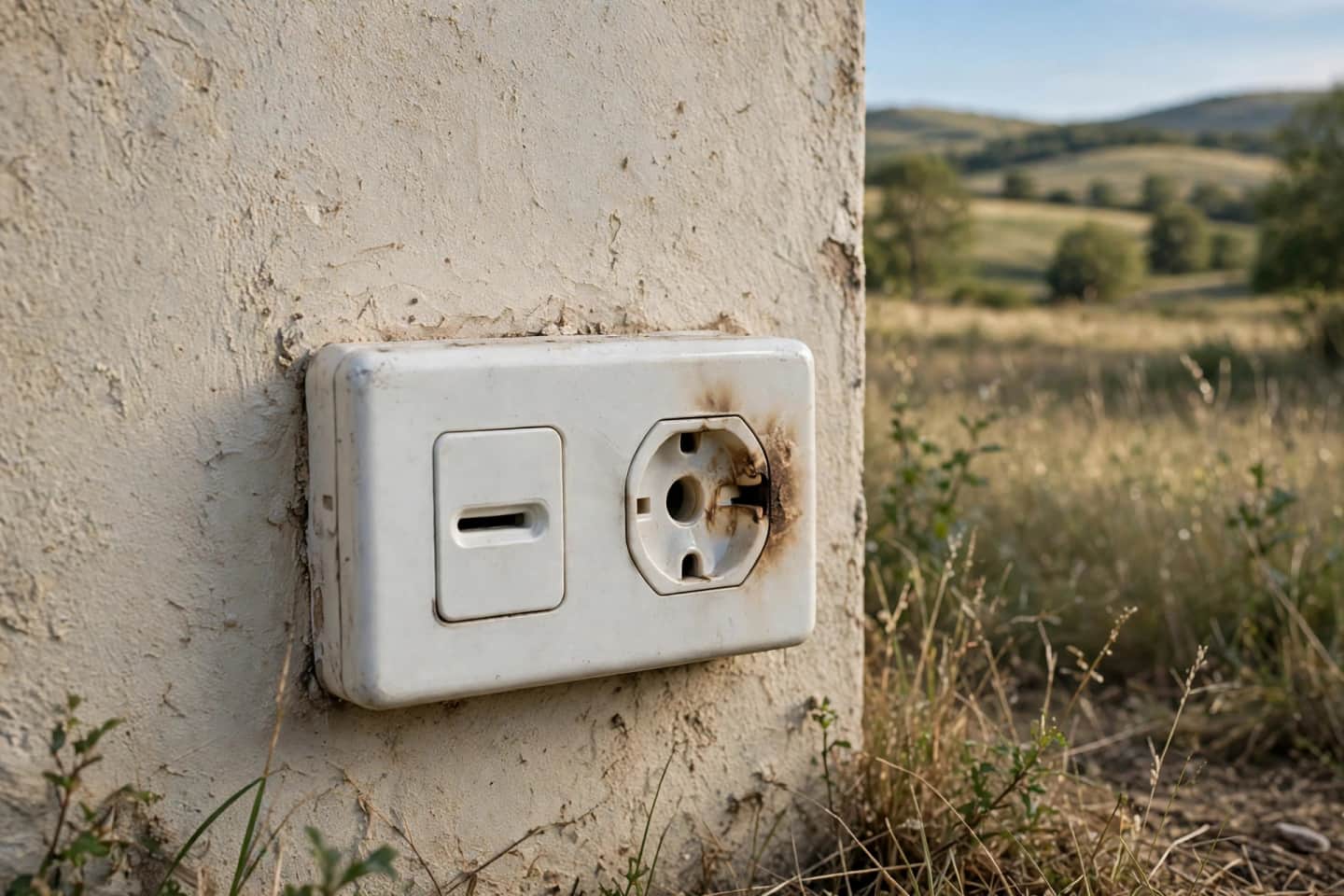
| Melted or brown marks on the plug or outlet | Heat damage at the receptacle contacts or wiring | Stop using the outlet; switch off its circuit if safe and call an electrician |
| Breaker trips when the strip’s devices run together | The circuit is carrying more than it is rated for | Spread loads now and have an electrician add outlets or a dedicated circuit |
| Smoke, sparks or a burning smell | Active overheating and possible fire | Keep clear, switch off the circuit or main only if safe, call 911, then an electrician |
Why chaining power strips overloads the first one
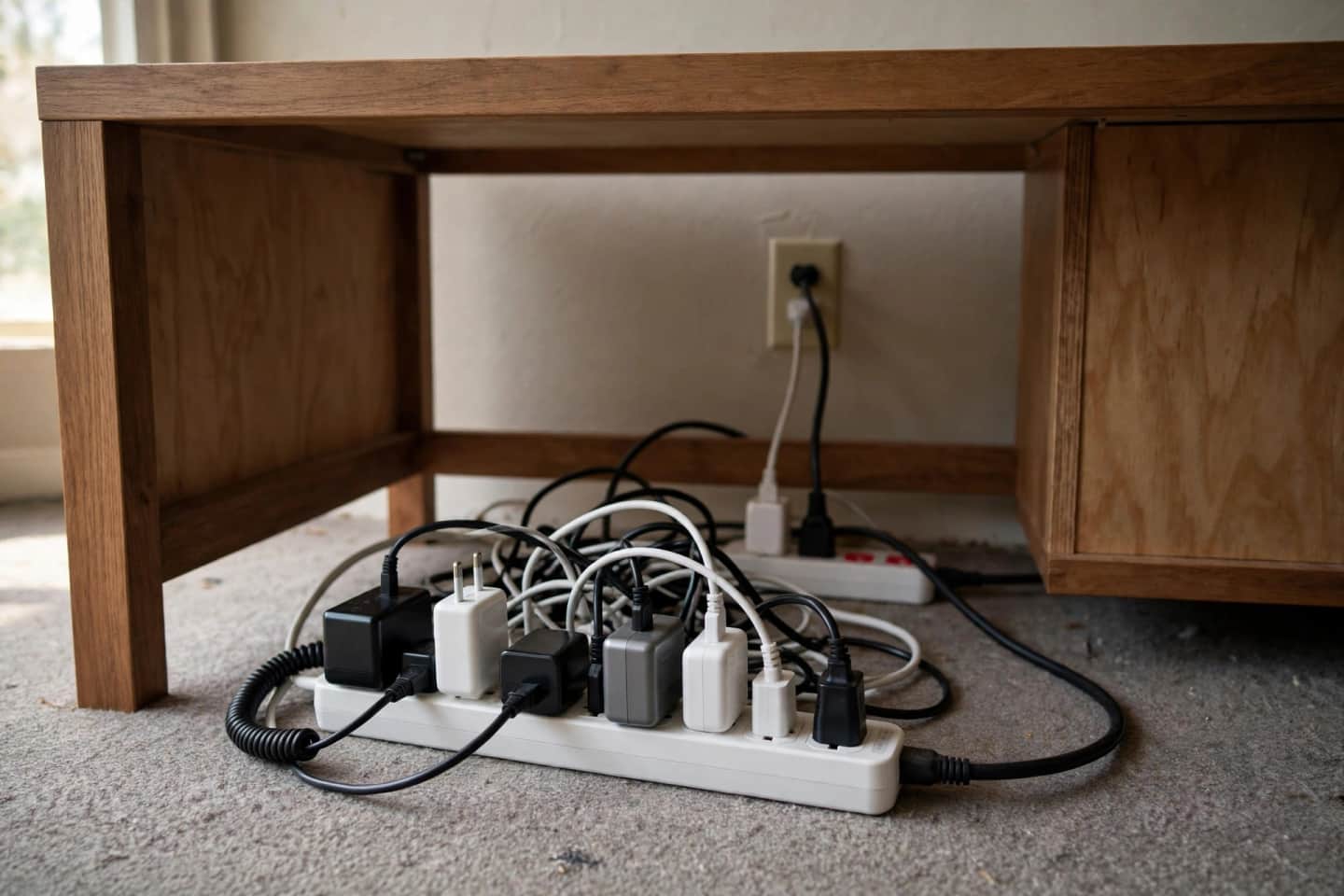
When one strip is plugged into another, everything on the second strip still flows through the first strip’s cord and plug and through the single wall outlet. Adding sockets never adds capacity. A row of chargers may be fine, but a chain that also feeds a printer, a space heater and a mini fridge concentrates far more current at one plug than any part of that chain expects. Heat builds where resistance is highest, usually at the wall plug, the first strip’s contacts or a cheap cord, and it builds quietly until plastic softens or discolors.
High-draw appliances that do not belong on a strip
Devices that make heat or run motors draw the most current: space heaters, portable air conditioners, microwaves, toasters, kettles, hair dryers, refrigerators and window units. Many manufacturers specifically instruct owners to plug these straight into a wall outlet and avoid extension cords and power strips. They also tend to run for long stretches, so the strip never cools down. If one of these is on a strip now, move it to a wall receptacle, and if no outlet is free or the breaker trips once it is moved, the circuit itself may need help.
Warning signs that a strip or outlet is overheating
Touch the strip’s plug and the wall plate with the back of your hand. Warmth, a soft or deformed plug, brown or melted marks, a crackling sound, flickering devices or a hot plastic smell all mean the connection is failing under load. A strip whose switch keeps resetting, or a wall breaker that trips when a heater cycles on, is telling you the same thing. Do not keep using a strip that shows heat damage; unplug the loads from it, unplug it only if the plug is not hot or smoking, and have the outlet behind it checked.
Safety: what to do if there is smoke, sparking or a burning smell
If a strip or outlet is smoking, sparking or smells like burning, keep people and pets back and do not touch the plug. If you can safely reach the electrical panel, switch off that circuit or the main; if there is fire or visible smoke, leave and call 911. Once the area is safe, call (855) 679-2483 to be connected with a licensed electrician before using that outlet again. Never remove the outlet cover or panel cover yourself, since damage behind the plate may be energized.
How an electrician diagnoses an overloaded circuit
An electrician starts by asking what is plugged in and where, then traces which outlets and rooms share the same breaker. With power safely controlled, they inspect the receptacle for loose terminals, backstabbed connections and heat damage, and check the circuit for discoloration at the breaker. A clamp meter shows how much current the circuit actually carries with your normal devices running. That reading, compared with the breaker and wire size, shows whether the problem is a bad connection, too many loads on one circuit, or simply too few outlets where you live and work.
Repair or replace: outlets, strips and new circuits
A damaged or heat-marked strip should be thrown away, not repaired. A scorched or loose receptacle is replaced, and the wire ends behind it are trimmed back to clean copper if they were overheated. If the circuit is simply carrying too much, the right fix is more capacity where it is needed: additional receptacles on a lighter circuit, or a dedicated circuit for a heater, office or entertainment setup. In older homes with few outlets per room, an electrician may recommend broader rewiring, which is the problem the strips were quietly papering over.
What happens during the service call
When you call, you are connected with an independent licensed electrician who will ask about the room, the devices and any warning signs. On site, they look at the affected outlet and the circuit, explain what they found and walk through options such as replacing a receptacle, adding outlets or running a new circuit. Pricing and scheduling come from the electrician directly. Have a short list of what you normally plug in at that spot; it speeds up the load check considerably.
Preventing power strip overloads
Use one strip per wall outlet and never plug a strip into another strip or an extension cord. Choose strips that carry a recognized safety listing, and check the rating on the label against what you connect. Keep strips out from under rugs and furniture where heat cannot escape, and replace any strip with a cracked case, loose sockets or a worn cord. Reserve strips for low-draw electronics such as computers, chargers and lamps, and give heating and cooling appliances their own wall outlet or circuit.
Related electrical problems
Overloaded strips often show up alongside a breaker that keeps tripping, a scorched outlet or a burning smell from an outlet, because they share the same root cause: more current than one connection can comfortably carry. If your home has many two-prong outlets, the shortage of grounded receptacles may be why strips and adapters multiplied in the first place, and adding grounded outlets solves both problems together.
Questions people ask about overloaded power strips
Is it dangerous to plug a power strip into another power strip?
Yes. Daisy-chaining power strips can overload the first strip and the outlet, causing overheating. It is also a sign the room needs more outlets. Use a single strip for low-power electronics and have additional outlets or circuits installed where you need them.
Is it dangerous to plug a power strip into another power strip?
Yes, it is a real fire risk. Every device on the second strip still draws through the first strip and the single wall outlet, so heat builds at those plugs and contacts. Unplug the chain, use one strip per outlet, and if you keep running out of sockets, call (855) 679-2483 to talk with a licensed electrician about adding outlets.
Can I plug a space heater into a power strip?
No, plug a space heater directly into a wall outlet. Heaters draw heavy current for long periods, and many manufacturers warn against power strips and extension cords for that reason. If the breaker trips or the outlet gets warm once the heater is on the wall, the circuit may need a dedicated line installed by an electrician.
Why is my power strip warm to the touch?
A warm strip usually means it is carrying too much load or has a worn internal connection. Unplug the high-draw devices, let it cool, and replace the strip if it shows any discoloration. If the wall plug or outlet plate is warm too, the receptacle may be failing, and an electrician should inspect it before you use it again.
Who do I call if I don’t have enough outlets in a room?
Call a licensed electrician, who can add receptacles or a new circuit so you no longer rely on strips. You can reach one by calling (855) 679-2483; you’ll be connected with an independent licensed electrician who can look at the room, check the existing circuit and explain your options.
Does a surge protector stop an overload?
No, surge protection and overload protection are different jobs. Surge components absorb brief voltage spikes, while overload is too much current over time. Some strips have a small built-in breaker, but it protects the strip, not your wall wiring or a loose outlet. The fix for overload is reducing load or adding capacity.
What should I do if my power strip is sparking or smoking?
Keep away from it and do not pull the plug. If you can reach the panel safely, switch off that circuit or the main; if there is smoke or fire, leave and call 911. After it is safe, call an electrician to inspect the outlet and wiring before anything is plugged back in.
Editorial note: general safety information, not a substitute for an on-site evaluation by a licensed electrician.