Ohio pairs some of the Midwest’s oldest housing — in Cleveland, Cincinnati, Toledo, Dayton and Youngstown — with fast-growing suburbs around Columbus. Severe thunderstorms, derechos and tornadoes cause many of the state’s largest outages, and long winters make furnace power and sump pumps a priority. Electrical contractors are licensed by the state, and local building departments handle permits.
The hazards that drive the most electrical calls here, and how homeowners prepare for them.
Winter storms and cold
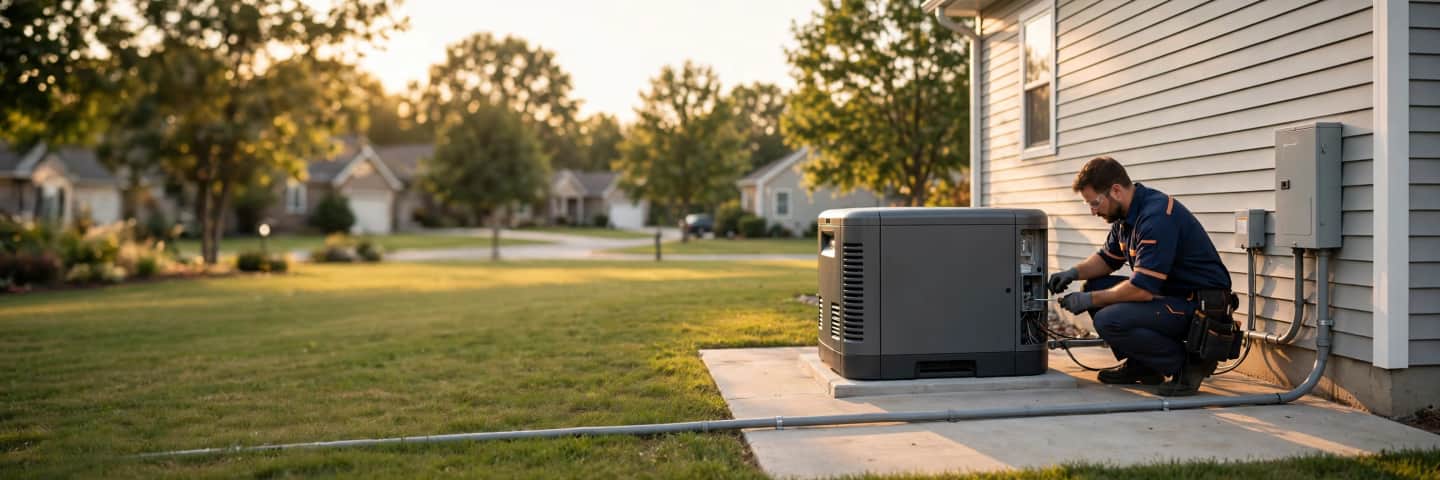
Heavy snow and wind cause outages when heating demand is highest. Generators, dedicated circuits for space heaters, and heat-tape circuits with GFCI protection are common winter projects. Avoid running heaters through extension cords or power strips.
Storm damage can tear service masts and meter bases from the home. After a storm, look for a leaning mast or pulled service cable and keep clear — the utility side stays energized. Repairs to the mast and meter base are usually the homeowner’s responsibility.
Ice accumulation brings down lines and trees across wide areas, often for days. Backup power planning matters, and overhead service drops near trees should be checked for damage after ice events.
AEP Ohio serves Columbus and large parts of central, southern and eastern Ohio. FirstEnergy’s Ohio companies — Ohio Edison, The Illuminating Company and Toledo Edison — serve the northeast, the Cleveland area and Toledo. Duke Energy Ohio serves the Cincinnati area, and AES Ohio serves the Dayton region. Cleveland Public Power and many other municipal systems serve individual cities, and electric cooperatives serve much of the rural state.
Ohio has retail electric choice, so many customers buy generation from a competitive supplier or through community aggregation, but the distribution utility owns the wires and meter and sets the rules for service upgrades and reconnection.
Licensing and permits
Electrical contractors in Ohio are licensed by the Ohio Construction Industry Licensing Board, which requires experience, an exam and insurance. Some cities also register contractors or license individual electricians. You can verify a contractor’s state license online.
Residential building work follows the Residential Code of Ohio, and electrical work follows the adopted edition of the National Electrical Code. Permits and inspections are handled by local building departments certified by the state, or by the county where a city does not run its own department. Panel upgrades, new circuits, generators and EV chargers generally need a permit.
Older housing in Ohio’s cities
Cleveland, Cincinnati, Toledo, Dayton, Akron, Youngstown and Canton grew rapidly between 1890 and 1930, and much of that housing remains. Two-and-a-half-story frame houses, doubles and brick homes often contain knob-and-tube wiring, fuse panels, 60-amp services and decades of add-on circuits. Balloon-framed walls in older houses let wiring be fished between floors but also allow fire to travel, which makes safe wiring especially important.
Columbus and its suburbs, by contrast, have grown quickly in recent decades, with large areas of newer construction built for heavier loads.
Derechos, windstorms and tornadoes
Ohio’s worst outages often come from wind rather than snow. In September 2008, the remnants of Hurricane Ike swept across the state with hurricane-force gusts and knocked out power to millions. The June 2012 derecho caused widespread outages during a heat wave, and the Memorial Day 2019 tornado outbreak struck the Dayton area hard.
Storms pull service drops off houses, break masts and damage meter bases. The utility reconnects its line, but repairs to the equipment on the house must be made by an electrician first, and some jurisdictions require inspection before reconnection.
Winter, sump pumps and basements
Most Ohio homes have basements, and many rely on sump pumps that must run during spring thaws and heavy rain — exactly when storms also knock out power. Battery backup pumps or generator circuits keep basements dry. Furnaces need electricity for blowers and controls, so backup power plans should include the furnace circuit.
Ice storms and heavy snow bring down limbs on overhead service drops in wooded neighborhoods. Dedicated, GFCI-protected circuits for heat tape and space heaters are safer than extension cords during cold snaps.
Growing demand and electrification
Central Ohio has seen rapid growth in manufacturing and data centers, which has made grid planning a major issue for the region. At the household level, heat pumps, heat pump water heaters and EV chargers are becoming common, especially in Columbus, Cincinnati and Cleveland suburbs. A load calculation decides whether an older 100-amp service can carry them or needs an upgrade.
River towns and flooding
Communities along the Ohio River and its tributaries, and along rivers flowing to Lake Erie, have a long history of flooding. Electrical equipment that has been underwater should be replaced, and raising panels and outlets during renovation reduces damage in future floods.
Regional differences
Northeast Ohio deals with lake-effect snow, old housing and FirstEnergy service. Central Ohio is growing quickly, with newer homes and EV adoption. Southwest Ohio around Cincinnati and Dayton has hillside neighborhoods, older brick housing and Ohio River flooding. Northwest Ohio around Toledo is flatter, agricultural and exposed to wind. Southeast Ohio is hilly, rural and wooded, with cooperatives and longer outage restoration times.
Doubles, duplexes and rental properties
Ohio cities have large numbers of two-family homes — side-by-side doubles in Columbus and Cincinnati, and up-and-down duplexes in Cleveland, Akron and Toledo. Each unit usually has its own meter and panel, while basements, laundry and exterior lighting may be shared. Landlords commonly need panel replacements, smoke alarm updates, GFCI protection and correction of tenant-installed wiring. Some cities require rental registration and inspections that check basic electrical safety.
Cincinnati’s hillsides and historic rowhouses
Cincinnati’s neighborhoods climb steep hills above the Ohio River, and areas like Over-the-Rhine contain one of the largest collections of 19th-century Italianate buildings in the country. Renovating these brick rowhouses and walk-ups often means replacing everything from the service entrance to the last outlet, while preserving plaster and woodwork. Hillside homes elsewhere in the city face long overhead service runs and masts exposed to wind and falling limbs.
EVs, solar and newer suburbs
EV ownership is growing fastest in the Columbus, Cincinnati and Cleveland suburbs, where attached garages make home charging straightforward. The usual limit is panel capacity in homes built before the 1990s. Rooftop solar is expanding as well, and each utility sets its own interconnection process. Newer subdivisions around Columbus are often built with 200-amp services that can handle an EV charger without an upgrade.
Surge protection and summer storms
Ohio’s summer thunderstorms bring frequent lightning and power fluctuations as lines are damaged and restored. Surges damage furnace and air conditioning control boards, sump pump controllers and electronics. A whole-home surge protective device at the panel is an inexpensive layer of protection, especially when installed alongside other panel work.
Appalachian Ohio and long outages
The hilly, heavily wooded counties of southeast Ohio, from Athens to Marietta and along the Ohio River, are largely served by cooperatives and rural lines that run through forest. Ice storms and summer windstorms bring down trees across those lines, and restoration can take days. Homes here often depend on wells and propane or wood heat, so a generator sized for the well pump, furnace blower and refrigeration, connected through a transfer switch or interlock, is one of the most valuable upgrades.
Point-of-sale inspections
A number of Ohio municipalities, particularly suburbs in Cuyahoga County, require a point-of-sale inspection before a home can change hands. Electrical deficiencies such as missing GFCI protection, open junction boxes, ungrounded outlets, damaged service equipment and improper basement wiring are frequent findings, and they must be corrected or escrowed before or after closing. Sellers often schedule an electrician early so repairs do not delay the sale.
Lake Erie and the snow belt
Communities east of Cleveland in Lake, Geauga and Ashtabula counties sit in a lake-effect snow belt that can bury homes in heavy snow, adding weight to service drops and masts and bringing down limbs. Lakefront cottages and seasonal homes need wiring suited to damp conditions and attention when they are opened and closed each year. Along the shoreline, wind exposure makes secure masts and weatherheads especially important.
Common electrical calls in Ohio
Frequent requests include replacing fuse panels and small services, rewiring older homes during renovation, backup power for sump pumps and furnaces, storm repairs to service masts and meter bases, surge protection, and panel upgrades for EV chargers and heat pumps.
Working with an electrician in Ohio
Confirm the contractor’s OCILB license and any local registration, ask who will pull the permit from your city or county building department, and get a written scope. For service upgrades and storm repairs, ask how the electrician will coordinate with AEP Ohio, FirstEnergy, Duke Energy Ohio, AES Ohio or your municipal utility or cooperative.
Electrical licensing and permits in Ohio are set by state and local authorities. The electrician confirms what applies to your project.
Services
Most requested in Ohio
Ranked by how many of this state’s climate risks each service addresses.
Connect with an independent licensed electrician near you
Smoke, flames or sparking? Leave the building and call 911 first.
Pronto Electrician is a free referral service. Calls are answered by independent licensed electricians in your area. Pronto Electrician does not perform electrical work, and the electrician you choose sets the price, schedule, permits and warranty.
Free to call · All 50 states + DC
Talk to a licensed electrician in Ohio
Describe the problem and get connected with an independent licensed electrician who serves your area.