Short answer
Flickering in a single fixture is usually a loose bulb, a bad dimmer match, or a failing fixture. Flickering across many rooms, or lights that brighten and dim when large appliances run, can point to a loose service connection or neutral problem, which needs an electrician promptly.Electrical components involved: Flickering Lights
- Bulb and lamp socket
- The most common source of single-fixture flicker: a loose bulb, a worn socket contact or an LED bulb whose driver is struggling.
- Dimmer switch
- Older dimmers designed for incandescent loads can make LED bulbs flicker, strobe or buzz, especially at low settings.
- Splices and device terminals
- Wire nuts, back-stab connections and switch terminals that loosen over time create intermittent contact and heat.
- Branch circuit
- A circuit shared with motors or heavy appliances can sag in voltage when those loads start, producing a brief dip in the lights.
- Neutral conductor
- A loose or corroded neutral at the panel, meter or service drop lets voltage swing between the two halves of the panel, so some lights dim while others brighten.
- Service entrance and panel
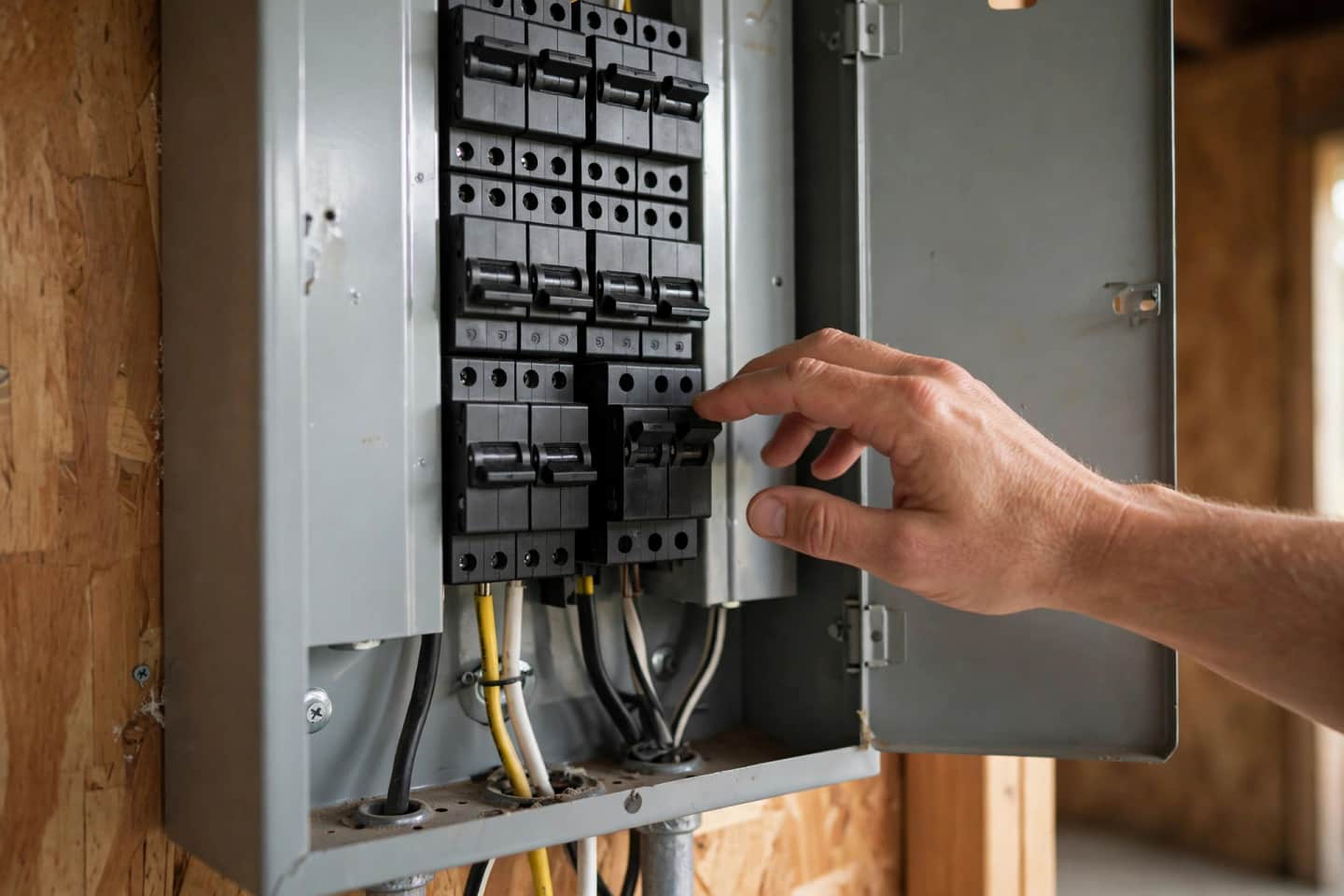
- Main lugs, the meter connection and the utility drop carry the whole house; a fault here affects lights throughout the home.
Common causes
- Loose or incompatible LED bulbs
- Dimmers not rated for LED loads
- Loose connections in boxes
- Voltage drop from large appliances on shared circuits
- Loose neutral at the panel or service
What you can safely check
- 1Tighten or swap the bulb
- 2Check whether it happens only on a dimmer
- 3Notice if it coincides with HVAC, dryer or other big loads
Stop and call an electrician when
- Many rooms flicker at once
- Lights get brighter than normal
- Flicker comes with buzzing or a burning smell
What you are seeing, what it likely means, what to do
| What you notice | Likely meaning | Next step |
|---|---|---|
| Only one fixture flickers | Likely a loose or failing bulb, socket or fixture | Turn it off, let the bulb cool, reseat or replace it; call if it continues |
| Flicker only on a dimmer with LED bulbs | Likely a dimmer and LED compatibility mismatch | Confirm bulbs are dimmable; have an LED-rated dimmer installed |
| Lights dip briefly when HVAC or a motor starts | Startup current draw; slight dips can be normal | Call if dips are deep, lasting or getting worse |
| Several rooms flicker; some lights get brighter | Possible loose neutral at the panel or service | Unplug sensitive electronics and call an electrician promptly |
| Flicker with buzzing, warmth or burning smell | Loose connection that is arcing or overheating | Switch off the circuit if safe, call 911 for smoke or fire, then an electrician |
One fixture flickering: bulbs, sockets and fixture parts
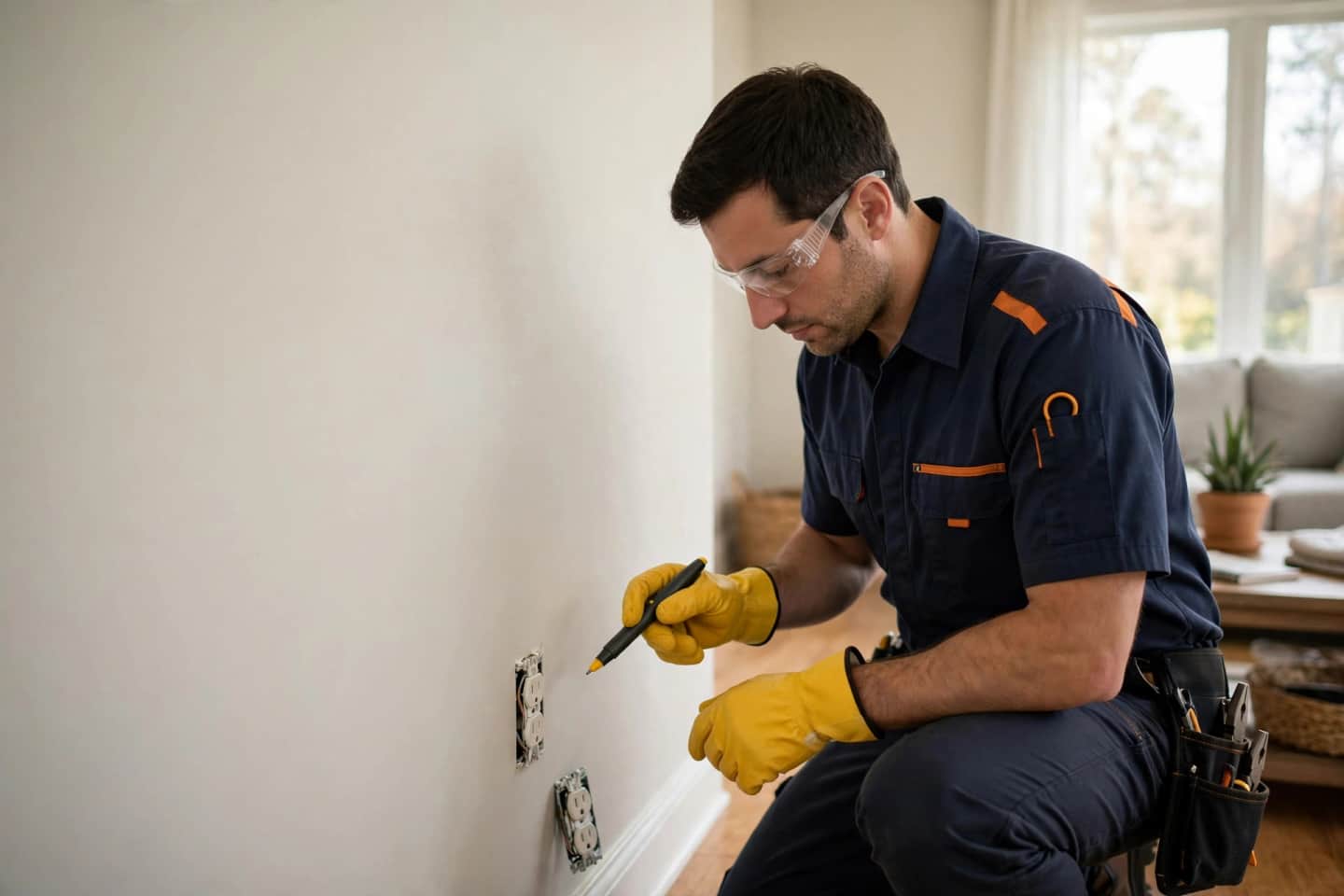
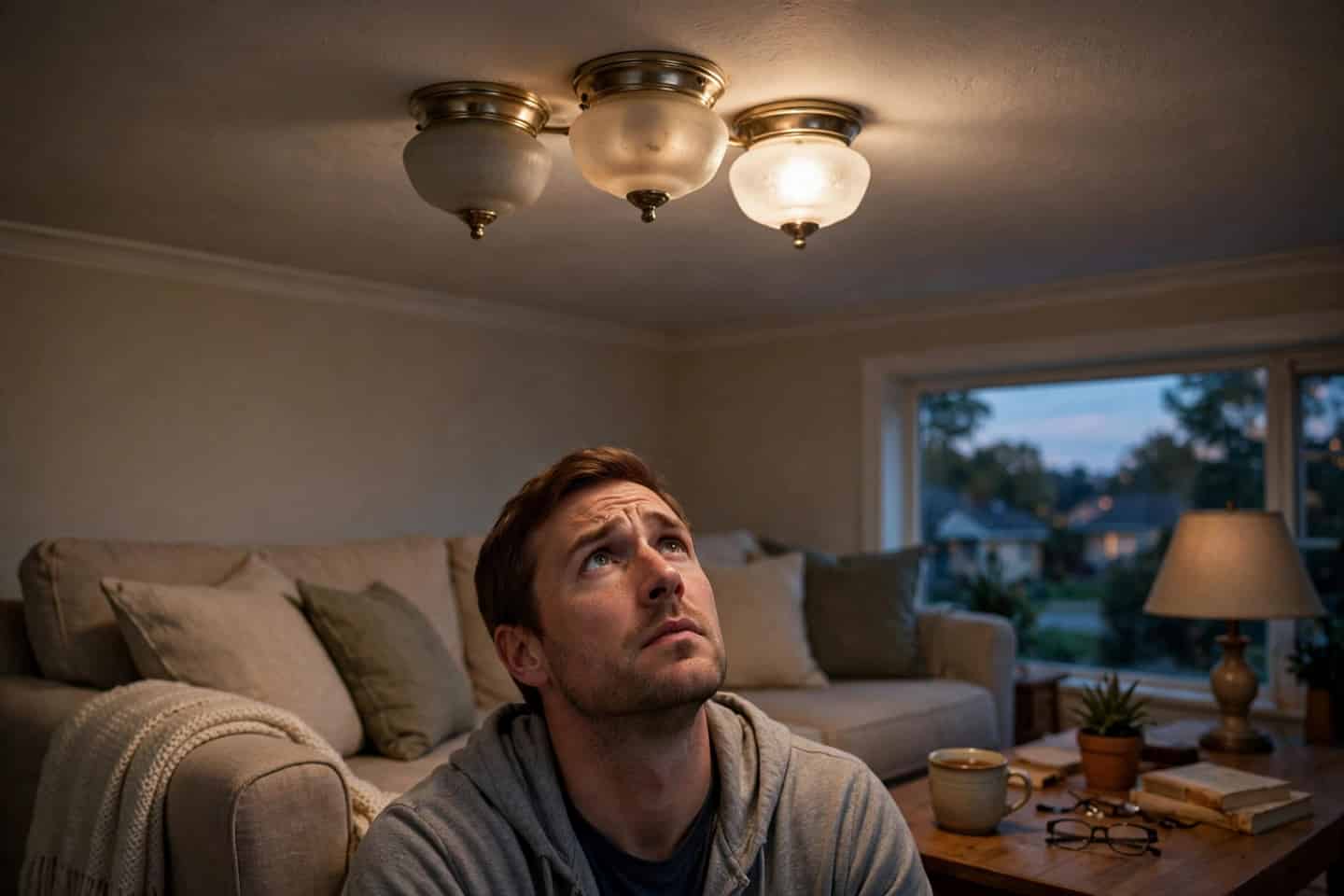
When only one light flickers, start with the simplest explanation. A bulb that is slightly loose in its socket makes intermittent contact, and a vibration from a ceiling fan or a closing door can be enough to interrupt it. With the switch off and the bulb cool, seat it firmly or swap in a known-good bulb. If the new bulb behaves, the old one was the problem. If the flicker continues, the socket contact may be flattened or corroded, or the fixture’s internal wiring may be worn, and that is a repair best handled with the circuit de-energized by someone qualified.
LED bulbs on the wrong dimmer
Many flicker complaints began when incandescent bulbs were replaced with LEDs on an existing dimmer. Older dimmers were built for the steady resistive load of a filament; an LED draws far less power and uses an internal driver, so the dimmer may not regulate it smoothly. The result is flicker, strobing at low settings or a faint buzz. Check that the bulbs are labeled dimmable and that the dimmer is listed as compatible with LED loads. Replacing the dimmer with an LED-rated model is a common, modest fix, but it involves working inside a switch box, so call an electrician if you are not qualified.
Loose connections inside boxes and switches
If a flicker follows a particular switch, or several lights on the same circuit blink together, the likely culprit is a loose splice or terminal somewhere along that circuit. Push-in back-stab connections on outlets and switches are a frequent source, as are aged wire nuts. A loose connection is not only annoying; it can arc and generate heat inside a box, discoloring the device and damaging insulation. Warning signs include a switch plate that feels warm, crackling sounds, or a faint burning smell. Any of those mean the circuit should be switched off at the breaker, if safe to reach, and inspected.
Dimming when the HVAC, dryer or other large load starts
A brief dip in brightness when an air conditioner, well pump or vacuum starts is common, because motors draw a short burst of current on startup. A brief, slight dip is often normal. What is not normal is a deep or lasting dim, lights that brighten when the load starts, or dips that have become noticeably worse over time. Those patterns suggest an undersized or overloaded circuit, a loose connection carrying the load, or a problem with the service itself. An electrician can measure voltage under load to tell the difference.
Whole-house flicker and a loose neutral
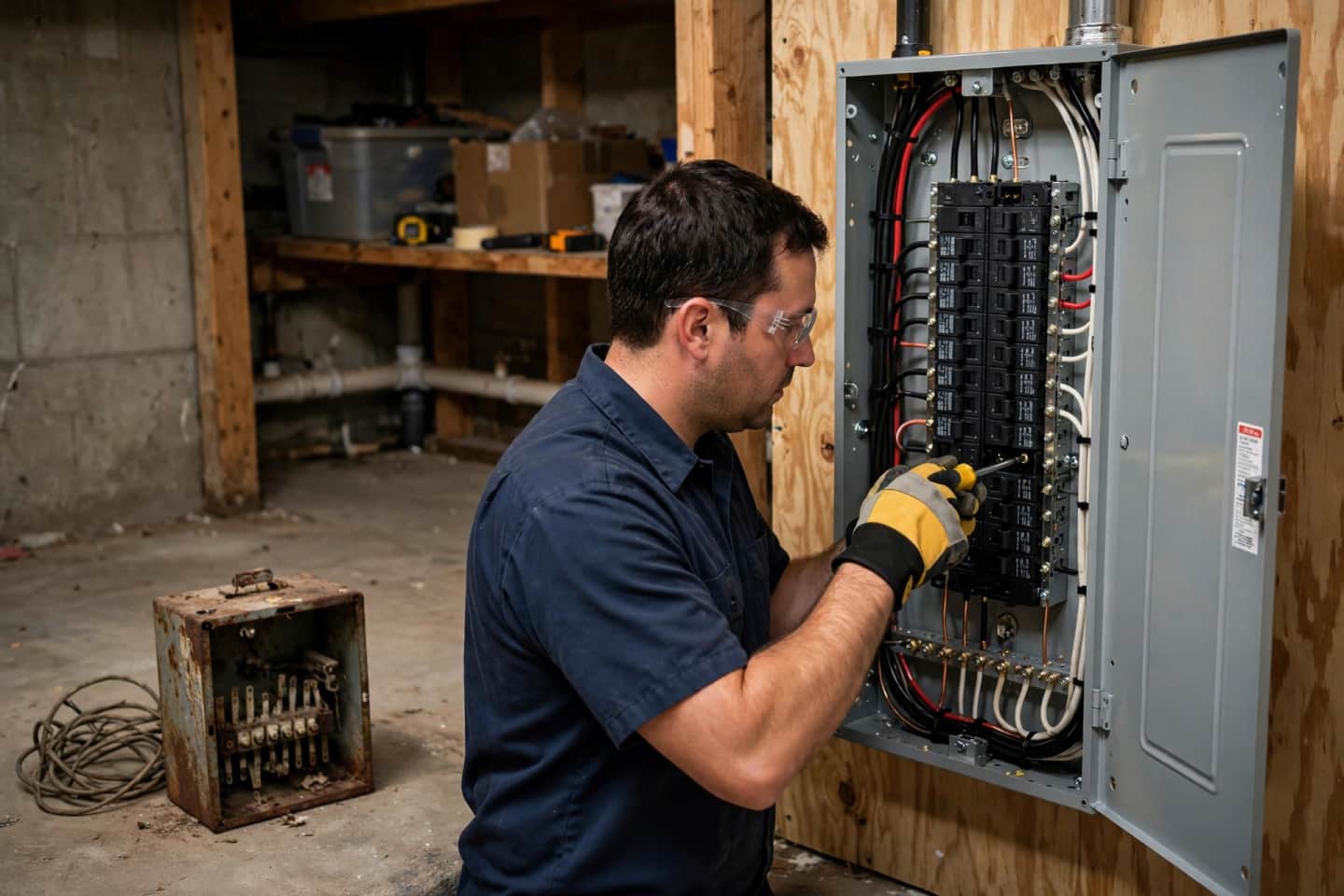
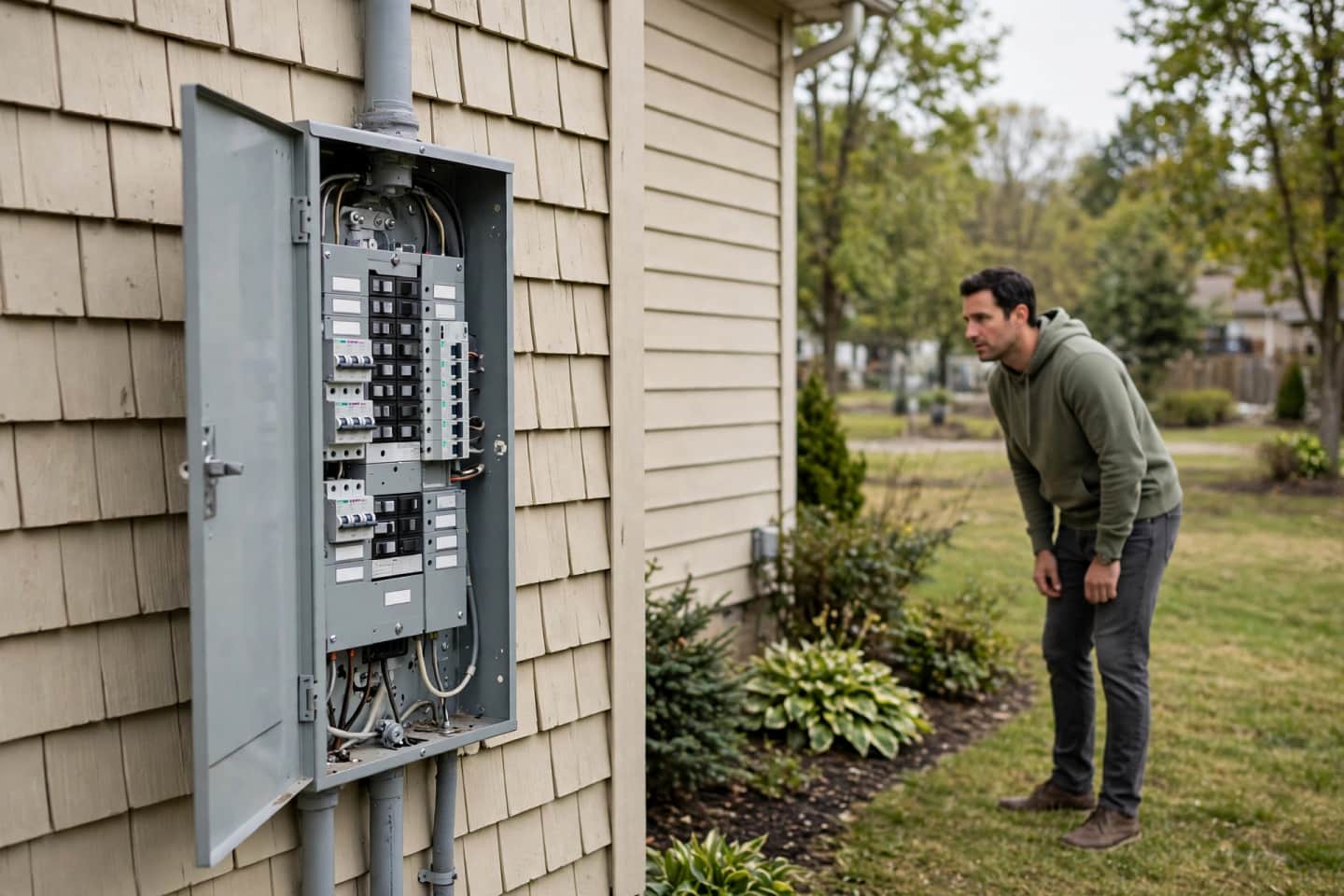
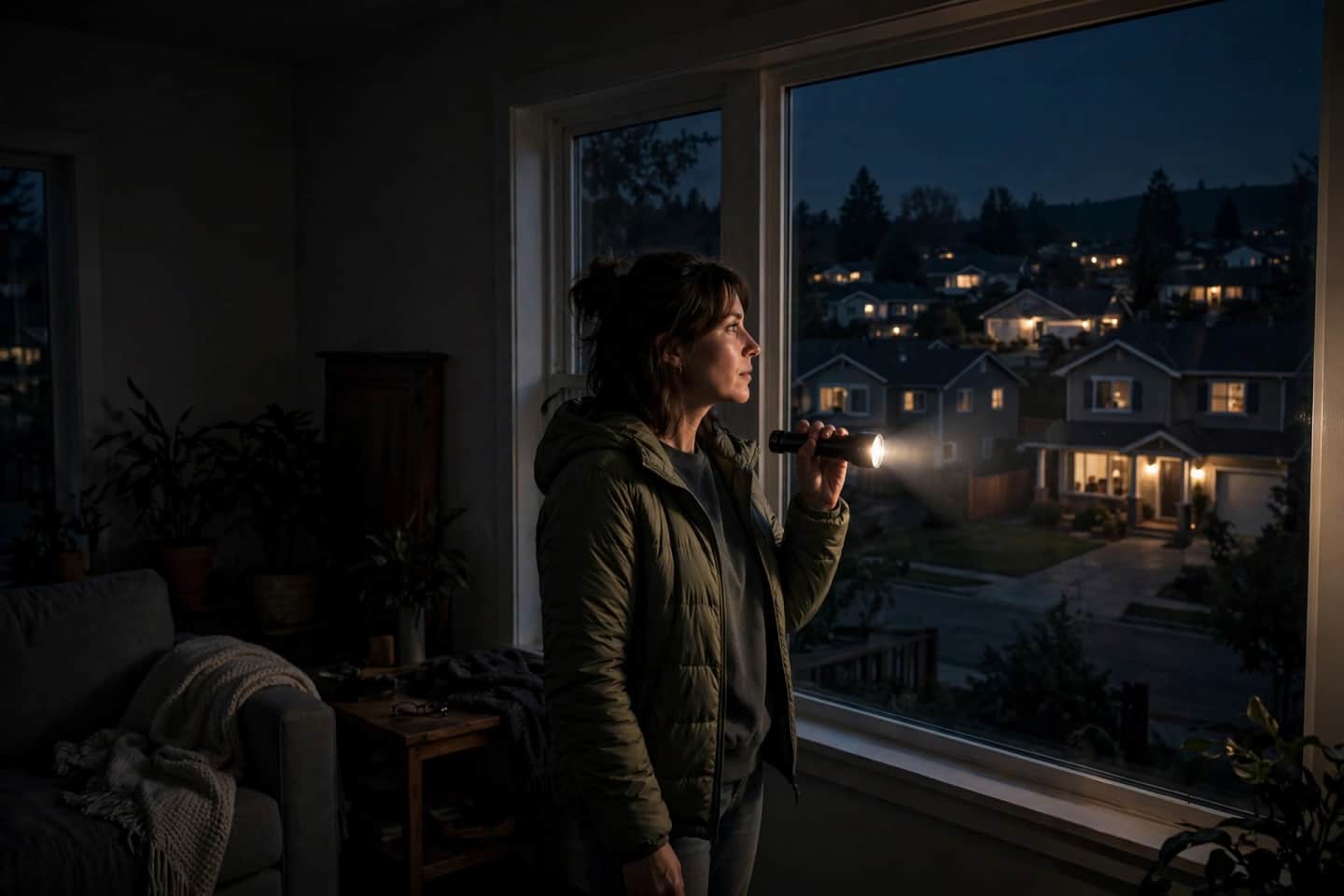
Flicker across many rooms at once is the pattern to take most seriously. If the neutral connection at the panel, meter base or utility drop loosens or corrodes, the voltage on each half of the panel can drift apart. Lights on one side dim while lights on the other side glow brighter than usual, and electronics can be damaged by the overvoltage. Bulbs burning out unusually often is another clue. Because the fault may sit on the utility’s side or the homeowner’s side, an electrician typically checks the panel and meter connections and, if the problem is upstream, advises contacting the utility. Some utilities may also respond directly to whole-house flicker reports.
Safety: when flickering lights become urgent
Treat flicker as urgent when it comes with smoke, a burning or hot-plastic smell, sparking, buzzing from the panel, a warm panel cover, or lights that go noticeably brighter than normal. Keep people away from the area, switch off the affected breaker or the main only if you can reach it safely and without standing in water, and call 911 if you see smoke or fire. Then call an electrician. Do not remove the panel cover, open switch boxes on a live circuit, or keep resetting breakers to see what happens.
How an electrician diagnoses flickering
The electrician starts by mapping the pattern: which lights flicker, whether they share a circuit, and whether the flicker lines up with a particular appliance or time of day. They then test voltage at outlets and fixtures, often while a heavy load runs, and compare readings between the two legs of the panel. Imbalanced or swinging readings point toward the neutral or service. On a single circuit, they open the relevant switch and fixture boxes with power off, looking for loose terminals, heat discoloration and failing devices, and they inspect panel terminations for tightness and corrosion.
Repair or replace: what the fix usually involves
Most flicker repairs are targeted rather than sweeping. A bad bulb or socket, an incompatible dimmer or a single loose splice can be corrected by replacing the bulb, swapping the dimmer, or remaking the connection with fresh wire nuts or proper screw terminals. If heat has damaged a device or wire, the electrician replaces the damaged section. Larger work, such as moving loads to a new circuit or replacing a deteriorated panel, comes up when testing shows the existing equipment cannot carry the home’s demand. Ask the electrician to explain what they found before any larger replacement.
Prevention and related warning signs
Use bulbs rated for the fixture and dimmers listed for LED loads, avoid running several heavy appliances on one circuit, and pay attention when flicker changes from occasional to constant. Flicker often travels with other symptoms worth reading together: breakers that trip, switches that feel warm, buzzing from the panel, or part of the house losing power. When you call (855) 679-2483, describe which lights flicker, when it happens and what else you have noticed, so the licensed electrician you are connected with arrives ready to trace it.
Questions people ask about flickering lights
Why are the lights in my house flickering?
Flickering in a single fixture is usually a loose bulb, a bad dimmer match, or a failing fixture. Flickering across many rooms, or lights that brighten and dim when large appliances run, can point to a loose service connection or neutral problem, which needs an electrician promptly.
Why are all the lights in my house flickering?
Flicker across the whole house usually points to a problem shared by every circuit, such as a loose neutral or service connection at the panel, meter or utility drop. It is worth calling an electrician promptly, especially if some lights get brighter than normal, because the voltage swings involved can damage electronics and appliances.
Is it dangerous if my lights flicker?
It can be, depending on the pattern. A single loose bulb is a nuisance, but flicker caused by a loose connection can arc and overheat inside a box. If flicker comes with buzzing, warmth, sparking or a burning smell, switch off the circuit if you can reach it safely and call an electrician; call 911 for smoke or fire.
Who do I call for flickering lights?
Call a licensed electrician when flicker affects more than one fixture, follows a switch, or keeps happening after you replace the bulb. You can call (855) 679-2483 to be connected with an independent licensed electrician. If several homes on your street are flickering too, the issue may be on the utility side, so contact your utility as well.
Why do my LED lights flicker on a dimmer?
Most often the dimmer was designed for incandescent bulbs and does not regulate the small load of an LED smoothly. Check that the bulbs are marked dimmable, then have a dimmer listed for LED loads installed. Mixing bulb brands on one dimmer can also cause uneven behavior.
Is it normal for lights to dim when the air conditioner turns on?
A brief, slight dip when a large motor starts is common, because startup draws a short surge of current. It is not normal if the dimming is deep, lasts more than a moment, is getting worse, or if lights get brighter instead. Those signs call for voltage testing by an electrician.
Editorial note: general safety information, not a substitute for an on-site evaluation by a licensed electrician.