
01
Ice storm tree damage
The 2023 ice storm downed limbs onto overhead service drops all over the city. Damaged masts, weatherheads and meter bases need repair before Austin Energy can restore service.
Emergency Electrician
Austin is served by Austin Energy, a city-owned utility, rather than the retail-choice market most of Texas uses. The city has been hit by back-to-back winter events — the 2021 freeze and the February 2023 ice storm that brought down trees and lines across town — while summers push air conditioning loads to the limit. Backup power, panel upgrades for EV chargers and heat pumps, and storm repairs are common requests.
Free to call · Independent licensed electricians
Serving Hyde Park, Travis Heights, East Austin, Allandale, Mueller, Zilker and every other Austin neighborhood.
Austin at a glance
Electrical services in Austin
The calls Austin homeowners make most, followed by every service independent licensed electricians handle here.
Not sure which service you need? Describe the problem and an electrician will tell you.
Call for Electrical Service in AustinHousing and wiring
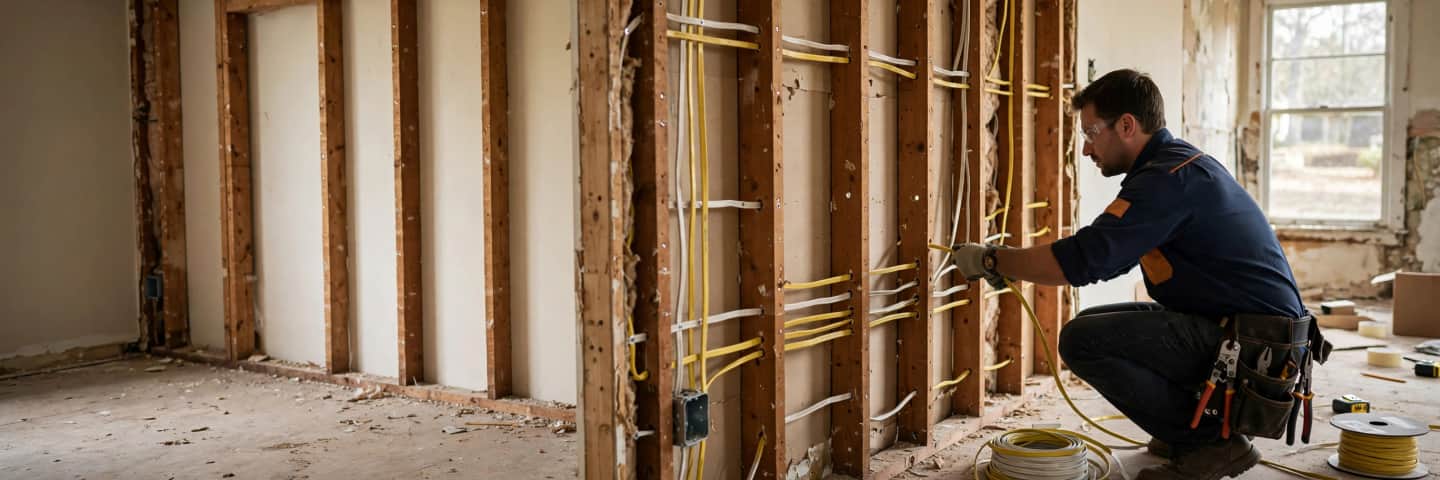
Hyde Park and Travis Heights have 1920s–40s bungalows with original wiring, often modified over decades. Allandale and Crestview have 1950s–60s ranch homes on aging panels, while Mueller and newer suburbs are recent construction with room for EV and solar loads.
Neighborhoods we cover
Local issues
Problems that come up again and again in local homes, and the service that fixes each one.
The 2023 ice storm downed limbs onto overhead service drops all over the city. Damaged masts, weatherheads and meter bases need repair before Austin Energy can restore service.
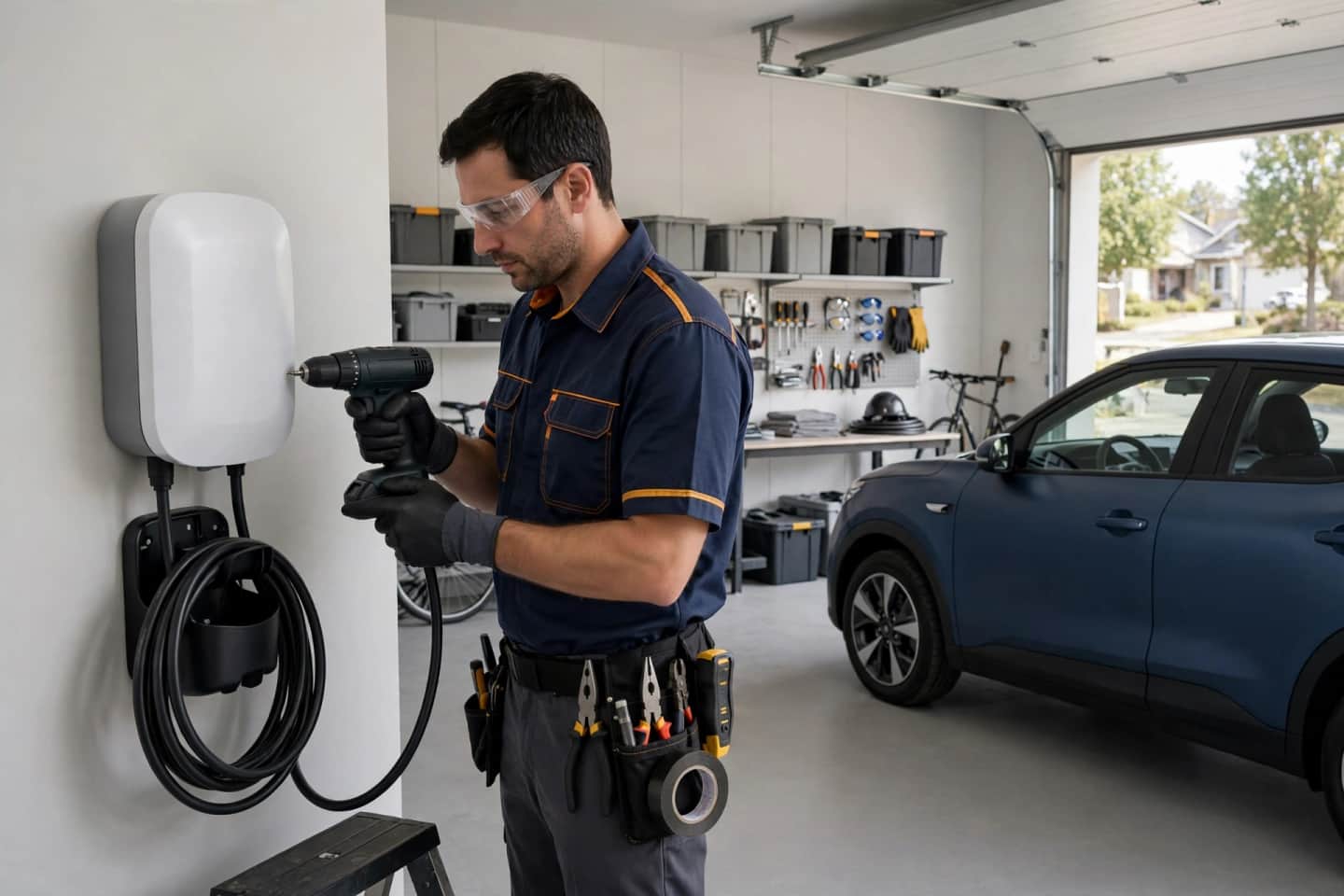
Emergency ElectricianMany central Austin homes add solar, batteries and EV chargers to 100-amp services. A load calculation and sometimes a service upgrade come first.
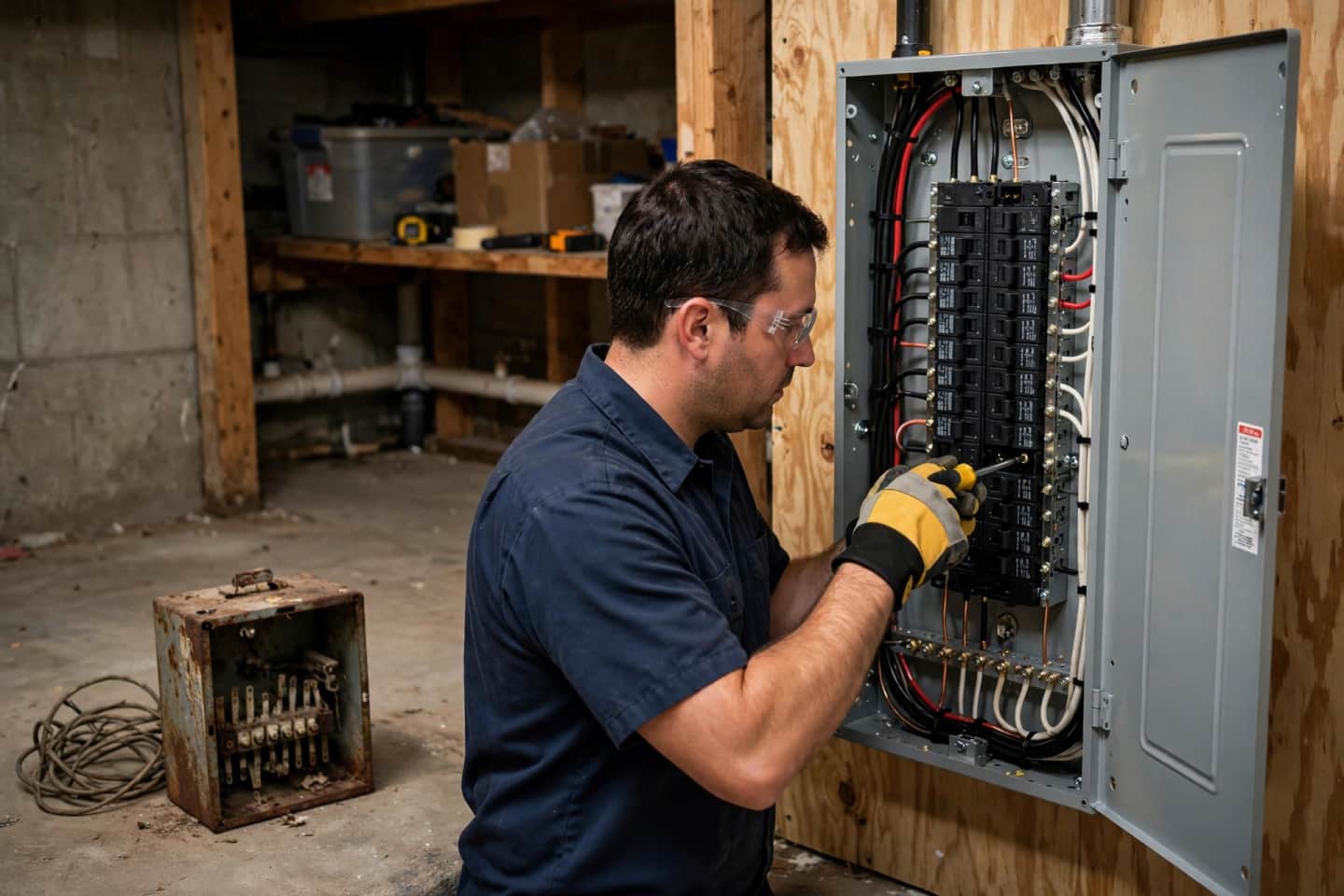
Electrical Panel UpgradeInterlocks and standby generators let homes keep heat, refrigeration and medical equipment running through multi-day outages.
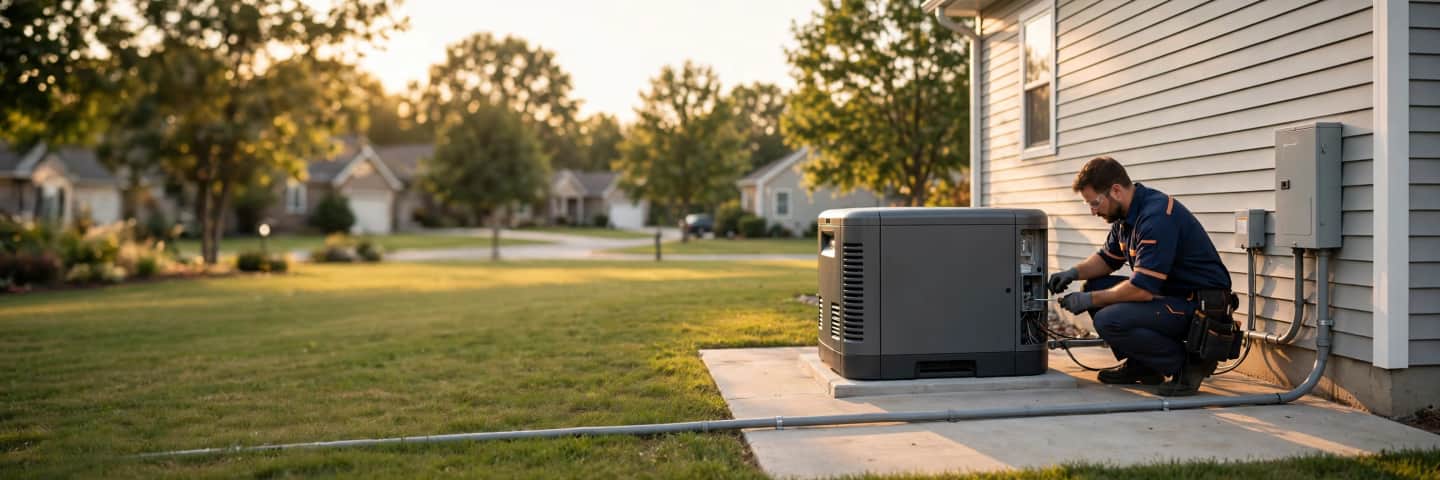
Generator InstallationLocal guide
History, housing, weather and rules that shape electrical work in Austin, TX.
As a city-owned utility, Austin Energy runs its own programs for solar, batteries, EVs and efficiency. It credits rooftop solar through a value-of-solar rate rather than traditional net metering, offers rebates for solar and some battery installations, and supports EV charging through its Plug-In EVerywhere network and home charger incentives. Austin Energy also has its own requirements for service upgrades and meter placement.
Hyde Park, one of Austin’s earliest suburbs, has a local historic district with homes from the 1890s through the 1930s. Clarksville, Travis Heights and Bouldin Creek have older cottages and bungalows, many renovated several times. East Austin has seen rapid redevelopment, with older homes replaced or joined by new units. Mueller, built on the former airport, is a planned community of newer homes. Allandale and Crestview are mostly 1950s ranch homes, and southwest neighborhoods like Circle C are newer.
In December 2023, Austin approved the first phase of its HOME initiative, allowing up to three housing units on many single-family lots. Adding a second or third unit means planning electrical capacity for multiple kitchens, air conditioners and water heaters, and often separate meters coordinated with Austin Energy. A load calculation and a conversation with the utility should come before design is finished.
The ice storm of February 1, 2023, coated Austin’s live oaks and pecans with ice, sending limbs crashing onto lines across the city and leaving a large share of Austin Energy customers without power, some for close to a week. Damaged masts and meter sockets on houses had to be fixed before reconnection. Two years earlier, the February 2021 winter storm brought rotating outages during record cold.
Central Texas is known as Flash Flood Alley. Onion Creek flooded neighborhoods in southeast Austin in 2013 and again in 2015, leading to large buyouts of flood-prone homes. Homes near creeks should keep electrical equipment above flood levels, and power should stay off to any flooded area until an electrician has inspected it.
Neighborhoods along the city’s western edge, where homes meet cedar and oak woodland, face wildfire risk. The 2011 Bastrop County Complex fire east of Austin destroyed more than 1,600 homes, the most destructive wildfire in Texas history. Keeping brush clear of service equipment and having backup power are practical steps in wildland-edge neighborhoods.
Inside city limits, electrical permits come from the Development Services Department and must be pulled by a licensed electrical contractor. Austin Energy coordinates disconnects, meter work and reconnection. In surrounding cities such as Round Rock, Pflugerville, Cedar Park and Buda, each city has its own permit office.
Common requests include EV chargers, solar and battery panel work, service upgrades for added units, generator interlocks, storm repairs, rewiring older central-city homes and surge protection.
Many older Austin homes in Hyde Park, Travis Heights, East Austin and Clarksville sit on pier-and-beam foundations with crawl spaces underneath. That space makes it easier to run new wiring than in a slab home, but it also exposes old wiring to moisture, animals and decades of amateur additions. A crawl-space inspection often explains flickering lights and dead outlets upstairs.
Homes on Lake Austin and Lake Travis have boat docks, lifts and lighting that sit over water whose level can swing dramatically between drought and flood. Dock wiring needs ground-fault protection and wet-location equipment, and docks on these lakes are subject to city and Lower Colorado River Authority rules. Older docks should be inspected before summer.
Austin licenses short-term rentals, and many homes near downtown and South Congress are rented to visitors. Heavy guest use wears out outlets and switches, and rental owners commonly add GFCI protection, smoke alarms and enough circuits for guests’ devices.
The summer of 2023 was one of the hottest on record in Austin, with weeks of triple-digit temperatures. Air conditioning ran nearly nonstop, exposing weak breakers and connections. Heat pumps are increasingly replacing older air conditioners and electric furnaces, often with Austin Energy rebates.
Austin’s rapid growth, driven by technology and manufacturing employers in the region, has filled suburbs such as Round Rock, Leander, Kyle and Manor with new homes. New homes usually have 200-amp services, but EV chargers and home offices quickly use the spare capacity.
Beyond panel and EV work, Austin electricians often add dedicated circuits for home offices, install whole-home surge protection, wire outdoor kitchens and pool equipment, and repair storm damage to service drops after ice or wind.
Austin protects many large trees through its heritage tree rules, and live oaks often grow over service drops in central neighborhoods. Trimming near energized lines is handled by Austin Energy or qualified contractors, while homeowners can ask an electrician to move a service drop or convert to underground service when renovating.
Even before the HOME changes, many Austin lots had garage apartments and backyard cottages. Older units sometimes run on undersized feeders or improvised wiring from the main house. When renovating, a properly sized subpanel or separate meter, smoke alarms and GFCI protection make these units safe to rent.
Inspections of older Austin homes often flag fuse panels, Federal Pacific or Zinsco panels, ungrounded outlets and aluminum wiring in some homes from the late 1960s and early 1970s. Buyers often negotiate these repairs before closing.
Beyond Onion Creek, streets near Williamson Creek, Boggy Creek and Walnut Creek also see flash flooding. When renovating homes on these streets, raising the main panel, air handler and water heater off the floor and keeping outdoor equipment above expected water levels reduces damage. The city’s flood maps show which properties are at risk.
In the Hyde Park and other local historic districts, Austin’s Historic Landmark Commission reviews many exterior changes. Electricians plan meter relocations, new service masts and exterior conduit to minimize visible changes, and owners should allow time for review when a project touches the front of the house. Interior rewiring generally does not need that review.
Questions
The City of Austin Development Services Department issues permits for work inside city limits. Austin Energy also has requirements for service changes and solar interconnection.
Sometimes. A load calculation decides; a smaller charger or a load-management device can avoid a full service upgrade.
Problem guides
 Breaker Keeps TrippingWhy does my circuit breaker keep tripping?
 Flickering LightsWhy are the lights in my house flickering?
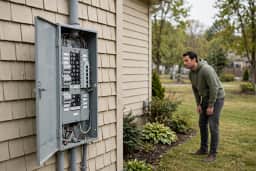 Buzzing Electrical PanelWhy is my electrical panel buzzing?
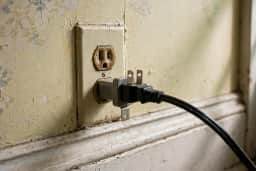 Two-Prong Ungrounded OutletsAre two-prong outlets safe?
 Knob and Tube WiringDo I need to replace knob and tube wiring?
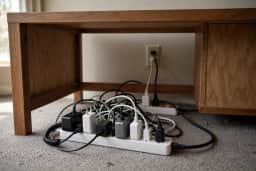 Overloaded Power StripsIs it dangerous to plug a power strip into another power strip?
Same-day help often available
Call an electrician in Austin
Describe the problem and your Austin neighborhood. Your call goes to an independent licensed electrician who works locally.
Call (855) 679-2483Smoke, flames or sparking? Leave the building and call 911 first.
Pronto Electrician is a free referral service. Calls are answered by independent licensed electricians in your area. Pronto Electrician does not perform electrical work, and the electrician you choose sets the price, schedule, permits and warranty.
Nearby
Free to call · All 50 states + DC
Describe the problem and get connected with an independent licensed electrician who serves your area.