Extreme heat
Air conditioning runs near continuously, stressing panels, breakers and connections. Heat pumps, pool equipment and EV chargers add to the load, making load calculations and panel capacity checks important before adding equipment.
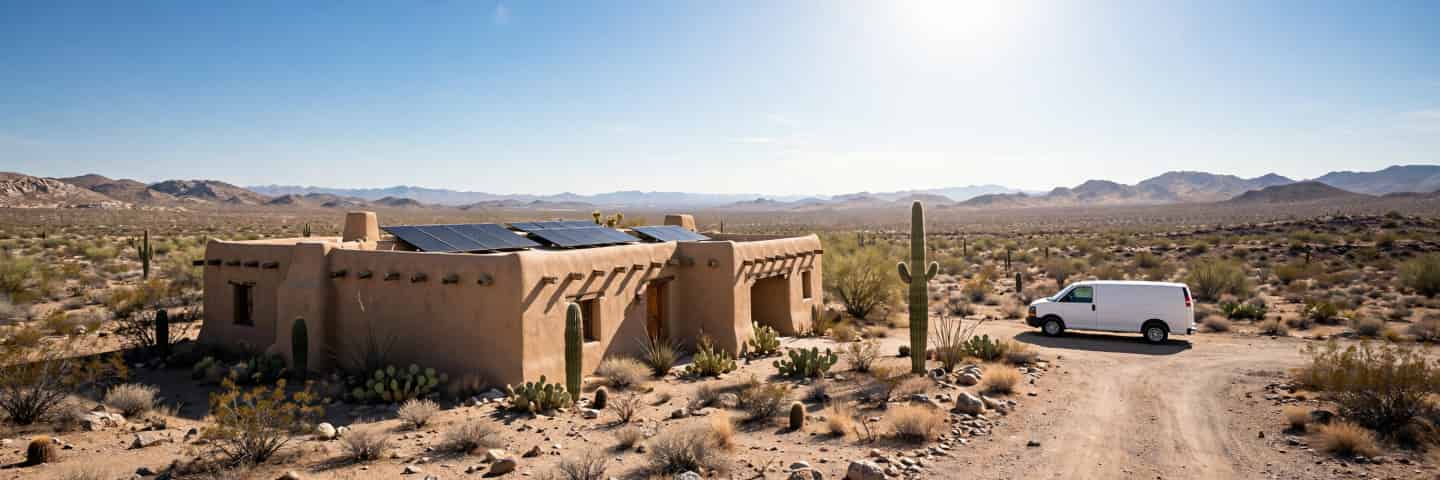
Texas runs its own power grid, builds more new homes than almost any other state, and sees nearly every kind of severe weather: Gulf hurricanes, tornadoes, hail, flash floods, ice storms and long stretches of triple-digit heat. The February 2021 winter storm, when millions of Texans lost power for days in freezing temperatures, permanently changed how many homeowners think about backup power and the condition of their electrical systems.
Free to call · Independent licensed electricians
Climate risks
The hazards that drive the most electrical calls here, and how homeowners prepare for them.
Air conditioning runs near continuously, stressing panels, breakers and connections. Heat pumps, pool equipment and EV chargers add to the load, making load calculations and panel capacity checks important before adding equipment.
Long outages make backup power a priority. Standby generators with automatic transfer switches, or portable generators connected through a listed interlock, keep refrigeration, sump pumps and medical equipment running. Any equipment that was submerged must be inspected before re-energizing.
Storm damage can tear service masts and meter bases from the home. After a storm, look for a leaning mast or pulled service cable and keep clear — the utility side stays energized. Repairs to the mast and meter base are usually the homeowner’s responsibility.
Ice accumulation brings down lines and trees across wide areas, often for days. Backup power planning matters, and overhead service drops near trees should be checked for damage after ice events.
Electrical equipment that has been underwater — panels, outlets, breakers, appliances — generally must be replaced, not dried and reused. Do not re-energize a flooded home until an electrician has inspected it.
Cities
Open a city guide for local utilities, permit offices, neighborhoods and the problems electricians see most.
State guide
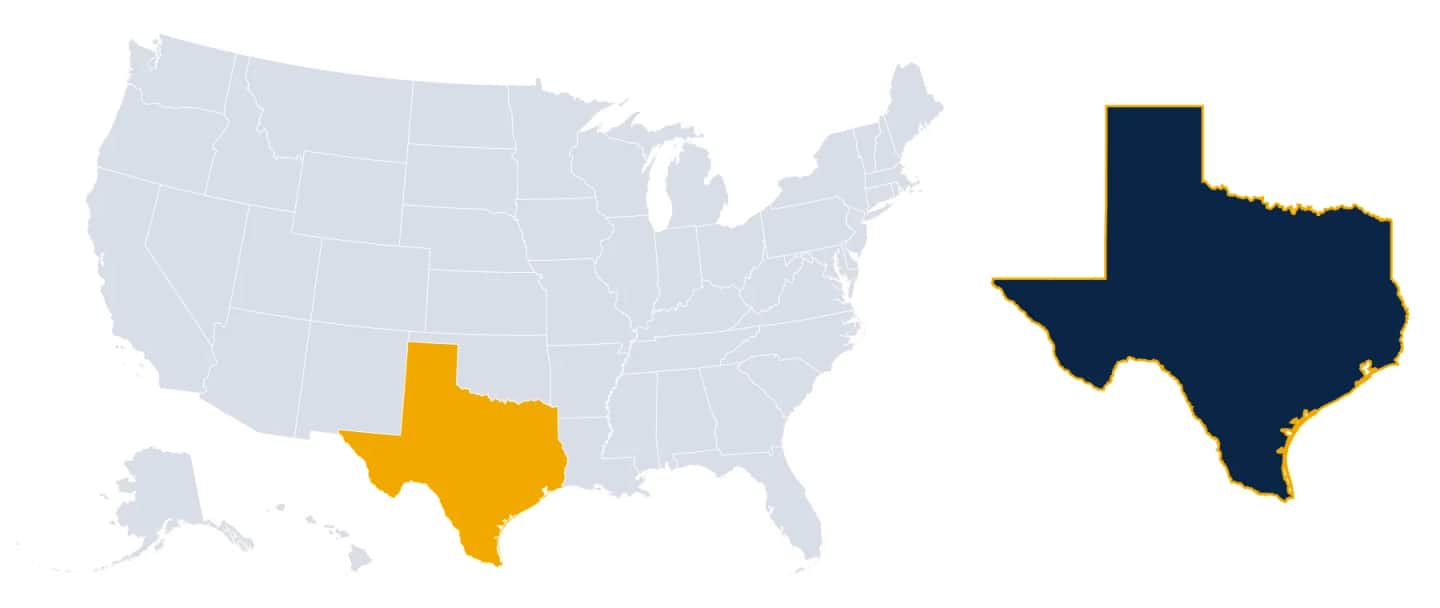
Most of Texas is served by the grid managed by ERCOT, the Electric Reliability Council of Texas, which is largely separate from the two large interconnections that serve the rest of the continental United States. Several parts of the state are outside ERCOT: El Paso is part of the western grid, much of the Panhandle and South Plains is in the Southwest Power Pool, and parts of Southeast Texas around Beaumont are served through the MISO region.
Inside ERCOT, much of the state has a competitive retail market. In areas like Houston, Dallas–Fort Worth, Corpus Christi and much of South and West Texas, a transmission and distribution utility — such as CenterPoint Energy, Oncor, AEP Texas or Texas-New Mexico Power — owns the poles, wires and meters, while customers buy electricity from a retail provider of their choice. Cities with their own utilities, including Austin (Austin Energy) and San Antonio (CPS Energy), and rural electric cooperatives are generally not part of retail choice.
For electrical work, the company that owns your wires and meter is the one that matters. It sets the requirements and schedules for service upgrades, meter pulls and reconnection after storm damage — not your retail electricity provider.
Electricians and electrical contractors in Texas are licensed statewide by the Texas Department of Licensing and Regulation. Electricians are licensed at levels such as apprentice, journeyman and master, and electrical contractors must hold a contractor license and employ a master electrician. TDLR has a public license search, and checking it takes less than a minute.
Cities issue electrical permits and enforce the National Electrical Code, usually with local amendments, so requirements in Houston, Dallas, San Antonio and Austin differ in the details. Outside city limits, building permit requirements can be limited, which makes hiring a licensed electrician who follows code even more important — insurers, buyers and lenders may ask how the work was done.
In February 2021, extreme cold led to rolling outages across ERCOT that, for many households, lasted days rather than hours. Homes lost heat, pipes burst, and some people were hurt or killed by carbon monoxide from generators and grills used indoors.
Since then, generators have become one of the most requested electrical upgrades in Texas. A portable generator should be connected through a transfer switch or a listed interlock kit on the main panel — never back-fed through a dryer outlet — and should always run outdoors, well away from windows and doors. Standby generators with automatic transfer switches start on their own within seconds of an outage. Battery systems, often paired with rooftop solar, are another option for powering essential circuits.
The Texas coast has been struck repeatedly — Hurricane Ike in 2008, Hurricane Harvey in 2017, with its catastrophic flooding in the Houston area, and Hurricane Beryl in July 2024, which left millions of Houston-area customers without power during summer heat. Coastal and Houston-area homeowners commonly invest in generators, surge protection and electrical inspection after storms.
Electrical equipment that has been underwater — panels, breakers, outlets, wiring and appliances — generally must be replaced rather than dried and reused. Do not turn power back on to a flooded home until it has been inspected, and keep clear of downed lines.
Texas summers keep air conditioners running for months, and during heat waves ERCOT has asked customers to conserve. Heavy cooling loads stress breakers, connections and older panels; a warm breaker, a burning smell or an AC circuit that trips repeatedly should be checked rather than reset over and over.
North Texas sits in one of the most active hail and tornado regions in the country. Storms can tear service drops off homes, bend masts and pull meter bases loose. The utility repairs its line, but the mast, weatherhead and meter base on the house are typically the homeowner’s responsibility and must be repaired, and often inspected, before reconnection.
Texas has a huge share of homes built since 2000, especially in the suburbs of Dallas–Fort Worth, Houston, Austin and San Antonio, and most sit on slab foundations, which affects how wiring can be routed during remodels. Older neighborhoods in every major city have 1920s–50s houses with ungrounded wiring and small services, and some homes from the late 1960s and early 1970s have aluminum branch wiring that needs connectors rated for it.
Expansive clay soils across much of Central and North Texas cause foundation movement, which can stress service entrances and conduit where they enter the home. If doors start sticking and cracks appear, it is worth checking that the meter base and service entrance are still sound.
Rooftop solar and batteries have grown quickly in Texas, driven by resiliency concerns after 2021 as much as by bills. Rules for solar buyback vary widely because retail providers, municipal utilities and co-ops each set their own. EV ownership is rising fastest around Austin, Dallas–Fort Worth and Houston. Large homes with two air conditioning systems, pools and EV chargers often outgrow 150- or 200-amp services, making a load calculation an important first step.
Texas is big enough that electrical priorities change by region. The Gulf Coast from Beaumont to Corpus Christi focuses on hurricanes, flooding, salt air and generators. Dallas–Fort Worth deals with hail, tornadoes, fast-growing suburbs and heavy summer cooling loads. Central Texas and the Hill Country see flash floods, lightning and wildfire risk on the wildland edge, along with rapid solar and EV adoption around Austin. The Rio Grande Valley combines intense heat with hurricane exposure.
West Texas and El Paso are dry and hot, and El Paso sits outside ERCOT on the western grid. The Panhandle and South Plains have some of the strongest winds and coldest winters in the state, with blizzards and ice that bring down lines, and are served largely through the Southwest Power Pool. East Texas has dense pine forests, where storms bring down trees onto overhead lines and many homes are served by electric cooperatives.
Outside the metros, many Texas properties have detached shops, barns, RV hookups and water wells. Detached buildings need a properly sized feeder, their own disconnect and a grounding electrode, and long runs need larger wire to avoid voltage drop. Well pumps are often the most important load to keep running during an outage, so rural generator plans should include the pump circuit and its starting load. Many rural homes are served by electric cooperatives, which have their own requirements for service upgrades and generator connections.
Across the state the most common requests are generator installations and interlocks, panel upgrades for EV chargers and second air conditioning systems, storm repairs to service masts and meter bases, surge protection, and repairs to overheated breakers and connections after a hot summer. In older neighborhoods, rewiring ungrounded circuits and replacing fuse panels or problem panels is common before a sale or after an insurance inspection.
Verify the TDLR license, ask whether your city requires a permit and who will pull it, and get a written scope. For panel upgrades and storm repairs, ask whether the electrician will coordinate with your wires company — CenterPoint, Oncor, AEP Texas, TNMP, Austin Energy, CPS Energy or your co-op — for the disconnect and reconnect. For generators, ask how the unit will be connected and where it will sit relative to windows, doors and property lines.
Electrical licensing and permits in Texas are set by state and local authorities. The electrician confirms what applies to your project.
Services
Ranked by how many of this state’s climate risks each service addresses.
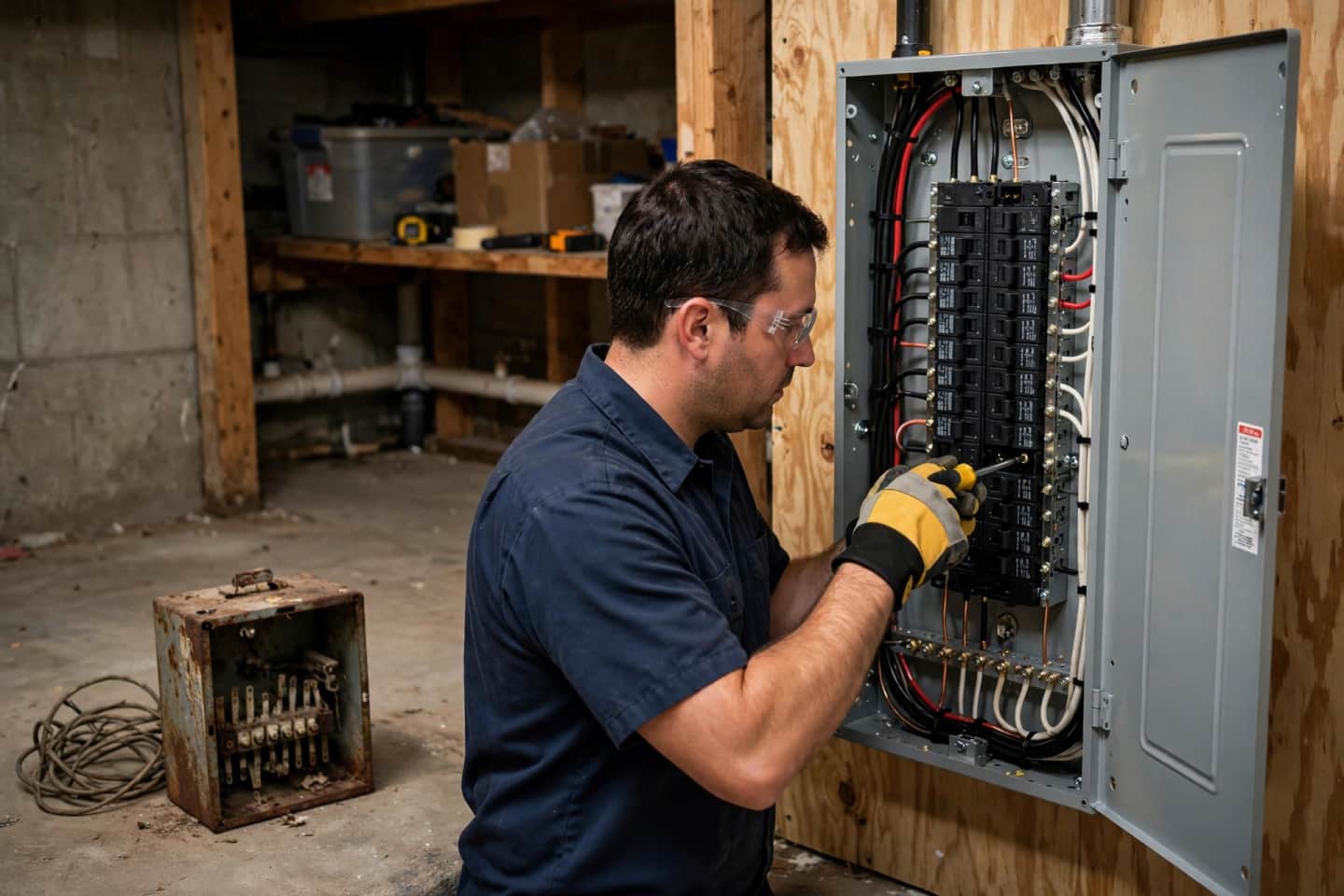
Panel replacements and service upgrades for modern loads, EV chargers and heat pumps.
Explore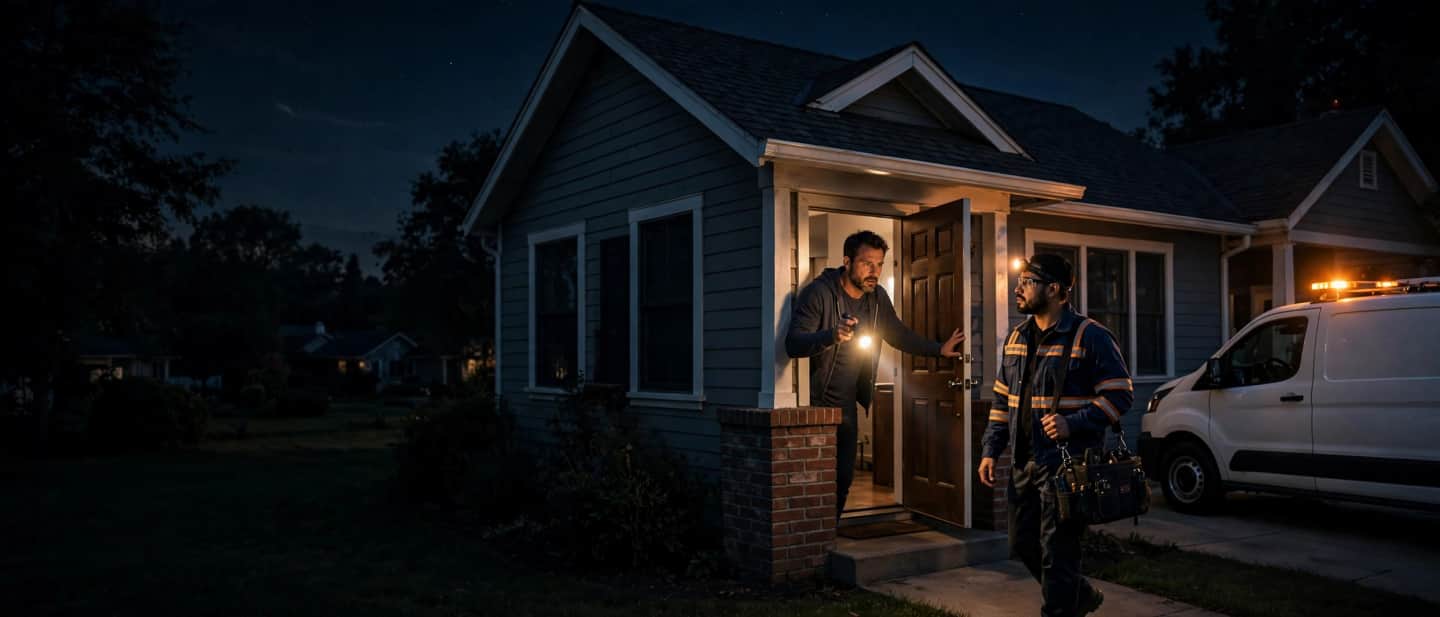
Urgent help for outages, burning smells, sparking and dangerous electrical faults.
Explore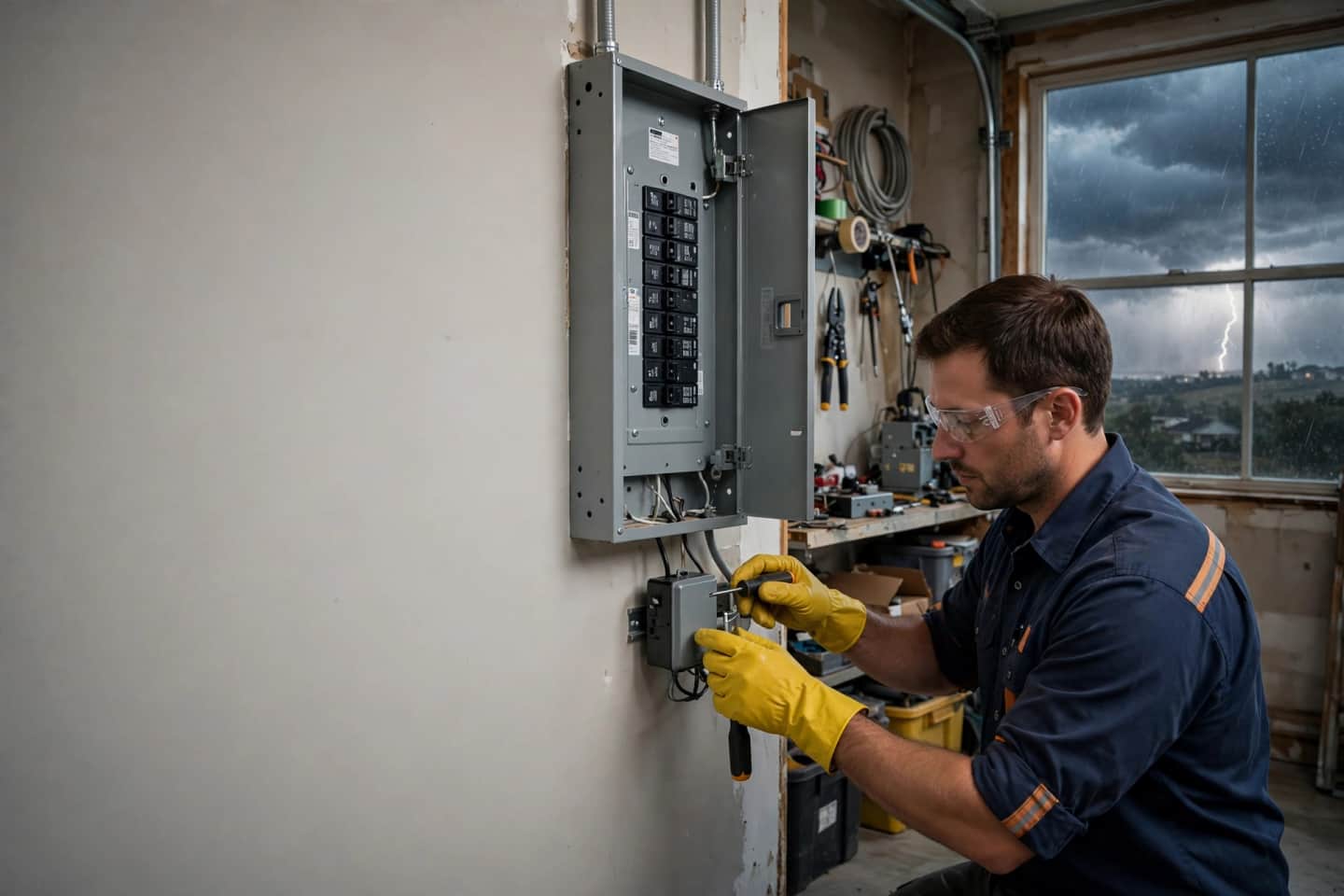
Panel-mounted surge protective devices for the whole home.
ExploreGet started
One call connects you with an independent licensed electrician who serves your part of the state.
Same-day help often available
Call for electrical help in Texas
Tell the electrician what is happening and your city. Calls go to independent licensed electricians who serve your area.
Call (855) 679-2483Smoke, flames or sparking? Leave the building and call 911 first.
Pronto Electrician is a free referral service. Calls are answered by independent licensed electricians in your area. Pronto Electrician does not perform electrical work, and the electrician you choose sets the price, schedule, permits and warranty.
Free to call · All 50 states + DC
Describe the problem and get connected with an independent licensed electrician who serves your area.