Houston homes run air conditioning most of the year, sit in the path of Gulf hurricanes, and have lived through some of the longest outages in recent memory — Hurricane Harvey in 2017, Winter Storm Uri in 2021 and Hurricane Beryl in 2024. That history shapes the electrical work Houston homeowners ask for most: backup power, panels that can carry heavy cooling loads, and repairs after storm and flood damage.
The Heights and Montrose still have early-1900s bungalows where original wiring and small services turn up, while much of the city is post-war ranch housing and 1970s–80s suburban construction on slab foundations. Many of those homes are on their original panels, and some 1970s homes have aluminum branch wiring.
Problems that come up again and again in local homes, and the service that fixes each one.
01
Long outages after hurricanes
Beryl left millions of CenterPoint customers without power for days in July heat. Standby generators with automatic transfer switches, or portable generators on a listed interlock, are the most requested storm upgrades.
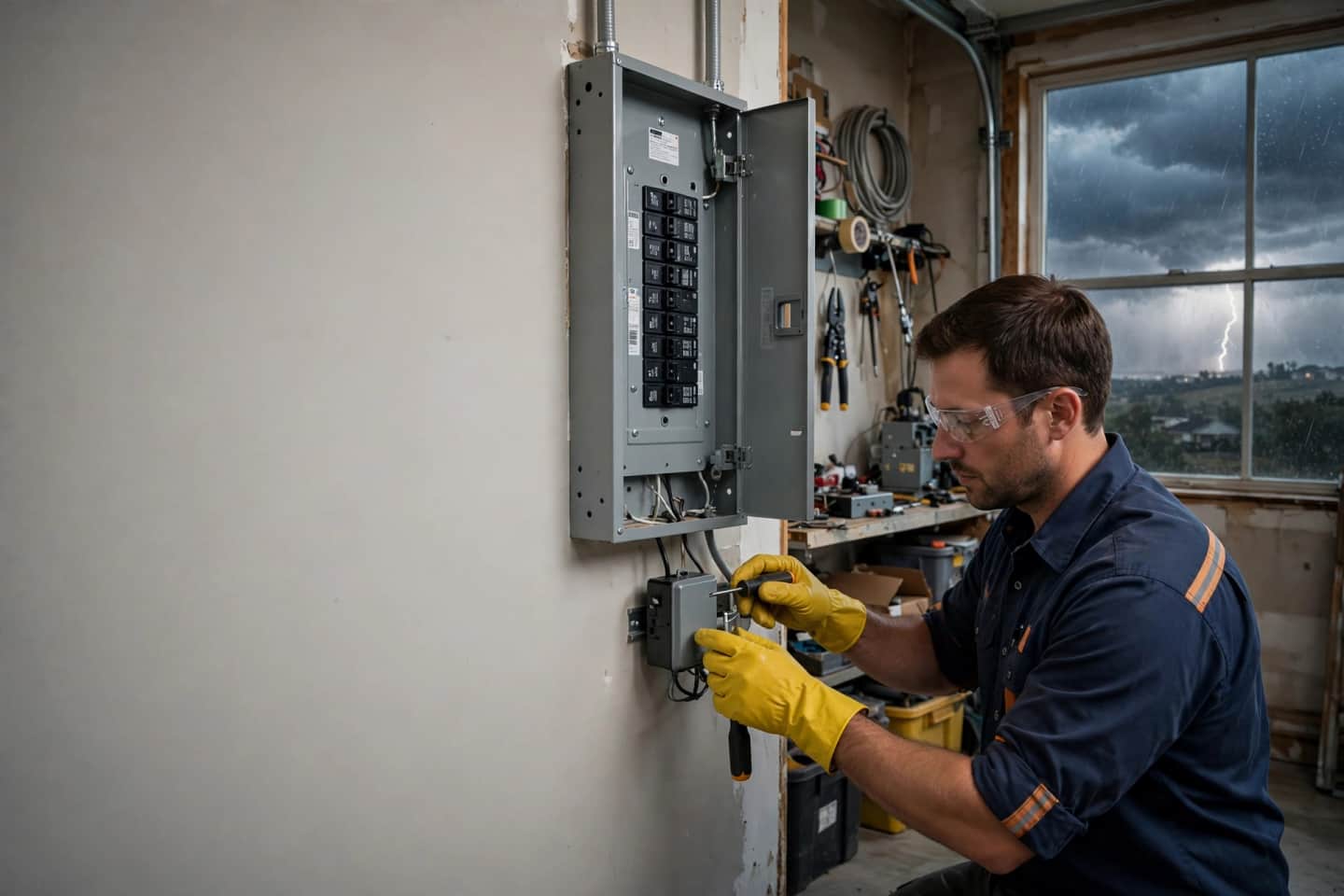
Panels, outlets and wiring that were underwater generally have to be replaced, not dried out. Do not re-energize a flooded home until an electrician has inspected it.
Running central air near continuously, plus pool equipment and EV chargers, pushes 100- and 125-amp services hard. A load calculation shows whether an upgrade is needed.
History, housing, weather and rules that shape electrical work in Houston, TX.
A city without zoning
Houston is the largest U.S. city without conventional zoning, so land use is shaped by deed restrictions, the city’s development rules and the market rather than zoning districts. One visible result is blocks where 1920s bungalows sit next to three-story townhouses built on subdivided lots, especially in the Heights, Rice Military, Montrose and the East End.
For electrical work that mix matters. Townhouse rows often share grouped meter banks, have panels on upper floors, and park cars in tandem garages where an EV charger needs careful placement. A 1925 bungalow next door may still run on a 100-amp service with original branch circuits in the attic.
Neighborhood by neighborhood
The Heights has city historic districts where exterior changes, including some visible meter or conduit work, need review, and many homes there have garage apartments that draw power from the main house. Montrose mixes older bungalows, fourplexes and new townhomes. River Oaks and Memorial have large homes where whole-house standby generators, pool equipment and outdoor kitchens are common.
Meyerland and Westbury flooded repeatedly — during the Memorial Day flood of 2015, the Tax Day flood of 2016 and Hurricane Harvey in 2017 — and many homes there were rebuilt on raised foundations or demolished. Kingwood, under its tall pines, flooded from the San Jacinto River and Lake Houston during Harvey and loses power often when limbs fall. Alief and Sharpstown are full of 1960s and 1970s houses on original panels.
The 2024 derecho and Hurricane Beryl
On May 16, 2024, a derecho tore through Houston with winds that shattered downtown skyscraper windows and toppled transmission towers, knocking out power to roughly a million customers. Less than two months later, Hurricane Beryl made landfall on July 8 and left more than two million CenterPoint customers without power, many for over a week in extreme heat.
Those back-to-back events pushed thousands of households to add generators and battery systems and to rethink placement of service equipment. Damaged masts, weatherheads and meter sockets on the house side had to be repaired by licensed electricians before CenterPoint could restore service, which created long waits for repairs right when they mattered most.
Floodplain rules and raised equipment
After Harvey, Houston strengthened its floodplain ordinance in 2018 so that new construction and substantial improvements in the 100- and 500-year floodplains must be built higher above the base flood elevation. That affects electricians directly: panels, outlets, air conditioning condensers and generators in rebuilt homes are increasingly mounted on upper walls or raised platforms, and service entrances are designed to reach them.
Homeowners renovating in flood-prone neighborhoods should ask the electrician to plan equipment heights with the floodplain requirements in mind, not just what was there before.
Standby generators in Houston
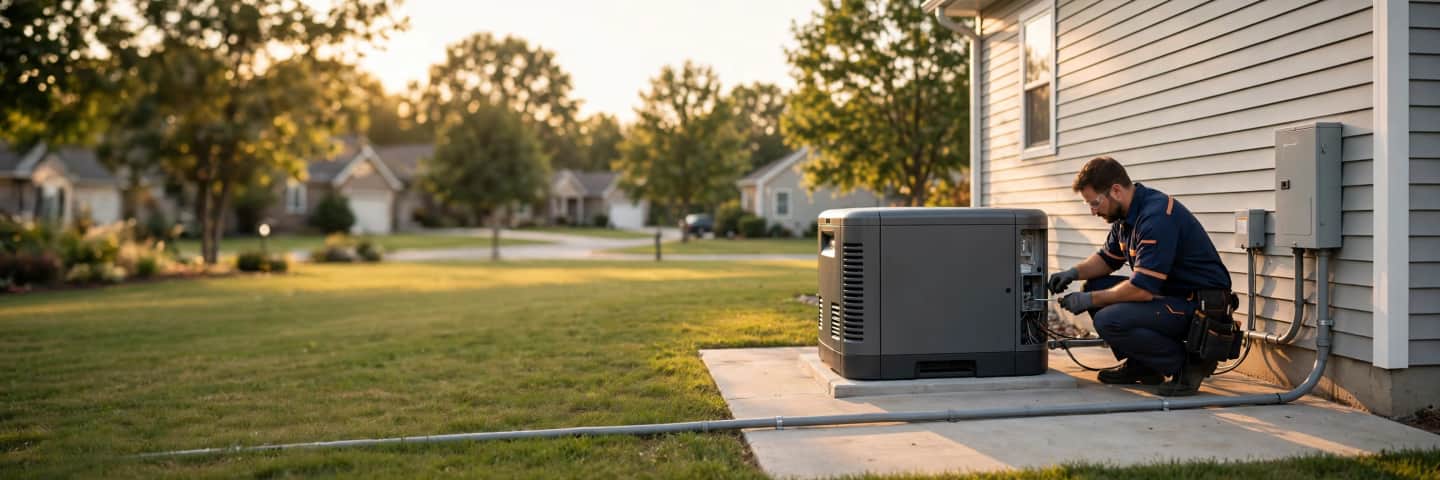
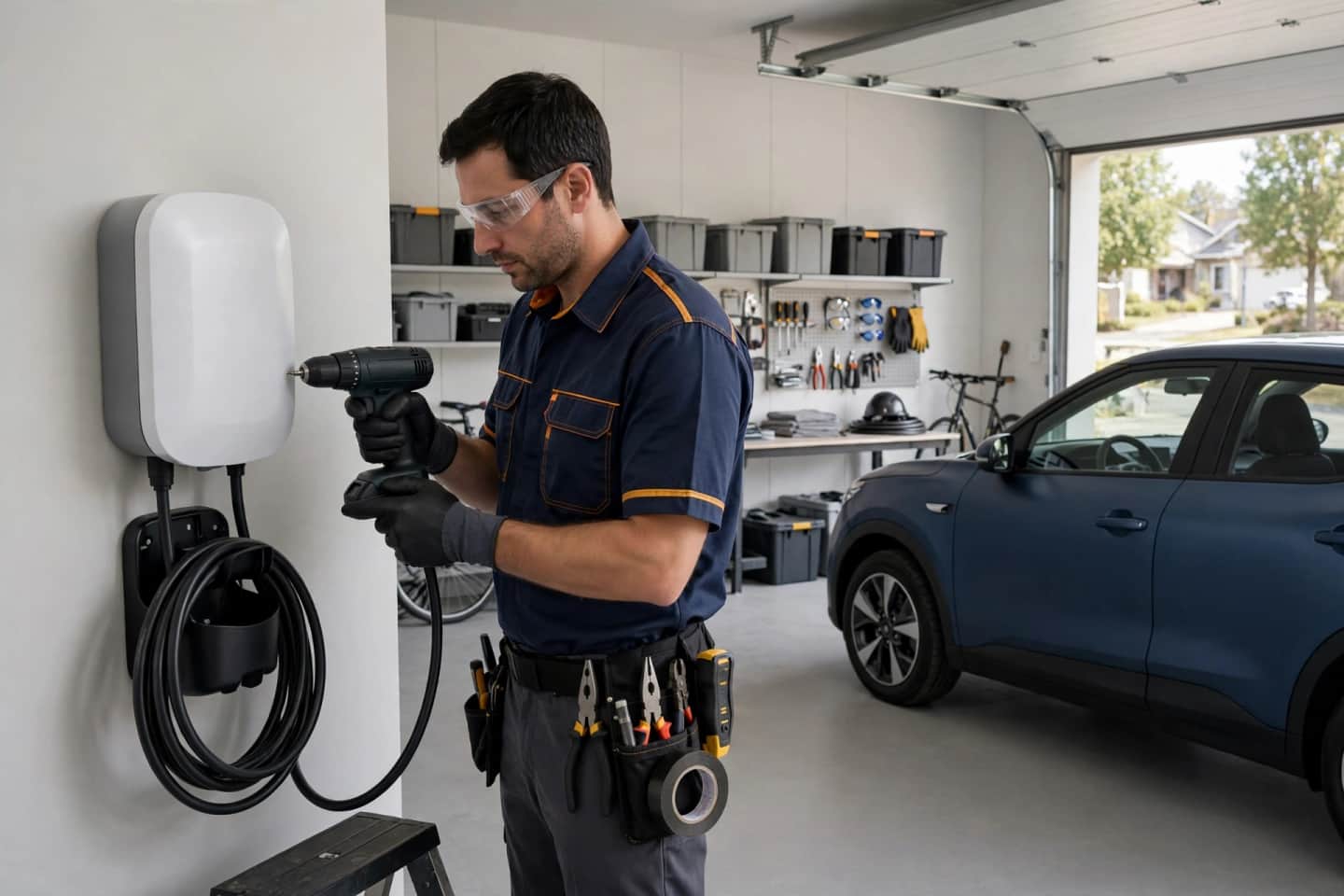
Natural-gas standby generators are extremely common in Houston because gas service reaches most neighborhoods and fuel does not need to be stored. A standby installation usually involves an electrical permit, a separate plumbing permit for the gas line, a concrete or composite pad, an automatic transfer switch and placement that meets the manufacturer’s clearance distances from windows, doors and property lines. Deed restrictions and homeowners associations sometimes add screening or location rules.
Garage apartments and second units
Houston’s inner-loop neighborhoods have many garage apartments, and the city allows secondary dwelling units on many single-family lots. Powering one usually means a subpanel fed from the main house, sized for an air conditioner, kitchen and water heater, plus smoke alarms. Older garage apartments wired with extension cords or undersized feeders are a frequent safety finding.
Attics, humidity and heat
Most Houston homes run their wiring, air handlers and ductwork through attics that are brutally hot for months. Humidity adds condensation and corrosion. Brittle insulation on old cable, overloaded attic circuits and junction boxes buried under insulation are common discoveries during inspections.
Retail electricity versus the wires company
Houstonians choose a retail electricity provider, but the poles, wires, meters and outage restoration belong to CenterPoint Energy. When a service upgrade, meter pull or storm reconnection is needed, the electrician coordinates with CenterPoint, not with the company named on the bill.
Typical Houston electrical jobs
Common requests include standby generator and battery installations, storm repairs to masts and meter sockets, panel upgrades for EV chargers and second air conditioners, raised equipment in flood-prone homes, garage apartment subpanels, pool bonding corrections and rewiring of older inner-loop bungalows.
Addicks, Barker and west Houston
During Harvey, engineers released water from the Addicks and Barker reservoirs to protect the dams, and thousands of homes in west Houston and the Energy Corridor flooded for days, some well after the rain had stopped. Many of those homes had panels, outlets and air handlers replaced. Buyers in these areas should ask whether a home flooded and whether its electrical system was replaced with permits afterward.
The 2021 freeze in a warm-weather city
Houston homes are built for heat, not cold, and during the February 2021 freeze many lost power while pipes in attics and exterior walls burst. Water pouring through ceilings soaked light fixtures, outlets and wiring. After a freeze like that, any circuit that got wet should be checked before it is turned back on.
Solar and batteries under retail choice
Because Houstonians buy electricity from retail providers, how rooftop solar is credited depends on the plan you choose, not on CenterPoint. Many homeowners now pair solar with batteries mainly for backup during long outages. Any system needs a permit and CenterPoint interconnection approval.
Questions to ask before hurricane season
Before June, Houston homeowners should know where their main breaker is, how their generator connects, whether their pool equipment and AC condensers sit above likely flood levels, and which licensed electrician they would call to repair a damaged mast after a storm. Booking generator work in winter avoids the summer rush.
Townhome rows and shared walls
In new inner-loop townhome rows, fire-rated shared walls limit where wiring can run, and panels often sit on the second or third floor. Adding circuits later usually means careful routing through closets and ceilings.
Questions
Questions from Houston homeowners
Do I need a permit for electrical work in Houston?+
Most new circuits, panel changes and generator installs need a permit through the City of Houston Permitting Center. Areas outside city limits follow Harris County or their own city’s rules. The electrician pulls the permit.
Who do I call when my power goes out in Houston?+
Report area outages to CenterPoint Energy. If only your home or part of it is dark and neighbors have power, the problem is likely on your side of the meter and needs an electrician.
Connect with an independent licensed electrician near you
Smoke, flames or sparking? Leave the building and call 911 first.
Pronto Electrician is a free referral service. Calls are answered by independent licensed electricians in your area. Pronto Electrician does not perform electrical work, and the electrician you choose sets the price, schedule, permits and warranty.