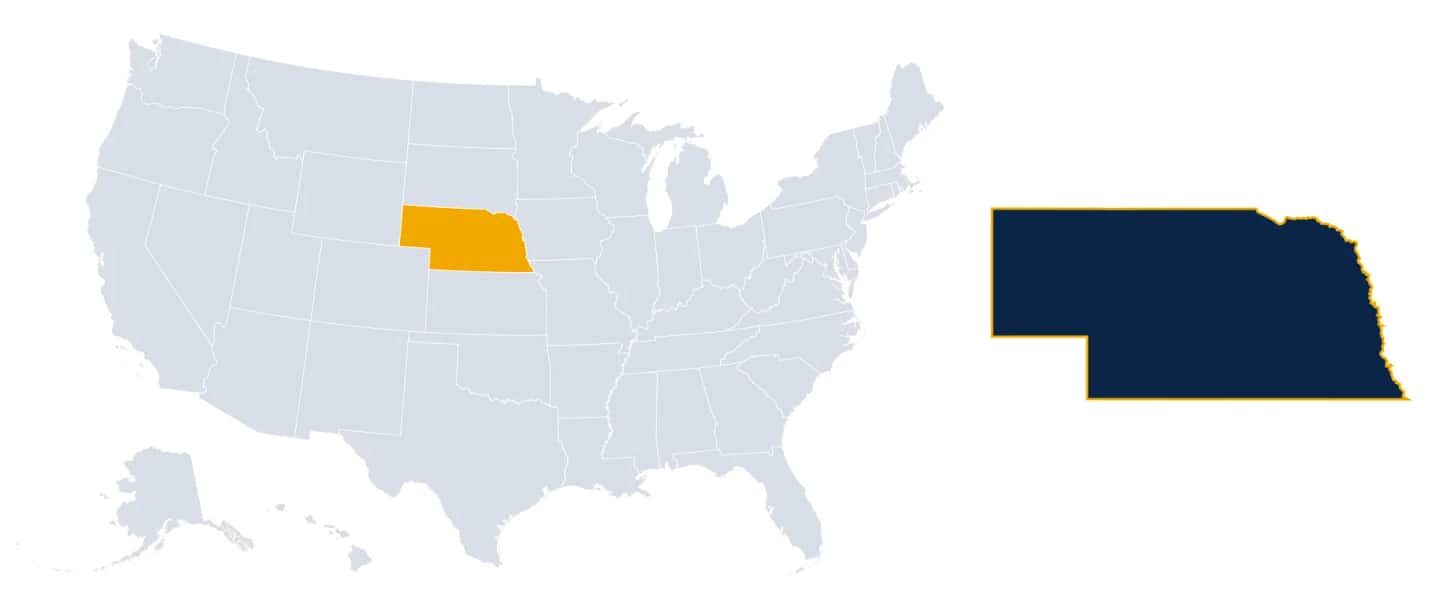
Nebraska is the only state where every home and business gets its electricity from public power — utilities owned by cities, districts and their customers rather than by investors. Its weather is anything but gentle: Panhandle blizzards, Sandhills wind, tornadoes and derechos across the east, and the March 2019 bomb cyclone that sent the Missouri, Platte and Elkhorn rivers over their banks.
The hazards that drive the most electrical calls here, and how homeowners prepare for them.
Severe storms and tornadoes
Storm damage can tear service masts and meter bases from the home. After a storm, look for a leaning mast or pulled service cable and keep clear — the utility side stays energized. Repairs to the mast and meter base are usually the homeowner’s responsibility.
Heavy snow and wind cause outages when heating demand is highest. Generators, dedicated circuits for space heaters, and heat-tape circuits with GFCI protection are common winter projects. Avoid running heaters through extension cords or power strips.
Nearby strikes send surges through power and communication lines. A whole-home surge protective device at the panel, a sound grounding system and point-of-use protection for electronics reduce damage to appliances and HVAC controls.
Omaha Public Power District covers Omaha and a large share of eastern Nebraska, while Lincoln Electric System, owned by the city, serves the capital. Nebraska Public Power District generates and transmits power for much of the state and serves many towns directly. Beyond those three, dozens of rural public power districts and municipal electric departments — from Grand Island and Hastings to Fremont and Kearney — deliver power to their own communities.
Because these utilities answer to elected boards and city councils rather than shareholders, policies on things like solar interconnection, generator hookups and service upgrade fees can differ noticeably from one district to the next. An electrician who works regularly in your district will already know its paperwork and lead times.
Who licenses and inspects electrical work
The Nebraska State Electrical Division, overseen by the State Electrical Board, issues licenses to journeyman and master electricians and to electrical contractors. Omaha and Lincoln operate their own permit and inspection offices, as do some other cities; across much of rural Nebraska, the State Electrical Division’s own inspectors review the work instead.
In practice that means a homeowner in Papillion, a rancher outside Valentine and a family in Scottsbluff may all deal with different inspection offices for the same job. Panel replacements, added circuits, standby generators and EV chargers all need a permit, and a licensed electrician files it.
What the 2019 floods taught
The March 2019 storm dumped heavy rain onto deeply frozen ground and thick river ice. Ice jams and the collapse of the Spencer Dam on the Niobrara River sent water through towns such as Fremont, Norfolk, Peru and Niobrara, and the Missouri River flooded Offutt Air Force Base and farms for miles. Some communities were cut off for days.
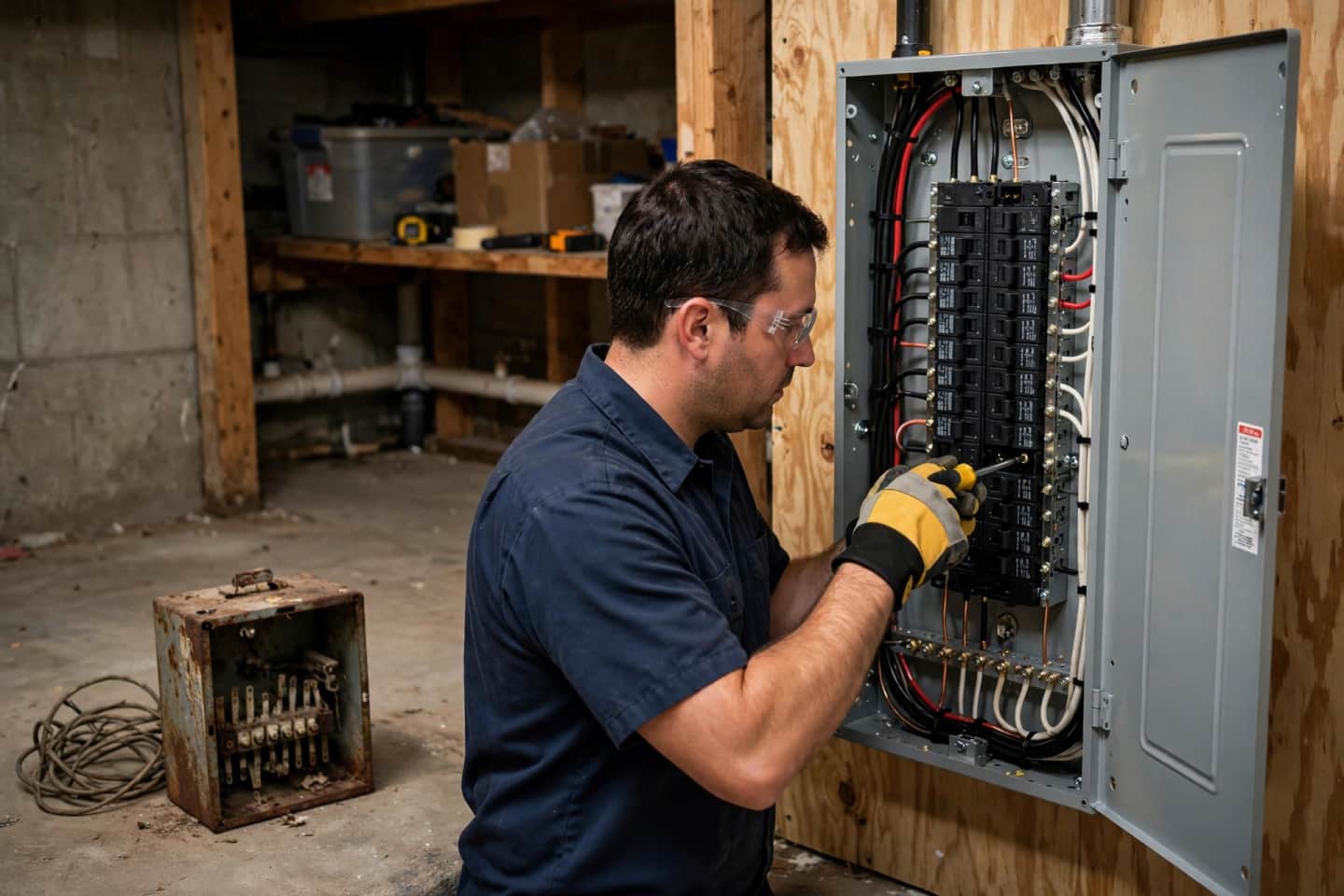
Homes that took on water needed their breakers, outlets, panels and furnace controls replaced rather than dried out, and many rebuilt with panels and mechanical equipment moved upstairs or onto raised platforms. If a basement floods, the safe move is to leave that area de-energized until a licensed electrician has checked it.
Blizzards, cold snaps and the 2021 rolling outages
Nebraska winters bring ground blizzards across the Panhandle and Sandhills and long stretches below zero statewide. In February 2021, the Southwest Power Pool, which coordinates the regional grid, directed rolling outages that reached Omaha and Lincoln during some of the coldest days in decades — an unusual experience for public power customers used to reliable service.
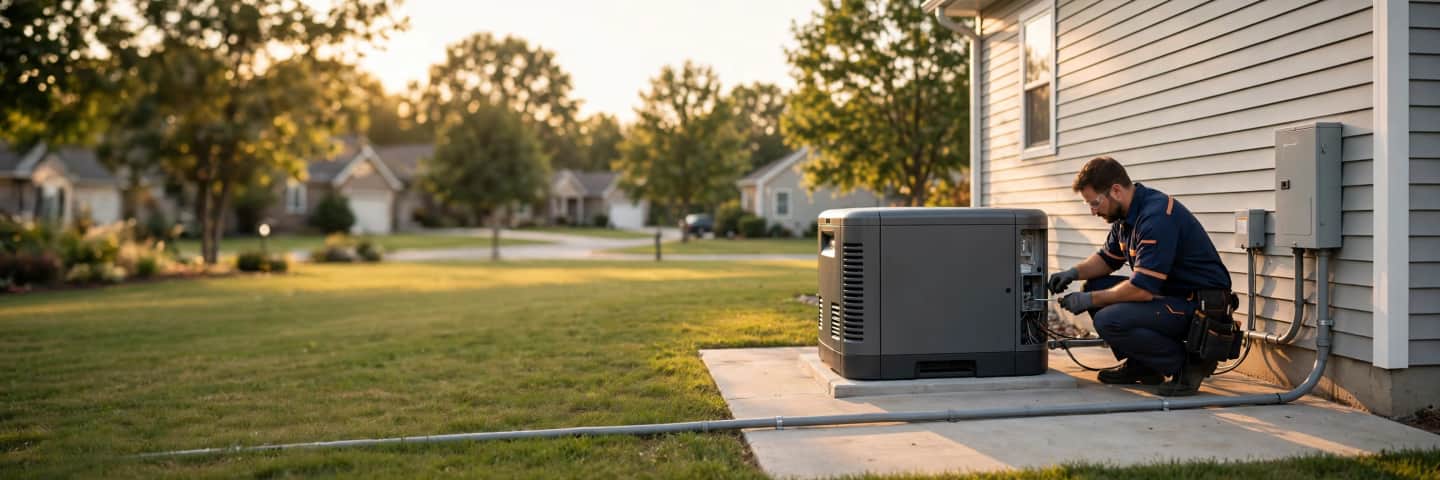
A furnace blower, a boiler circulator or a heat pump air handler all stop when the grid does. A generator wired through a listed interlock or transfer switch, sized to run the heating system plus the refrigerator and a few lights, is the core of a Nebraska winter outage plan.
Straight-line winds and hail
The derecho of May 12, 2022, raced across eastern Nebraska with gusts near 100 miles per hour, knocking out power to a large share of OPPD customers. Tornadoes add to the toll each spring, and hailstones the size of baseballs regularly shred siding, gutters, solar modules and outdoor condensers.
When wind tears the service drop from a house or bends the mast, the utility can only restore power after the homeowner’s side — the mast, weatherhead and meter socket — has been rebuilt by an electrician. After a hailstorm, it is worth checking that rooftop conduit and the weatherhead are still sealed, because cracked fittings let water reach wiring.
Center pivots, grain dryers and farm power
Nebraska irrigates more cropland than any other state, and thousands of center-pivot systems and irrigation wells pull power through the growing season. Rural public power districts design their lines around this load. On the farmstead, grain bins, aeration fans, dryers and shops add large motors that need properly sized feeders, disconnects and grounding.
Grain dust, bird nests and mice are the enemies of farm wiring. Enclosed, dust-tight fixtures, conduit instead of exposed cable in livestock buildings, and an annual walk-through before harvest go a long way toward preventing barn and bin fires.
Omaha and Lincoln housing
Omaha’s Dundee, Benson and Field Club neighborhoods and Lincoln’s Near South and Everett are filled with foursquares, bungalows and Victorians built before the Second World War. Opening a wall in these homes often reveals cloth-insulated cable or knob-and-tube, and many still run on modest services that predate central air.
West Omaha, Elkhorn, Papillion, Gretna and the newer edges of Lincoln are dominated by post-1990 construction with 200-amp panels, but finished basements, hot tubs and workshops fill those panels faster than many owners expect.
Basement shelters and sump pumps
In much of Nebraska, the basement is both the family storm shelter and the part of the house most likely to flood. That makes two upgrades worth considering together: permanent lighting and an outlet for a weather radio and phone chargers in the shelter area, and a battery backup or generator-powered sump pump so the space stays dry when storms take the power out.
Surges from Plains storms
Thunderstorms on the Plains often bring more lightning than rain. Nearby strikes and the switching that happens as crews restore lines send spikes through home wiring that can take out furnace control boards, irrigation controllers, garage door openers and televisions. A surge protective device mounted at the main panel, backed by plug-in protection for electronics, is a modest investment against those losses.
Heat pumps, EVs and public power incentives
Several Nebraska utilities, including OPPD and LES, offer incentives and rate options for heat pumps and electric vehicles. Many homeowners pair a cold-climate heat pump with an existing gas furnace that takes over on the coldest nights. Adding a Level 2 charger in a home with a 100-amp panel usually starts with a load calculation; a load-management device can sometimes avoid replacing the service.
Sandhills ranches and remote homes
In the Sandhills and the Panhandle, ranch headquarters can sit miles from the nearest town, at the end of long distribution lines that are slow to repair after ice or blizzards. Stock wells, tank heaters and calving barns cannot wait for restoration crews, so a generator sized for those loads — connected with a proper transfer switch — is standard equipment on many ranches.
How the regions differ
The Omaha–Lincoln corridor deals with older city neighborhoods, fast-growing suburbs and derecho winds. Northeast Nebraska and the river valleys carry the most flood risk. The Platte Valley from Grand Island to North Platte is irrigated farm country. The Sandhills are sparsely settled ranch land, and the Panhandle around Scottsbluff is high, dry and prone to ground blizzards.
Typical projects in Nebraska
The work Nebraska electricians see most often includes rebuilding storm-damaged masts and meter sockets, installing generators with interlocks or transfer switches, adding battery-backed sump pumps and shelter lighting, replacing fuse boxes and undersized panels in older city homes, wiring farm buildings and irrigation equipment, and installing EV chargers in the suburbs.
A note on timing
Frozen ground makes trenching for garage feeders, shop circuits and EV charger runs harder from December through March, so Nebraskans often schedule outdoor electrical work for spring through fall and save panel replacements and rewiring for winter.
Hiring an electrician in Nebraska
Look up the electrician’s license with the State Electrical Division, confirm whether Omaha, Lincoln, another city or the state will issue the permit and inspect the job, and ask for the scope in writing. For anything involving the service — panel changes, meter moves, generator hookups — ask how the electrician will schedule the disconnect with OPPD, LES, NPPD or your local public power district.
Electrical licensing and permits in Nebraska are set by state and local authorities. The electrician confirms what applies to your project.
Services
Most requested in Nebraska
Ranked by how many of this state’s climate risks each service addresses.
Connect with an independent licensed electrician near you
Smoke, flames or sparking? Leave the building and call 911 first.
Pronto Electrician is a free referral service. Calls are answered by independent licensed electricians in your area. Pronto Electrician does not perform electrical work, and the electrician you choose sets the price, schedule, permits and warranty.
Free to call · All 50 states + DC
Talk to a licensed electrician in Nebraska
Describe the problem and get connected with an independent licensed electrician who serves your area.