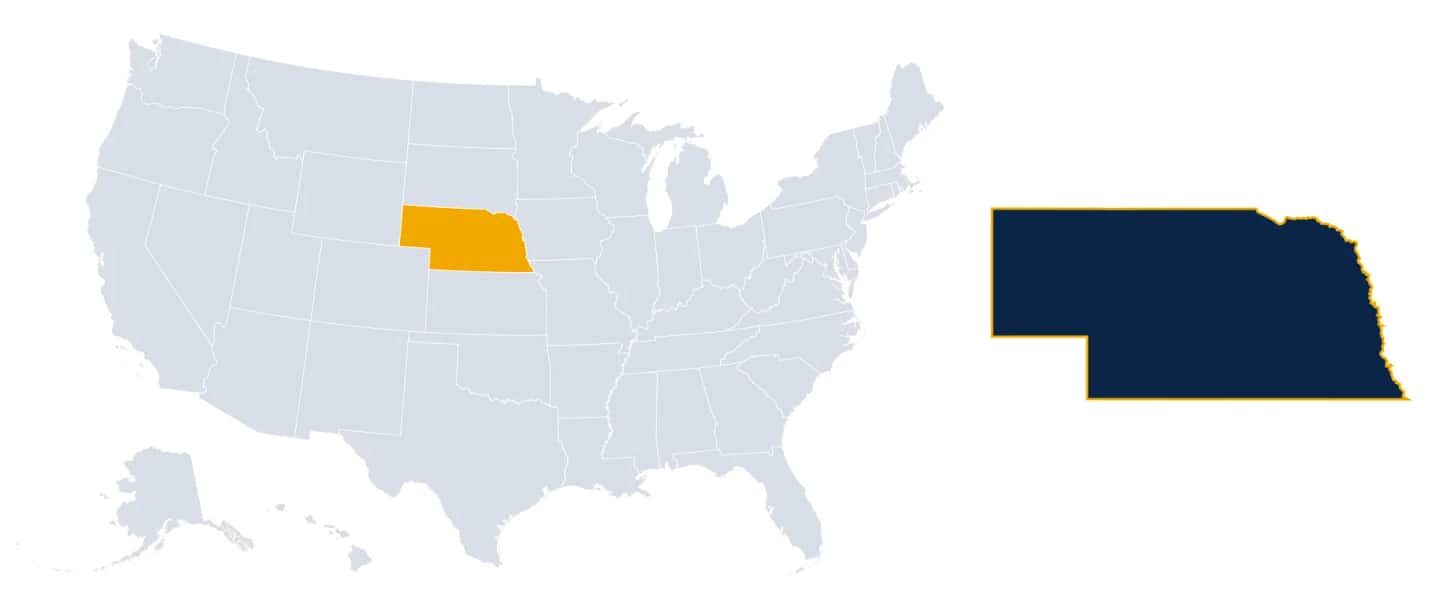
Lincoln was a prairie village called Lancaster until Nebraska chose it as the capital in 1867, and Bertram Goodhue’s Capitol tower still rises over the city. Lincoln Electric System, owned by the city, supplies power in a state where every electric utility is publicly owned. Pre-war houses with basements surround the University of Nebraska, absorbed towns such as Havelock and College View keep their own character, and new subdivisions keep spreading south and east across clay and loess soils.
Near South, Everett and Woods Park are full of Victorians, foursquares and bungalows from the 1880s through the 1920s, almost all built over basements. Bethany, University Place, College View and Havelock were separate towns annexed between 1922 and 1930. Post-war ranches fill much of the east side and northeast, and the far south, southeast and northwest edges have been built mostly since 1990, with finished basements that steadily add circuits.
Problems that come up again and again in local homes, and the service that fixes each one.
01
Fuse-era basements in Near South
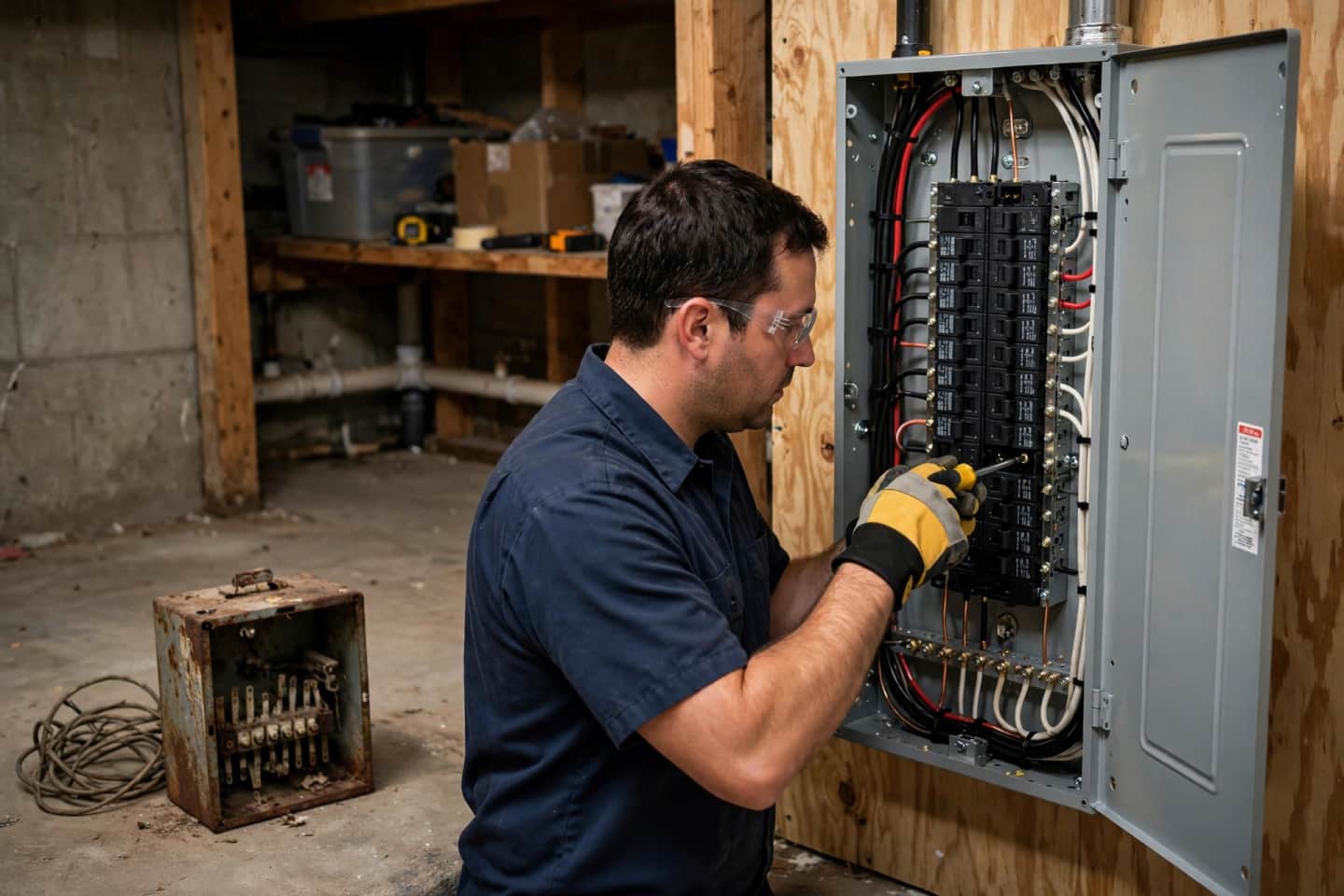
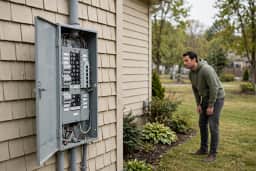
Older Lincoln homes often keep the service in an unfinished basement where fuses, ungrounded circuits and a small panel sit beside the furnace. Finishing that basement usually starts with a panel upgrade.
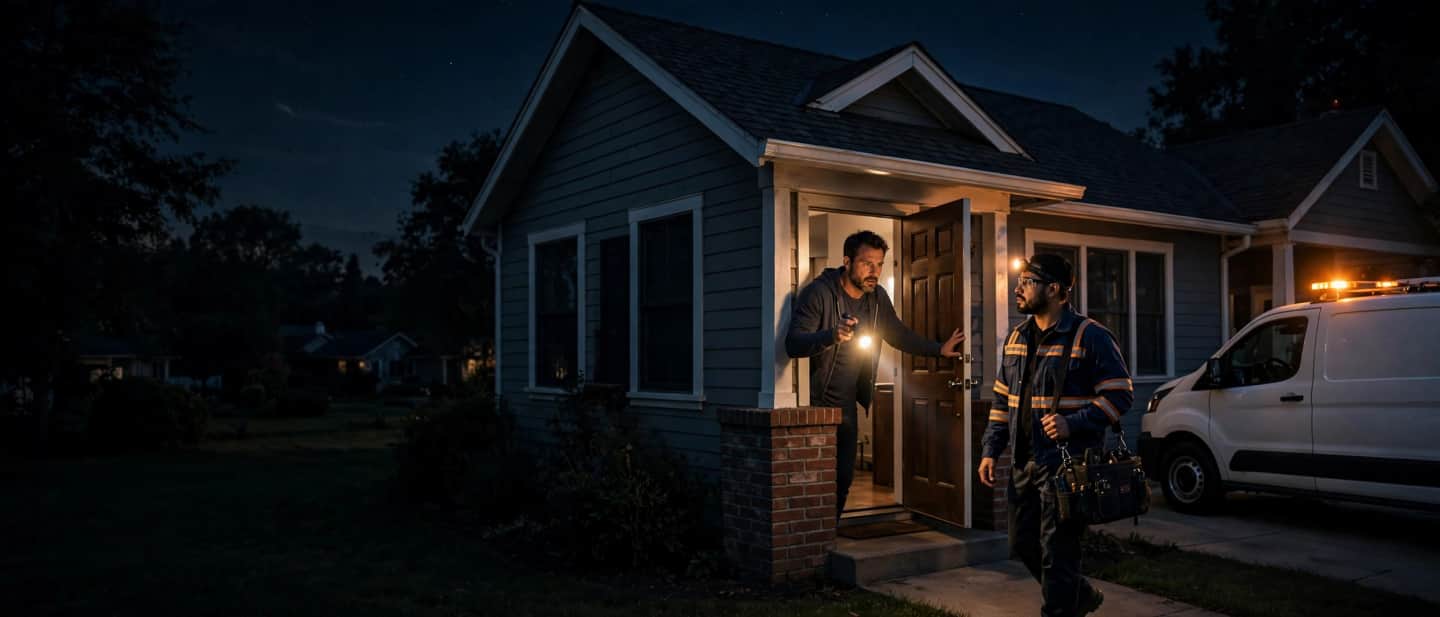
The October 1997 snowstorm and the August 2025 windstorm both brought down trees onto lines across the city. Pulled masts and damaged meter bases need an electrician before LES can restore service.
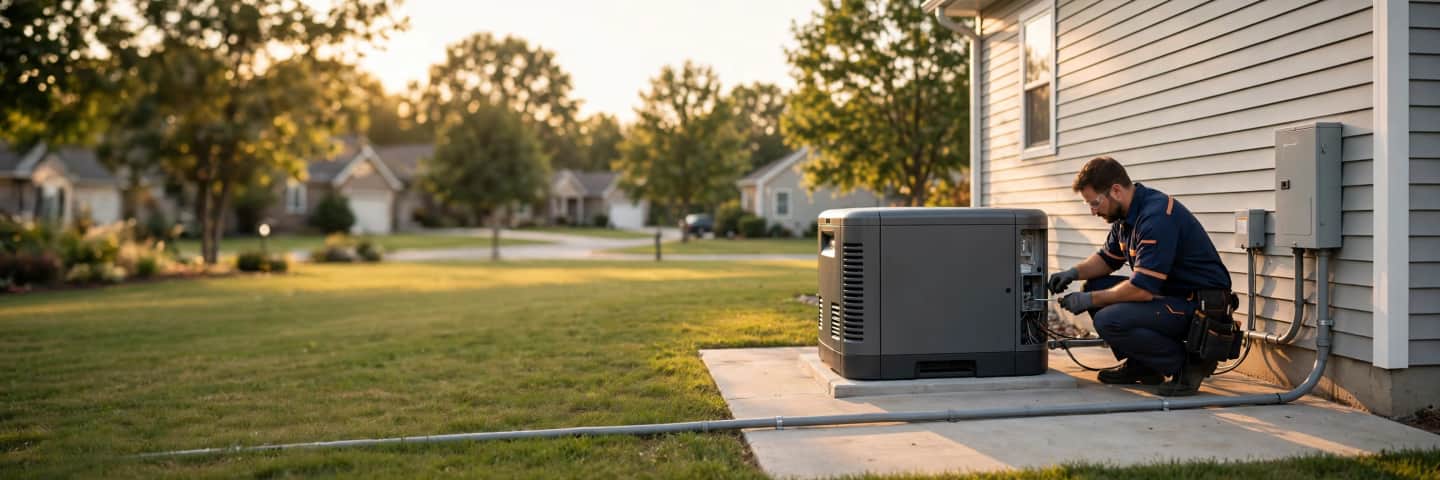
Clay and loess under Lincoln hold water against foundation walls, and many basements depend on a sump pump. A dedicated circuit and backup power keep it running during summer storms.
History, housing, weather and rules that shape electrical work in Lincoln, NE.
Lancaster becomes the capital
When Nebraska became a state in 1867, commissioners chose the small settlement of Lancaster, near the salt flats along Salt Creek, as the capital and renamed it Lincoln. Early hopes for a salt industry faded, but state government, the railroads and the university chartered in 1869 built the city. Its oldest neighborhoods grew in a grid around the capitol square and the campus.
Goodhue’s Capitol and the downtown grid
The current Nebraska State Capitol, designed by Bertram Goodhue, was built between 1922 and 1932, and its tower is visible across the city. Downtown blocks around it mix state offices with older commercial buildings, many of which now have apartments upstairs. Converting those floors to housing usually brings new services, separate meters for each unit, emergency lighting and fire alarm work.
Haymarket warehouses and the arena
The Haymarket grew beside the rail yards west of downtown, with brick warehouses for produce, farm implements and freight. Today those buildings hold restaurants, offices and lofts, and Pinnacle Bank Arena opened nearby in 2013. Commercial electricians working in the district often deal with thick masonry, old freight elevators and services that need to be rebuilt for modern kitchens and tenants.
Near South and Everett houses
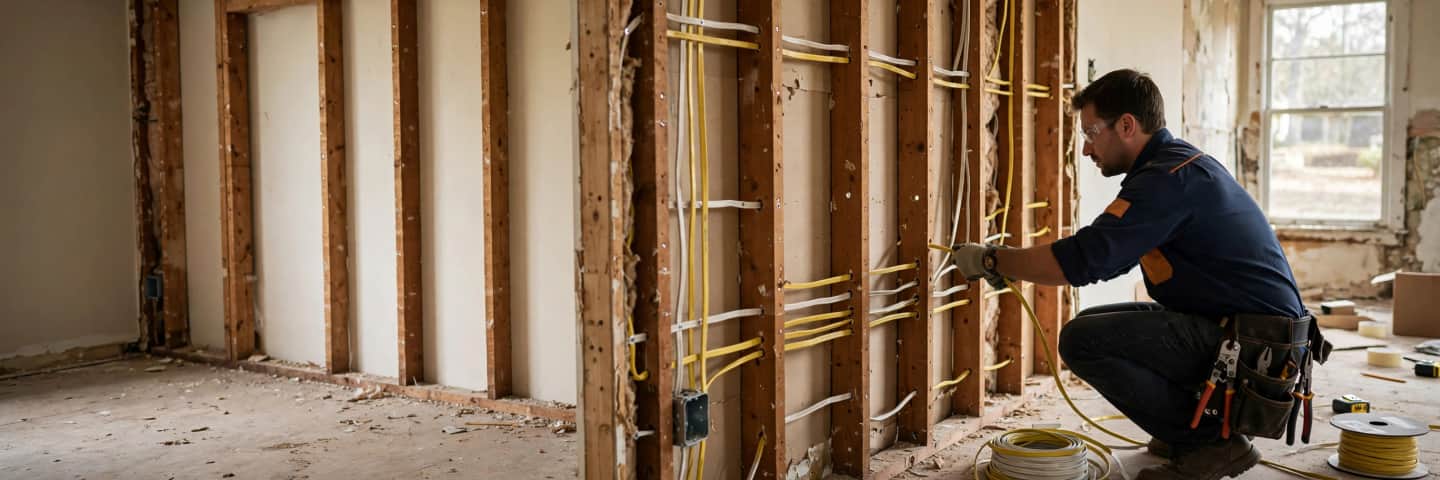
South of downtown, Near South and Everett hold large Victorians, foursquares and Prairie-influenced houses built from the 1880s into the 1920s. Many were split into apartments during the twentieth century and later restored as single homes. Electricians there find knob-and-tube, cloth-covered cable, old fuse boxes in basements and multiple meters left over from apartment days. Rewiring is usually done from the basement up, through closets and attics.
Four towns absorbed by Lincoln
Lincoln grew partly by swallowing its neighbors. Bethany was annexed in 1922, University Place in 1926, College View in 1929 and Havelock in 1930. Each had its own main street, churches and small houses, and each still feels distinct. Their oldest homes predate annexation and were often built by local carpenters, so wiring methods vary widely from one house to the next.
Havelock and the Burlington shops
Havelock grew up around the Burlington railroad’s shops in northeast Lincoln, where workers repaired locomotives and cars. Small worker cottages and bungalows line the streets near Havelock Avenue. Many have been updated in pieces, with a newer panel feeding original circuits, so a careful evaluation of what is actually behind the walls should come before any remodel or the purchase of a new appliance.
College View and Union College
College View formed around Union College, a Seventh-day Adventist school that opened in 1891 in what was then open prairie southeast of Lincoln. The neighborhood still has small early-1900s houses near the campus along with mid-century homes farther out. Rentals for students and staff are common, and landlords often add outlets and kitchen circuits as appliances outgrow the original wiring.
University Place and Nebraska Wesleyan
Nebraska Wesleyan University anchors University Place in northeast Lincoln. The old town center along 48th Street and the surrounding blocks of bungalows and cottages date from the decades before annexation in 1926. Wesleyan was founded in 1887, and the surrounding town grew with it. Owners updating these houses commonly replace ungrounded circuits, add bathroom and kitchen GFCI protection and enlarge the service for central air.
Campus rentals around UNL
The University of Nebraska–Lincoln brings tens of thousands of students to City Campus and East Campus, and the older houses in Hawley, Malone and the blocks north of campus are heavily rented. Extension cords, space heaters and window air conditioners stress old circuits. Landlords commonly add receptacles, smoke alarms and dedicated circuits to cut down on tripped breakers and fire risk.
October 1997: snow on leafy trees
On October 25 and 26, 1997, Lincoln received 13.2 inches of heavy, wet snow while trees still had their leaves. Limbs snapped all night, about 55,000 LES customers lost power, and some were not reconnected until November 3, more than a week later. The storm reshaped the city’s tree canopy, and many service drops, masts and meter bases were replaced in the weeks afterward.
February 2021 rolling outages
During a record cold wave on February 15 and 16, 2021, the Southwest Power Pool ordered utilities across the region to shed load. LES rotated outages that reached more than 12,000 customers, an unfamiliar experience in a public power city used to reliable service. The event pushed many Lincoln households to look at standby generators, transfer switches and backup for sump pumps.
The August 2025 windstorm
Early on August 9, 2025, a severe thunderstorm crossed Lincoln with a measured gust of 91 miles per hour. Nearly 35,000 customers lost power at the peak, some for more than three days, and LES put its restoration cost above $2 million. Fallen limbs ripped service drops from houses, and homeowners with damaged masts or meter bases needed repairs by an electrician before LES crews could reconnect them.
Hallam, Waverly and tornadoes nearby
Lincoln itself has seldom taken a direct tornado hit, but Lancaster County has. On May 22, 2004, a tornado more than two miles wide destroyed most of Hallam, south of the city. In April 2024, tornadoes near Waverly and northeast Lincoln damaged homes and overturned a train. Surge protection, sound grounding and secure service masts make sense across the county.
The Antelope Creek flood channel
For decades Antelope Creek ran through an underground conduit and flooded neighborhoods east of downtown in heavy rain. The Antelope Valley Project replaced it with an open channel, and FEMA map revisions in March 2011 removed about 450 acres and more than 570 structures from the floodplain. Homes in the area still benefit from keeping panels and basement equipment above likely water levels.
Salt Creek and the saline wetlands
Salt Creek winds through north and west Lincoln behind levees, past saline wetlands found almost nowhere else in the state. Building near the floodplain comes with city rules for elevation and flood protection of new structures. For electrical work that means paying attention to where panels, meters, disconnects and outdoor equipment sit, and using wet-location rated materials in basements and crawl spaces.
Loess, clay and wet basements
Wind-blown loess over glacial clay covers much of the Lincoln area. It holds water against foundation walls after spring storms and heavy snowmelt, which is why sump pumps are so common. A pump on its own circuit, with a battery or generator backup, protects a finished basement. Unfinished basement outlets also need GFCI protection, since water and concrete floors make shocks more likely.
Arnold Heights and the old air base
Lincoln Air Force Base operated on the northwest side until 1966. The runways became Lincoln Airport, which the Nebraska Air National Guard still shares, and housing built for the base became the Arnold Heights neighborhood. These mid-century homes have been through several owners, and panel replacements, grounding upgrades and outlet additions are common requests there, especially when kitchens are remodeled.
Finished basements on the south edge
Subdivisions along the south and southeast edges, and in the northwest near Fallbrook, were built mostly after 1990 with 200-amp services. Owners there commonly finish basements, add a hot tub or workshop and install an EV charger, and the panel fills quickly. Lincoln requires permits for that work, and inspections help catch missing AFCI protection, undersized wire or overloaded circuits.
Questions
Questions from Lincoln homeowners
Who issues electrical permits in Lincoln?+
The City of Lincoln’s Building & Safety Department, part of Planning and Development Services at 555 South 10th Street, issues electrical permits and inspects electrical work inside the city’s jurisdiction, with the office in Suite 203 of the County-City Building. Permit applications and inspection requests go through that office. Farther out in Lancaster County, ask Building & Safety or the Nebraska State Electrical Division which office has jurisdiction.
Does Nebraska license electricians?+
Yes. The Nebraska State Electrical Division, headquartered in Lincoln, licenses electricians and electrical contractors statewide. Lincoln is one of the cities that runs its own electrical licensing through Building & Safety, and a city license can be used in place of the state license for work inside Lincoln’s jurisdiction. Contractors also register with the Nebraska Department of Labor.
Why is Lincoln’s utility owned by the city?+
Nebraska is the only state served entirely by publicly owned electric utilities, and Lincoln Electric System is the city’s own. Outages, meter questions and service disconnects all go through LES, which sets its rates locally rather than earning profits for shareholders.
Connect with an independent licensed electrician near you
Smoke, flames or sparking? Leave the building and call 911 first.
Pronto Electrician is a free referral service. Calls are answered by independent licensed electricians in your area. Pronto Electrician does not perform electrical work, and the electrician you choose sets the price, schedule, permits and warranty.