
01
Tornadoes and wind
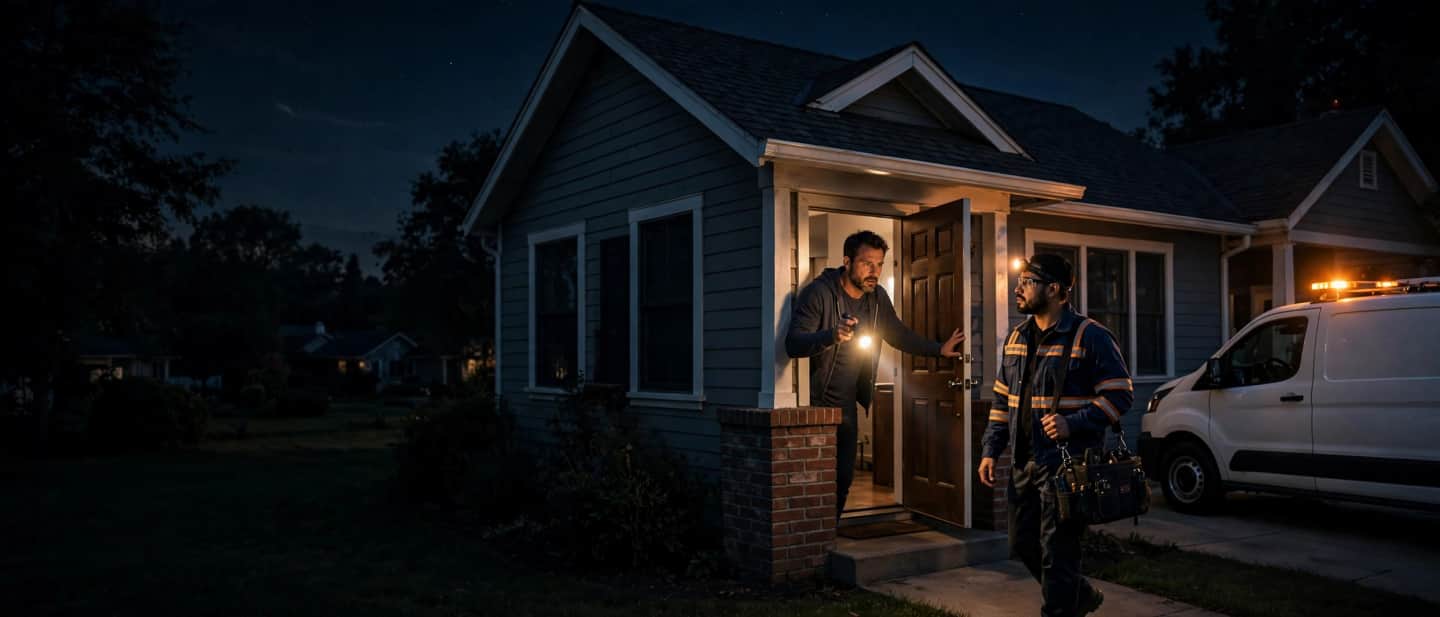
The May 1975 Omaha tornado tore across the city, and severe windstorms still damage service drops and masts. Damaged equipment must be repaired before OPPD reconnects.
Emergency Electrician
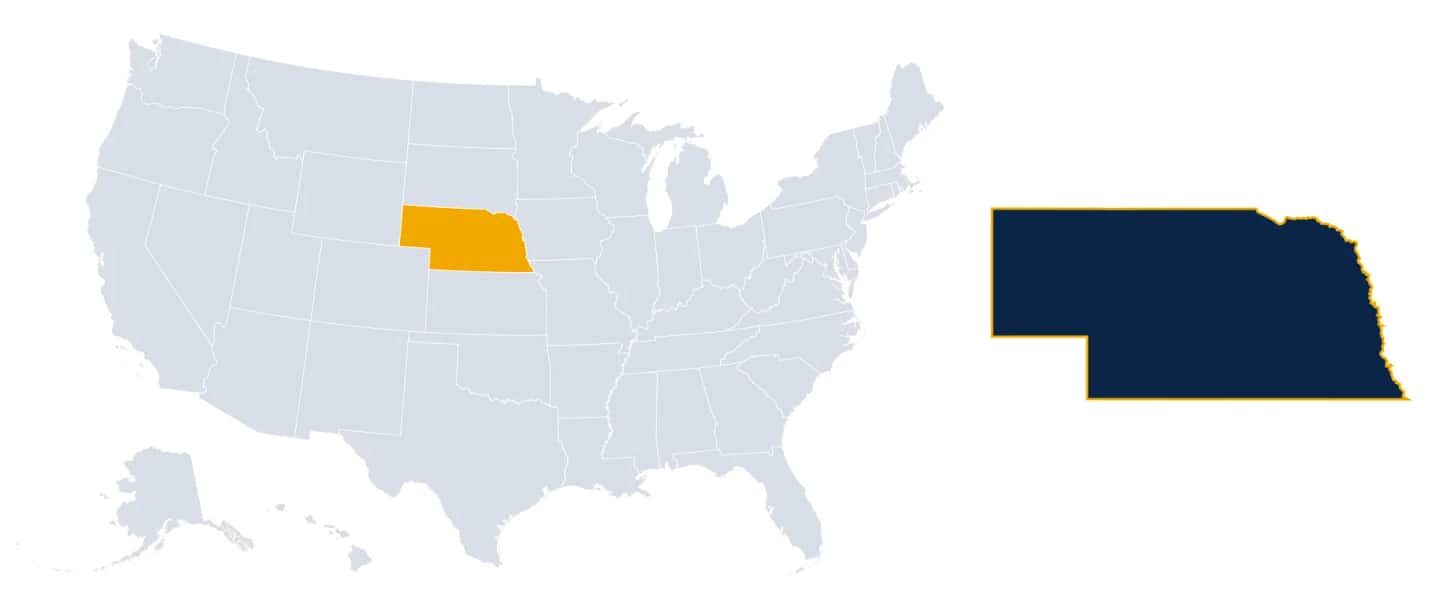
Omaha sits on the bluffs above the Missouri River and is powered entirely by public power: Nebraska is the only state where every home and business gets electricity from a publicly owned utility, and in Omaha that is OPPD. Tornadoes, ice storms, bitter cold, summer heat and river flooding all test homes here, and the city’s older neighborhoods are filled with homes more than a century old.
Free to call · Independent licensed electricians
Serving Dundee, Benson, Field Club, Florence, Midtown, Millard and every other Omaha neighborhood.
Omaha at a glance
Electrical services in Omaha
The calls Omaha homeowners make most, followed by every service independent licensed electricians handle here.
Not sure which service you need? Describe the problem and an electrician will tell you.
Call for Electrical Service in OmahaHousing and wiring
Field Club, Gifford Park, Bemis Park and Kountze Place have Victorian and early-1900s homes. Dundee and Happy Hollow have Tudor, Colonial and Craftsman homes from the 1910s through the 1930s, Benson and Florence have bungalows and cottages, and west Omaha, including annexed Millard and Elkhorn, grew mostly after 1960.
Neighborhoods we cover
Local issues
Problems that come up again and again in local homes, and the service that fixes each one.
The May 1975 Omaha tornado tore across the city, and severe windstorms still damage service drops and masts. Damaged equipment must be repaired before OPPD reconnects.
Emergency ElectricianHomes in Field Club, Dundee and Benson often have original wiring, small services and basement panels.
House RewiringHeavy rains and spring thaw push water into basements. Sump pumps need dedicated circuits and backup power.
Generator InstallationLocal guide
History, housing, weather and rules that shape electrical work in Omaha, NE.
Every Nebraska home and business is served by a public power entity, such as a municipal utility, a public power district or a cooperative. OPPD, governed by an elected board, serves Omaha and a large surrounding area. Because OPPD is publicly owned, its rates, rebates and rules for service upgrades and solar interconnection are set locally. OPPD has also shifted its generation mix in recent years, closing the Fort Calhoun nuclear station in 2016.
Field Club, south of downtown near Hanscom Park, and Gifford Park, in midtown, have Victorian, Queen Anne and early-1900s homes, many on large lots. Field Club is a local landmark district. Restoring these homes typically means replacing knob-and-tube wiring, consolidating panels and upgrading services, while keeping meters and conduit off the front facades.
Dundee, once a separate village annexed in 1915, has tree-lined streets of Tudor, Colonial and Craftsman homes from the 1910s through the 1930s and a lively business district along Underwood Avenue. Homes there are often remodeled with modern kitchens, finished basements and EV chargers, which frequently push original services past their limits.
Benson, northwest of midtown, grew around a streetcar line and has bungalows and cottages from the early 1900s, plus a revitalized business district. Florence, in far north Omaha, was a Mormon settlement in the 1840s and has some of the city’s oldest homes. Both neighborhoods have homes with small services and outdated wiring.
North Omaha, home to long-standing Black communities and historic neighborhoods such as Kountze Place, has many homes from the late 1800s and early 1900s. Decades of disinvestment left many homes needing electrical updates, and nonprofit and city programs sometimes help owner-occupants with repairs.
South Omaha grew around the stockyards and meatpacking plants and was a separate city until 1915. Its small homes and cottages, many owned by immigrant families, often have original wiring and small panels. Renovations commonly include service upgrades and grounded circuits.
West Omaha grew rapidly from the 1960s onward, and the city annexed Millard in 1971 and Elkhorn in 2007. These areas have ranch homes, split-levels and newer subdivisions. Homes from the 1960s and 1970s may have original panels, some from manufacturers electricians recommend replacing, and newer homes may still need upgrades for EV chargers or hot tubs.
On May 6, 1975, a violent tornado tracked through the heart of Omaha, damaging or destroying thousands of homes and businesses. It remains one of the costliest tornadoes in American history. Today, basements serve as shelters, and lighting and an outlet for charging and a weather radio make them more useful.
Omaha regularly sees severe thunderstorms with damaging straight-line winds and hail. Mature trees in older neighborhoods drop limbs on service drops, pulling masts from houses. Repairing damaged masts and meter bases is the homeowner’s responsibility before OPPD can reconnect service.
Ice storms periodically coat Omaha’s trees and lines, causing widespread outages, and winter temperatures can drop well below zero. Gas furnaces need electricity for blowers and controls, so backup power plans should include the furnace and sump pump. Heat tape on pipes should be on ground-fault-protected circuits.
In March 2019, a powerful storm combined with snowmelt and ice jams caused record flooding on the Missouri, Platte and Elkhorn rivers, inundating communities around Omaha and flooding much of Offutt Air Force Base. Homes near rivers and creeks should keep electrical equipment above flood levels and have everything inspected before re-energizing after a flood.
Omaha’s loess soils and clay subsoils hold water, so a quick March thaw on frozen ground or a run of May downpours sends water toward foundations. Lower levels in Benson, Dundee and the older parts of west Omaha rely on sump pits, and a pump that loses power during a thunderstorm can let several inches of water in within an hour. A pump on its own circuit, a battery backup pump in the same pit and a high-water alarm cost little compared with replacing a furnace, water heater and a basement panel that sat in water.
Eastern Nebraska sits in one of the most hail-prone corridors in the country, and Omaha neighborhoods are periodically pounded by stones large enough to dent siding and shatter skylights. After a hailstorm, it is worth checking condenser fins, outdoor disconnects, exterior light fixtures, rooftop solar arrays and the weatherhead where the service enters the house. Cracked fixtures and covers let water into boxes, and an electrician can document damage for an insurance adjuster.
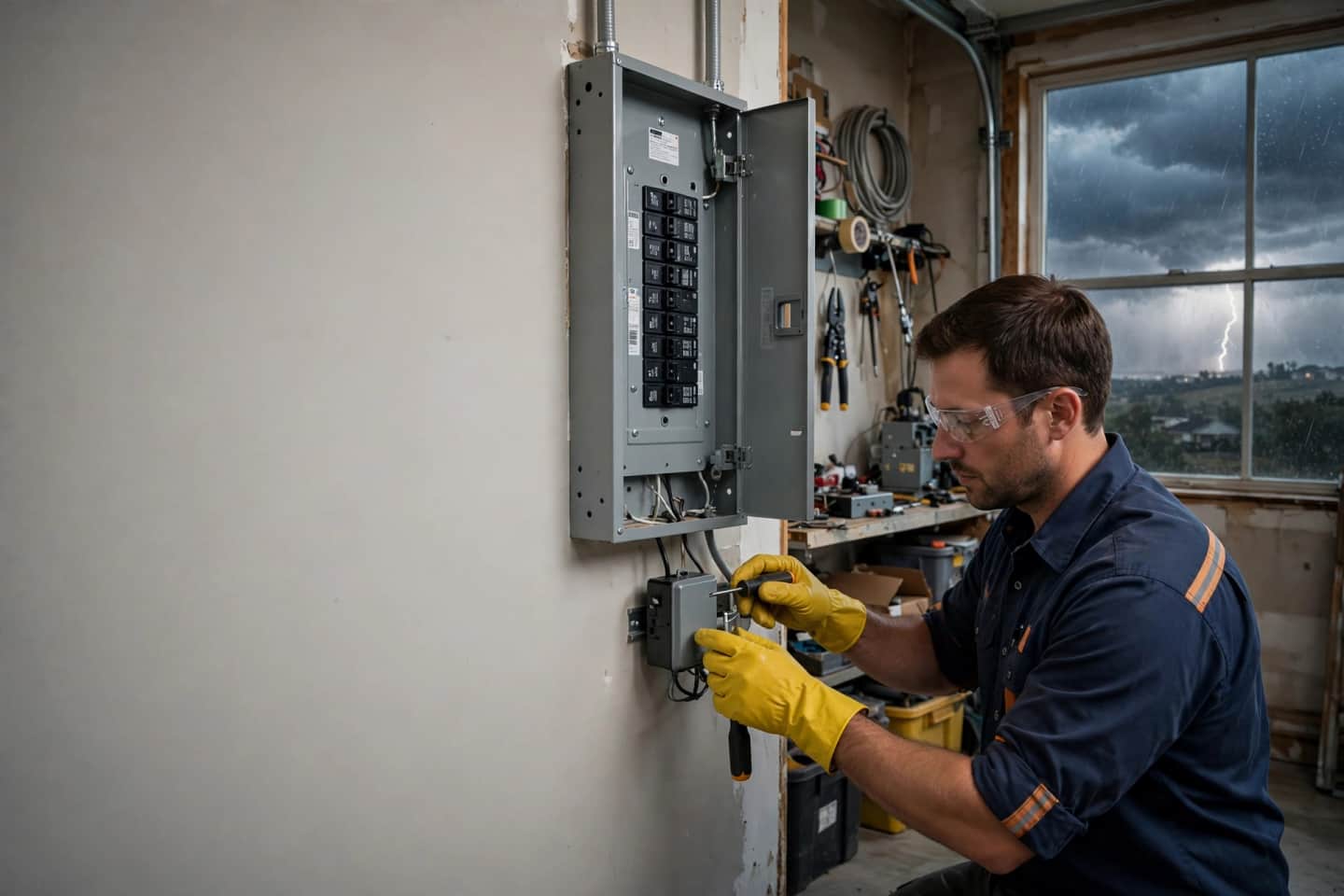
Plains thunderstorms often roll through Omaha at night with intense lightning. The modern furnaces, high-efficiency air conditioners, garage door openers and smart thermostats in many homes all depend on small control boards that surges can kill. A surge protective device mounted at the main panel, paired with plug-in protection for computers and televisions, is the most common protective step Omaha homeowners take.
Omaha summers swing from mild to steamy, with stretches of humid days in the 90s when central air runs for hours on end. Older homes with 60- or 100-amp services sometimes struggle when owners add central air to a house that originally had window units. Breakers that trip on the hottest afternoons, warm panel covers or lights that dim when the compressor starts all point to circuits or connections that need attention.
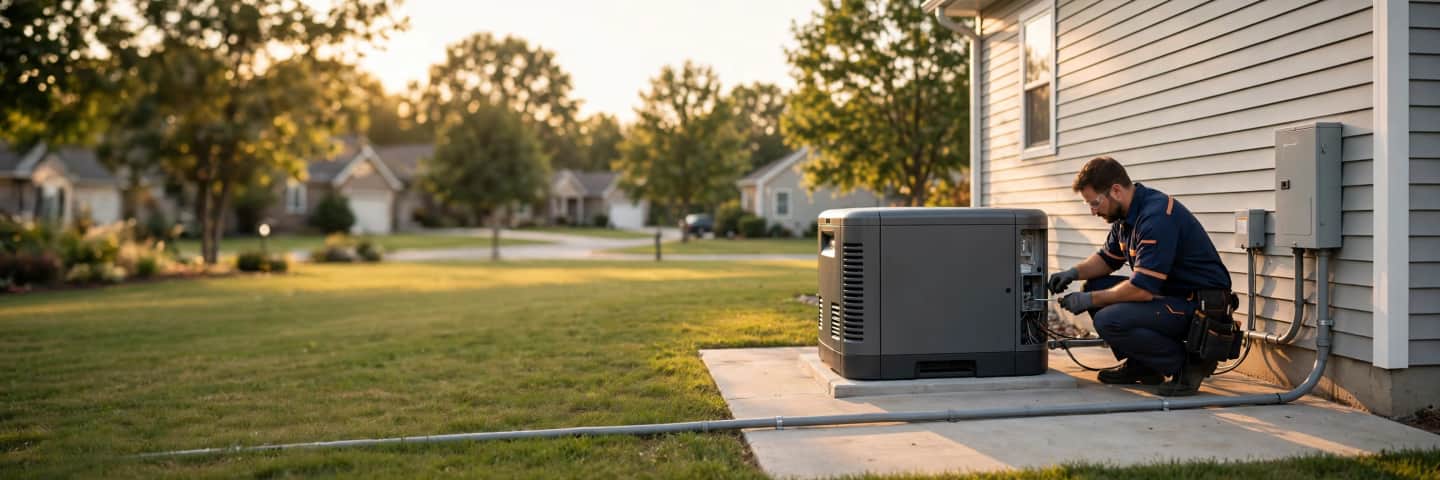
Ice storms and summer derechos have left parts of the metro without power for days, and families have responded in different ways. Some install natural gas standby generators sized to run the furnace, sump pump and refrigerator; others choose a portable generator with a permitted interlock on the main panel. Either way, OPPD crews depend on generators being isolated from the grid, and permits ensure the transfer equipment is listed and installed correctly.
Offutt Air Force Base, home of U.S. Strategic Command, brings many military families to Bellevue and south Omaha. Frequent moves create a steady rental market, and landlords regularly update outlets, alarms and ground-fault protection between tenants.
Many homes in Dundee, Benson and midtown have detached alley garages built for a single car, often fed by an old cable buried decades ago or none at all. Adding a Level 2 charger usually means trenching a new feeder from the house panel and confirming the main service can carry the extra load. OPPD has offered programs for EV owners, so checking current incentives before installation is worthwhile.
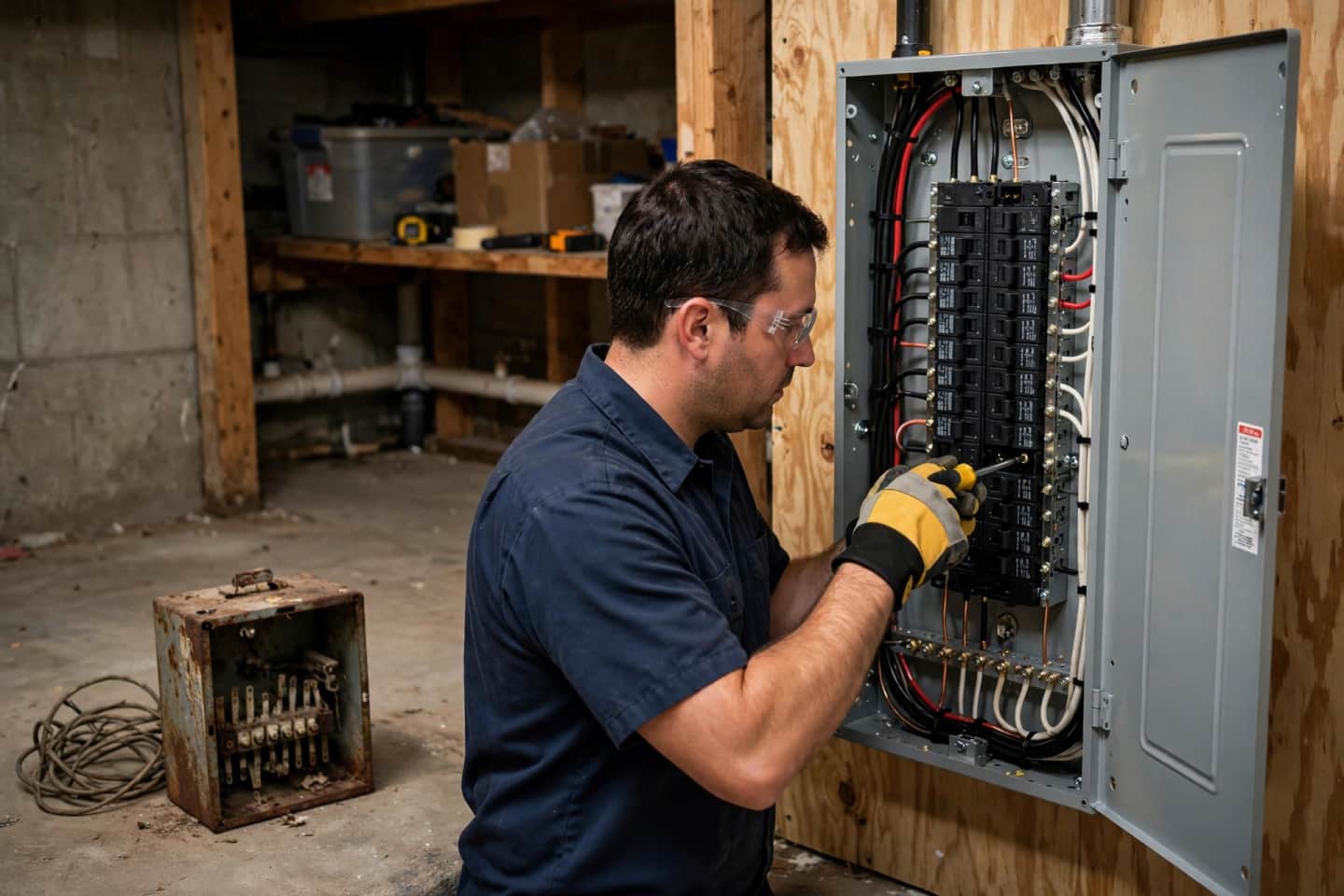
In older Omaha houses, inspection reports commonly note screw-in fuses, cloth-insulated cable still energized in attics, three-prong outlets with no ground behind them and splices hanging loose in unfinished basements. Newer homes on the west side are more likely to show double-tapped breakers or missing ground-fault protection near sinks. A licensed electrician can price the corrections so buyers and sellers negotiate from real numbers.
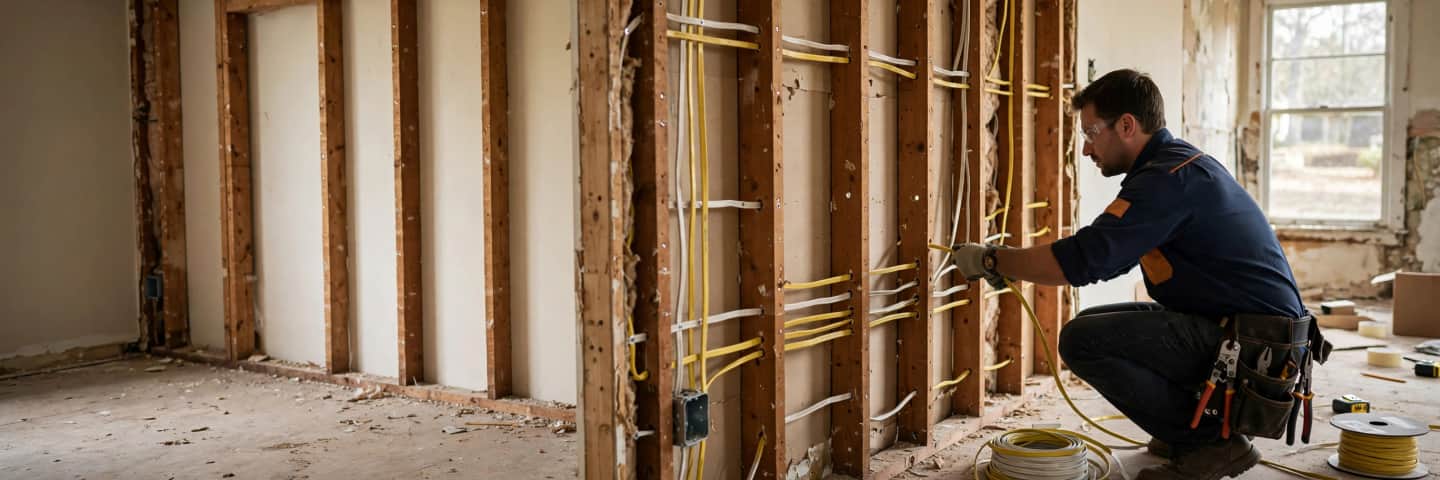
Across the city, the most frequent projects are replacing knob-and-tube in pre-war houses, upgrading undersized services before adding central air or a kitchen remodel, repairing masts and meter sockets after windstorms, protecting sump pumps, installing generator interlocks and adding garage chargers.
Questions
The City of Omaha’s Permits and Inspections Division issues permits and inspects work inside city limits and its extraterritorial jurisdiction. Suburbs such as Bellevue, La Vista, Papillion and Ralston have their own processes.
Yes. The Nebraska State Electrical Division licenses electrical contractors and electricians statewide, and Omaha also has local requirements for contractors pulling permits in the city.
Problem guides
 Breaker Keeps TrippingWhy does my circuit breaker keep tripping?
 Flickering LightsWhy are the lights in my house flickering?
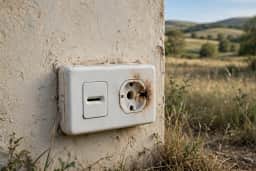 Burnt or Scorched OutletWhat should I do if an outlet has burn marks?
 Burning Smell From OutletIs a burning smell from an outlet dangerous?
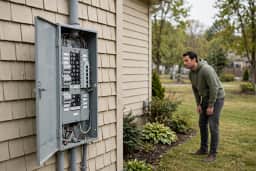 Buzzing Electrical PanelWhy is my electrical panel buzzing?
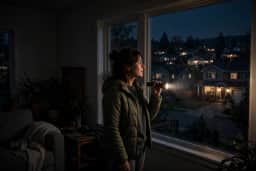 Power Out in Part of the HouseWhy is the power out in only part of my house?
Same-day help often available
Call an electrician in Omaha
Describe the problem and your Omaha neighborhood. Your call goes to an independent licensed electrician who works locally.
Call (855) 679-2483Smoke, flames or sparking? Leave the building and call 911 first.
Pronto Electrician is a free referral service. Calls are answered by independent licensed electricians in your area. Pronto Electrician does not perform electrical work, and the electrician you choose sets the price, schedule, permits and warranty.
Free to call · All 50 states + DC
Describe the problem and get connected with an independent licensed electrician who serves your area.