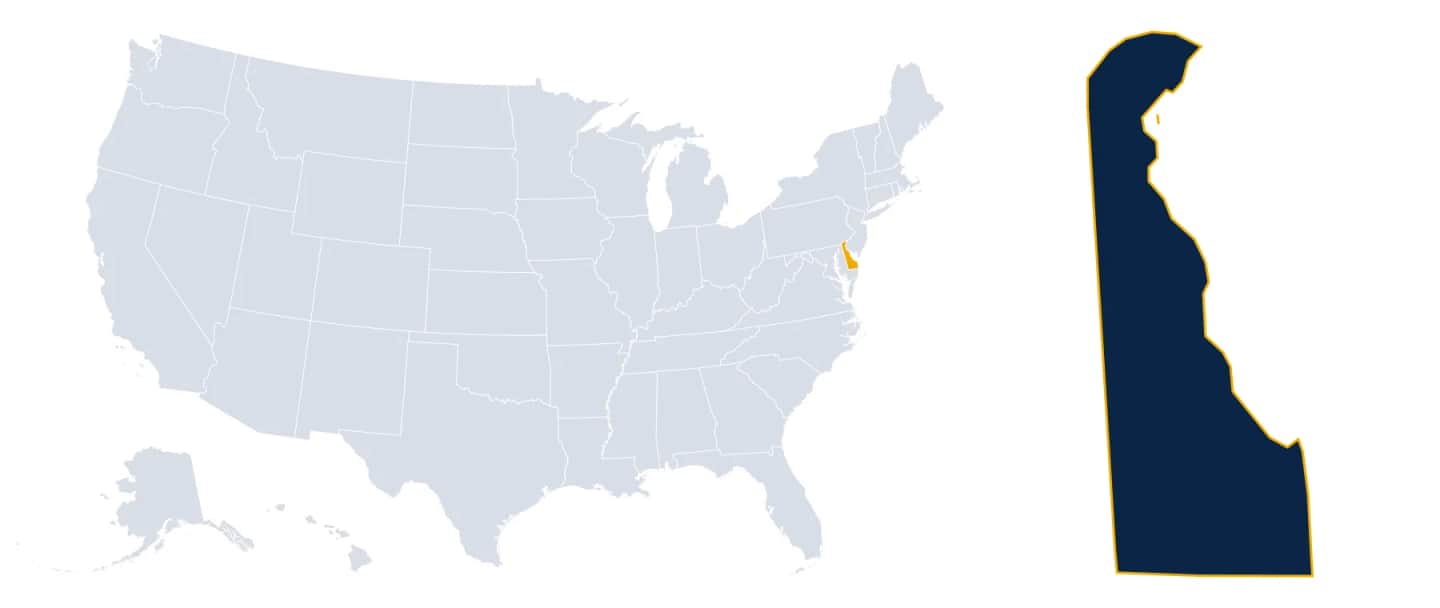
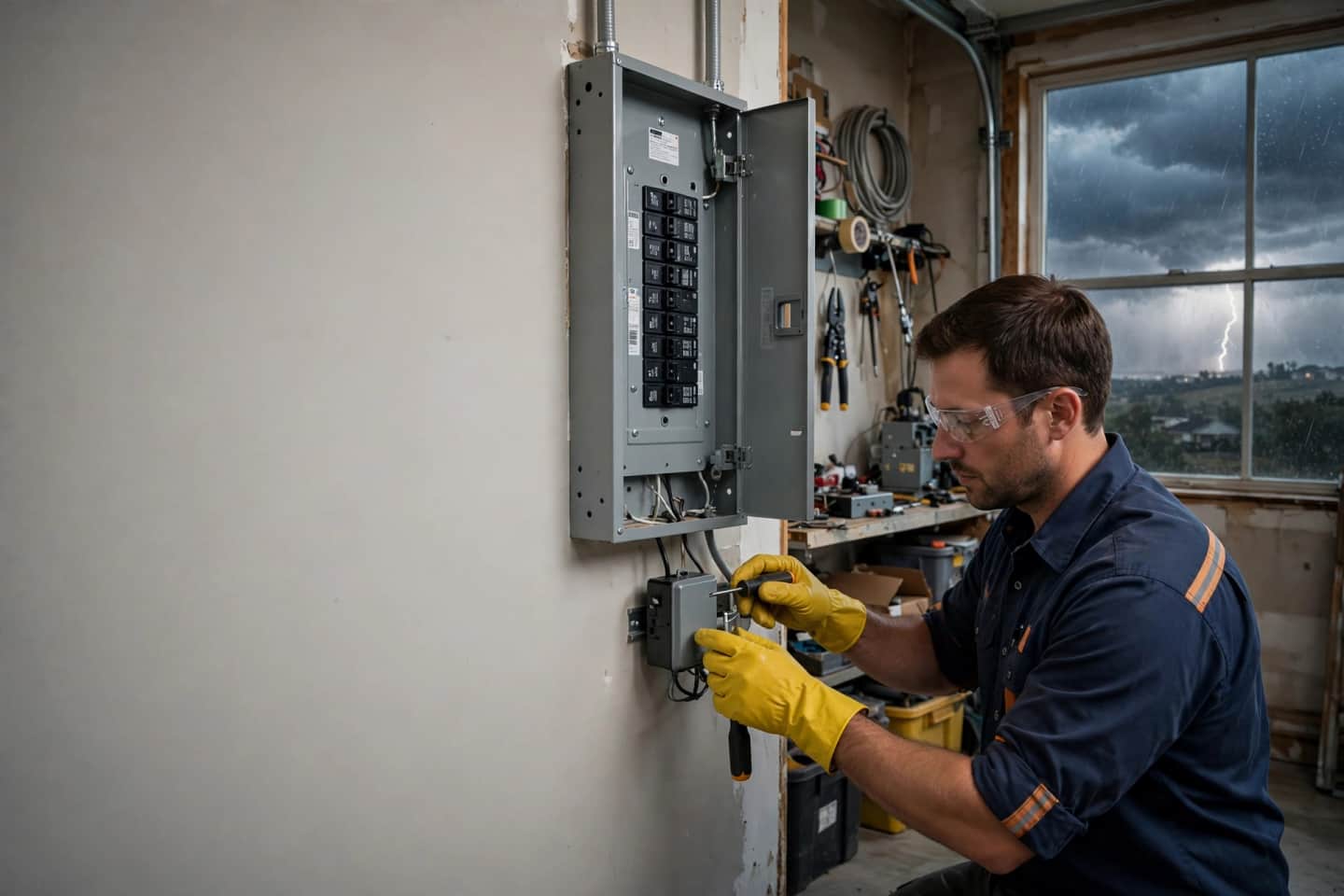
Delaware has the lowest average elevation of any state, which makes coastal flooding and sea-level rise central to its electrical planning. Wilmington’s rowhouses, Newark’s student rentals, Sussex County’s booming beach and retirement communities, and the poultry farms of Delmarva each bring different electrical needs to a state small enough to drive across in two hours.
The hazards that drive the most electrical calls here, and how homeowners prepare for them.
Hurricanes and tropical storms
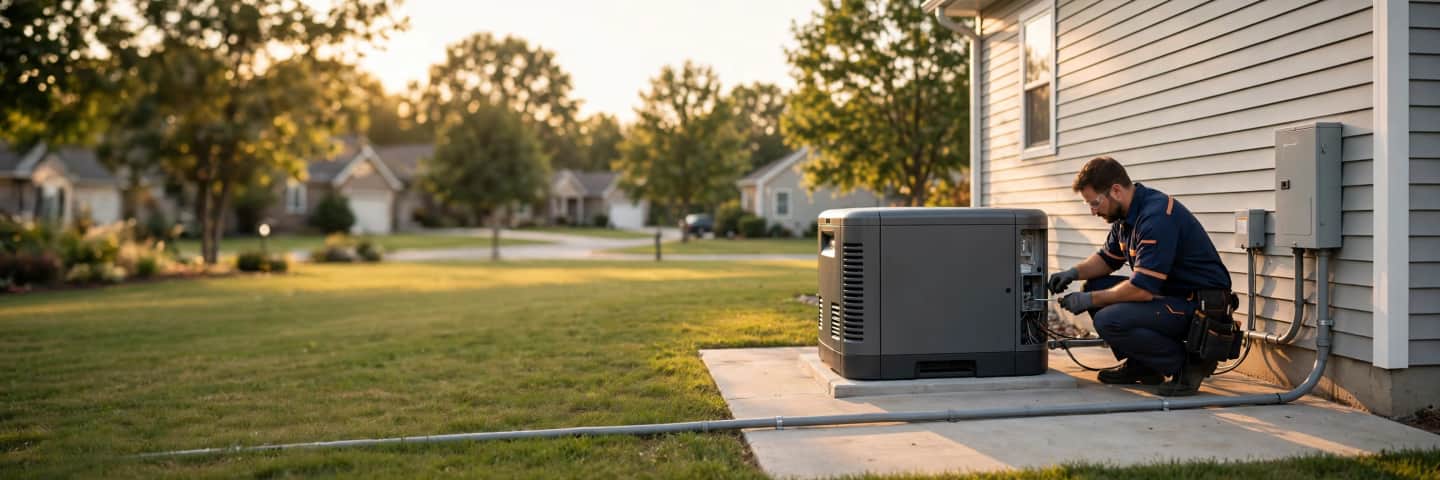
Long outages make backup power a priority. Standby generators with automatic transfer switches, or portable generators connected through a listed interlock, keep refrigeration, sump pumps and medical equipment running. Any equipment that was submerged must be inspected before re-energizing.
Electrical equipment that has been underwater — panels, outlets, breakers, appliances — generally must be replaced, not dried and reused. Do not re-energize a flooded home until an electrician has inspected it.
Salt air corrodes exterior meter bases, disconnects, outdoor receptacles and AC disconnects faster than inland. Corrosion-resistant enclosures and periodic inspection of exterior connections extend their life.
Independent licensed electricians serve communities across Delaware.
Also serving
Wilmington
Dover
Newark
Middletown
State guide
Electrical work in Delaware
Delaware’s utilities
Delmarva Power serves New Castle County and much of the rest of the state. The Delaware Electric Cooperative, owned by its members, serves large parts of Kent and Sussex counties, and nine municipal utilities — including Dover, Newark, Lewes, Seaford, Milford and Middletown — serve their towns. Customers in Delmarva territory can choose an electricity supplier, but the delivery utility controls service upgrades, meter changes and reconnection.
Licensing and third-party inspections
Delaware licenses electricians through the Board of Electrical Examiners, with master, journeyperson and limited licenses. Licenses can be verified through the Division of Professional Regulation.
Electrical inspections in Delaware are typically performed by state-approved third-party inspection agencies, and the utility generally will not energize a new or modified service until an inspection certificate is issued. Building permits come from the county or municipality. Panel upgrades, new circuits, generators, EV chargers and solar need both a permit and an inspection.
A low-lying coast
The Ash Wednesday Storm of March 1962 battered Delaware’s beaches for three days, destroying homes from Lewes to Fenwick Island. More recent nor’easters and Superstorm Sandy flooded Bethany Beach, Rehoboth Beach, Slaughter Beach and communities along the Delaware Bay. With so much of the state close to sea level, tidal flooding now reaches streets during ordinary high tides in some places.
Coastal homes benefit from electrical equipment raised above expected flood levels, corrosion-resistant meter sockets and disconnects, and backup power for sump pumps. Equipment that has been underwater has to be replaced before the power comes back on.
Sussex County growth
Southern Delaware is one of the fastest-growing areas on the East Coast, driven by retirees and second-home buyers drawn by the beaches and low property taxes. Developments around Lewes, Millsboro, Ocean View and Milton add thousands of new homes, many with pools, outdoor kitchens and EV chargers. New homes usually have 200-amp services, but generators and charging can still fill a panel quickly.
Wilmington rowhouses
Wilmington’s Trolley Square, Little Italy, Quaker Hill and the Highlands are made up largely of rowhouses and twins built from the late 1800s through the 1920s. Rewiring them means working in narrow basements and around plaster and party walls, and many still have fuse panels, small services or knob-and-tube wiring hidden in walls and attics.
Newark and student rentals
Newark’s rental market serves the University of Delaware, and many older single-family homes have been converted to student housing. Overloaded circuits, extension-cord wiring and outdated panels are common. Landlords typically need GFCI protection in kitchens and baths, working smoke alarms and enough capacity for more appliances than the house was built to handle.
Poultry farms on Delmarva
Delaware is part of the Delmarva poultry industry, and chicken houses run fans, heaters, feeders, lighting and controls around the clock. A power failure on a hot summer day can kill a flock in a short time, so automatic standby generators and transfer switches are standard equipment. Dusty, humid poultry houses also need sealed fixtures and regular electrical inspection to prevent fires.
Storms, trees and outages
Severe thunderstorms, tropical storms and nor’easters bring down trees onto lines in northern Delaware’s wooded suburbs and across the farmland of Kent and Sussex. When a service drop is pulled away or a mast bends, the homeowner’s side must be repaired and, in Delaware, inspected before reconnection, so having an electrician lined up shortens the outage.
Generators and fuel
Natural gas standby generators are common in New Castle County, while beach and rural homes often use propane units. Portable generators must be connected through a listed interlock or transfer switch and placed outdoors, away from windows and doors. Coastal installations should sit on raised pads.
Solar, EVs and heat pumps
Delaware offers incentives for rooftop solar, EVs and chargers, and many homes in the state already heat with heat pumps. Backup electric heat strips on heat pumps draw large currents in cold snaps. A load calculation helps decide whether an older service can handle an EV charger or additional heat pump.
Lightning and surges
Summer thunderstorms bring frequent lightning along the coast and across the flat farmland of lower Delaware. A surge protective device at the main panel protects heat pump boards, pool equipment and electronics.
Regional differences
New Castle County combines Wilmington’s older neighborhoods with suburbs and Newark’s rentals. Kent County, including Dover, has farms, older towns and growing subdivisions. Sussex County has the beach towns, fast growth, poultry farms and the greatest flood exposure.
Common electrical calls in Delaware
Frequent requests include generator installations, panel upgrades for EV chargers and additions, flood-related repairs, rowhouse rewiring, rental safety updates, poultry house electrical work and surge protection.
Brandywine Hundred and mid-century suburbs
North of Wilmington, the Brandywine Hundred and neighborhoods along Concord Pike and Naamans Road were built largely in the 1950s and 1960s. Ranches, split-levels and colonials from that era often still have their original 100-amp panels, two-prong outlets in some rooms and aluminum branch wiring in a portion of homes. Adding central air, an EV charger or a finished basement in these homes usually starts with a panel evaluation.
Beach rentals and seasonal turnover
Rehoboth, Dewey, Bethany and Fenwick have thousands of vacation rentals that host a new set of guests every week in summer. Heavy use wears out outlets and switches, outdoor showers and decks need fixtures rated for wet locations, and salt air corrodes exterior equipment. Owners commonly schedule an electrical check in the spring before bookings begin.
Retirement communities and medical needs
Many of Sussex County’s new residents are retirees living in 55-and-older communities. Oxygen concentrators, CPAP machines, stair lifts and refrigerated medications make dependable power more than a convenience. Battery backup or a standby generator covering medical equipment, along with bright, well-placed lighting, are common requests.
Docks on the Inland Bays
Homes on Rehoboth Bay, Indian River Bay and Little Assawoman Bay often have docks, boat lifts and dock lighting. Wiring faults on a dock can energize the water around swimmers, so ground-fault protection, bonding and corrosion-resistant fittings are essential, and older docks should be inspected before the boating season.
Dover and Kent County
Dover, the state capital and home of Dover Air Force Base, has historic homes near The Green and many post-war neighborhoods, while Kent County’s towns and farms are steadily filling with new subdivisions. Older homes often need panel updates, and rural properties rely on wells that need backup power.
Pools and outdoor living
Backyard pools, screened porches and outdoor kitchens are standard in many new Sussex and Kent County developments. Pool pumps, heaters and lights must be bonded and protected by ground-fault devices, and outdoor circuits need weather-resistant outlets with in-use covers. Older pools in established neighborhoods often need updates to meet today’s safety rules.
Basements and high water tables
Much of Delaware sits on flat, low ground with a high water table, so basements in northern Delaware and crawl spaces downstate often stay damp. Moisture corrodes panels and connections, and sump pumps need dependable power, ideally with battery backup.
Surge protection near the coast
Coastal thunderstorms and the outage-and-restoration cycles after nor’easters send surges through home wiring. A surge protective device at the main panel protects heat pump boards, pool controls and electronics.
Working with an electrician in Delaware
Verify the electrician’s license with the Board of Electrical Examiners, ask which inspection agency will inspect the work and who will request the inspection, and get a written scope. For service changes, ask how the electrician will coordinate with Delmarva Power, the Delaware Electric Cooperative or your municipal utility.
Electrical licensing and permits in Delaware are set by state and local authorities. The electrician confirms what applies to your project.
Services
Most requested in Delaware
Ranked by how many of this state’s climate risks each service addresses.
Connect with an independent licensed electrician near you
Smoke, flames or sparking? Leave the building and call 911 first.
Pronto Electrician is a free referral service. Calls are answered by independent licensed electricians in your area. Pronto Electrician does not perform electrical work, and the electrician you choose sets the price, schedule, permits and warranty.
Free to call · All 50 states + DC
Talk to a licensed electrician in Delaware
Describe the problem and get connected with an independent licensed electrician who serves your area.