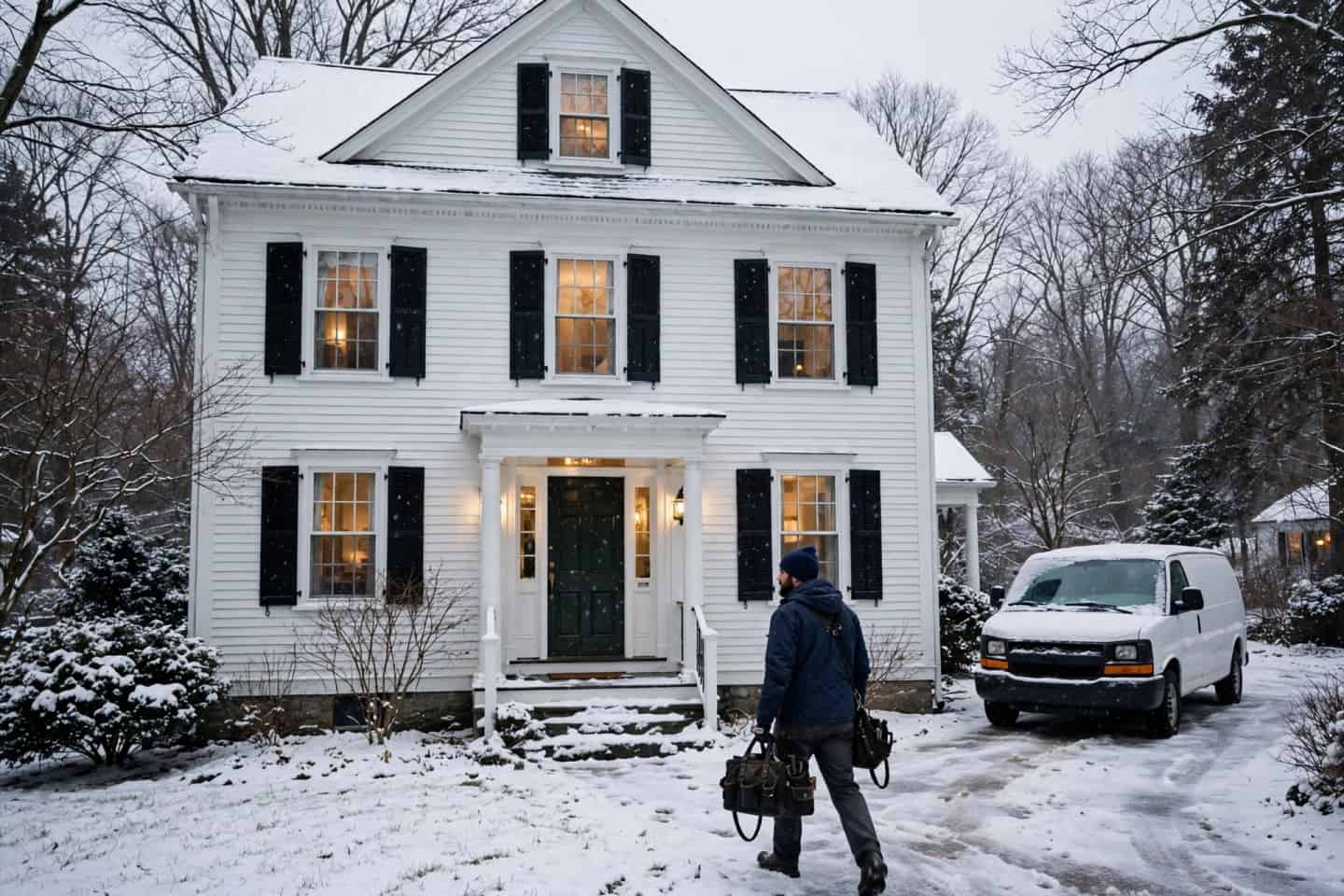
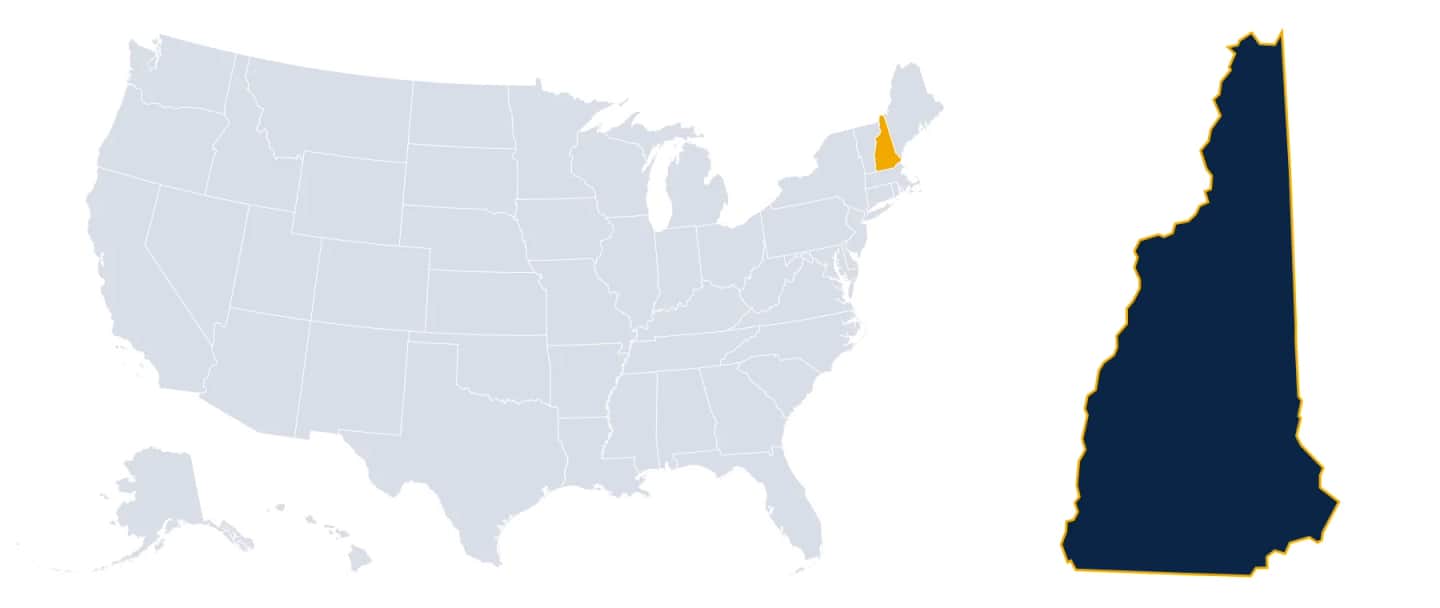
New Hampshire’s woods make it beautiful and make its power lines vulnerable. The December 2008 ice storm caused the largest outage in the state’s history, and an October 2017 windstorm left hundreds of thousands without power again. Old farmhouses, mill-city housing, lake camps and ski-country condos all bring their own electrical needs.
What New Hampshire weather does to electrical systems
The hazards that drive the most electrical calls here, and how homeowners prepare for them.
Winter storms and cold
Heavy snow and wind cause outages when heating demand is highest. Generators, dedicated circuits for space heaters, and heat-tape circuits with GFCI protection are common winter projects. Avoid running heaters through extension cords or power strips.
Ice accumulation brings down lines and trees across wide areas, often for days. Backup power planning matters, and overhead service drops near trees should be checked for damage after ice events.
Independent licensed electricians serve communities across New Hampshire.
Also serving
Manchester
Nashua
Concord
Dover
Rochester
State guide
Electrical work in New Hampshire
New Hampshire’s utilities
Eversource serves most of New Hampshire. Unitil serves the Seacoast and Concord areas, Liberty Utilities serves parts of the southwest and the Salem area, and the New Hampshire Electric Cooperative serves many towns in the central and northern parts of the state. A few towns run their own utilities. Customers can choose a supplier, but the delivery utility sets the rules for service upgrades and reconnection.
Licensing and permits
New Hampshire licenses master and journeyman electricians through the Electricians’ Board within the Office of Professional Licensure and Certification. Licenses can be verified online.
Towns and cities issue building and electrical permits; in towns without a building department, the state may handle certain inspections. Panel upgrades, new circuits, generators, heat pumps and EV chargers generally require permits.
The 2008 ice storm and 2017 windstorm
In December 2008, ice coated trees across southern and central New Hampshire, bringing down lines and leaving hundreds of thousands of customers without power, some for nearly two weeks. On October 30, 2017, a powerful windstorm knocked out power to a large share of the state again. Trees falling on service drops cause most outages.
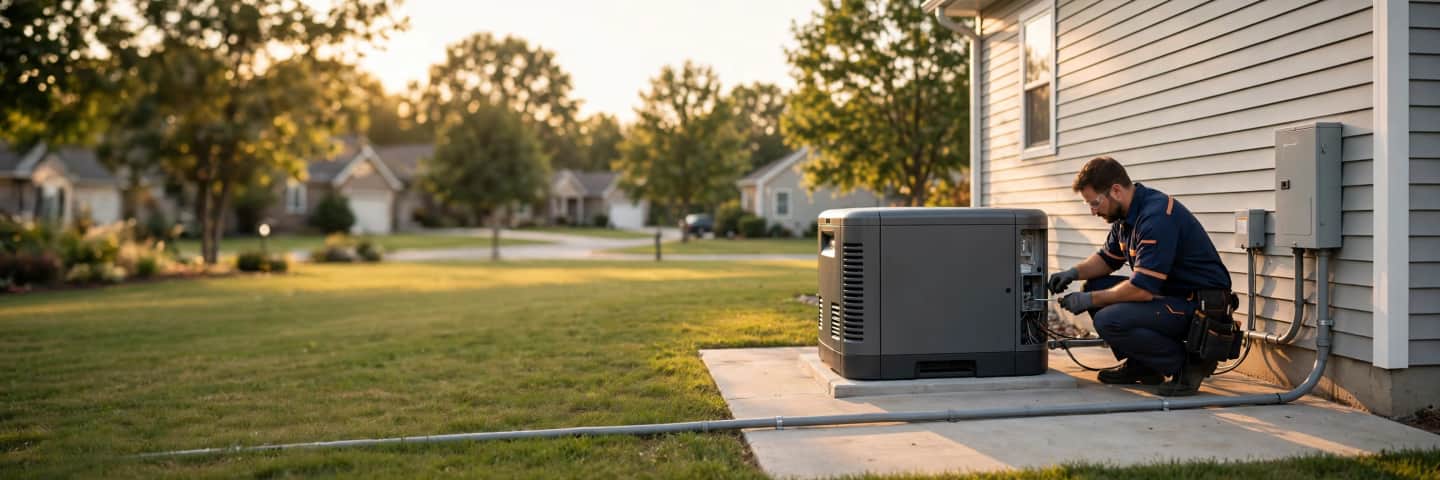
Generators have become standard equipment in many New Hampshire homes. They must be connected through a listed interlock or transfer switch and run outdoors.
Mill cities
Manchester grew around the Amoskeag Mills, once among the largest textile mills in the world, and Nashua, Dover and Somersworth have their own mill histories. Worker housing, tenements and multifamily homes from the late 1800s and early 1900s often have old wiring, fuse panels and small services, and many have been converted into apartments.
Farmhouses and old homes
Rural New Hampshire is full of farmhouses and colonial-era homes, often connected to barns. Wiring has been added piecemeal over generations, and knob-and-tube and ungrounded circuits are common. Rewiring these homes requires care around plaster, beams and wide-board floors.
Lake camps and the Lakes Region
Lake Winnipesaukee, Squam Lake and Sunapee are lined with camps and lake homes with docks and boathouses. Dock and boathouse wiring needs ground-fault protection to prevent shock hazards in the water, and seasonal homes benefit from electrical checks before opening.
Ski country and the White Mountains
The White Mountains and ski towns such as North Conway and Lincoln have condos, vacation homes and rentals with hot tubs, heated driveways and electric heat. Heavy snow, long outages and many absentee owners make backup heat and periodic inspection important.
Heat pumps and cold winters
Cold-climate heat pumps are spreading across New Hampshire, often paired with oil or propane systems for the coldest days. Each unit adds load, and older 100-amp services may need an upgrade.
Wells and rural service
Most rural homes rely on wells. When the power fails, the water stops. A generator sized for the well pump, heating system and refrigeration is the core of a New Hampshire outage plan.
Southern New Hampshire growth
Towns along the Massachusetts border, such as Salem, Windham, Hudson and Bedford, have grown with commuters, adding newer homes with larger services. EV ownership is rising there fastest.
Common electrical calls in New Hampshire
Frequent requests include generator installations, storm repairs, heat pump circuits and service upgrades, knob-and-tube replacement, lake and dock wiring, EV chargers and surge protection.
Portsmouth and the Seacoast
Portsmouth, Rye, Hampton and the Seacoast have colonial-era homes, a historic downtown and coastal neighborhoods exposed to storm surge and salt air. Rewiring historic homes requires care around original woodwork, and coastal equipment needs corrosion-resistant enclosures and elevation where flooding is possible.
Manufactured housing communities
New Hampshire has many manufactured housing communities, some owned cooperatively by residents. Homes are fed from meter pedestals through feeders exposed to frost heave and plows, and older homes may need updated panels and wiring. Community-wide upgrades are sometimes planned together with the utility.
Ice dams and roof cables
Ice dams form on older, poorly insulated roofs across New Hampshire. Roof and gutter heating cables need GFCI-protected circuits and controllers, not extension cords from an outdoor outlet.
Space heaters and old circuits
Drafty farmhouses and older apartments lead many residents to rely on space heaters, which overload old shared circuits and overheat worn outlets. Dedicated circuits for heaters, or a permanent heat pump, are safer solutions.
Solar and batteries
Rooftop solar has grown in New Hampshire under its net metering rules, and batteries are increasingly paired with solar to ride out the long outages that follow ice and windstorms. Battery systems need permits and utility approval.
Frozen pipes and heat tape
Camps, crawl spaces and older homes are vulnerable to frozen pipes. Heat tape on dedicated GFCI-protected circuits, checked every fall, prevents both freeze-ups and fires.
Buying an older New Hampshire home
Inspections of older New Hampshire homes often find knob-and-tube wiring, fuse panels, ungrounded outlets and amateur barn or garage wiring. An electrician’s written evaluation clarifies what needs attention before closing.
Surge protection
Summer thunderstorms and restoration after storms send surges through home wiring. A surge protective device at the panel protects heat pumps, boilers and electronics.
Generators and fuel choices
After the 2008 ice storm, generators became common in New Hampshire homes. Propane standby units are popular in rural towns, natural gas units where lines exist, and portable generators connected through an interlock for households on a budget. Size the generator for the well pump, heating system and refrigeration.
NHSaves and heat pump incentives
The NHSaves programs offered by the state’s utilities provide incentives for heat pumps, weatherization and efficient equipment. Combining weatherization with heat pumps makes the most of a limited electrical service, and addressing old wiring before insulation work is often required.
Winterizing lake camps
Many Lakes Region camps were built for summer use and later winterized. Their wiring and services were never designed for year-round electric heat, heat tape and well pumps. Before converting a camp to year-round use, a load calculation and inspection of the old wiring are essential.
Manchester and Nashua apartments
Manchester and Nashua have large numbers of apartments in older multifamily buildings, often with overloaded circuits and limited panel capacity. Landlords commonly need GFCI protection, updated alarms and panel upgrades to keep units safe.
EV charging in southern New Hampshire
EV ownership is growing fastest in towns near the Massachusetts border, where many commuters have attached garages. Older homes may need a load calculation, and load-management devices can sometimes avoid a service upgrade.
Dover, Rochester and the Seacoast towns
Dover, Rochester and Somersworth have older mill-era homes and growing new subdivisions, a mix that keeps electricians busy with both rewiring and add-ons. Coastal and riverside neighborhoods should plan electrical equipment above expected flood levels.
Smoke and carbon monoxide alarms
New Hampshire requires carbon monoxide alarms in homes with fuel-burning appliances or attached garages, along with smoke alarms. Because so many homes burn oil, propane or wood all winter, working, interconnected alarms are one of the most important safety upgrades an electrician can install.
Basements, sump pumps and spring thaw
Many New Hampshire homes have fieldstone or block basements that take on water during the spring thaw and heavy rains, and sump pumps keep them dry only while the power is on. A battery backup pump or a generator circuit for the sump, along with a check for rust and moisture around basement panels and water heaters, prevents both flooding and electrical hazards in the season when storms and outages are most likely.
Working with an electrician in New Hampshire
Confirm the electrician’s license, ask whether your town requires a permit, and get a written scope. For service upgrades, ask how the electrician will coordinate with Eversource, Unitil, Liberty, the New Hampshire Electric Cooperative or your town utility.
Electrical licensing and permits in New Hampshire are set by state and local authorities. The electrician confirms what applies to your project.
Services
Most requested in New Hampshire
Ranked by how many of this state’s climate risks each service addresses.
Connect with an independent licensed electrician near you
Smoke, flames or sparking? Leave the building and call 911 first.
Pronto Electrician is a free referral service. Calls are answered by independent licensed electricians in your area. Pronto Electrician does not perform electrical work, and the electrician you choose sets the price, schedule, permits and warranty.
Free to call · All 50 states + DC
Talk to a licensed electrician in New Hampshire
Describe the problem and get connected with an independent licensed electrician who serves your area.