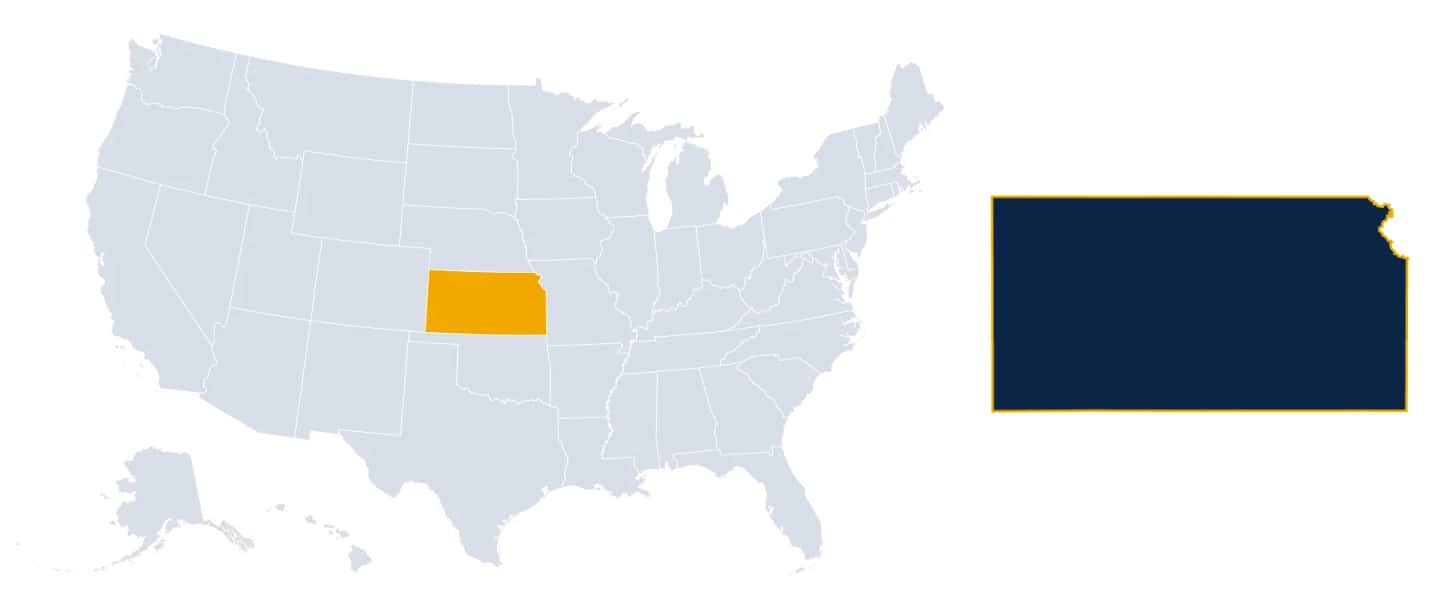
Kansas homes face tornadoes, hail, ice storms, wind-driven wildfires and extreme heat and cold. In 2007, an EF5 tornado destroyed Greensburg, which rebuilt as one of the most energy-efficient towns in the country. Kansas has no statewide electrician license, so the rules for electrical work depend on your city or county.
The hazards that drive the most electrical calls here, and how homeowners prepare for them.
Severe storms and tornadoes
Storm damage can tear service masts and meter bases from the home. After a storm, look for a leaning mast or pulled service cable and keep clear — the utility side stays energized. Repairs to the mast and meter base are usually the homeowner’s responsibility.
Ice accumulation brings down lines and trees across wide areas, often for days. Backup power planning matters, and overhead service drops near trees should be checked for damage after ice events.
Nearby strikes send surges through power and communication lines. A whole-home surge protective device at the panel, a sound grounding system and point-of-use protection for electronics reduce damage to appliances and HVAC controls.
Evergy serves Wichita, Topeka, Lawrence, the Kansas City suburbs and much of eastern Kansas. The Board of Public Utilities serves Kansas City, Kansas. Midwest Energy and other cooperatives serve much of western and rural Kansas, and many towns run their own municipal electric systems.
Kansas homes cannot choose a retail supplier. Your utility sets the rules for service upgrades, generator connections and reconnection after storms.
Licensing and permits
Kansas does not issue a statewide electrician license. Many cities and counties, including Wichita, the Kansas City suburbs, Topeka and Lawrence, license or register electricians and contractors locally, while some rural areas have no requirement. Ask which local licenses an electrician holds.
Cities and counties issue permits and inspect work under their adopted codes. Where there is no local inspection, hiring a licensed, experienced electrician who follows code is especially important.
Tornadoes and Greensburg
On May 4, 2007, an EF5 tornado destroyed about 95 percent of Greensburg. The town rebuilt with energy-efficient buildings and wind power. Across Kansas, tornadoes tear service drops from houses and damage masts and meter bases, which must be repaired by an electrician before the utility reconnects.
Rebuilding after a direct hit means a new service, panel and wiring, and many Kansas families add storm shelters or safe rooms with permanent lighting and outlets.
Ice storms
Ice storms periodically coat eastern and central Kansas, bringing down trees and lines. In December 2007, an ice storm left many Kansas communities without power for days. Backup power for heating, wells and refrigeration, connected through a transfer switch or listed interlock, is the main preparation.
The 2021 winter storm
During the February 2021 cold wave, the regional grid operator ordered rolling outages in Kansas while electric heat and heat pumps ran at full output. Many homeowners added generators afterward and had their backup heat circuits checked.
Wind-driven wildfires
Western and central Kansas are vulnerable to fast-moving grass fires during high winds, including major fires in 2017 and December 2021. Downed power lines can ignite fires in dry, windy conditions. Keeping vegetation clear of service equipment and having backup power help rural homes.
Hail and lightning
Kansas sees frequent large hail, which damages roofs, solar panels, outdoor AC units and service masts, and frequent lightning, which damages HVAC control boards and electronics. A whole-home surge protective device at the panel is inexpensive protection.
Heat and air conditioning
Kansas summers bring long stretches of 100°F weather, and air conditioning runs for months. Older panels and connections degrade under constant load, and warm breakers or AC circuits that trip repeatedly should be checked.
Kansas housing
Wichita’s College Hill and Riverside, Topeka’s Potwin and older neighborhoods in Lawrence, Salina and Hutchinson have homes from the late 1800s through the 1940s with knob-and-tube wiring and small services. Johnson County suburbs such as Overland Park, Olathe and Lenexa are largely newer.
Basements and sump pumps
Many Kansas homes have basements, which double as tornado shelters and rely on sump pumps during heavy rains. Backup power for sump pumps and properly installed basement circuits are practical upgrades.
Farms and ranches
Kansas farms and ranches have grain bins, irrigation pumps, shops and livestock buildings with large loads on long service runs. Center-pivot irrigation in western Kansas uses significant power. Dust, rodents and moisture damage farm wiring, so periodic inspection prevents fires.
Wind power
Kansas is one of the country’s leading wind power states, with turbines generating a large share of its electricity. Many rural landowners lease land for turbines, and the transmission lines carrying that power cross the state.
Heat pumps and EVs
Heat pumps and EV chargers are growing in Johnson County, Wichita and Lawrence. A load calculation decides whether older services can carry them. Backup heat strips on heat pumps draw large currents in cold snaps and should be checked.
Regional differences
Johnson County and the Kansas City suburbs are growing quickly. Wichita and south-central Kansas face tornadoes, hail and heat. Topeka and Lawrence have older neighborhoods and ice storms. Western Kansas is agricultural, windy and prone to grass fires and blizzards.
Common electrical calls in Kansas
Frequent requests include storm repairs to masts and meter bases, generator and interlock installations, storm shelter wiring, surge protection, panel upgrades, farm wiring and EV charger installations.
Johnson County suburbs
Overland Park, Olathe, Lenexa, Shawnee and Leawood make up one of the fastest-growing parts of the Kansas City metro. Most homes are newer, but finished basements, EV chargers, hot tubs and generators fill panels quickly. Many neighborhoods are governed by HOAs with rules for exterior equipment. The metro straddles the state line, so rules on the Kansas side differ from Missouri’s.
College towns
Lawrence and Manhattan have large rental markets serving the University of Kansas and Kansas State University. Older houses converted to apartments often have overloaded circuits and outdated panels, and landlords commonly need GFCI protection, smoke alarms and panel upgrades.
Manufactured homes
Manufactured homes are common in rural Kansas and are especially vulnerable to tornadoes and high winds. Their meter pedestals and feeders should be inspected after storms, and older units may need panel and wiring updates. A nearby storm shelter is a critical safety measure.
Generators and fuel choices
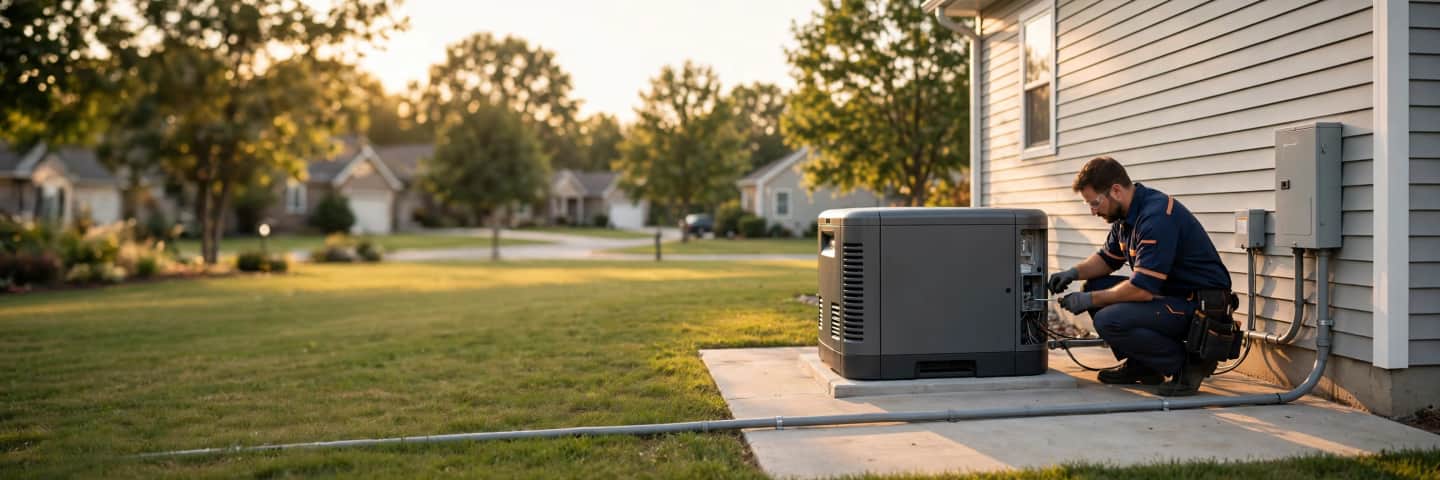
Natural-gas standby generators are common in Johnson County and Wichita suburbs, while rural homes use propane units or portable generators with a listed interlock. Generators should be sized for heating in winter storms and air conditioning in summer outages, and must run outdoors away from windows and doors.
Lessons from Greensburg
Greensburg’s rebuild showed how a community can come back stronger: efficient buildings, modern electrical systems and local wind power. For individual homeowners rebuilding after a storm, the same principles apply — a properly sized new service, surge protection, generator readiness and efficient heating and cooling equipment.
Problem panels and aluminum wiring
Inspections of older Kansas homes often flag fuse panels, older panels with known concerns and aluminum branch wiring in some homes from the late 1960s and 1970s. Repairs range from pigtailing with listed connectors to replacing circuits or panels.
Wells and rural water
Many rural Kansas homes rely on private wells or rural water districts. Well pumps stop during outages, so generator plans should include the pump and its starting load. Livestock water heaters and stock tank de-icers need properly installed, GFCI-protected circuits.
Wichita’s aviation-era neighborhoods
Wichita grew rapidly with the aircraft industry during and after World War II, and large areas of modest homes from that era still have original or partially updated wiring and small services. Updating these homes often means a new panel, grounded circuits and dedicated kitchen and laundry circuits.
Basement storm shelters
In homes with basements, the basement often doubles as the family’s storm shelter. Reliable lighting, an outlet for a weather radio and charging, and a battery or generator backup make that space safer during tornado warnings.
Pools and outdoor living
Backyard pools, hot tubs and outdoor kitchens are common in Johnson County and Wichita suburbs. Pool equipment requires correct bonding and GFCI protection, and outdoor circuits need weather-resistant devices and in-use covers rated for Kansas weather. Hail and wind can damage outdoor fixtures, so check them after storms.
Working with an electrician in Kansas
Because licensing is local, ask which licenses the electrician holds for your city or county, who will pull the permit and whether the work will be inspected. Get a written scope. For service upgrades and storm repairs, ask how the electrician will coordinate with Evergy, BPU, your cooperative or your city utility.
Electrical licensing and permits in Kansas are set by state and local authorities. The electrician confirms what applies to your project.
Services
Most requested in Kansas
Ranked by how many of this state’s climate risks each service addresses.
Connect with an independent licensed electrician near you
Smoke, flames or sparking? Leave the building and call 911 first.
Pronto Electrician is a free referral service. Calls are answered by independent licensed electricians in your area. Pronto Electrician does not perform electrical work, and the electrician you choose sets the price, schedule, permits and warranty.
Free to call · All 50 states + DC
Talk to a licensed electrician in Kansas
Describe the problem and get connected with an independent licensed electrician who serves your area.