New York has some of the oldest housing in the country, a patchwork of local electrical licensing instead of a single state license, and weather that ranges from coastal hurricanes on Long Island to lake-effect blizzards in Buffalo. That combination means electrical work here depends heavily on where you live — the rules, the utility and the typical problems are very different in Queens, Westchester, Albany and Rochester.
The hazards that drive the most electrical calls here, and how homeowners prepare for them.
Winter storms and cold
Heavy snow and wind cause outages when heating demand is highest. Generators, dedicated circuits for space heaters, and heat-tape circuits with GFCI protection are common winter projects. Avoid running heaters through extension cords or power strips.
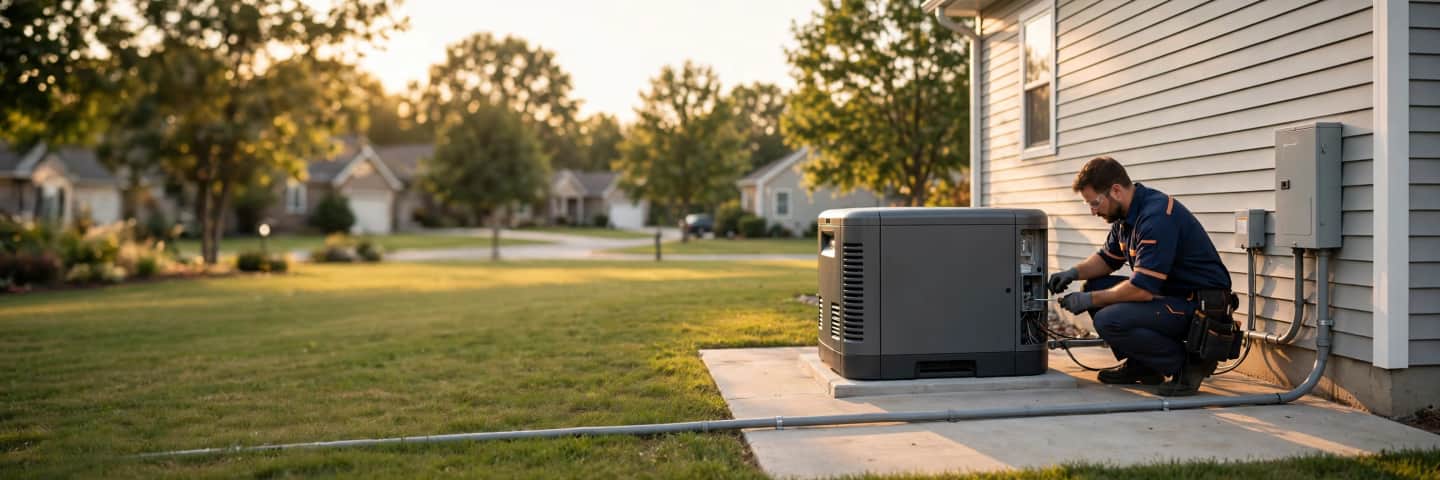
Long outages make backup power a priority. Standby generators with automatic transfer switches, or portable generators connected through a listed interlock, keep refrigeration, sump pumps and medical equipment running. Any equipment that was submerged must be inspected before re-energizing.
Electrical equipment that has been underwater — panels, outlets, breakers, appliances — generally must be replaced, not dried and reused. Do not re-energize a flooded home until an electrician has inspected it.
Con Edison serves New York City and most of Westchester County. Long Island and the Rockaways are served by PSEG Long Island, which operates the grid owned by the Long Island Power Authority. Upstate, National Grid serves much of Central and Western New York and the Capital Region, NYSEG serves large areas of the Southern Tier, Finger Lakes and Hudson Valley, Rochester Gas and Electric serves the Rochester area, and Central Hudson and Orange & Rockland serve parts of the Hudson Valley. Dozens of small municipal utilities and cooperatives serve individual villages and rural areas.
New York allows customers to buy electricity supply from energy service companies, but the delivery utility still owns the wires and meter. For service upgrades, meter changes and storm reconnections, it is the delivery utility’s rules and scheduling that matter.
Licensing is local in New York
New York does not issue a statewide electrician license. Licensing is handled by cities and counties. In New York City, electrical work must be performed under a Licensed Master Electrician, who files the work with the Department of Buildings. Counties such as Westchester, Nassau and Suffolk, and cities such as Buffalo, Rochester, Syracuse and Yonkers, have their own licensing requirements. In many smaller towns there is no local license at all.
Outside New York City, electrical inspections are often performed by third-party electrical inspection agencies approved by the municipality, while building permits come from the town, village or city. Because the rules vary so much, ask any electrician which license they hold for your municipality and who will arrange the inspection. New York City has its own Electrical Code; the rest of the state works under the Uniform Code, which adopts the National Electrical Code.
Old housing and old wiring
A large share of New York homes were built before 1940 — brownstones and rowhouses in Brooklyn and Harlem, two-family homes in Buffalo and Rochester, Victorian houses in Troy and Saratoga Springs, and farmhouses across rural upstate. Knob-and-tube wiring, cloth-insulated cable, fuse boxes and services of 60 amps or less are still common finds during renovations.
Many older homes have been updated in pieces over the decades, leaving a mix of old and new circuits, overloaded junction boxes and ungrounded outlets that have been swapped for three-prong devices without a ground. A full inspection before a renovation or purchase shows what is still active and what needs replacement.
Apartments, co-ops and building limits
In New York City and older cities upstate, many people live in apartments, co-ops and condos where each unit draws from a building riser with limited capacity. Adding a mini-split, dryer, induction range or EV charger may require building approval, board sign-off and sometimes riser upgrades by the building. An electrician can perform a load review of your unit and coordinate with management before you buy equipment.
Window air conditioners on shared old circuits are a frequent cause of tripped breakers, blown fuses and warm outlets in summer. Dedicated circuits for air conditioning are the lasting fix.
Coastal storms and basement flooding
Superstorm Sandy in 2012 flooded basements across Lower Manhattan, Brooklyn, Queens, Staten Island and Long Island, where meters, panels and boilers often sit. In 2021, the remnants of Hurricane Ida brought record rainfall that flooded basement apartments in Queens and Brooklyn. Tropical Storm Isaias in 2020 caused widespread outages across Westchester and Long Island when trees fell on lines.
Equipment that has been underwater must be inspected and usually replaced before power is restored. In flood-prone neighborhoods, relocating meters and panels above expected flood levels during renovation is a common resilience upgrade, and backup power keeps sump pumps running when the grid goes down.
Lake-effect snow, ice and cold
Western and Central New York get some of the heaviest snowfall of any populated area in the country, driven by lake-effect bands off Lakes Erie and Ontario. Buffalo’s December 2022 blizzard stranded residents in their homes for days during an extended outage, and the January 1998 ice storm left parts of the North Country without power for weeks.
Snow load and ice can pull service drops and bend masts, and heavy snow on roofs can damage weatherheads. Backup power that can run a furnace blower, sump pump and refrigeration is a practical upgrade upstate, along with dedicated, GFCI-protected circuits for heat tape on pipes and roof edges.
Electrification in New York
State climate law and New York City local laws are pushing buildings away from fossil-fuel heating. New York City now requires most new buildings to be all-electric, and large existing buildings face emissions limits. Across the state, heat pumps for heating and cooling are growing quickly, supported by utility incentive programs.
For houses, a cold-climate heat pump, heat pump water heater and EV charger together can exceed what a 100-amp service can safely carry. A load calculation shows whether you need a service upgrade or whether load-management devices can make it work. Rooftop solar and batteries are common on Long Island and in the Hudson Valley.
Regional differences
New York City jobs revolve around filing requirements, building approvals and small services. Long Island focuses on hurricanes, salt air, solar and backup power. The Hudson Valley and Capital Region have older housing, ice storms and many homes on wells, where well pumps need backup power. Western New York deals with lake-effect snow and aging two-family housing. The Southern Tier has seen major river flooding, including in 2006 and from Tropical Storm Lee in 2011. The North Country and Adirondacks face long, cold winters and long outage restoration times.
Backup power choices for New York homes
On Long Island and in Westchester, where tree-related outages after tropical storms can last days, standby generators running on natural gas are common. Upstate, where many homes use propane or heating oil, portable generators connected through a listed interlock or manual transfer switch are a lower-cost option. Battery systems paired with solar are growing on Long Island and in the Hudson Valley. Whichever option you choose, size it to run the furnace, sump pump, refrigerator and, in rural areas, the well pump.
Buying, insuring or renovating an older New York home
Home inspectors in New York regularly flag knob-and-tube wiring, fuse boxes, ungrounded three-prong outlets, double-tapped breakers and amateur basement wiring. Some insurers decline or surcharge homes with active knob-and-tube or fuse panels, so buyers often negotiate electrical repairs before closing. An electrician’s written evaluation gives you a clearer scope and price than a general inspection report.
In New York City co-ops and condos, renovation usually requires an alteration agreement with the building, proof of the electrician’s license and insurance, Department of Buildings filings for most electrical work, and sometimes review by the building’s engineer. Starting that paperwork early prevents delays.
Common electrical calls in New York
The most frequent requests are fuse panel and small-service upgrades in older houses, dedicated circuits for air conditioners and kitchen appliances, rewiring during brownstone and rowhouse renovations, backup power for sump pumps and furnaces, storm repairs to service drops and masts, and panel upgrades for heat pumps and EV chargers in the suburbs.
Working with an electrician in New York
Ask which license the electrician holds for your city or county, and who files the work or arranges the inspection. In co-ops and condos, get building approval before scheduling. For service upgrades, ask how the electrician will coordinate with Con Edison, PSEG Long Island, National Grid, NYSEG, RG&E or your local utility. A good electrician will explain the problem, the code requirements and your options in plain language before quoting.
Electrical licensing and permits in New York are set by state and local authorities. The electrician confirms what applies to your project.
Services
Most requested in New York
Ranked by how many of this state’s climate risks each service addresses.
Connect with an independent licensed electrician near you
Smoke, flames or sparking? Leave the building and call 911 first.
Pronto Electrician is a free referral service. Calls are answered by independent licensed electricians in your area. Pronto Electrician does not perform electrical work, and the electrician you choose sets the price, schedule, permits and warranty.
Free to call · All 50 states + DC
Talk to a licensed electrician in New York
Describe the problem and get connected with an independent licensed electrician who serves your area.