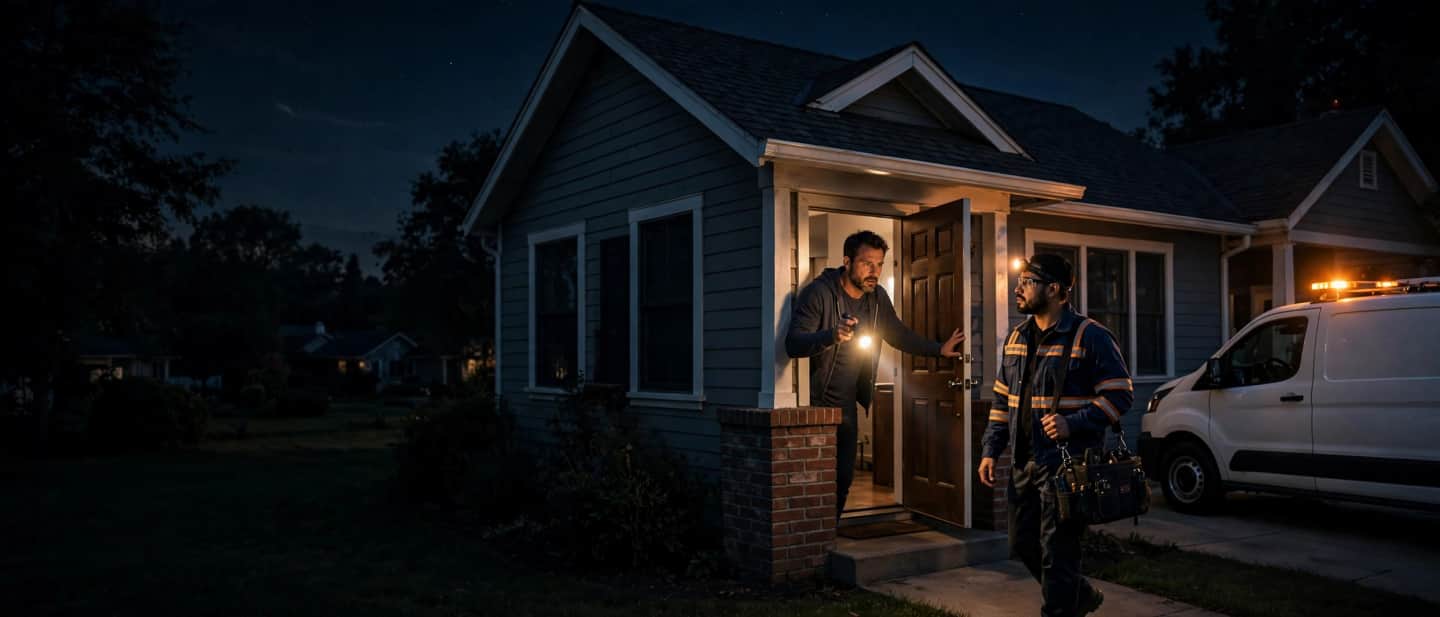
Michigan homeowners have learned to expect long outages. Ice storms, summer windstorms and tornadoes regularly knock out power for days across the Lower Peninsula, and basements across the state depend on sump pumps that stop the moment the power does. Add an aging housing stock in Detroit, Flint, Lansing and Grand Rapids and the growth of electric vehicles in the auto industry’s home state, and the demands on residential electrical systems are high.
The hazards that drive the most electrical calls here, and how homeowners prepare for them.
Winter storms and cold
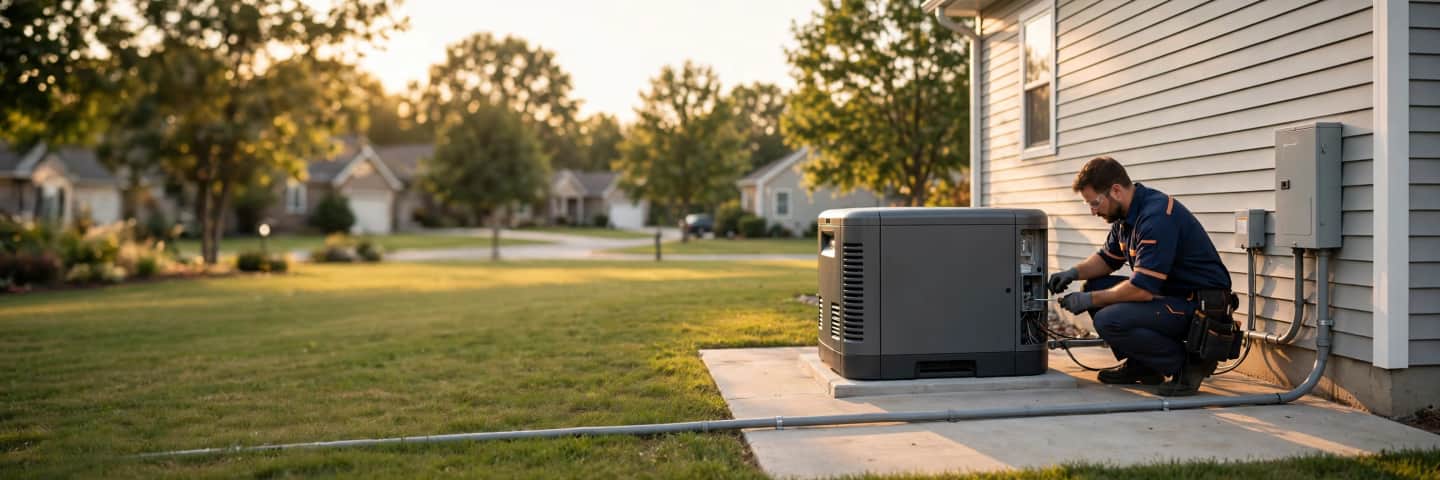
Heavy snow and wind cause outages when heating demand is highest. Generators, dedicated circuits for space heaters, and heat-tape circuits with GFCI protection are common winter projects. Avoid running heaters through extension cords or power strips.
Ice accumulation brings down lines and trees across wide areas, often for days. Backup power planning matters, and overhead service drops near trees should be checked for damage after ice events.
DTE Electric serves Detroit and much of Southeast Michigan, while Consumers Energy serves most of the rest of the Lower Peninsula, including Grand Rapids, Kalamazoo, Flint, Saginaw and Jackson. The Upper Peninsula is served by several smaller utilities and cooperatives. Municipal utilities serve cities such as Lansing, through the Lansing Board of Water & Light, and Holland, Traverse City, Marquette and Zeeland.
Michigan allows only a small share of customers to buy power from alternative suppliers, so for most homes the utility both supplies and delivers electricity. Your utility sets the rules for service upgrades, meter relocations and reconnection after storm damage.
Licensing and permits
Michigan licenses electricians and electrical contractors at the state level through the Department of Licensing and Regulatory Affairs, with journeyman and master electrician licenses and a separate electrical contractor license. Homeowners can verify a license through the state’s online lookup.
Electrical work follows the Michigan Electrical Code, which adopts the National Electrical Code with state amendments. Permits and inspections are handled by the city, township or county where you live, or by the state Bureau of Construction Codes in communities that do not enforce the code locally. Panel upgrades, new circuits, generators and EV chargers require permits.
Storms and long outages
Michigan’s two largest utilities have faced intense scrutiny over storm reliability. A February 2023 ice storm left hundreds of thousands of Southeast Michigan customers without power, many for several days in freezing weather, and severe thunderstorms and tornadoes in August 2023 caused another round of widespread outages. Tree-lined older neighborhoods are particularly vulnerable because limbs fall on overhead service drops.
When a storm pulls the service drop off your house or bends the mast, the utility will reconnect only after the house-side equipment — mast, weatherhead and meter base — has been repaired by an electrician and, where required, inspected.
Basements, sump pumps and flooding
Most Michigan homes have basements, and many rely on sump pumps to keep groundwater out. In June 2021, intense rainfall flooded freeways and tens of thousands of basements across Metro Detroit, and spring thaws routinely raise water tables across the state.
Because storms and outages often arrive together, backup for sump pumps is one of the most valuable upgrades in Michigan — a battery backup pump, a generator circuit, or both. If floodwater reaches outlets, a furnace, a water heater or the panel, keep the power off in that area until an electrician has inspected it.
Cold winters and heating
Michigan winters are long and cold, and lake-effect snow buries western communities near Lake Michigan as well as the Upper Peninsula. Furnaces need electricity to run their blowers and controls, so a generator plan should include the furnace circuit. Heat tape on pipes and roof edges should be on dedicated, GFCI-protected circuits rather than extension cords.
Space heaters are common in older drafty homes and are a frequent cause of overheated outlets. If outlets feel warm or breakers trip when a heater runs, a dedicated circuit or permanent heating solution is safer.
Michigan housing
Detroit’s housing is dominated by brick and frame homes built before 1950, including the grand houses of Indian Village and Boston-Edison and thousands of modest bungalows. Flint, Saginaw, Lansing and Grand Rapids have similar early-1900s neighborhoods. These homes commonly have knob-and-tube wiring, fuse panels and 60-amp services, and many have sat vacant and need full electrical evaluation before reoccupation.
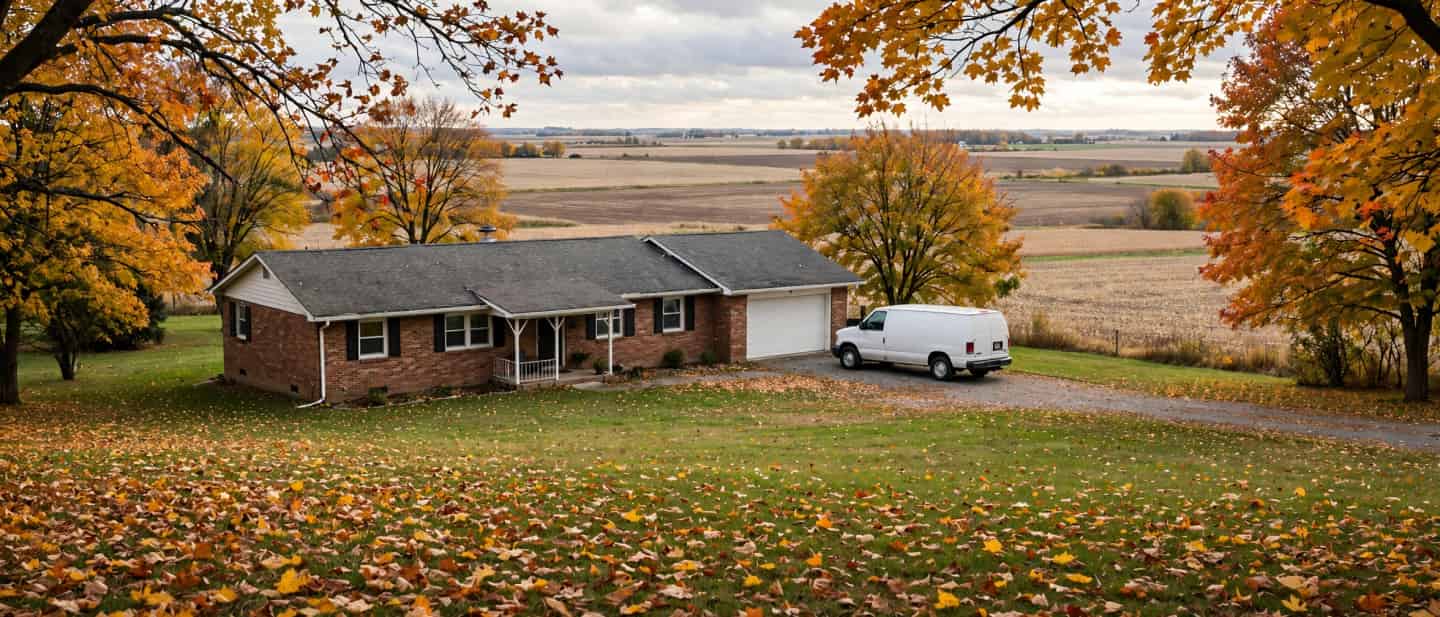
Post-war suburbs ring every Michigan city with ranches and colonials on original 100-amp panels. Northern Michigan and the Upper Peninsula have many seasonal cottages and cabins with wiring that has been modified over generations.
EVs and the auto state
As the home of the American auto industry, Michigan has many households with employee-discounted or leased electric vehicles. Level 2 charging is straightforward in homes with attached garages and enough panel capacity, but many older homes in Detroit and inner-ring suburbs have detached garages behind the house, requiring a new circuit run underground or overhead from the house panel.
Michigan’s 2023 clean energy law set a goal of 100 percent clean electricity by 2040, and heat pumps are growing alongside EVs. A load calculation decides whether a 100-amp service can carry these additions.
Up North and the Upper Peninsula
Cottages and cabins on inland lakes and along the Great Lakes shoreline face damp conditions, mice, freezing winters and long periods of vacancy. Wiring should be suited to damp locations, outlets near water need GFCI protection, and docks and boat lifts need proper ground-fault protection to prevent electric shock hazards in the water. Rural properties rely on wells, so a generator plan should include the well pump. In the Upper Peninsula, heavy snow, remote service territories and long restoration times make backup power especially valuable.
Regional differences
Metro Detroit focuses on storm reliability, old brick housing, basements and EV charging. West Michigan around Grand Rapids and the lakeshore sees heavy lake-effect snow and growing suburbs. Mid-Michigan, including Lansing, Flint and the Tri-Cities, has older industrial-era housing. Northern Lower Michigan has seasonal homes and wooded rural lines. The Upper Peninsula is remote and snowy, with cooperatives and small utilities.
Alleys, detached garages and rear services
In Detroit and many older Michigan cities, utility lines run along rear alleys rather than the street, so the service drop reaches the house from the back of the lot, often crossing a yard or passing near a detached garage. Overgrown alleys put limbs in contact with those lines, and storms bring them down. Adding power to a detached garage for an EV charger, workshop or opener usually means a new feeder from the house panel, run underground in conduit or overhead with proper clearance.
Buying an older Michigan home
Home inspections in Michigan frequently flag fuse panels, ungrounded outlets, knob-and-tube wiring, missing GFCI protection in basements and kitchens, and amateur wiring in finished basements. Homes that sat vacant may have damaged or stripped wiring. Some cities require inspections when a property is sold or rented. A written evaluation from an electrician before closing separates urgent hazards from items that can wait.
Surges and lightning
Summer thunderstorms and repeated outage-and-restoration cycles send surges through home wiring that damage furnace boards, sump pump controllers, garage door openers and electronics. A whole-home surge protective device at the panel, along with point-of-use protection, is an inexpensive layer of protection that is easy to add during other panel work.
Common electrical calls in Michigan
Frequent requests include sump pump backup and generator installations, storm repairs to masts and meter bases, fuse panel and service upgrades in older homes, EV charger installations, dedicated circuits for space heaters and heat tape, surge protection, and evaluations of vacant or older houses before purchase. Spring, before storm season, is the best time to test sump pumps and backup systems.
Working with an electrician in Michigan
Verify the electrician’s state license, ask who will pull the permit from your city, township or county, and get a written scope. For storm repairs and service upgrades, ask how they will coordinate with DTE, Consumers Energy, your municipal utility or cooperative, and how long you will be without power. If your basement depends on a sump pump, ask about backup options during the same visit. For cottages and cabins Up North, ask whether the electrician can inspect docks, boat lifts and outbuildings in the same trip, since travel time often makes up a large part of the cost of rural service calls.
Electrical licensing and permits in Michigan are set by state and local authorities. The electrician confirms what applies to your project.
Services
Most requested in Michigan
Ranked by how many of this state’s climate risks each service addresses.
Connect with an independent licensed electrician near you
Smoke, flames or sparking? Leave the building and call 911 first.
Pronto Electrician is a free referral service. Calls are answered by independent licensed electricians in your area. Pronto Electrician does not perform electrical work, and the electrician you choose sets the price, schedule, permits and warranty.
Free to call · All 50 states + DC
Talk to a licensed electrician in Michigan
Describe the problem and get connected with an independent licensed electrician who serves your area.