On August 10, 2020, a derecho with winds topping 100 miles per hour tore across Iowa, flattening crops and trees and leaving parts of Cedar Rapids without power for weeks. That storm, along with the 2008 floods and frequent tornadoes, defines how Iowans think about electrical resilience. Iowa also gets more of its electricity from wind than almost any other state.
The hazards that drive the most electrical calls here, and how homeowners prepare for them.
Severe storms and tornadoes
Storm damage can tear service masts and meter bases from the home. After a storm, look for a leaning mast or pulled service cable and keep clear — the utility side stays energized. Repairs to the mast and meter base are usually the homeowner’s responsibility.
Heavy snow and wind cause outages when heating demand is highest. Generators, dedicated circuits for space heaters, and heat-tape circuits with GFCI protection are common winter projects. Avoid running heaters through extension cords or power strips.
Electrical equipment that has been underwater — panels, outlets, breakers, appliances — generally must be replaced, not dried and reused. Do not re-energize a flooded home until an electrician has inspected it.
Independent licensed electricians serve communities across Iowa.
Also serving
Des Moines
Cedar Rapids
Davenport
Sioux City
Iowa City
State guide
Electrical work in Iowa
Iowa’s utilities
MidAmerican Energy serves Des Moines, the Quad Cities, Sioux City and much of western and central Iowa. Alliant Energy serves Cedar Rapids and much of eastern and northern Iowa. Iowa also has more than one hundred municipal utilities, including those in Ames, Cedar Falls and Muscatine, and electric cooperatives serve much of the countryside.
Iowa homes cannot choose a retail supplier. Your utility sets the rules for service upgrades, generator connections and solar interconnection.
Licensing and inspections
Iowa licenses electricians and electrical contractors statewide through the Electrical Examining Board, including apprentice, journeyman, master and contractor licenses. Licenses can be verified online.
Many cities run their own electrical inspection programs, and the state performs inspections in areas without one. Panel upgrades, new circuits, generators and EV chargers require permits.
The 2020 derecho
The August 2020 derecho damaged or destroyed a huge share of Cedar Rapids’ trees and many homes, and knocked out power to hundreds of thousands of Iowans. Some neighborhoods waited weeks for restoration. Service drops, masts and meter bases were torn from houses across the state.
Since then, many Iowa homeowners have added generators with listed interlocks or transfer switches, and replaced damaged service equipment with sturdier installations. After any storm, damaged house-side equipment must be repaired by an electrician before the utility reconnects.
Floods
In June 2008, record flooding inundated Cedar Rapids and Iowa City, and Iowa’s rivers — the Cedar, Iowa, Des Moines, Missouri and Mississippi — flood regularly. Basement flooding is common across the state.
Electrical equipment that has been underwater must be replaced, and power should stay off until an electrician has inspected the system. Raising panels and equipment out of flood-prone basements is a practical upgrade.
Tornadoes
Tornadoes strike Iowa every year. In May 2024, an EF4 tornado devastated the town of Greenfield. Rebuilding after a direct hit means a new service, panel and wiring, and storm damage to masts and meter bases must be repaired before reconnection.
Winter cold and blizzards
Iowa winters bring blizzards, ice and stretches of subzero temperatures. Furnaces need electricity to run, sump pumps must work during thaws, and livestock water heaters and ventilation keep farms running. Backup power plans should cover heating, sump pumps and, on farms, essential livestock equipment.
Basements and sump pumps
Most Iowa homes have basements, and many depend on sump pumps during spring thaws and heavy rains. Because storms often cause outages at the same time, battery backup pumps or generator circuits are among the most valuable upgrades.
Wind power
Wind turbines generate roughly 60 percent of Iowa’s electricity, more than in almost any other state. For homeowners, the practical concerns are the same as elsewhere — storms, outages and panel capacity — but many farm families also lease land for turbines, and some rural homes have small wind or solar systems that require proper interconnection.
Farms and grain handling
Iowa farms have grain bins, dryers, augers and livestock buildings with large, sometimes three-phase, electrical loads. Dust, moisture and rodents damage farm wiring, and grain dryers run hard during harvest. Periodic inspection prevents fires, and generators sized for livestock ventilation and water are essential.
Iowa housing
Des Moines neighborhoods such as Sherman Hill, Drake and Beaverdale, along with older parts of Cedar Rapids, Davenport, Dubuque, Waterloo and Sioux City, have homes from the late 1800s through the 1940s with knob-and-tube wiring, fuse panels and small services. Suburbs around Des Moines — Ankeny, Waukee, West Des Moines — are growing quickly with new construction.
Lightning and surges
Summer thunderstorms bring frequent lightning, and surges damage furnace boards, sump pump controllers, grain dryer controls and electronics. A whole-home surge protective device at the panel is inexpensive protection.
Heat pumps and EVs
Heat pumps and EV chargers are growing in Des Moines, Iowa City and Cedar Rapids. Older 100-amp services may need an upgrade or load management to carry them, and cold-climate heat pumps are often paired with existing furnaces.
Lakes and docks
The Iowa Great Lakes around Okoboji, Clear Lake and Saylorville Lake have homes with docks and boat lifts. Dock wiring needs ground-fault protection and wet-location wiring to prevent shock hazards in the water.
Regional differences
Central Iowa around Des Moines is growing fastest. Eastern Iowa, including Cedar Rapids, Iowa City and the Quad Cities, faces flooding and derecho recovery. Western Iowa and the Missouri River valley see flooding and wind. Northern Iowa is agricultural and cold.
Common electrical calls in Iowa
Frequent requests include generator and interlock installations, storm repairs to masts and meter bases, sump pump backup, fuse panel and service upgrades, farm wiring inspections, surge protection and EV charger installations.
Mississippi River towns
Dubuque, Davenport, Bettendorf, Burlington and Fort Madison sit along the Mississippi, with historic brick homes and riverfront neighborhoods. Davenport is known for relying on temporary defenses rather than a permanent floodwall along much of its riverfront, and floods regularly reach low-lying areas. Raising electrical equipment and planning for shutoffs during floods are practical steps in river towns.
College towns and rentals
Iowa City and Ames have large rental markets serving university students. Older houses converted into apartments often have overloaded circuits, ungrounded outlets and limited panel space. Both cities have rental inspection programs, and landlords commonly need panel upgrades, GFCI protection and smoke alarm updates to pass.
Generators and fuel choices
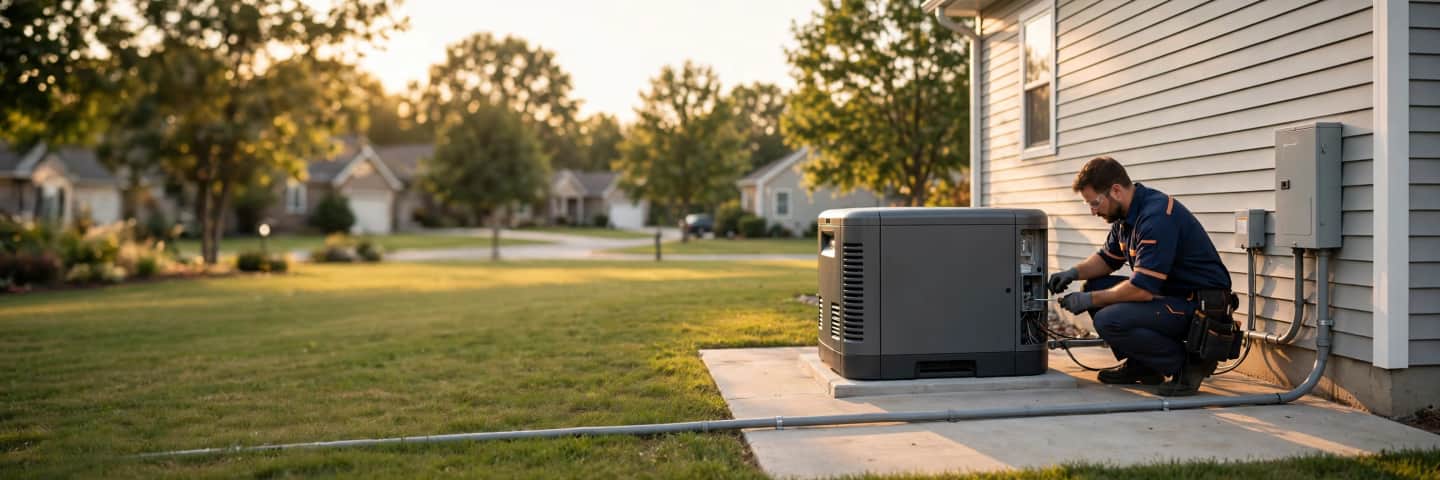
Since the derecho, many Iowa households have installed standby generators where natural gas is available or propane units in rural areas, while others use portable generators with a listed interlock. Generators should be sized to run the furnace, sump pump and refrigeration, and on farms, livestock ventilation and water.
Detached garages and EV charging
Older Iowa neighborhoods often have detached garages behind the house, sometimes off an alley. Adding an EV charger or heated workshop requires a new feeder from the house panel, usually run underground before the ground freezes. Cold weather reduces EV range, which makes reliable home charging more important.
Problem panels and home sales
Inspections of older Iowa homes commonly flag fuse panels, older panels with known concerns, knob-and-tube wiring and amateur basement wiring. An electrician’s written evaluation helps buyers and sellers agree on repairs before closing.
Lightning and grain dryers
During harvest, grain dryers run around the clock, and lightning or utility surges can damage their controls and motors at the worst possible time. Surge protection on farm panels, sound grounding and properly sized feeders keep dryers and bins running.
Ice and spring storms
Spring brings ice storms and severe thunderstorms in close succession. Inspecting service masts and drops after winter, and before storm season, catches damage before the next storm finishes the job.
Heat tape and frozen pipes
Iowa cold snaps freeze pipes in crawl spaces, garages and outside walls. Heat tape should be on dedicated GFCI-protected circuits, installed according to the manufacturer’s instructions, and checked each fall.
Surge protection for homes
Iowa homes see frequent lightning and repeated outage-and-restoration cycles after storms. A whole-home surge protective device at the panel, combined with point-of-use protection for electronics, limits damage to furnace boards, sump pump controllers and appliances. It is easiest to add while an electrician is already working at the panel.
Working with an electrician in Iowa
Verify the electrician’s and contractor’s licenses with the Electrical Examining Board, ask whether your city or the state will inspect the work, and get a written scope. For storm repairs and service upgrades, ask how the electrician will coordinate with MidAmerican, Alliant, your municipal utility or cooperative.
Electrical licensing and permits in Iowa are set by state and local authorities. The electrician confirms what applies to your project.
Services
Most requested in Iowa
Ranked by how many of this state’s climate risks each service addresses.
Connect with an independent licensed electrician near you
Smoke, flames or sparking? Leave the building and call 911 first.
Pronto Electrician is a free referral service. Calls are answered by independent licensed electricians in your area. Pronto Electrician does not perform electrical work, and the electrician you choose sets the price, schedule, permits and warranty.
Free to call · All 50 states + DC
Talk to a licensed electrician in Iowa
Describe the problem and get connected with an independent licensed electrician who serves your area.