24 hour emergency service, electrical repair, panel upgrades, generator installation and EV chargers in Des Moines. Call (855) 679-2483 and get connected with an independent licensed electrician who works locally.
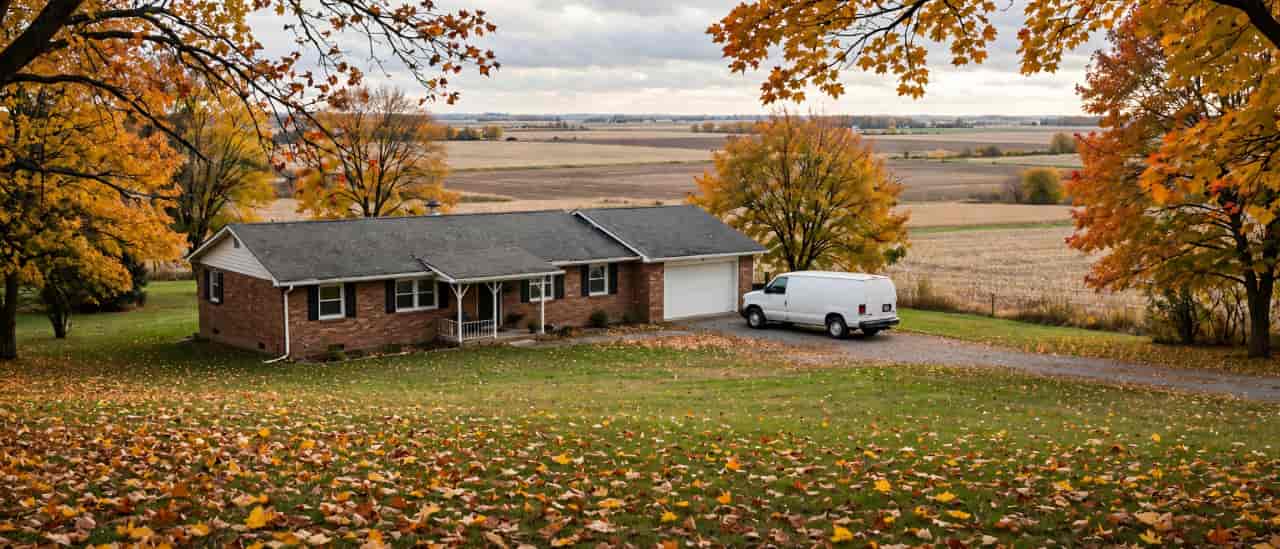
Des Moines is Iowa’s capital and largest city, set where the Raccoon River meets the Des Moines River in Polk County. MidAmerican Energy delivers the power from its downtown headquarters. The city’s electrical history is written in weather: the river floods of 1993 and 2008, and the August 10, 2020 derecho that knocked out power across the metro. Housing ranges from 1880s Victorians near downtown to Beaverdale brick and post-war ranches, each with its own wiring story.
By calling, you agree to be connected with an independent electrician, who may call or text you back about your request at the number you call from. Calls may be recorded for quality and routing. Consent is not a condition of any purchase, and you can opt out at any time; message and data rates may apply. Privacy policy.
Serving Beaverdale, Sherman Hill, Drake, Highland Park, Waterbury, Capitol East and every other Des Moines neighborhood.
Des Moines at a glance
Electric utility
MidAmerican Energy, headquartered in Des Moines, provides electric service throughout the city
Permits and inspections
City of Des Moines Permit & Development Center, Development Services (Argonne Armory Building, 602 Robert D. Ray Drive)
County
Polk County
ZIP codes include
50310 · 50312 · 50314 · 50315 · 50316 · 50317
Electrical services in Des Moines
What do you need help with in Des Moines, IA?
The calls Des Moines homeowners make most, followed by every service independent licensed electricians handle here.
Sherman Hill holds the oldest houses, Victorians from the 1880s and apartment buildings from the 1900s–1910s. Drake, Highland Park and Capitol East have early-1900s frame foursquares and bungalows. Beaverdale is known for its 1920s–1940s brick Tudor-style homes, while the south side and outer neighborhoods filled with ranch houses after World War II. Basements are nearly universal, which places panels below grade and close to flood and sump risks.
Problems that come up again and again in local homes, and the service that fixes each one.
01
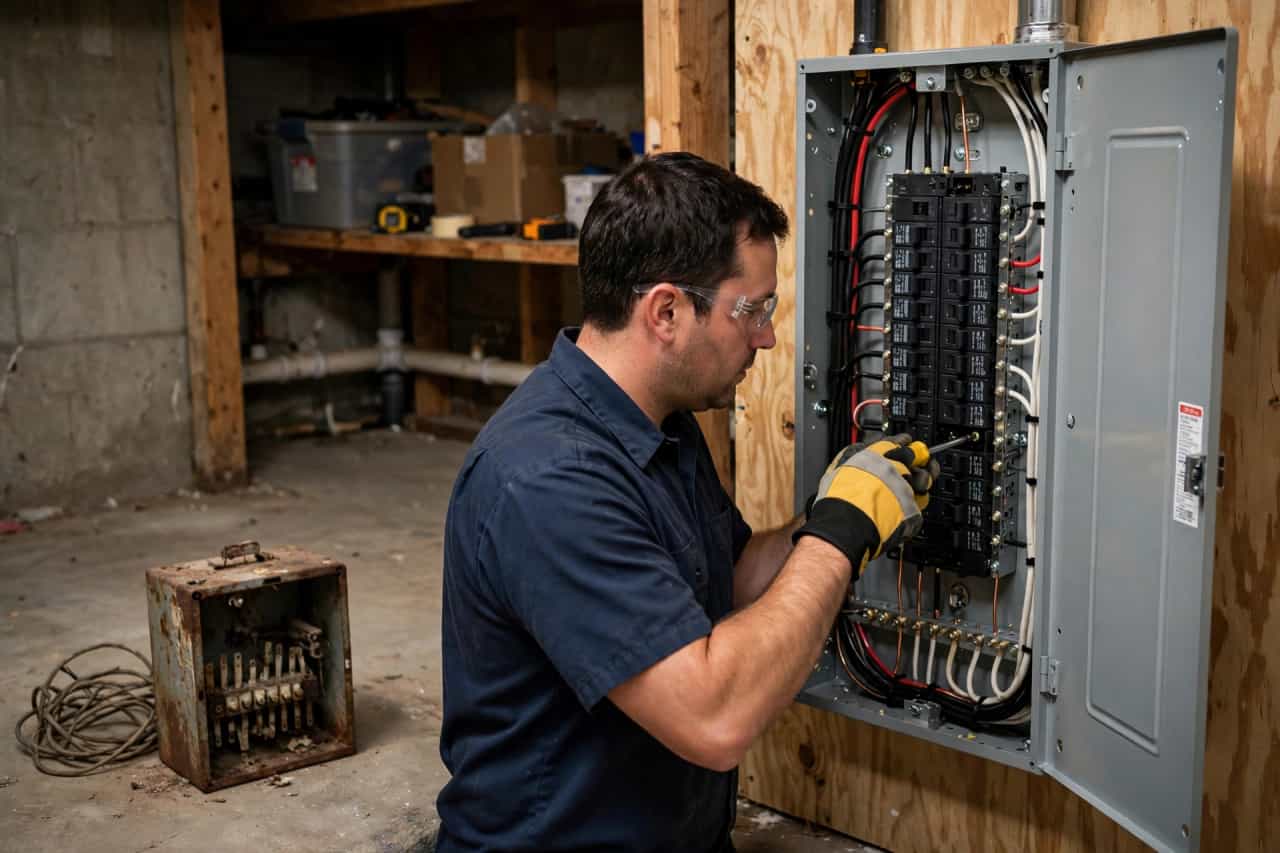
Basement panels in a river city
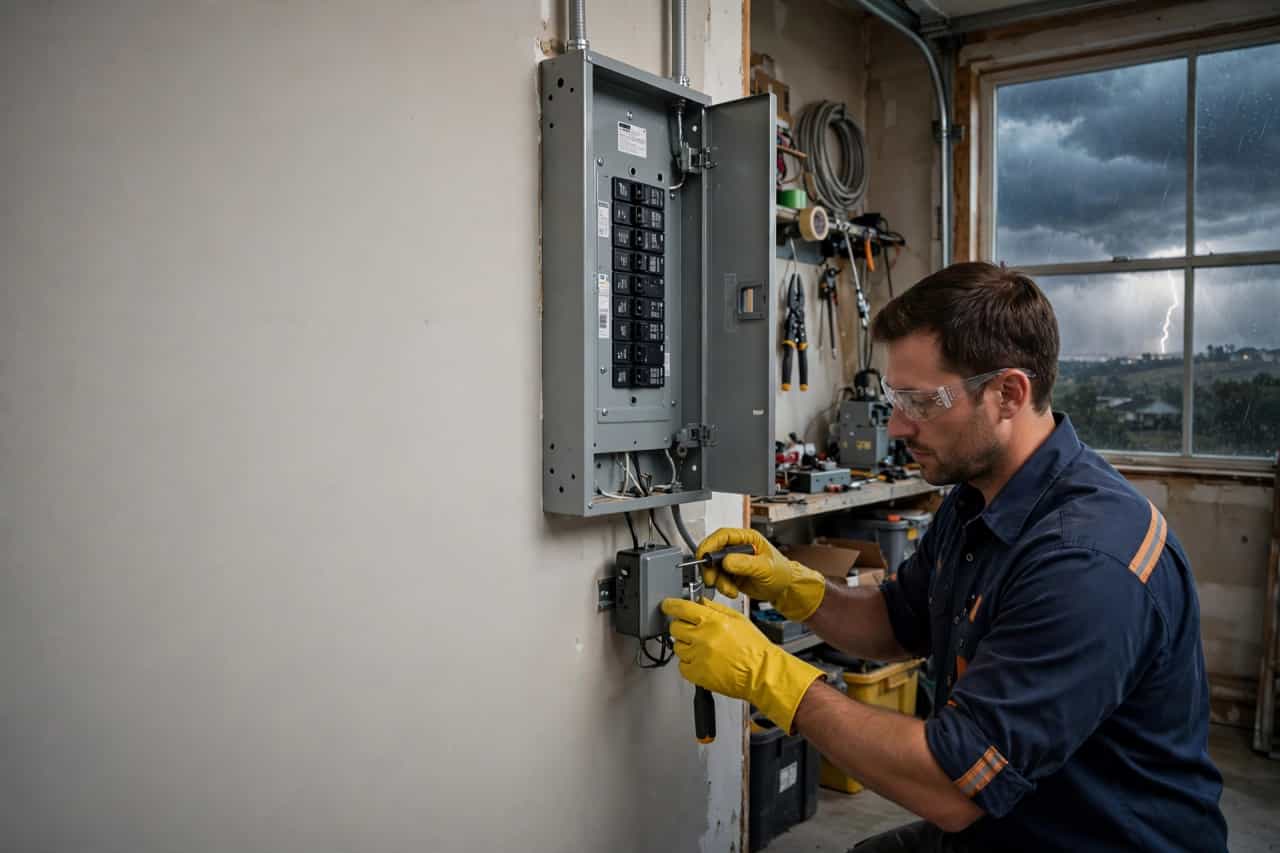
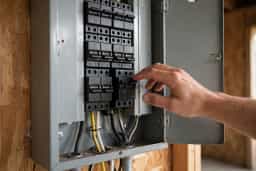
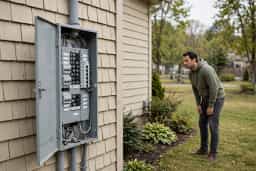
Most Des Moines homes keep the panel in the basement, and floods and failed sump pumps have reached that equipment before. Breakers and wiring that have been underwater need replacement, not drying, and a remodel is a chance to raise the panel.
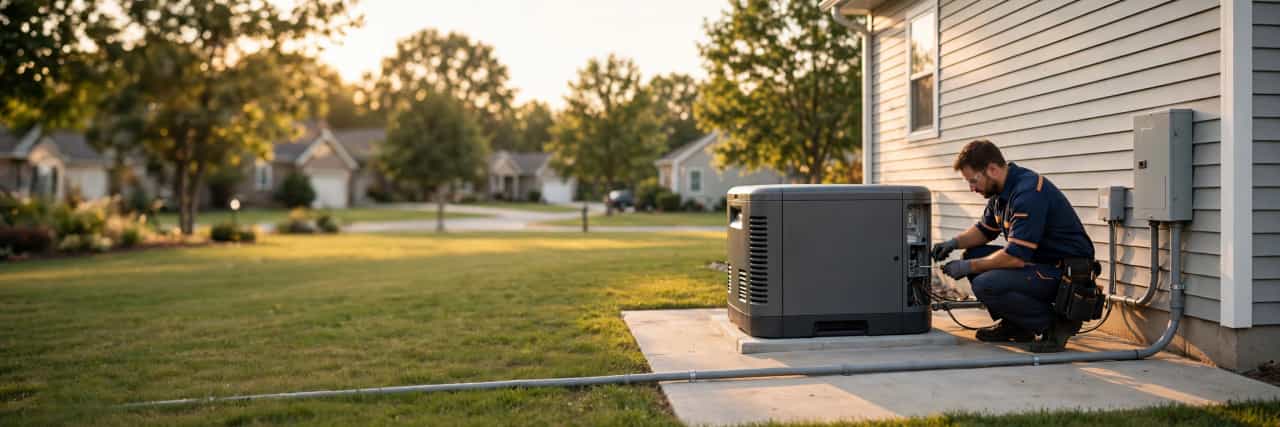
The 2020 derecho left many Des Moines homes dark for days, and winter ice can bring down lines again. A properly installed generator with a transfer switch keeps sump pumps and furnaces running safely.
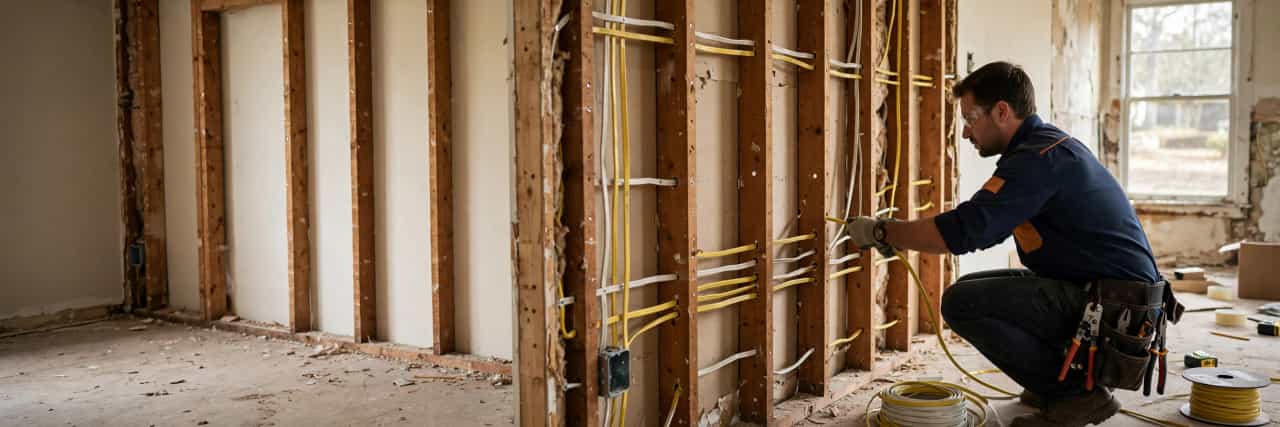
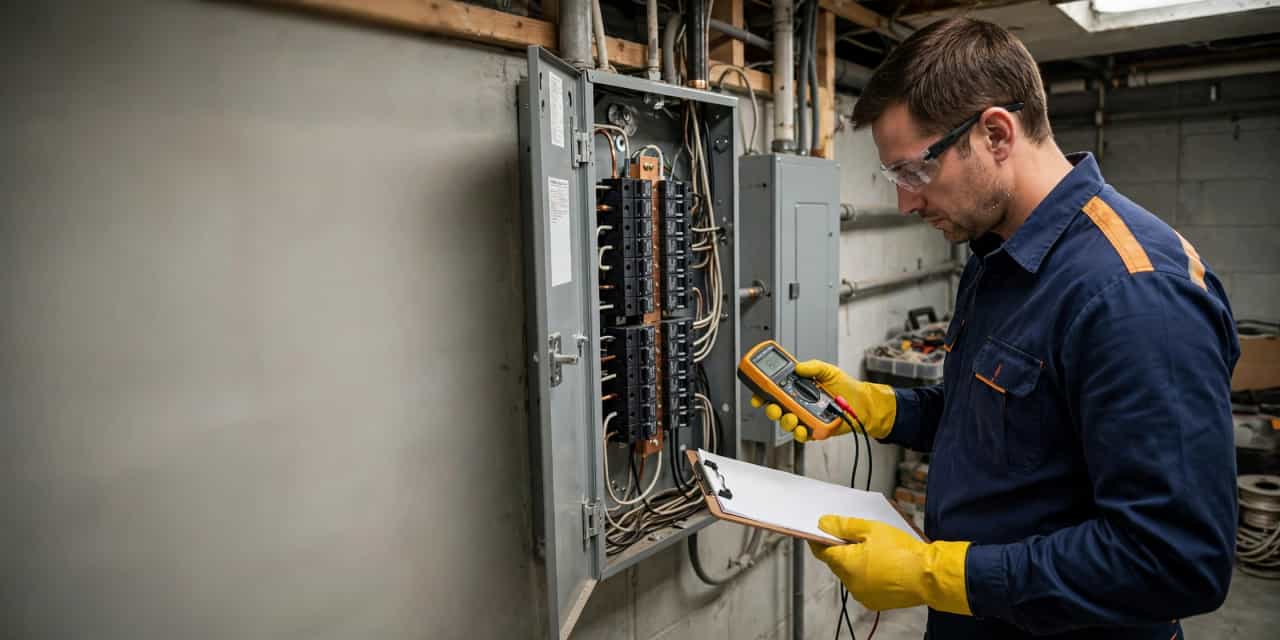
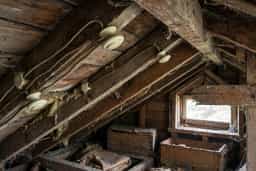
Foursquares and bungalows in Drake, Highland Park and Capitol East can still carry knob-and-tube or cloth-sheathed cable behind plaster and lath. Finding what is still energized comes before any upgrade.
History, housing, weather and rules that shape electrical work in Des Moines, IA.
Where the Raccoon meets the Des Moines River
Downtown Des Moines grew at the confluence of the Raccoon and Des Moines rivers, and both have shaped the city’s neighborhoods and its flood defenses. Low ground near the rivers, including the south side bottoms and the area around the Water Works, carries more flood risk than the upland neighborhoods. Homeowners in those zones should know whether their panel and furnace sit below the highest recorded water.
July 1993, when the Water Works went under
On July 11, 1993, the flooding Raccoon River overwhelmed the Des Moines Water Works treatment plant, and roughly a quarter million people went without running water for close to two weeks. Downtown businesses and riverfront homes also lost power as basements filled. The lesson for electrical work still holds: equipment that has been submerged, even briefly, should be replaced rather than switched back on.
The Birdland levee breach of June 2008
On June 14, 2008, the Des Moines River broke through a levee near the Birdland neighborhood north of downtown, flooding more than 200 homes, North High School and dozens of businesses with up to six feet of water. Many houses there had basements full of mechanical equipment. Rebuilding meant replacing panels, receptacles and furnace wiring, and some owners chose to relocate their electrical service to the first floor afterward.
August 10, 2020: the derecho
The derecho of August 10, 2020 crossed Iowa with hurricane-force gusts, flattening trees across Des Moines and leaving roughly 100,000 Des Moines-area customers without power. Thousands were still dark days later, and torn-off service masts and crushed meter bases required private electricians before reconnection. Many households bought generators that week, not all of them installed safely.
Beaverdale brick, built 1920 to 1940
Beaverdale, northwest of Drake, is famous for its brick houses with steep gables, arched doorways and front chimneys, locally called Beaverdale brick. Most were built between the 1920s and early 1940s. Original wiring was modest, and later owners often added circuits piecemeal. Plaster walls and solid masonry make fishing new cable harder, so electricians plan routes through basements and attics.
Sherman Hill’s Victorian homes and conversions
Sherman Hill, just northwest of downtown, is the city’s oldest residential neighborhood and its first local historic district, with Queen Anne and Italianate houses from the 1880s onward. Many were cut into apartments and later restored. Restorers often find several eras of wiring in one wall, and exterior changes such as meter moves or new lighting may need review under the district’s historic guidelines.
Drake neighborhood student rentals
Around Drake University, older single-family homes are rented to students by the room. Space heaters, mini-fridges and multiple chargers load circuits that were never designed for that use. Des Moines requires rental properties to hold a city rental certificate backed by inspection, and landlords commonly schedule electrical repairs before those inspections and between leases. Tamper-resistant outlets, working smoke alarms and labeled breakers make those visits go smoothly.
Highland Park and the north side foursquares
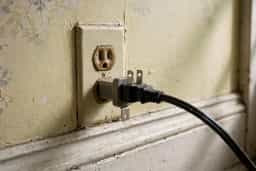
Highland Park and Oak Park on the north side contain early-1900s foursquares, bungalows and cottages, many now owned by young families renovating room by room. Ungrounded two-prong outlets, ceiling fixtures on old cloth wiring and fuse-panel subpanels left in the basement are common discoveries. A phased rewiring plan lets owners spread the cost while fixing the riskiest circuits first. Kitchens, bathrooms and bedrooms usually come first.
Capitol East near the State Capitol
East of the river, the neighborhoods surrounding the gold-domed Iowa State Capitol hold some of the city’s oldest workers’ housing, much of it modest frame houses on narrow lots. Revitalization has brought new infill homes beside century-old ones. Older houses here often have small 60-amp services, and a service upgrade with a new meter base is usually the first step before adding central air.
East Village lofts and mixed-use buildings
The East Village, between the river and the Capitol, turned old warehouses and storefronts into lofts, shops and restaurants. Converted commercial buildings bring their own electrical quirks, such as shared meter rooms, old conduit reused for new circuits and tenant spaces carved from larger floors. Restaurant and retail tenants there routinely need lighting, equipment circuits and permit work reviewed before opening.
Waterbury and Salisbury Oaks on the west side
West of Drake, Waterbury and Salisbury Oaks feature larger 1920s to 1950s homes on wooded lots, including brick colonials and Tudors near Grand Avenue. Mature oaks and maples line the streets, and the derecho showed how much damage falling limbs can do to overhead service drops. Owners often add whole-home surge protection and generator connections when they replace a damaged mast.
South side ranches from the post-war boom
The south side, from Southridge to Easter Lake, filled with ranch houses and split-levels in the 1950s and 1960s as the city expanded. Many still run on their first breaker panels, and some panel brands from that era have known reliability concerns. Kitchens updated with induction ranges and new appliances often outgrow the original 100-amp service. Attached garages converted to family rooms also tend to hide undersized wiring.
Winters that reach well below zero
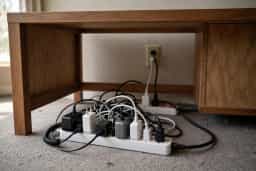
Des Moines winters bring stretches of subzero cold, ice storms and blowing snow. Furnaces, heat tape, block heaters and space heaters all add load, and extension cords run to garages and porches become hazards. If a cord or outlet feels warm, unplug what you can and have the circuit checked. Never run a generator in a garage, even with the door open.
Tornado season and lightning
Central Iowa sits in an active zone for spring and summer storms, with tornado warnings, hail and frequent lightning. Lightning-induced surges can destroy furnace boards, garage door openers and electronics. A whole-home surge protector at the panel, combined with point-of-use protection for sensitive equipment, reduces that risk, and an electrician can check the grounding system it depends on. Unplug sensitive devices when storms approach.
Glacial soils and basement moisture
Des Moines lies at the southern tip of the Des Moines Lobe, the last glacier to reach Iowa, which left clay-rich till that holds water. Many basements depend on sump pumps that run hard after spring rains. A sump pump on a dedicated, ground-fault-protected circuit, with a battery or generator backup, is one of the most useful small upgrades a Des Moines homeowner can make.
MidAmerican’s wind-heavy power supply
MidAmerican Energy generates a large share of its electricity from wind farms across Iowa, and it offers programs and rates that support home efficiency and electric vehicles. As more households add heat pumps and EV chargers, panel capacity becomes the limiting factor in older homes. A load calculation shows whether a smart load manager can avoid a full service upgrade.
EV charging in older garages
Detached garages behind Beaverdale and north side homes were built for one small car and a single bulb. Adding a Level 2 charger typically means a new feeder from the house, often trenched under the yard, plus a subpanel in the garage. Iowa’s frozen ground means outdoor trenching is best planned for spring through fall. Ask whether MidAmerican offers a separate EV rate or program before choosing a charger.
Ingersoll and Grand Avenue businesses
Ingersoll Avenue and the stretch of Grand Avenue west of downtown are lined with restaurants, salons and small offices in older buildings. Turnover is steady, and new owners often find outdated lighting, overloaded kitchen circuits or panels hidden in back rooms. Commercial electricians handle tenant improvements and coordinate inspections with the city’s Permit & Development Center. Emergency lighting and exit signs are often part of the review.
Homeowner work and the city permit process
Rules for homeowners doing their own electrical work vary by jurisdiction in Iowa, and permits and inspections still apply, so ask the Permit & Development Center before starting anything yourself. Anyone paid to do the work must hold a state electrical license. Checking that the permit is pulled protects you when you sell or file an insurance claim. Keep the final inspection record with your house papers.
When to call and what to have ready
Smoke, a burning odor, sparking, or water near the panel means everyone should keep clear. Turn off the main only if you can reach it without standing in water, call 911 for smoke or fire, then call an electrician. For non-emergency work, call (855) 679-2483 and describe the problem, the age of the house and where the panel is located.
Questions
Questions from Des Moines, IA homeowners
Is there a 24 hour emergency electrician in Des Moines, IA?+
Yes. Call (855) 679-2483 any time, day or night, and you are connected with an independent licensed electrician who covers Des Moines, including Beaverdale, Sherman Hill, Drake. For sparks, smoke or a hot panel, call 911 first.
Who handles electrical repair and generator installation in Des Moines?+
Licensed electrical contractors working in Polk County handle outlet and switch repair, circuit troubleshooting, panel work and standby generator installation. Permits go through City of Des Moines Permit & Development Center, Development Services (Argonne Armory Building, 602 Robert D. Ray Drive).
Who issues electrical permits in Des Moines?+
The City of Des Moines Permit & Development Center issues electrical permits and schedules inspections, from the Argonne Armory Building on Robert D. Ray Drive. Suburbs such as West Des Moines, Urbandale and Ankeny run their own permit offices, so the property address determines where the permit goes.
Who do I call if my power keeps going out in Des Moines?+
Report neighborhood-wide outages to MidAmerican Energy. If the outages keep happening only at your house, or only on certain circuits, the cause is probably on your side of the meter, so call (855) 679-2483 to reach a licensed electrician.
Does an electrician need a license in Iowa?+
Yes, Iowa licenses electricians and electrical contractors through the Iowa Electrical Examining Board, part of the Department of Inspections, Appeals and Licensing. Ask for the license number and check it on the state’s lookup before work starts.
By calling, you agree to be connected with an independent electrician, who may call or text you back about your request at the number you call from. Calls may be recorded for quality and routing. Consent is not a condition of any purchase, and you can opt out at any time; message and data rates may apply. Privacy policy.
Free to call
Explain the problem in plain words
Connect with an independent licensed electrician near you
Smoke, flames or sparking? Leave the building and call 911 first.
Pronto Electrician is a free referral service. The electricians you are connected with are independent contractors, not employees or agents of Pronto Electrician. Pronto Electrician does not perform electrical work, and the electrician you choose sets the price, schedule, permits and warranty.
By calling, you agree to be connected with an independent electrician, who may call or text you back about your request at the number you call from. Calls may be recorded for quality and routing. Consent is not a condition of any purchase, and you can opt out at any time; message and data rates may apply. Privacy policy.