Missouri’s weather is some of the most severe in the country. The 2011 Joplin tornado was one of the deadliest in U.S. history, ice storms have left parts of the state dark for weeks, and the Missouri and Mississippi rivers flood regularly. St. Louis’s century-old brick housing and the lake homes of the Ozarks add their own electrical challenges.
The hazards that drive the most electrical calls here, and how homeowners prepare for them.
Severe storms and tornadoes
Storm damage can tear service masts and meter bases from the home. After a storm, look for a leaning mast or pulled service cable and keep clear — the utility side stays energized. Repairs to the mast and meter base are usually the homeowner’s responsibility.
Ice accumulation brings down lines and trees across wide areas, often for days. Backup power planning matters, and overhead service drops near trees should be checked for damage after ice events.
Electrical equipment that has been underwater — panels, outlets, breakers, appliances — generally must be replaced, not dried and reused. Do not re-energize a flooded home until an electrician has inspected it.
Ameren Missouri serves St. Louis and much of eastern and central Missouri. Evergy serves Kansas City and western Missouri. Liberty serves Joplin and much of Southwest Missouri. City Utilities of Springfield, Columbia Water and Light and Independence Power & Light are among the municipal utilities, and electric cooperatives serve most of rural Missouri.
Missouri does not have retail choice for homes. Your utility sets the requirements for service upgrades, meter changes, generator connections and reconnection after storms.
Licensing and permits
Electrical licensing in Missouri has historically been local, with Kansas City, St. Louis City, St. Louis County, Springfield and other jurisdictions licensing electricians and contractors. Missouri also offers a statewide electrical contractor license that many local jurisdictions accept. Rural areas may have no local licensing requirement. Ask your electrician which licenses they hold and whether your jurisdiction recognizes them.
Cities and counties issue permits and inspect work under their adopted edition of the National Electrical Code. Some rural counties have no building code enforcement, so hiring a licensed electrician who follows code matters even when no permit is required.
Tornadoes
On May 22, 2011, an EF5 tornado destroyed a large part of Joplin and killed 161 people. Tornadoes strike Missouri every year, from the Bootheel to the Kansas City suburbs. Wind tears service drops off houses and damages masts and meter bases, and rebuilding after a direct hit means a new service, panel and wiring throughout.
After a storm, stay away from downed lines and have house-side equipment repaired before the utility reconnects.
Ice storms
In January 2007, an ice storm coated Springfield and much of Southwest Missouri in thick ice, bringing down trees and lines and leaving many homes without power for a week or more. Ice storms also strike central and northern Missouri. Backup power for heating, well pumps and refrigeration is the most important ice-storm preparation, and generators must be connected through a transfer switch or listed interlock.
Summer storms and heat
In July 2006, back-to-back severe storms knocked out power to hundreds of thousands of Ameren customers in the St. Louis area during a heat wave, some for more than a week. Missouri summers are hot and humid, and air conditioning loads stress older panels. Warm breakers, burning smells and AC circuits that trip repeatedly should be checked.
River flooding
The Great Flood of 1993 inundated communities along the Missouri and Mississippi rivers, and major flooding has returned many times since. Electrical equipment that has been underwater must be replaced, and homes in flood-prone areas benefit from raising panels and equipment during renovation.
St. Louis brick homes
St. Louis is known for its brick housing — flats, bungalows and grand homes in neighborhoods such as Soulard, Lafayette Square, Tower Grove and the Central West End, many built between the 1880s and 1930s. Rewiring solid brick homes requires routing through basements, attics and closets, and many still contain knob-and-tube wiring, fuse panels and small services. Older flats often have separate meters and panels for each unit.
Kansas City housing
Kansas City neighborhoods such as Brookside, Waldo, Hyde Park and the Northeast have early-1900s homes with older wiring, while suburbs in Clay, Platte and Cass counties are largely newer. The metro straddles the state line, so permit and licensing rules differ between the Missouri and Kansas sides.
Lake of the Ozarks and docks
The Lake of the Ozarks, Table Rock Lake and other reservoirs have thousands of docks. Electric shock drowning has been a serious concern at the Lake of the Ozarks, where faulty dock wiring has energized the water. Dock circuits need ground-fault protection, correct bonding and wet-location wiring, and older docks should be inspected before swimming season. Some lake-area jurisdictions have adopted dock electrical inspection requirements.
New Madrid seismic zone
Southeast Missouri, including the Bootheel, sits on the New Madrid seismic zone, which produced major earthquakes in 1811 and 1812. A large quake is unlikely in any given year but possible. Securing water heaters and appliances and checking service equipment after any significant quake are practical precautions.
Rural properties and wells
Much of rural Missouri relies on wells and electric cooperatives. Farms have barns, shops and grain equipment with heavy loads, and long service runs. Well pumps stop during outages, so backup power plans should include the pump. Manufactured homes are common and depend on meter pedestals and feeders that should be checked after storms.
EVs and solar
EV ownership is growing in St. Louis and Kansas City suburbs, and rooftop solar is expanding. A load calculation decides whether an older 100-amp service can support a Level 2 charger. Solar requires utility interconnection approval and permits.
Regional differences
Greater St. Louis focuses on brick homes, flats and storm reliability. Kansas City combines older neighborhoods, suburbs and a two-state metro. Southwest Missouri faces tornadoes and ice storms. The Ozarks have lake homes, docks and rugged rural service. Northern Missouri is agricultural, and the Bootheel faces flooding and seismic risk.
Common electrical calls in Missouri
Frequent requests include storm repairs, generator and interlock installations, fuse panel and service upgrades, rewiring brick homes, dock inspections, surge protection, flood-damaged equipment replacement and EV charger installations.
Flats and multi-unit buildings in St. Louis
St. Louis has thousands of two-family and four-family brick flats, each unit with its own meter and panel. Owners rehabilitating flats often upgrade every service at once, replace the meter bank, and add a house panel for common lighting and laundry. Separate units also need separate smoke alarms and, in many cases, interconnection within each unit.
Buying an older Missouri home
Inspections of older Missouri homes often find fuse panels, ungrounded outlets, knob-and-tube wiring, missing GFCI protection and wiring damaged by moisture in basements. Some cities, including St. Louis and Kansas City, have occupancy or rental inspection requirements. An electrician’s written evaluation helps buyers understand what is urgent and what it will cost.
Springfield and the Ozarks
Springfield is served by its own municipal utility, City Utilities, and the surrounding Ozarks are among the fastest-growing parts of the state, with new subdivisions alongside older rural homes. Rugged terrain, wooded lines and ice storms make outages longer in the countryside, and many homes rely on wells that need backup power.
Heat pumps and backup heat
Heat pumps are common across Missouri, and during cold snaps they rely on electric backup heat strips that draw large currents. Checking the circuits and connections that feed backup heat reduces the risk of overheating, and generator plans should account for whether heating will run during an outage.
Generators and fuel choices
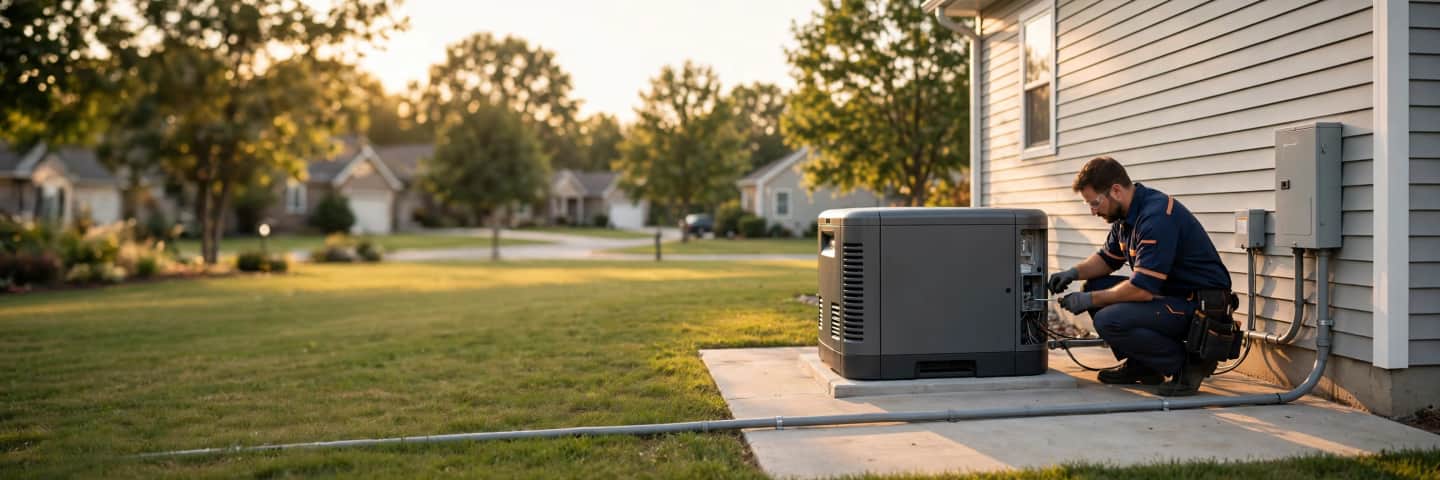
In the suburbs, natural-gas standby generators with automatic transfer switches are common. Rural homes often use propane units or portable generators with an interlock. Generators must run outdoors with clearances from windows and doors, and must never be connected by back-feeding through an outlet.
Surge protection and lightning
Missouri’s spring and summer storms bring frequent lightning, and the surges that follow damage heat pump control boards, well pump controllers and electronics. A whole-home surge protective device at the panel, along with point-of-use protection, is an inexpensive layer of defense that pairs well with other panel work.
Working with an electrician in Missouri
Ask which local or statewide license the electrician holds, who will pull the permit, and whether your jurisdiction requires inspection. For service upgrades and storm repairs, ask how they will coordinate with Ameren Missouri, Evergy, Liberty, your city utility or cooperative. At the lake, ask about dock inspection requirements.
Electrical licensing and permits in Missouri are set by state and local authorities. The electrician confirms what applies to your project.
Services
Most requested in Missouri
Ranked by how many of this state’s climate risks each service addresses.
Connect with an independent licensed electrician near you
Smoke, flames or sparking? Leave the building and call 911 first.
Pronto Electrician is a free referral service. Calls are answered by independent licensed electricians in your area. Pronto Electrician does not perform electrical work, and the electrician you choose sets the price, schedule, permits and warranty.
Free to call · All 50 states + DC
Talk to a licensed electrician in Missouri
Describe the problem and get connected with an independent licensed electrician who serves your area.