St. Louis has stood apart from any county since voters split it from St. Louis County in 1876, and nearly everything inside its fixed boundary was built of local red brick during a century of growth. Ameren Missouri delivers electricity. Electrical calls here revolve around nineteenth-century row houses and early twentieth-century flats, damp basements, humid summer storms and the long recovery from the EF3 tornado that crossed north city neighborhoods on May 16, 2025.
Soulard, Lafayette Square and Benton Park have brick townhouses from the mid and late 1800s. Tower Grove South, Bevo Mill and Dutchtown are thick with two-family and four-family brick flats built roughly between 1900 and 1930, and St. Louis Hills filled in during the 1930s and 1940s. Plaster over masonry, knob-and-tube remnants, converted gas fixtures and fuse boxes in the basement are everyday findings.
Problems that come up again and again in local homes, and the service that fixes each one.
01
Tornado and wind damage on the north side
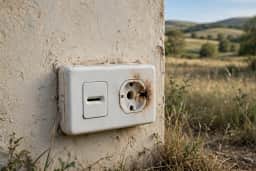
The May 2025 tornado tore service drops, masts and meter sockets off thousands of buildings. Ameren restores the line, but damaged equipment on the building usually has to be repaired by an electrician and pass inspection first.
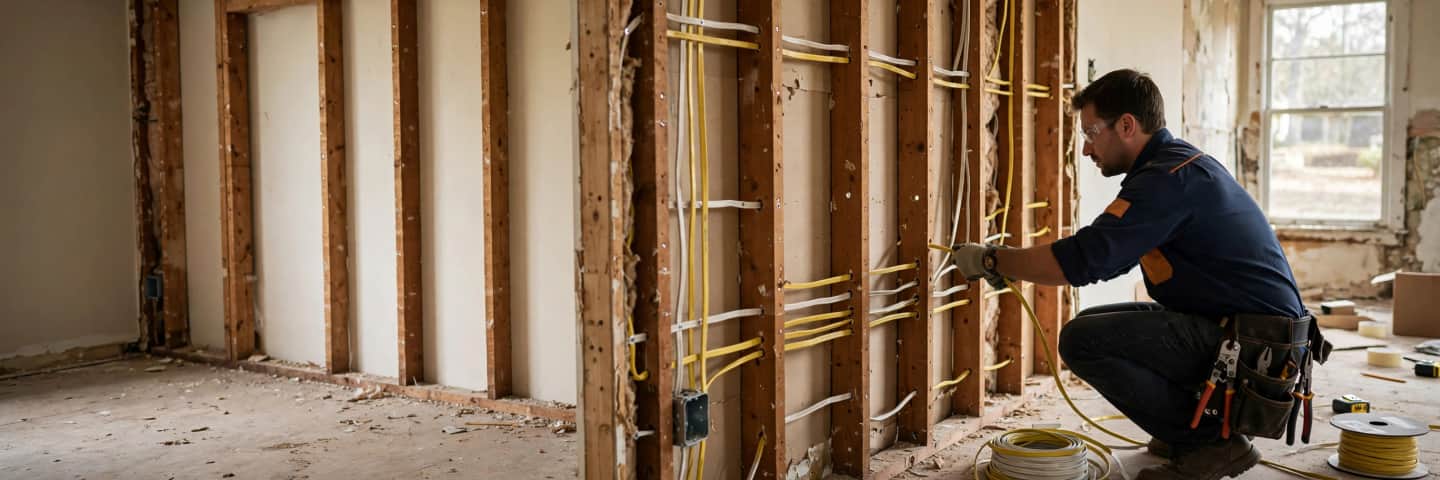
Flats and row houses built before about 1930 often still have original knob-and-tube in walls and ceilings, sometimes buried under attic insulation. Rewiring through solid masonry takes careful routing through floors, closets and chases.
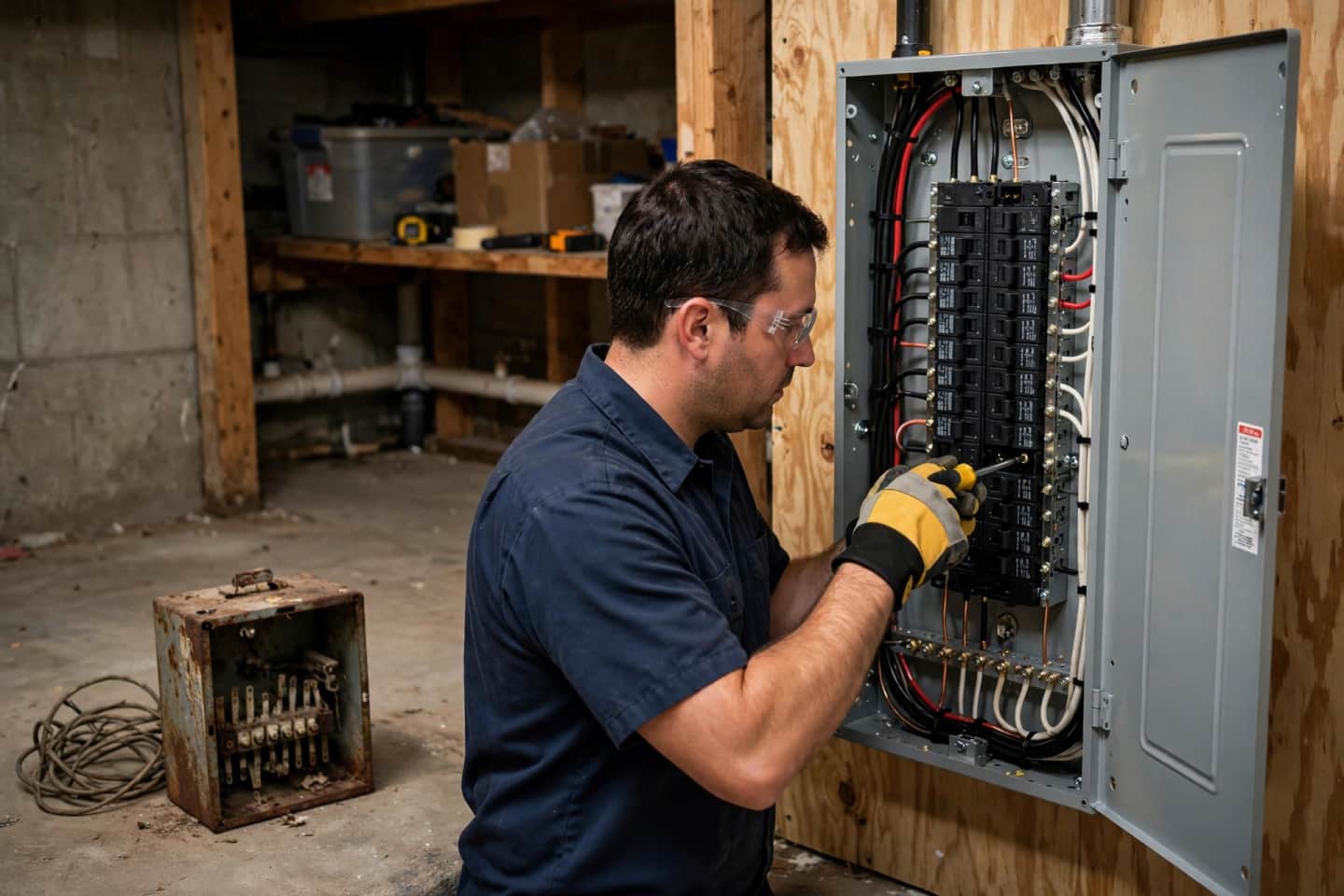
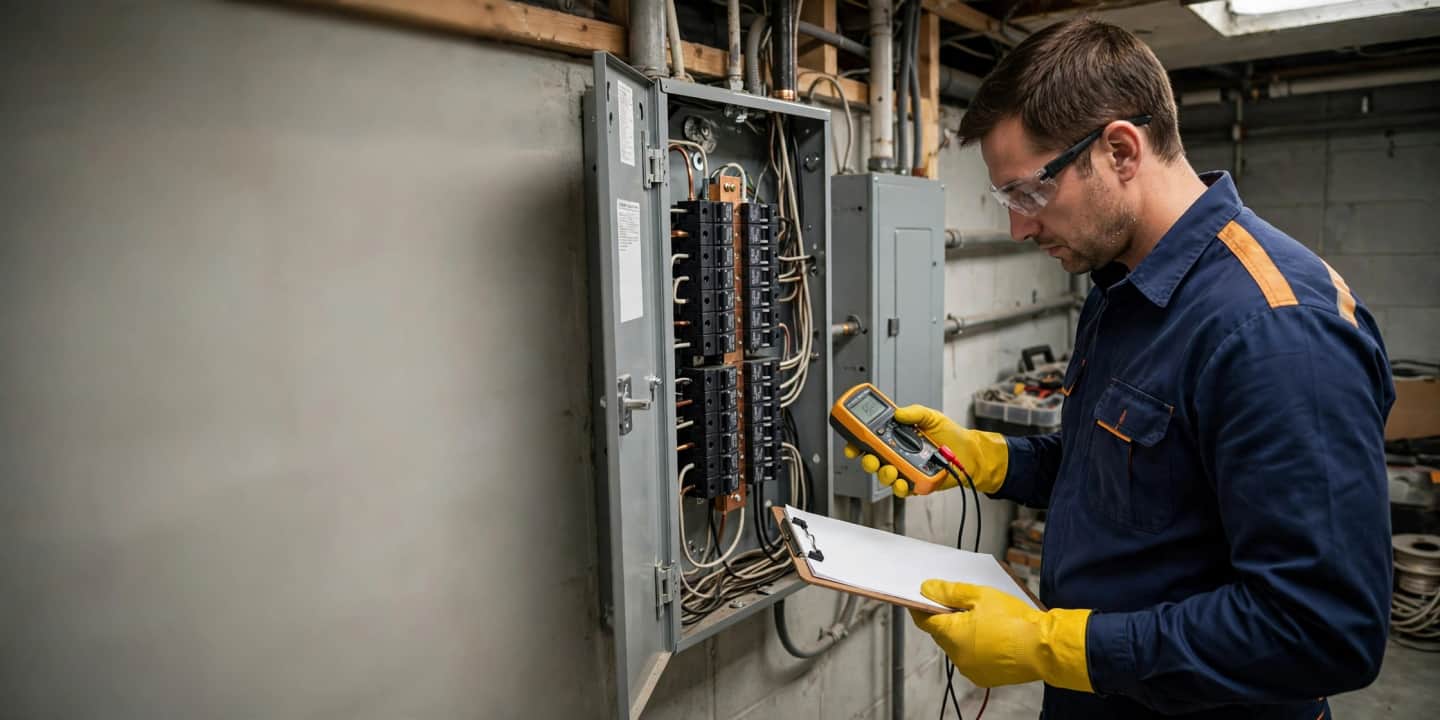
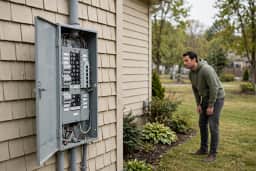
Panels, laundry circuits and furnace wiring usually live in the basement. After storms like the record rain of July 2022, anything that sat in water should be evaluated and replaced before it is energized.
History, housing, weather and rules that shape electrical work in St. Louis, MO.
The 1876 Great Divorce
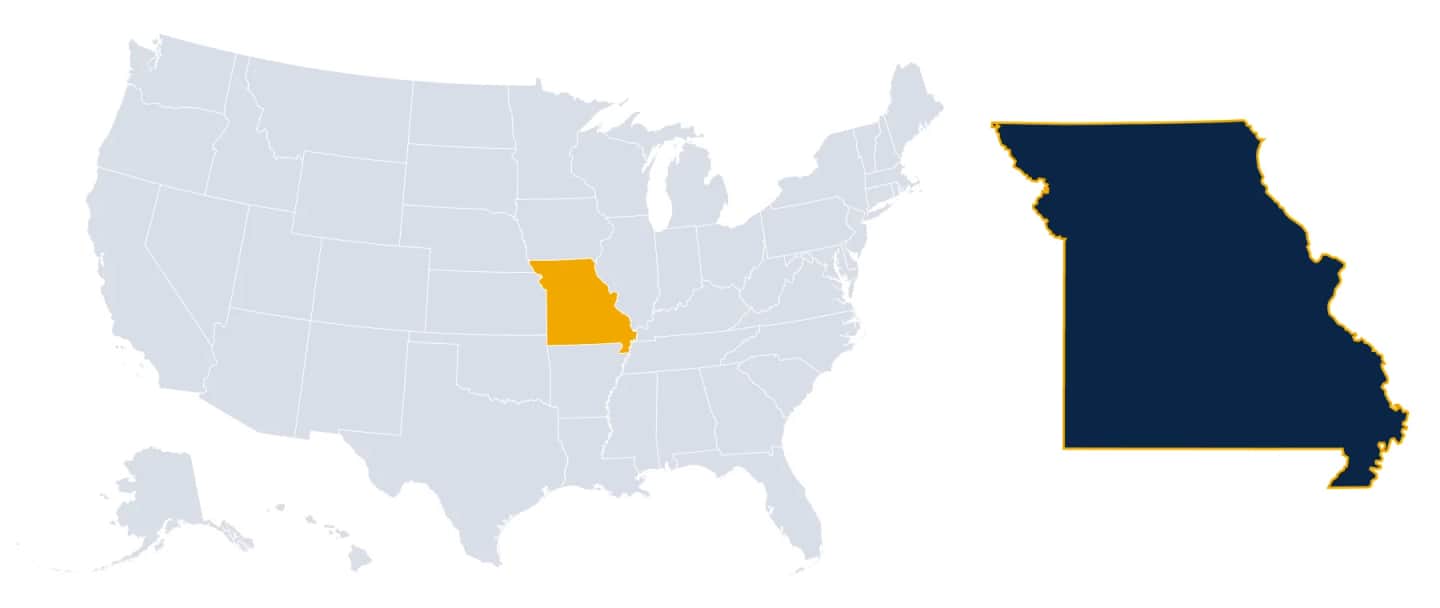
In August 1876 city voters chose to separate from St. Louis County, and a disputed recount confirmed the result late that year. The city boundary has not moved since, which is why St. Louis has no unincorporated fringe and no new subdivisions to speak of. For homeowners it also means one set of rules inside the line and a patchwork of county and municipal offices outside it, so the address decides which permit office and license apply.
A city made of local clay
St. Louis sat on rich clay deposits and the coal to fire them, and by the end of the 1800s dozens of clay products companies operated here. After the Great Fire of 1849, the city also pushed builders toward brick and stone. The legacy is solid masonry everywhere. Electricians cannot simply drill through stud walls, so new circuits are routed through basements, attics, closets and old chimney chases, or run in surface raceway where concealment is impractical.
Soulard row houses beside the brewery
Soulard grew up around its long-running farmers market and the Anheuser-Busch brewery to the south, and its narrow lots are lined with brick row houses and cottages from the mid-1800s. Many have been renovated piecemeal over generations, leaving circuits from several eras tied together. Common jobs include replacing basement fuse panels, eliminating spliced extensions in crawl spaces and adding properly protected circuits for kitchens squeezed into small rear rooms.
Lafayette Square after 1896
A tornado on May 27, 1896, devastated Lafayette Square and much of the near south side. The Victorian townhouses rebuilt or repaired afterward now form a restored historic district around the city’s oldest public park. Owners there often want period chandeliers wired safely, discreet outlets in tall plaster walls and modern panels hidden in the basement. Exterior changes, such as relocated meters or new conduit on a facade, may need historic review.
Two-family flats in Tower Grove South
Tower Grove South and neighboring Dutchtown are dense with brick two-family and four-family flats from the first decades of the twentieth century. Each unit typically has its own meter and small panel, plus house circuits for basement lights and laundry that may be tied into one unit without anyone noticing. Owners converting a two-family into a single home usually need a single new service and a reworked panel layout.
Narrow cottages on The Hill
The Hill, settled largely by Italian immigrants who worked in nearby clay mines and brickyards, is known for compact brick cottages set close together on narrow lots. Their modest original wiring was extended over decades as families added kitchens, basement workshops and air conditioning. Overloaded basement circuits, ungrounded outlets and cramped service locations along tight side yards are frequent concerns when these homes change hands.
Bevo Mill bungalows
Named for the windmill restaurant August Busch Sr. built in 1917, the Bevo Mill neighborhood is full of brick bungalows and flats from the 1910s and 1920s. These houses often have early cloth-insulated wiring, a few outlets per room and basements that have been finished at least once. A whole-house evaluation helps owners decide whether to rewire in stages or all at once, and where a new panel should go.
St. Louis Hills between the wars
St. Louis Hills, around Francis Park in the southwest corner of the city, developed mainly in the 1930s and 1940s with well-built brick homes. The wiring is newer than in Soulard but still old by modern standards: small fuse or early breaker panels, two-prong outlets and few kitchen circuits. Adding central air, an induction range or an EV charger usually starts with a load calculation and frequently ends with a service upgrade from Ameren.
Central West End and the 1904 fair
Grand houses along the private streets of the Central West End, many built around the time of the 1904 World’s Fair in Forest Park, have three or four floors, servants’ stairs and ballroom attics. Wiring in the upper floors can be the oldest in the house. Restorations here involve long circuit runs, lighting controls for large rooms, and careful fishing through plaster to avoid damaging ornamental ceilings and woodwork.
Carondelet and the River Des Peres
Carondelet began as a separate French colonial village before the city annexed it in 1870. Its low ground along the River Des Peres has flooded more than once, including during the Great Flood of 1993, when high Mississippi water backed up the river channel. Basements in this part of south city are especially vulnerable. Moving a panel above the likely water line during a renovation is a practical step worth discussing.
The wettest day: July 26, 2022
Early on July 26, 2022, Lambert Airport recorded 7.68 inches of rain in six hours and 8.64 inches for the day, breaking a daily record of 6.85 inches set in 1915. Sewers backed up and basements filled across the city and county. Water-soaked panels, furnace controls, sump pump circuits and receptacles must be evaluated before they are re-energized, and many need to be replaced outright.
May 16, 2025: the EF3 tornado
The tornado that struck on the afternoon of May 16, 2025, moved from Forest Park through Fountain Park, the Greater Ville, Kingsway East and the O’Fallon neighborhood before crossing into Illinois. Roughly 115,000 Ameren customers lost power that day, and thousands of buildings were damaged. Ripped service masts, crushed meter bases and water-soaked wiring under torn roofs all need electrical repairs and inspection before power can safely return.
The July 2006 storms and long outages
In July 2006, back-to-back severe thunderstorms knocked out power to hundreds of thousands of Ameren customers in the St. Louis region during a heat wave, and some households waited days for restoration. That memory still drives interest in backup power. Portable generators should connect through a listed interlock or transfer switch, never through a dryer outlet, and standby units need permits and careful placement on tight city lots.
Window units in humid summers
Many older flats never received central air, so summer comfort depends on window units plugged into whatever outlets happen to be in the room. On a single shared bedroom circuit from the 1920s, two window units plus a fan can trip breakers or overheat a fuse. Adding dedicated circuits for air conditioners, or a ductless heat pump with its own circuit, is a common and sensible upgrade.
Gasoliers and early fixtures
Before electricity, many St. Louis homes were lit by gas, and some ornate ceiling fixtures were later converted to electric or built to use both. Antique gasoliers still hang in houses across Lafayette Square, Compton Heights and Soulard. Rewiring them with modern sockets and heat-rated wire, and confirming the old gas pipe is capped and not used as a ground path, protects both the fixture and the house.
Saint Louis University and student rentals
Saint Louis University anchors Midtown, and Washington University’s medical campus sits beside Forest Park, so the surrounding neighborhoods have a steady population of students, residents and hospital staff renting older units. Landlords benefit from updating ground-fault protection in kitchens and baths, replacing scorched outlets, installing interconnected smoke alarms and making sure every unit has a properly labeled panel that tenants can reach.
Service drops from the alley
Much of the city is served by overhead lines running down the alleys behind homes, so the service drop, mast and meter are usually at the back of the house or on a garage. Trees, vines and trash trucks in those alleys put steady wear on the equipment. A leaning mast, sagging drop or meter socket pulling away from the brick should be repaired quickly, before wind or ice finishes the job.
Rehabbing long-vacant buildings
St. Louis has many vacant houses and flats, including properties held by the city’s Land Reutilization Authority. Rehabbers bringing those buildings back typically face missing panels, stripped copper and water damage, and they usually start from scratch with a new service, new wiring and full inspections. Getting an electrician to walk the building before purchase helps buyers estimate costs realistically and plan the work in phases.
Chargers on streets without garages
Many city homes rely on street parking or a detached garage facing the alley. Charging an electric vehicle in that setting means running a feeder underground or overhead to the garage, or installing a charger near a parking pad, with permits from the Building Division. Owners of flats should also plan which meter will carry the charger so the cost lands on the right account.
Questions
Questions from St. Louis homeowners
Who issues electrical permits in St. Louis?+
Inside the city, the Building Division of the Department of Public Safety issues electrical permits, mainly to electrical contractors licensed by the city and, under certain conditions, to owners of single-family homes. Applications can be submitted online or at the permit counter in Room 425 of City Hall. Suburbs across the boundary follow St. Louis County’s Department of Transportation and Public Works or their own municipal building departments.
Does Missouri license electricians statewide?+
Missouri leaves most electrician licensing to local governments. The City of St. Louis licenses electrical contractors through its Building Division and a Committee of Electrical Examiners, and St. Louis County runs a separate licensing program, so confirm the contractor holds the license that matches your address.
Who do I call when the power goes out?+
Report outages and downed lines to Ameren Missouri. If the street has power but your building does not, the problem is likely on the customer side, such as the mast, meter socket or panel, and needs an electrician.
Connect with an independent licensed electrician near you
Smoke, flames or sparking? Leave the building and call 911 first.
Pronto Electrician is a free referral service. Calls are answered by independent licensed electricians in your area. Pronto Electrician does not perform electrical work, and the electrician you choose sets the price, schedule, permits and warranty.