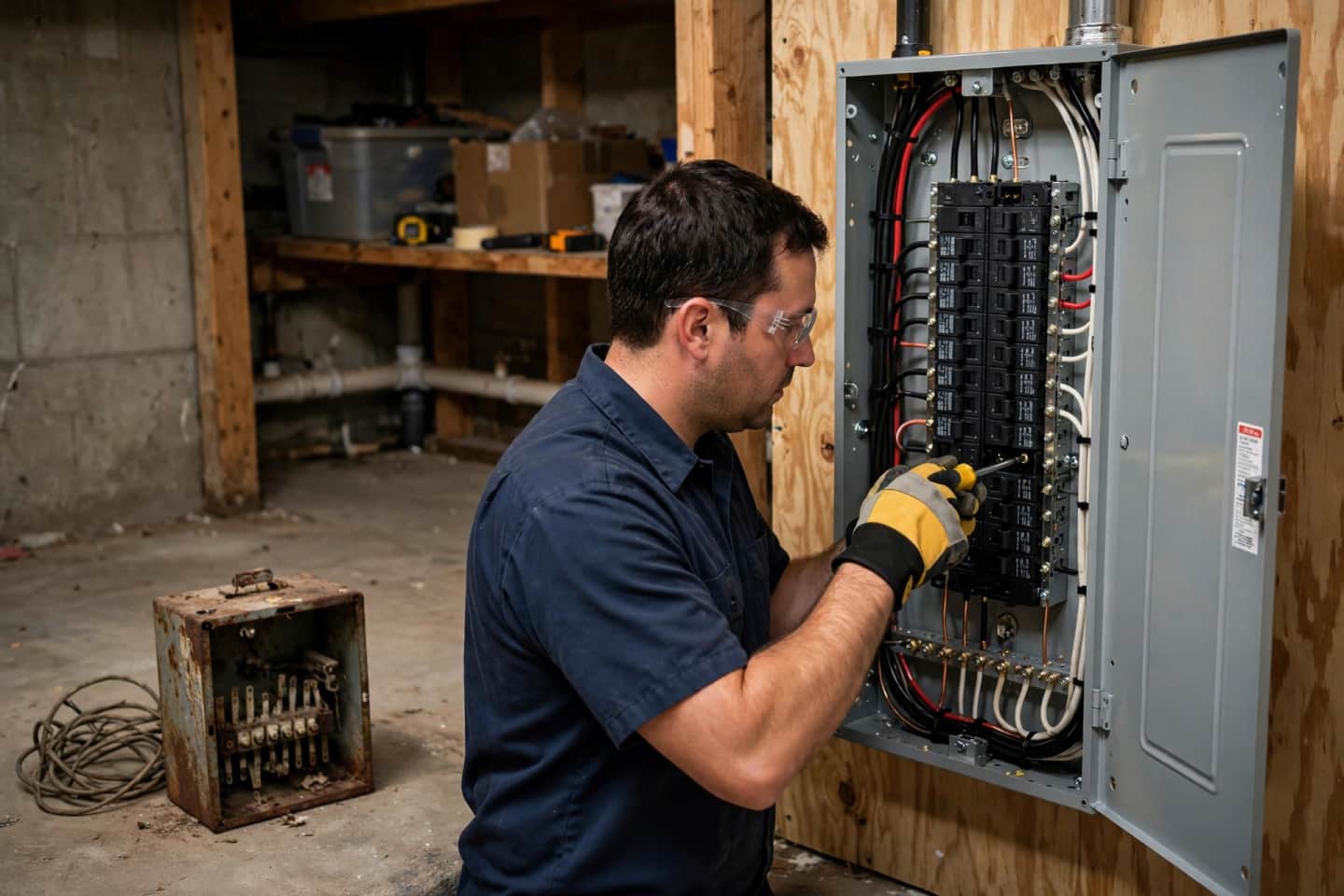
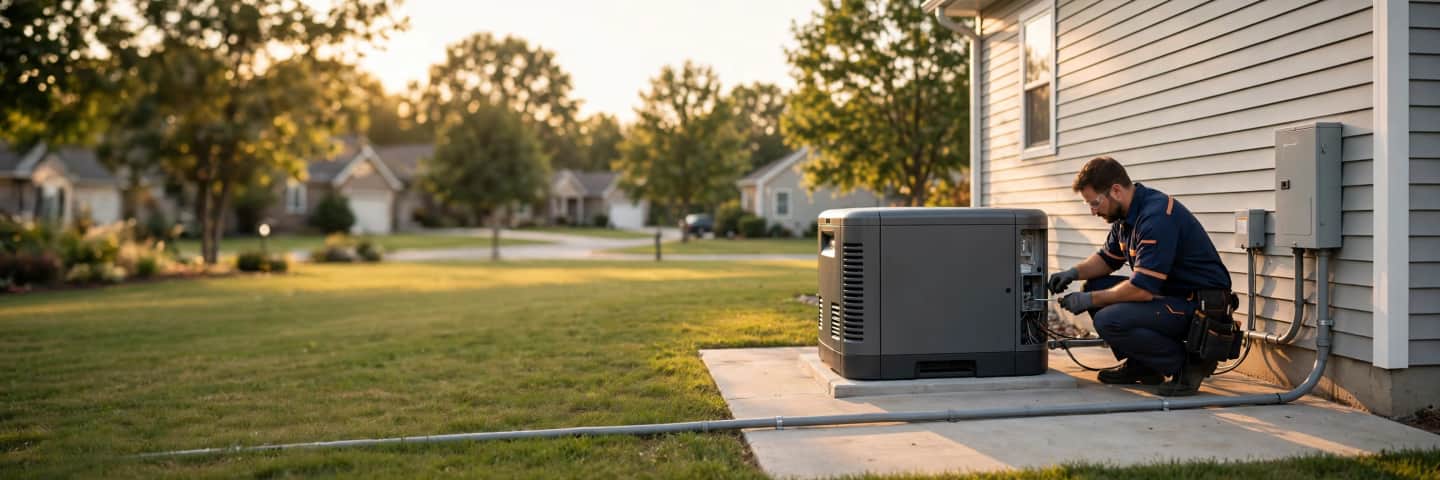
Kentucky has endured some of the most destructive weather in recent American history: the December 2021 tornado that leveled Mayfield, the July 2022 floods that swept through Eastern Kentucky, and the January 2009 ice storm that left hundreds of thousands without power. Those events, along with an older housing stock in Louisville, Lexington and Appalachian towns, define the state’s electrical needs.
The hazards that drive the most electrical calls here, and how homeowners prepare for them.
Severe storms and tornadoes
Storm damage can tear service masts and meter bases from the home. After a storm, look for a leaning mast or pulled service cable and keep clear — the utility side stays energized. Repairs to the mast and meter base are usually the homeowner’s responsibility.
Ice accumulation brings down lines and trees across wide areas, often for days. Backup power planning matters, and overhead service drops near trees should be checked for damage after ice events.
Electrical equipment that has been underwater — panels, outlets, breakers, appliances — generally must be replaced, not dried and reused. Do not re-energize a flooded home until an electrician has inspected it.
Louisville Gas and Electric serves Louisville, and Kentucky Utilities serves Lexington and much of central and western Kentucky. Duke Energy Kentucky serves Northern Kentucky near Cincinnati, and Kentucky Power, part of AEP, serves much of Eastern Kentucky. Electric cooperatives serve large rural areas, and some western Kentucky communities receive TVA power through local utilities.
Kentucky homes cannot choose a retail supplier, so your utility sets the requirements for service upgrades and storm reconnection.
Licensing and inspections
Kentucky licenses electricians and electrical contractors statewide through the Department of Housing, Buildings and Construction. Licenses can be verified online.
Electrical inspections are performed by state electrical inspectors or by certified local inspectors, and permits are required for most electrical work, including panel upgrades, new circuits, generators and EV chargers.
Tornadoes
On December 10, 2021, a long-track tornado devastated Mayfield, Dawson Springs, Bowling Green and other communities in western Kentucky. Tornadoes strike across the state, and storm damage to service masts, meter bases and drops must be repaired by an electrician before the utility reconnects. Rebuilding after a direct hit means a new service, panel and wiring.
Eastern Kentucky floods
In late July 2022, torrential rain caused catastrophic flash flooding in Eastern Kentucky, destroying homes along creeks and hollows in Breathitt, Knott, Perry and Letcher counties. Many homes in the region sit in narrow valleys close to streams.
Electrical equipment that has been underwater must be replaced. Rebuilding is an opportunity to raise panels and equipment and to plan backup power for long outages in remote areas.
Ice storms
The January 2009 ice storm coated much of Kentucky in thick ice, bringing down trees and lines and leaving many homes without power for weeks, particularly in western Kentucky. Ice storms are a recurring risk. Backup power for heat, wells and refrigeration, connected through a transfer switch or listed interlock, is the most important preparation.
Windstorms and Louisville
In September 2008, the remnants of Hurricane Ike swept through Louisville with hurricane-force gusts, causing one of the largest outages in the city’s history. Louisville’s mature tree canopy makes falling limbs a common cause of damaged service drops.
Louisville housing
Old Louisville contains one of the largest collections of Victorian homes in the country, and neighborhoods such as the Highlands, Germantown, Crescent Hill and Butchertown have shotgun houses, camelbacks and early-1900s homes. Knob-and-tube wiring, fuse panels and small services are common, and exterior changes in preservation districts may need review.
Lexington and the Bluegrass
Lexington has older neighborhoods near downtown and the University of Kentucky, along with fast-growing suburbs. Horse farms across the Bluegrass have barns, arenas and outbuildings with significant electrical loads that need properly sized feeders, grounding and moisture-resistant wiring.
Appalachian homes
Eastern Kentucky homes often sit on steep slopes or in hollows, with long service runs and wooded rights-of-way. Outages can last longer because of terrain. Many homes rely on wells, and older homes may have wiring that has been extended many times. A generator sized for the well pump, heat and refrigeration is especially valuable.
Heat pumps and backup heat
Heat pumps are common across Kentucky. During cold snaps, they rely on electric backup heat strips that draw large currents. Checking those circuits and connections reduces the risk of overheating during winter peaks.
Lightning and surge protection
Kentucky’s spring and summer storms bring frequent lightning. Surges damage heat pump boards, well pump controllers and electronics. A whole-home surge protective device at the panel is inexpensive protection.
Lakes and docks
Kentucky Lake, Lake Barkley, Lake Cumberland and other reservoirs have large numbers of docks and marinas. Faulty dock wiring can energize the water and create a risk of electric shock drowning. Docks need ground-fault protection, correct bonding and wet-location wiring.
Regional differences
Louisville focuses on historic homes, tree damage and storm outages. The Bluegrass combines Lexington’s growth and horse farms. Northern Kentucky is part of the Cincinnati metro. Western Kentucky faces tornadoes, ice storms and TVA power. Eastern Kentucky has mountains, hollows, flooding and long outages.
Common electrical calls in Kentucky
Frequent requests include generator and interlock installations, storm and flood repairs, panel upgrades, rewiring older homes, barn and outbuilding wiring, surge protection and dock inspections.
Northern Kentucky river towns
Covington, Newport and other Northern Kentucky river towns have historic brick homes and row houses from the 1800s. Rewiring these homes means working around plaster and masonry, and older homes often have fuse panels and small services. The Ohio River’s history of flooding, including the great 1937 flood, makes flood-aware placement of electrical equipment important.
Problem panels and aluminum wiring
Kentucky home inspections commonly flag fuse panels, older panels with known reliability concerns and aluminum branch wiring in some homes built in the late 1960s and early 1970s. Aluminum connections can loosen and overheat at devices not rated for it. Repairs range from pigtailing with listed connectors to replacing circuits or panels.
Basements, crawl spaces and moisture
Kentucky homes are built over a mix of basements and crawl spaces, and the state’s karst geology and heavy rains lead to wet basements in many areas. Sump pumps need reliable power, and moisture in crawl spaces damages wiring. Battery backup pumps and crawl-space inspections are practical steps.
EVs and new industry
Kentucky has attracted major EV battery manufacturing, and EV ownership is growing in Louisville, Lexington and Northern Kentucky. A load calculation decides whether an older 100-amp service can support a Level 2 charger, and load-management devices can sometimes avoid a service upgrade.
Manufactured homes
Manufactured homes are common in rural Kentucky. Their meter pedestals and feeders are exposed to storms and settling and should be inspected after severe weather. Older units may need panel and wiring updates, and homes in flood-prone hollows are particularly vulnerable.
Generators and fuel
After the 2009 ice storm, many Kentucky households invested in generators. Portable units must be connected through a transfer switch or listed interlock and run outdoors, well away from windows and doors. Standby generators are common where natural gas is available, while rural homes often rely on propane.
Buying an older Kentucky home
Inspections of older Kentucky homes often find knob-and-tube wiring, ungrounded outlets, missing GFCI protection and damaged wiring in basements and crawl spaces. An electrician’s written evaluation clarifies what must be fixed before closing.
Horse farms and barns
Barns on Bluegrass horse farms have lighting, fans, heated waterers and equipment that must be wired for dust, moisture and animals. Wiring should run in protected conduit, fixtures should be suited for damp locations, and outlets need GFCI protection. Barn fires are a serious risk, so periodic electrical inspection is a worthwhile investment.
Lightning season timing
Spring and early summer bring Kentucky’s most active storm season. Scheduling surge protection, generator readiness and service mast inspections in late winter means homes are prepared before the first severe weather of the year.
Winter heat and space heaters
Older Kentucky homes, especially in the mountains, often rely on space heaters to supplement central heat. Heaters on old shared circuits overheat worn outlets and loose connections. If outlets feel warm or breakers trip when a heater runs, a dedicated circuit or permanent heating solution is safer than an extension cord.
Working with an electrician in Kentucky
Verify the electrician’s and contractor’s state licenses, ask how the inspection will be arranged, and get a written scope. For service upgrades and storm repairs, ask how the electrician will coordinate with LG&E, KU, Duke Energy Kentucky, Kentucky Power or your cooperative.
Electrical licensing and permits in Kentucky are set by state and local authorities. The electrician confirms what applies to your project.
Services
Most requested in Kentucky
Ranked by how many of this state’s climate risks each service addresses.
Connect with an independent licensed electrician near you
Smoke, flames or sparking? Leave the building and call 911 first.
Pronto Electrician is a free referral service. Calls are answered by independent licensed electricians in your area. Pronto Electrician does not perform electrical work, and the electrician you choose sets the price, schedule, permits and warranty.
Free to call · All 50 states + DC
Talk to a licensed electrician in Kentucky
Describe the problem and get connected with an independent licensed electrician who serves your area.