01
Shotguns and camelbacks
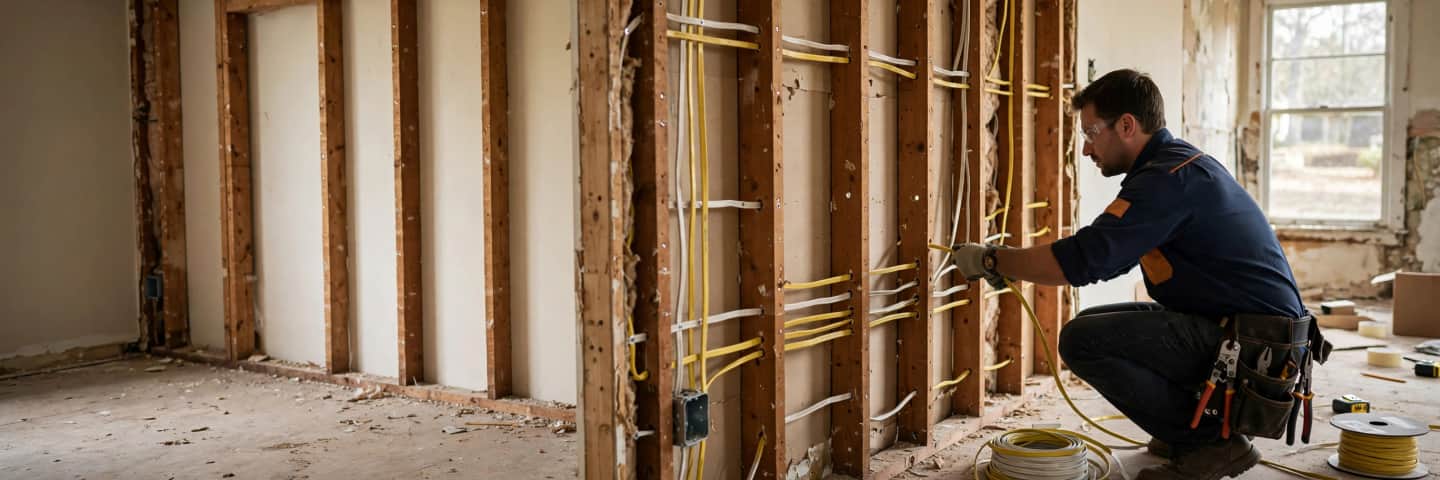
Long, narrow shotgun houses and their two-story camelback cousins often have original wiring sections and tiny panels. Renovations typically replace the service and rewire end to end.
House Rewiring
Louisville merged with Jefferson County in 2003 to form Louisville Metro, but dozens of small independent cities still dot the county, each with its own rules. LG&E supplies electricity, the Ohio River and a long floodwall frame the city’s western and northern edges, and its neighborhoods hold some of the richest collections of Victorian homes and shotgun houses in the country.
Free to call · Independent licensed electricians
Serving Old Louisville, the Highlands, Germantown, Crescent Hill, Butchertown, Clifton and every other Louisville neighborhood.
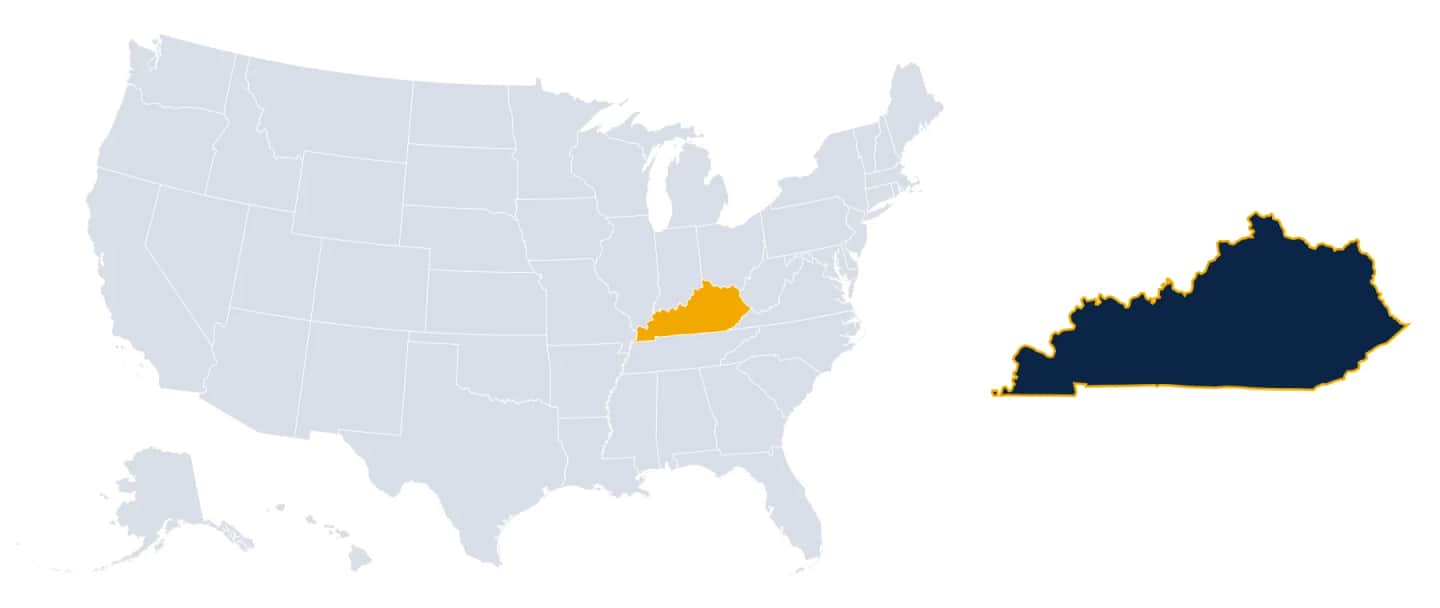
Louisville at a glance
Electrical services in Louisville
The calls Louisville homeowners make most, followed by every service independent licensed electricians handle here.
Not sure which service you need? Describe the problem and an electrician will tell you.
Call for Electrical Service in LouisvilleHousing and wiring
Old Louisville is among the largest Victorian residential districts in the United States. Germantown, Schnitzelburg and Butchertown are filled with shotgun and camelback houses from the late 1800s, the Highlands and Crescent Hill have homes from the 1890s through the 1930s, and the eastern suburbs were built mostly after World War II.
Neighborhoods we cover
Local issues
Problems that come up again and again in local homes, and the service that fixes each one.
Long, narrow shotgun houses and their two-story camelback cousins often have original wiring sections and tiny panels. Renovations typically replace the service and rewire end to end.
House RewiringHeavy rains can overwhelm the combined sewer system and push water into basements. Raising electrical equipment and backing up sump pumps reduce damage.
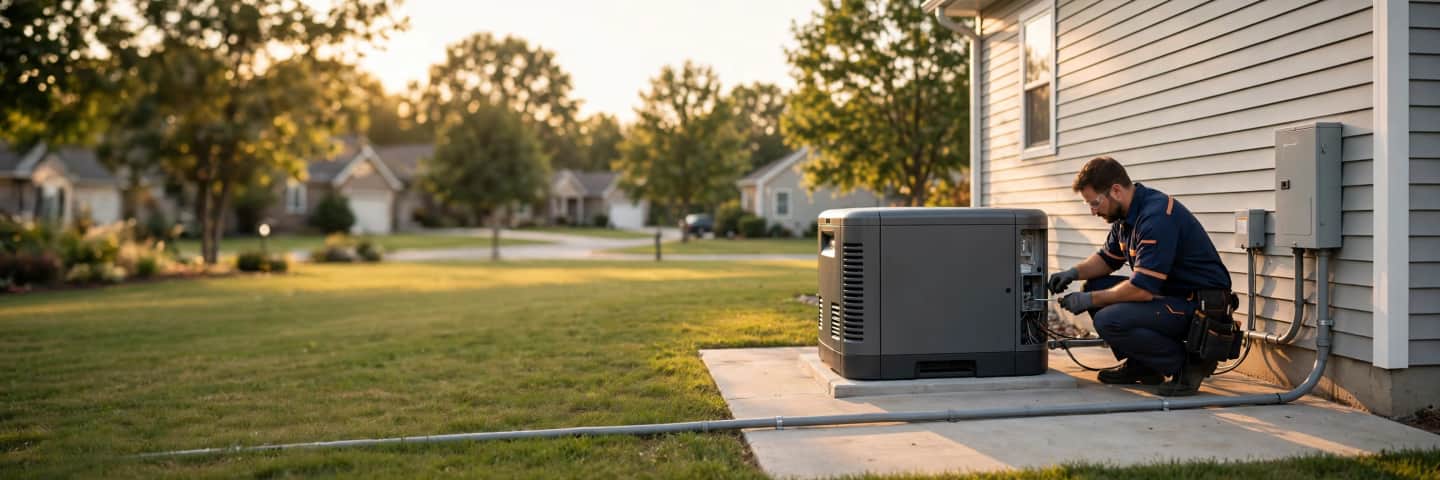
Generator InstallationLouisville’s tree canopy drops limbs on service drops during windstorms and ice storms. Damaged masts and meter bases must be repaired before LG&E reconnects.
Emergency ElectricianLocal guide
History, housing, weather and rules that shape electrical work in Louisville, KY.
When Louisville and Jefferson County merged in 2003, more than eighty small incorporated cities remained, ranging from St. Matthews and Jeffersontown to tiny enclaves of a few streets. Many rely on Louisville Metro for code enforcement, but some handle their own permits or have local requirements. Before starting work, an electrician should confirm whether an address falls inside one of these cities.
Old Louisville, south of downtown near the University of Louisville, contains blocks of Romanesque, Queen Anne and Italianate mansions built in the late 1800s. Many were divided into apartments during the twentieth century and are now being restored. Restorations usually involve a new service, consolidated panels and complete rewiring, often while preserving original gas light fixtures converted to electricity decades ago. Exterior changes are reviewed by the Landmarks Commission.
Germantown and Schnitzelburg grew around nineteenth-century German immigrant communities and are known for shotgun houses and camelbacks packed onto narrow lots. These homes often have small panels in the back room or basement, wiring routed along a single long hallway, and decades of additions. Their popularity with renovators means frequent service upgrades and new circuits for modern kitchens and baths.
The Highlands, centered on Bardstown Road, mixes Victorian homes, bungalows and apartment buildings. Cherokee Triangle, a local preservation district within the Highlands, has some of the city’s most admired homes. Renovations there balance modern electrical needs with historic review of exterior changes.
Butchertown, once home to meatpacking plants along Beargrass Creek, now has restored shotgun houses, new apartments and businesses. Clifton, on the hills east of downtown, has Victorian and early-1900s homes on steep lots. Both neighborhoods see steady renovation and rewiring work.
Louisville’s West End neighborhoods, including Russell, Shawnee, Portland and Parkland, have many historic homes built in the late 1800s and early 1900s, along with long-standing Black communities. Disinvestment has left many homes in need of electrical updates, and nonprofit and city programs sometimes help owner-occupants with repairs.
The Great Flood of 1937 submerged much of Louisville, and the city responded by building a floodwall and levee system with pumping stations along the Ohio River. Today, the floodwall protects much of the city, but neighborhoods along Beargrass Creek and other tributaries can still flood. Homeowners in low areas should keep electrical equipment above expected water levels.
Parts of Louisville are served by combined sewers, which can back up into basements during intense rain. The Metropolitan Sewer District has invested in tunnels and storage basins, but backups still occur. Basement panels, furnaces and water heaters are vulnerable, so backflow prevention, raised equipment and backup power for sump pumps are wise investments.
Louisville has lost power to major windstorms, including the remnants of Hurricane Ike in 2008, and to ice storms such as the January 2009 storm that brought down trees across the region. The city’s mature trees overhang many service drops, so trimming limbs near the house and keeping a licensed electrician’s number handy shortens storm outages.
Every spring, the Kentucky Derby brings parties and events to homes and lots near Churchill Downs and across the city. Temporary lighting, sound systems and catering equipment should use properly rated circuits and ground-fault protection rather than daisy-chained extension cords.
Crescent Hill, near the historic reservoir and water tower, and the adjacent city of St. Matthews have homes from the early 1900s through the 1950s. Many are being expanded with additions and finished basements, which often require service upgrades.
Heat pumps are common in Louisville, and many homes are replacing older systems. EV ownership is growing, especially in the eastern suburbs. Older homes with 100-amp services may need a load calculation before adding a charger or heat pump.
Spring and summer storms bring frequent lightning, and surges damage heat pump control boards and electronics. A whole-home surge protective device at the panel is an inexpensive layer of protection.
Inspections of older Louisville homes commonly flag fuse panels, knob-and-tube wiring, ungrounded outlets and basement wiring added without permits. An electrician’s evaluation helps buyers understand what must be fixed before closing.
Common requests include shotgun and Victorian rewiring, service upgrades, storm repairs, sump pump backup, generator installations, surge protection and EV chargers.
Portland, on the city’s northwest edge, began as a separate river town below the Falls of the Ohio and still has shotgun houses, cottages and brick commercial buildings from the 1800s. Many sit just behind the floodwall. Renovators there frequently find cloth-insulated wiring, fused disconnects in basements and services that were never upgraded beyond 60 amps. Because insurance companies and lenders often ask about the age of the electrical system, owners commonly pair a new meter base and panel with a basement-to-attic rewire.
The South End, Okolona, Fern Creek and Valley Station filled with brick ranches and Cape Cods in the 1950s and 1960s. These homes usually have original panels, some of them brands electricians suggest replacing, and grounded wiring in some rooms but not others. Basement finishing, new kitchens and heat pump swaps are the projects that most often trigger a panel replacement in these areas.
Kentucky licenses electrical contractors and electricians through the Department of Housing, Buildings and Construction, and local jurisdictions such as Louisville Metro enforce permits and inspections. Homeowners should ask for a contractor’s state license and confirm that a permit will be pulled for panel changes, new circuits and service work.
Small repairs can usually be scheduled within days. Service upgrades depend on Metro permits, inspection availability and LG&E’s schedule for disconnecting and reconnecting the meter, and work on exteriors in preservation districts adds a review step.
Ohio Valley thunderstorms roll through Louisville from spring into early fall, and nearby strikes send surges through service drops, cable lines and phone lines. Heat pump and furnace control boards, garage door openers and refrigerators with electronic controls are the usual casualties. A whole-home surge protective device mounted at the panel, paired with plug-in protectors for computers and televisions, costs far less than a single replacement board.
Questions
Louisville Metro handles electrical permits and inspections for most of Jefferson County, working alongside Kentucky’s state electrical program. Some small cities within the county, such as St. Matthews or Jeffersontown, have their own procedures.
LG&E restores its lines. If a storm damages the mast, weatherhead or meter base on your house, an electrician must repair it before LG&E can reconnect.
Problem guides
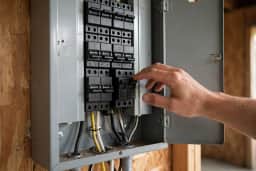 Breaker Keeps TrippingWhy does my circuit breaker keep tripping?
 Flickering LightsWhy are the lights in my house flickering?
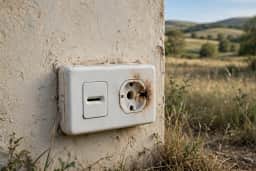 Burnt or Scorched OutletWhat should I do if an outlet has burn marks?
 Burning Smell From OutletIs a burning smell from an outlet dangerous?
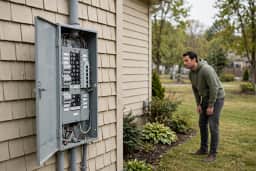 Buzzing Electrical PanelWhy is my electrical panel buzzing?
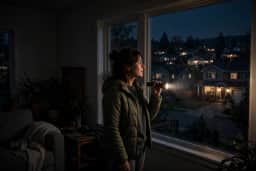 Power Out in Part of the HouseWhy is the power out in only part of my house?
Same-day help often available
Call an electrician in Louisville
Describe the problem and your Louisville neighborhood. Your call goes to an independent licensed electrician who works locally.
Call (855) 679-2483Smoke, flames or sparking? Leave the building and call 911 first.
Pronto Electrician is a free referral service. Calls are answered by independent licensed electricians in your area. Pronto Electrician does not perform electrical work, and the electrician you choose sets the price, schedule, permits and warranty.
Free to call · All 50 states + DC
Describe the problem and get connected with an independent licensed electrician who serves your area.