Connecticut’s tree-lined towns are beautiful and, for the electrical grid, a constant challenge. Tropical Storm Irene and the October 2011 snowstorm left hundreds of thousands of homes dark for more than a week, and Tropical Storm Isaias in 2020 caused another massive outage. Old colonial homes, shoreline flooding and strong state incentives for heat pumps round out the picture.
What Connecticut weather does to electrical systems
The hazards that drive the most electrical calls here, and how homeowners prepare for them.
Winter storms and cold
Heavy snow and wind cause outages when heating demand is highest. Generators, dedicated circuits for space heaters, and heat-tape circuits with GFCI protection are common winter projects. Avoid running heaters through extension cords or power strips.
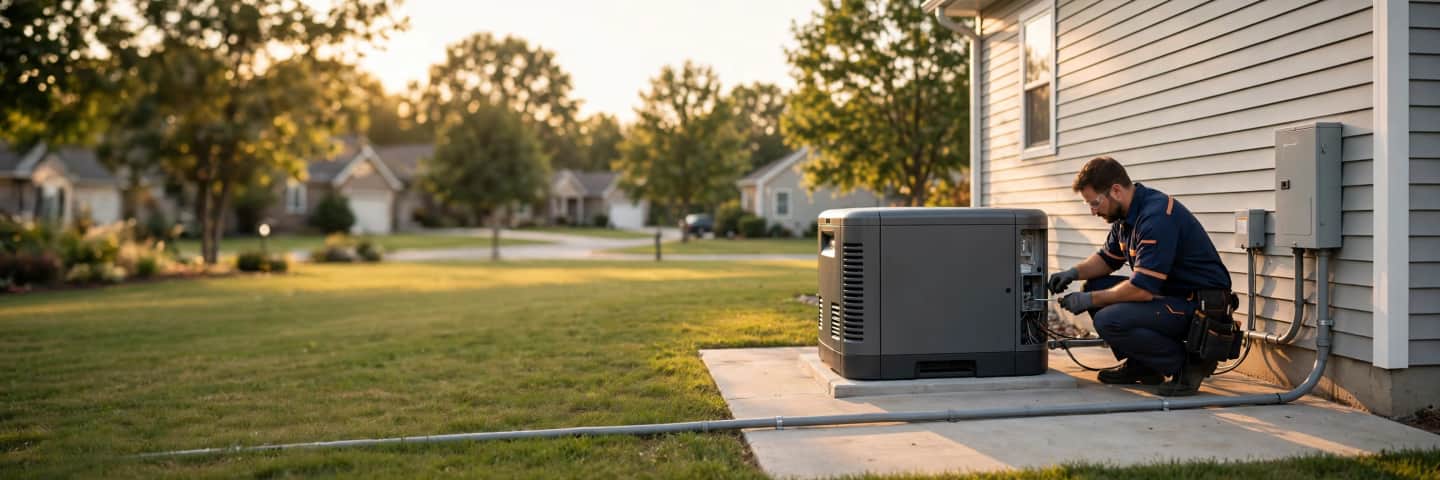
Long outages make backup power a priority. Standby generators with automatic transfer switches, or portable generators connected through a listed interlock, keep refrigeration, sump pumps and medical equipment running. Any equipment that was submerged must be inspected before re-energizing.
Salt air corrodes exterior meter bases, disconnects, outdoor receptacles and AC disconnects faster than inland. Corrosion-resistant enclosures and periodic inspection of exterior connections extend their life.
Independent licensed electricians serve communities across Connecticut.
Also serving
Bridgeport
New Haven
Hartford
Stamford
Waterbury
State guide
Electrical work in Connecticut
Connecticut’s utilities
Eversource serves most of Connecticut. United Illuminating serves the New Haven and Bridgeport area, and a handful of municipal utilities serve towns such as Norwich, Groton and Wallingford. Connecticut allows customers to buy electricity supply from competitive suppliers, but the distribution utility owns the wires and meter and sets the rules for service upgrades and storm reconnection.
Licensing and permits
Connecticut licenses electrical contractors and journeymen through the Department of Consumer Protection, with the E-1 unlimited contractor and E-2 unlimited journeyman licenses most common for residential work. Licenses can be verified online, and unlicensed electrical work is illegal.
Electrical permits are issued by each town’s building official under the Connecticut State Building Code, which adopts the National Electrical Code. Panel upgrades, new circuits, generators, heat pumps, EV chargers and solar require permits.
Storms and long outages
In 2011, Tropical Storm Irene in August and a rare October nor’easter, which dropped heavy snow on trees still in leaf, each left hundreds of thousands of Connecticut customers without power for a week or more. Superstorm Sandy followed in 2012, and Tropical Storm Isaias in August 2020 knocked out power to a large share of the state. Falling trees on service drops are the root of most outages.
Service drops, masts and meter bases damaged by falling limbs must be repaired by an electrician before the utility will reconnect. Keeping limbs trimmed away from the drop is one of the cheapest ways to reduce damage.
Generators and backup power
After the 2011 storms, standby generators became common in Connecticut suburbs. Natural-gas units with automatic transfer switches run the whole house or essential circuits, while homes on oil or propane use propane units or portable generators with a listed interlock. Towns often have setback and noise rules for generator placement, and installations require electrical and fuel permits.
Old houses and old wiring
Connecticut has many homes built before 1940, including antique colonials from the 1700s and 1800s, Victorians and early-1900s capes and bungalows. Knob-and-tube wiring, fuse panels, 60-amp services and decades of add-on circuits are common. Rewiring antique homes requires working around plaster, beams and wide-board floors with minimal damage.
Hartford, New Haven, Bridgeport and Waterbury also have large numbers of two- and three-family houses with separate meters and panels for each unit.
Crumbling foundations in eastern Connecticut
Thousands of homes in north-central and northeastern Connecticut have concrete foundations that are deteriorating because of the mineral pyrrhotite in the aggregate. Replacing a foundation involves lifting or supporting the house, which requires disconnecting and later reconnecting the electrical service, relocating basement panels and often upgrading the service at the same time. Coordinating the electrician early helps these projects go smoothly.
Shoreline flooding and salt air
Shoreline towns from Greenwich to Stonington face storm surge and coastal flooding, as Sandy showed in 2012. Raising panels and equipment above flood levels, corrosion-resistant exterior equipment and backup power for sump pumps are common shoreline upgrades. Equipment that has been underwater must be replaced.
Heat pumps and electrification
Connecticut offers incentives for heat pumps and heat pump water heaters through Energize CT, and many homeowners are replacing oil heat. Adding heat pumps, an EV charger and an induction range often exceeds older 100-amp services, so load calculations and service upgrades are common parts of these projects.
EVs and solar
EV ownership is strong in Fairfield County and the suburbs, and rooftop solar has grown through state programs. Solar paired with batteries offers backup during the long outages Connecticut is known for. Battery systems need permits, utility interconnection approval and often a critical-loads panel.
Basements, sump pumps and winter
Many Connecticut homes have fieldstone or block basements that take on water during spring thaws, and sump pumps keep them dry. Because nor’easters bring both water and outages, battery backup pumps or generator circuits are practical upgrades. Heat tape for pipes and roof edges should be on dedicated, GFCI-protected circuits.
Lightning and surges
Summer thunderstorms and the outage-and-restoration cycles after storms send surges through home wiring. Whole-home surge protection at the panel is an inexpensive layer of protection for heat pumps, boilers and electronics.
Regional differences
Fairfield County combines dense wooded suburbs, large homes and strong EV adoption. Greater Hartford and New Haven have older cities with multi-family housing. The shoreline faces flooding and salt air. Litchfield County and the Quiet Corner are rural and wooded, with wells and longer outages. North-central and northeastern towns deal with crumbling foundations.
Common electrical calls in Connecticut
Frequent requests include standby generator and interlock installations, storm repairs to masts and drops, heat pump circuits and service upgrades, knob-and-tube replacement, fuse panel upgrades, EV charger installations and sump pump backup.
Selling a home: smoke and CO affidavits
Connecticut sellers of one- and two-family homes generally must give buyers an affidavit about the smoke detection and carbon monoxide warning equipment in the house, or pay a credit at closing. Rather than scramble at the last minute, many sellers have an electrician replace aging hardwired alarms and add carbon monoxide detection near bedrooms and fuel-burning appliances a few weeks before listing.
Wells and rural towns
In Litchfield County, the Quiet Corner and many shoreline and hill towns, homes draw water from private wells. When the power fails, the well pump stops and so do the toilets, showers and kitchen sink. A generator plan in these towns starts with the well pump, whose starting surge is much larger than its running load, then adds the boiler or furnace and refrigeration.
Two- and three-family houses in the cities
Hartford’s “perfect sixes,” New Haven’s triple-deckers and the multifamily houses of Bridgeport and Waterbury usually have one meter and panel per unit plus a house panel for hallway lights and laundry. When an owner adds heat pumps or replaces a failing meter bank, upgrading all services in one coordinated project with the utility keeps the building’s outage short and the permit simple.
Candlewood Lake and lake houses
Candlewood Lake, Lake Zoar, Bantam Lake and dozens of smaller lakes have homes with docks, boat lifts and dock lighting. Wiring faults on a dock can put voltage into the surrounding water — a hazard swimmers cannot see. Ground-fault protection, bonding and wiring rated for wet locations protect people in the water, and older docks deserve an inspection before the season opens.
Older panels flagged at inspection
Buyers of Connecticut homes from the 1950s through the 1970s frequently see fuse panels, Federal Pacific or Zinsco panels, and two-prong outlets called out in the inspection report. An electrician can tell you which items are genuine hazards and which are simply out of date, and quote the replacement so it can be negotiated before closing.
Ice dams on older roofs
Connecticut’s antique and mid-century houses often have poorly insulated attics, so winter snow melts and refreezes at the eaves. Owners frequently install roof-edge heating cables, which need their own GFCI-protected circuit and a controller rather than an extension cord dangling from a soffit outlet.
Shoreline cottages
Beach cottages in towns like Old Lyme, Madison, Westbrook and Milford were often built as summer places and later winterized, so their wiring and services were never designed for year-round heat, air conditioning and modern kitchens.
Working with an electrician in Connecticut
Verify the electrician’s Department of Consumer Protection license, confirm that a permit will be filed with your town’s building official, and get a written scope. For heat pumps and EV chargers, ask about Energize CT incentives. For service upgrades, ask how the electrician will coordinate with Eversource, United Illuminating or your municipal utility.
Electrical licensing and permits in Connecticut are set by state and local authorities. The electrician confirms what applies to your project.
Services
Most requested in Connecticut
Ranked by how many of this state’s climate risks each service addresses.
Connect with an independent licensed electrician near you
Smoke, flames or sparking? Leave the building and call 911 first.
Pronto Electrician is a free referral service. Calls are answered by independent licensed electricians in your area. Pronto Electrician does not perform electrical work, and the electrician you choose sets the price, schedule, permits and warranty.
Free to call · All 50 states + DC
Talk to a licensed electrician in Connecticut
Describe the problem and get connected with an independent licensed electrician who serves your area.