North Carolina’s electrical risks run from the Outer Banks to the Blue Ridge: hurricanes and flooding on the coast, ice storms across the Piedmont, and — as Hurricane Helene showed in 2024 — catastrophic flooding even in the mountains. Rapid growth around Charlotte, Raleigh–Durham and the Triad keeps electricians busy with new construction, while older mill towns and farmhouses need updating.
What North Carolina weather does to electrical systems
The hazards that drive the most electrical calls here, and how homeowners prepare for them.
Hurricanes and tropical storms
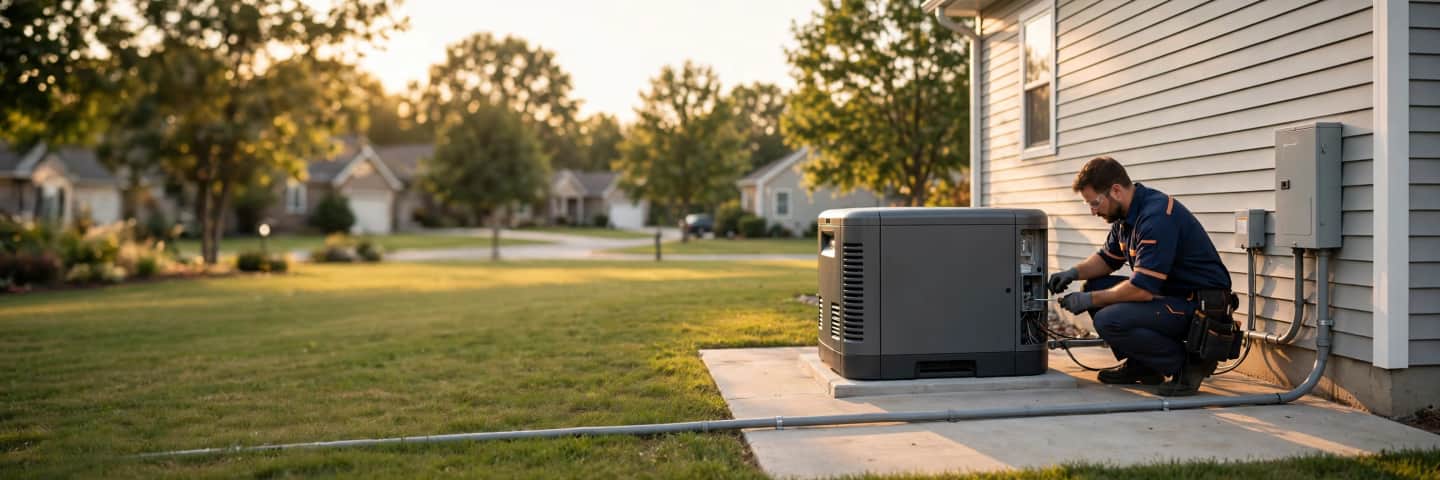
Long outages make backup power a priority. Standby generators with automatic transfer switches, or portable generators connected through a listed interlock, keep refrigeration, sump pumps and medical equipment running. Any equipment that was submerged must be inspected before re-energizing.
Nearby strikes send surges through power and communication lines. A whole-home surge protective device at the panel, a sound grounding system and point-of-use protection for electronics reduce damage to appliances and HVAC controls.
Ice accumulation brings down lines and trees across wide areas, often for days. Backup power planning matters, and overhead service drops near trees should be checked for damage after ice events.
Most North Carolinians are served by Duke Energy, through Duke Energy Carolinas in the western and central parts of the state and Duke Energy Progress in the east and around Raleigh and Asheville. Dominion Energy serves the northeastern corner. Electric cooperatives serve much of rural North Carolina, and roughly 70 cities and towns operate their own municipal electric systems.
North Carolina does not have retail electric choice for homes. Your provider determines the requirements for service upgrades, generator connections and solar interconnection.
Licensing and permits
Electrical contractors are licensed by the North Carolina State Board of Examiners of Electrical Contractors, with license classes that set the size of projects a contractor may take on, plus special restricted licenses for certain types of work. You can verify a license on the board’s website.
North Carolina has statewide building codes, including an electrical code based on the National Electrical Code with state amendments. Permits are usually issued by county inspection departments, and some cities run their own. In Charlotte and Mecklenburg County, for example, the county’s Code Enforcement office handles permits. Panel upgrades, new circuits, generators, EV chargers and solar require permits.
Hurricane Helene and the mountains
In September 2024, Hurricane Helene caused historic flooding and landslides across western North Carolina, including Asheville and surrounding counties. Many homes lost power for weeks, and countless electrical systems were damaged by floodwater.
For mountain homes, the lessons are clear: equipment that has been underwater must be replaced, backup power should cover wells and heat, and service entrances on steep or flood-prone lots deserve careful placement. Rebuilding is often the time to raise equipment and add generator or battery connections.
Coastal hurricanes and flooding
Eastern North Carolina has been hit by a long series of storms, including Floyd in 1999, Matthew in 2016 and Florence in 2018, which caused severe river flooding far inland. The Outer Banks and coastal towns also deal with salt air that corrodes exterior electrical equipment.
Generators with transfer switches or interlocks, surge protection, raised equipment in flood zones and corrosion-resistant enclosures are common coastal upgrades.
Ice storms across the Piedmont
The Piedmont, from Charlotte through Greensboro to Raleigh, is prone to freezing rain. The December 2002 ice storm left well over a million customers without power, mostly in Duke Energy’s territory. Ice on mature trees brings limbs down onto service drops across established neighborhoods.
Backup power for heat, well pumps and refrigeration is the main ice-storm upgrade, along with prompt repair of masts and meter bases damaged by falling limbs.
Mill houses, growth and housing
Textile and tobacco towns across the Piedmont have mill villages of small early-1900s houses with original or partially updated wiring. Durham, Greensboro, Winston-Salem and Charlotte have older neighborhoods of bungalows and Victorians. Meanwhile, the Charlotte and Raleigh metros are among the fastest-growing in the country, with large areas of new construction. Manufactured homes are common in rural counties.
EVs, solar and electrification
North Carolina has a significant solar industry and growing rooftop solar adoption, and EV ownership is rising fastest in the Triangle and Charlotte. Heat pumps are already common for heating and cooling across much of the state. Adding an EV charger or second heat pump to an older home usually starts with a load calculation.
Regional differences
The coast and Outer Banks focus on hurricanes, flooding and salt air. The eastern coastal plain is rural and agricultural, with river flooding and cooperatives. The Piedmont has ice storms, mill towns and fast-growing metros. The mountains face steep terrain, long outages, wells and the recovery from Helene.
Heat pumps, strip heat and winter peaks
Heat pumps are the most common heating system in many parts of North Carolina. During hard freezes, they rely on electric resistance backup heat, often called strip heat, which draws a large current and can stress breakers and connections. On December 24, 2022, during Winter Storm Elliott, extreme demand led Duke Energy to use rotating outages in the Carolinas for the first time in its history.
Checking the breakers, wiring and connections that feed backup heat strips, and making sure the system is sized for the panel, reduces the risk of overheating when temperatures drop.
New construction around Charlotte and the Triangle
The Charlotte and Raleigh–Durham metros add thousands of new homes each year. New homes usually come with 200-amp services, but builder-grade panels can fill quickly once owners add EV chargers, generators, hot tubs, workshops or finished basements. Planning for those additions early — spare breaker spaces, a generator inlet, conduit to the garage — costs far less than retrofitting later.
Tobacco-era and textile-era neighborhoods
Durham, Winston-Salem, Greensboro and many smaller towns grew around tobacco and textile industries in the early 1900s. Neighborhoods such as Durham’s Trinity Park and Greensboro’s Fisher Park, along with mill villages across the Piedmont, are full of homes with original wiring that has been extended many times. Renovations in these homes often call for rewiring, a new service and grounding upgrades.
Rooftop solar and batteries
North Carolina regulators approved changes in 2023 to how Duke Energy credits new rooftop solar customers, moving them toward time-of-use rates. That shift makes batteries more attractive, since stored solar can be used during higher-priced evening hours and during outages. Solar-plus-battery systems require utility interconnection approval, permits and, often, a critical-loads panel.
Lightning and surge protection
North Carolina sees frequent summer thunderstorms, especially across the Piedmont and coastal plain, and lightning surges routinely damage heat pump control boards, well pump controllers and electronics. A whole-home surge protective device at the panel, a solid grounding system and point-of-use protection for sensitive equipment work together to limit that damage. Surge protection is easy to add during a panel upgrade or generator installation, when the electrician is already working at the panel.
Beach houses and rental properties
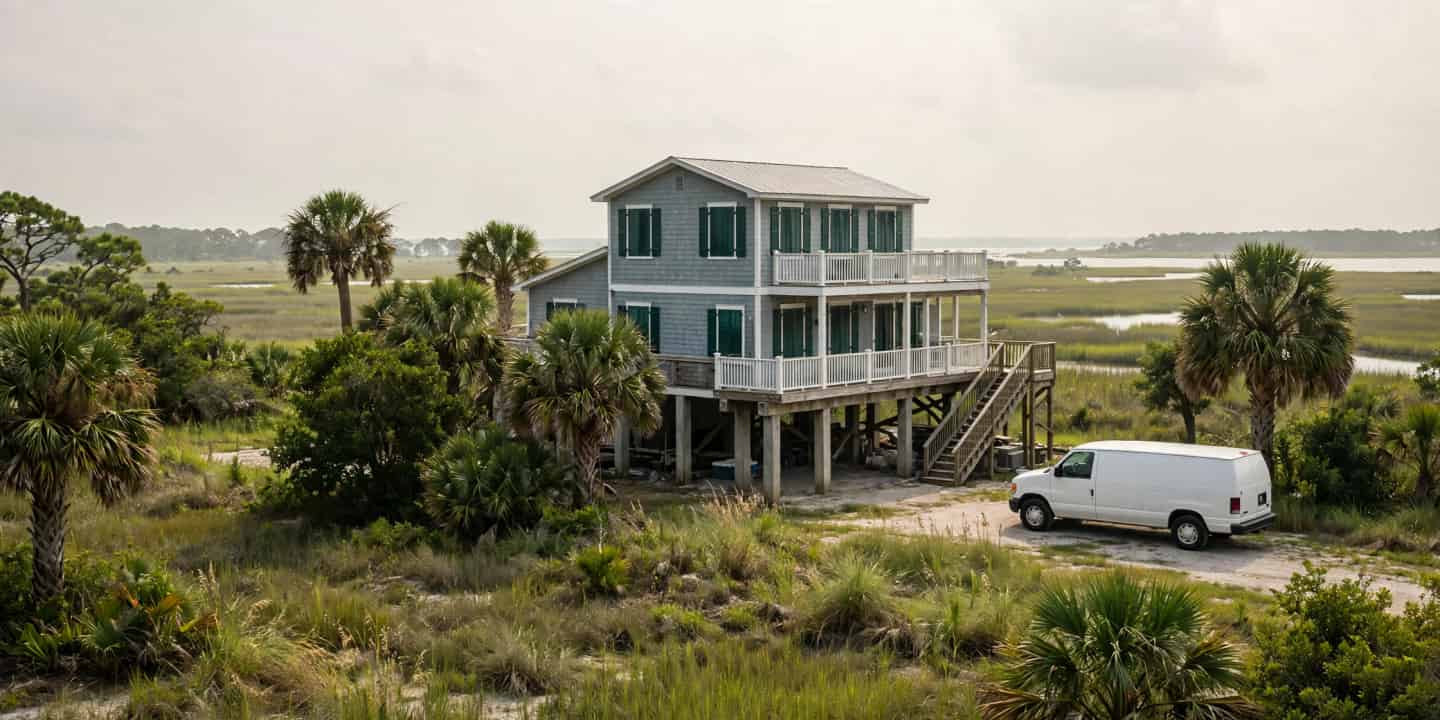
Along the Outer Banks, the Crystal Coast and Wilmington-area beaches, many homes stand on pilings with open areas underneath for parking, storage and outdoor showers. Wiring and lighting below the house are exposed to salt spray, wind and flooding, and meter bases and disconnects corrode quickly. Vacation rentals see heavy use and quick turnovers, so owners often schedule electrical inspections between seasons to catch corroded connections, damaged outdoor outlets and failing GFCI devices.
Wells, septic and manufactured homes
Much of rural North Carolina relies on private wells, and well pumps stop when the power goes out, leaving homes without water. Including the well pump in generator or battery plans is essential after ice storms and hurricanes. Manufactured homes, common across rural counties, are typically fed from an outdoor meter pedestal through a feeder that can be damaged by storms, settling or equipment, and should be inspected after severe weather.
Common electrical calls in North Carolina
Frequent requests include generator and interlock installations, storm repairs, surge protection, panel upgrades for EV chargers and heat pumps, rewiring older homes, and replacing flood-damaged equipment.
Working with an electrician in North Carolina
Verify the electrician’s license class with the state board, ask who will pull the permit from your county or city, and get a written scope. For service work, ask how they will coordinate with Duke Energy, Dominion, your cooperative or your town’s utility. Hurricane season runs from June through November, and demand for generator installations climbs sharply once a storm is in the forecast, so spring is the best time to plan backup power and get it permitted and inspected. In the mountains, ask about access, slope and drainage at the equipment location as well.
Electrical licensing and permits in North Carolina are set by state and local authorities. The electrician confirms what applies to your project.
Services
Most requested in North Carolina
Ranked by how many of this state’s climate risks each service addresses.
Connect with an independent licensed electrician near you
Smoke, flames or sparking? Leave the building and call 911 first.
Pronto Electrician is a free referral service. Calls are answered by independent licensed electricians in your area. Pronto Electrician does not perform electrical work, and the electrician you choose sets the price, schedule, permits and warranty.
Free to call · All 50 states + DC
Talk to a licensed electrician in North Carolina
Describe the problem and get connected with an independent licensed electrician who serves your area.