24 hour emergency service, electrical repair, panel upgrades, generator installation and EV chargers in Wilmington. Call (855) 679-2483 and get connected with an independent licensed electrician who works locally.
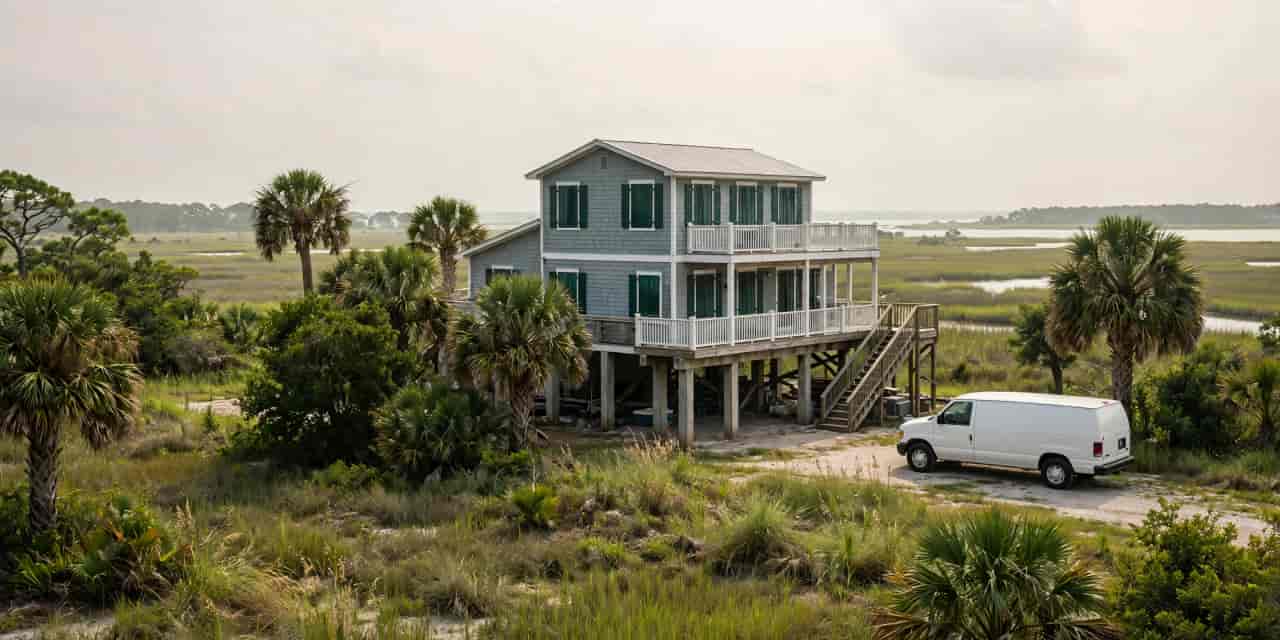
Wilmington sits on the east bank of the Cape Fear River, a short drive from Wrightsville Beach and the Atlantic. Duke Energy Progress supplies the power. The city mixes antebellum and Victorian houses downtown, streetcar-era bungalows in Carolina Place and Forest Hills, and fast-growing subdivisions toward Ogden and Monkey Junction. Hurricane Florence in September 2018 cut the city off by road for days, and salt air, sandy soil and summer humidity shape how electrical equipment ages here.
By calling, you agree to be connected with an independent electrician, who may call or text you back about your request at the number you call from. Calls may be recorded for quality and routing. Consent is not a condition of any purchase, and you can opt out at any time; message and data rates may apply. Privacy policy.
Serving Downtown Historic District, Forest Hills, Carolina Place, Sunset Park, Ogden, Mayfaire and every other Wilmington neighborhood.
Wilmington at a glance
Electric utility
Duke Energy Progress delivers electricity across the city
Permits and inspections
New Hanover County Building Safety (Planning and Land Use), which issues building and electrical permits and performs inspections inside Wilmington city limits
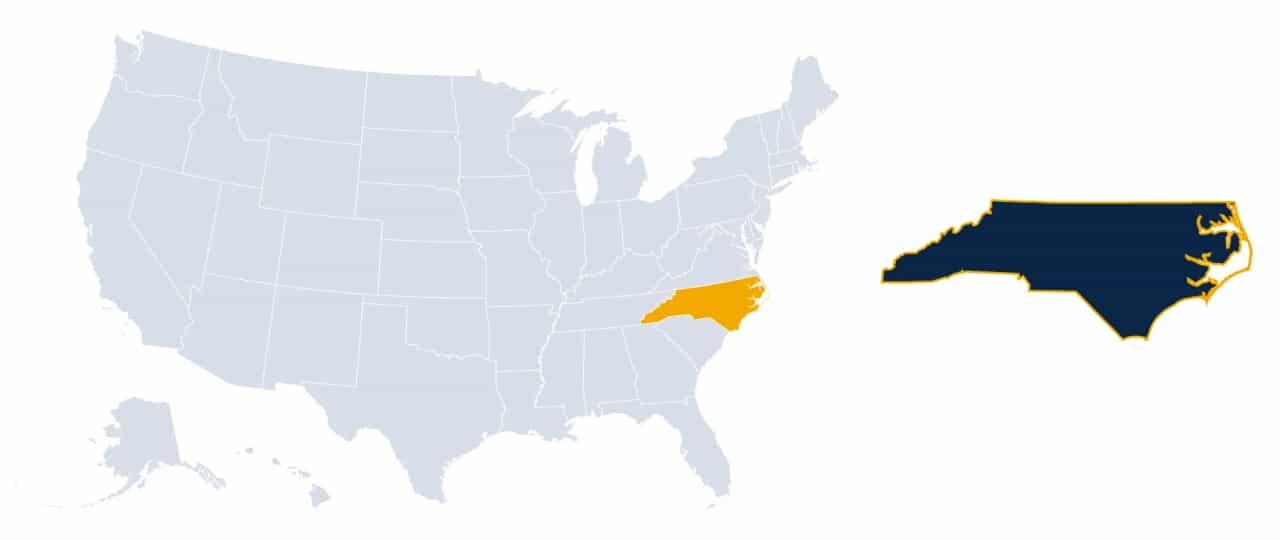
County
New Hanover County
ZIP codes include
28401 · 28403 · 28405 · 28409 · 28411 · 28412
Electrical services in Wilmington
What do you need help with in Wilmington, NC?
The calls Wilmington homeowners make most, followed by every service independent licensed electricians handle here.
Downtown’s historic district holds 1800s brick and frame townhouses, many split into apartments and later restored. Carolina Place, Carolina Heights and Forest Hills fill with bungalows and revival-style homes from the 1910s to 1940s. Postwar ranches spread across Winter Park and Pine Valley, while Ogden, Porters Neck and the Mayfaire area grew with slab-on-grade subdivisions and condos from the 1980s onward. Each era brings its own wiring habits, from cloth cable to aluminum branch circuits.
Problems that come up again and again in local homes, and the service that fixes each one.
01
Salt air on outdoor equipment
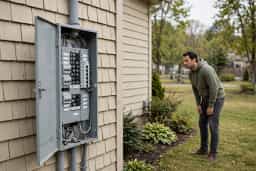
Meter bases, disconnects and condenser whips near the Intracoastal Waterway and the river corrode faster than inland. Green crust on lugs or rust inside an outdoor box is a sign that an electrician should look at it before it overheats.
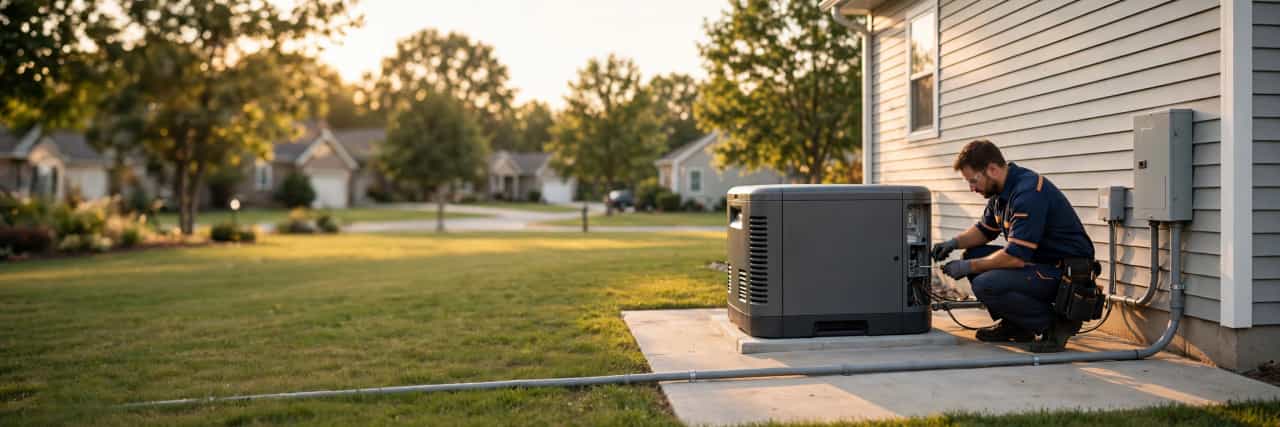
Florence left many Wilmington homes without power for a week or more. Families who depend on medical equipment, well pumps or refrigeration often choose a standby generator with a properly installed transfer switch.
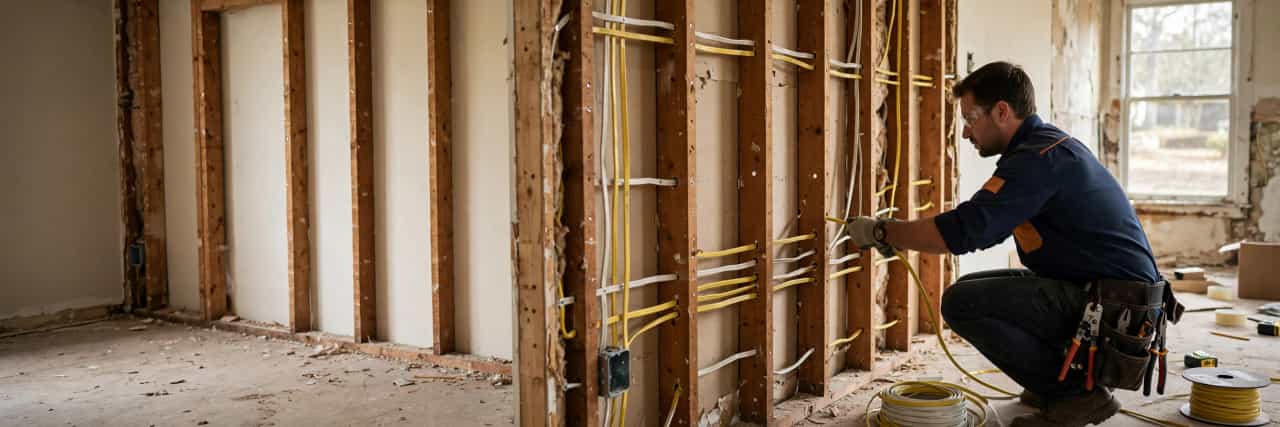
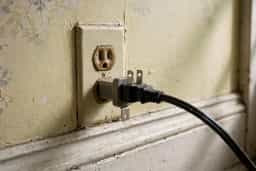
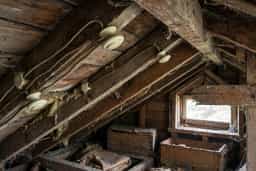
Downtown and Carolina Heights houses can still hide knob-and-tube or ungrounded circuits beneath decades of renovation. A careful inspection before buying or remodeling shows what is still energized.
History, housing, weather and rules that shape electrical work in Wilmington, NC.
Florence stalls over the Cape Fear, September 2018
Hurricane Florence came ashore near Wrightsville Beach on September 14, 2018, then crawled inland and dumped rain for days. Floodwater closed Interstate 40 and other routes, and Wilmington was briefly reachable only by air or water. Many neighborhoods waited a week or longer for power. Homes that took water had to have panels, receptacles and appliance circuits checked before being energized again, a lesson many owners still remember.
Brick townhouses in the Downtown Historic District
The blocks between the riverfront and Fifteenth Street form one of the larger historic districts in North Carolina, with Federal, Italianate and Queen Anne homes built through the 1800s. Electricity arrived long after most were finished, so wiring was fished in through plaster and floors over many generations. Electricians commonly find abandoned circuits, mismatched splices and service equipment tucked into closets that were never meant to hold it.
Historic Preservation Commission review downtown
Exterior work in Wilmington’s locally designated historic districts can require a certificate of appropriateness from the city’s Historic Preservation Commission. Relocating a meter to a front elevation, running visible conduit or adding prominent porch and landscape fixtures may fall under that review. Interior rewiring usually does not, but asking city planning staff before the job starts keeps a project from stalling.
Carolina Place and Carolina Heights bungalows
Carolina Place and Carolina Heights grew in the early 1900s as streetcar suburbs east of downtown, with bungalows, foursquares and Colonial Revival houses on modest lots. Many were updated piecemeal, leaving original two-wire circuits alongside newer cable. Owners modernizing kitchens or adding central air often discover that one or two old circuits feed half the house, which calls for new dedicated runs.
Forest Hills and its tree canopy
Forest Hills, begun in 1924 between Market Street and Oleander Drive and often called Wilmington’s first automobile suburb, is known for its winding streets, half-acre lots and large trees. Those trees are beautiful and also a frequent cause of storm outages when limbs fall across service drops. A pulled drop can damage the weatherhead and mast on the house, which belong to the owner and must be repaired before Duke Energy Progress reconnects.
Sunset Park and the South Seventeenth corridor
Sunset Park, south of downtown, began around 1912 as a planned residential park, and during World War II smaller bungalows filled its empty lots to house workers from the nearby shipyards. The neighborhood has seen steady renovation, and investors flipping homes sometimes leave behind uneven work. Buyers there benefit from having an electrician confirm grounding, check for double-tapped breakers and look at any additions built without permits.
Postwar ranches in Winter Park and Pine Valley
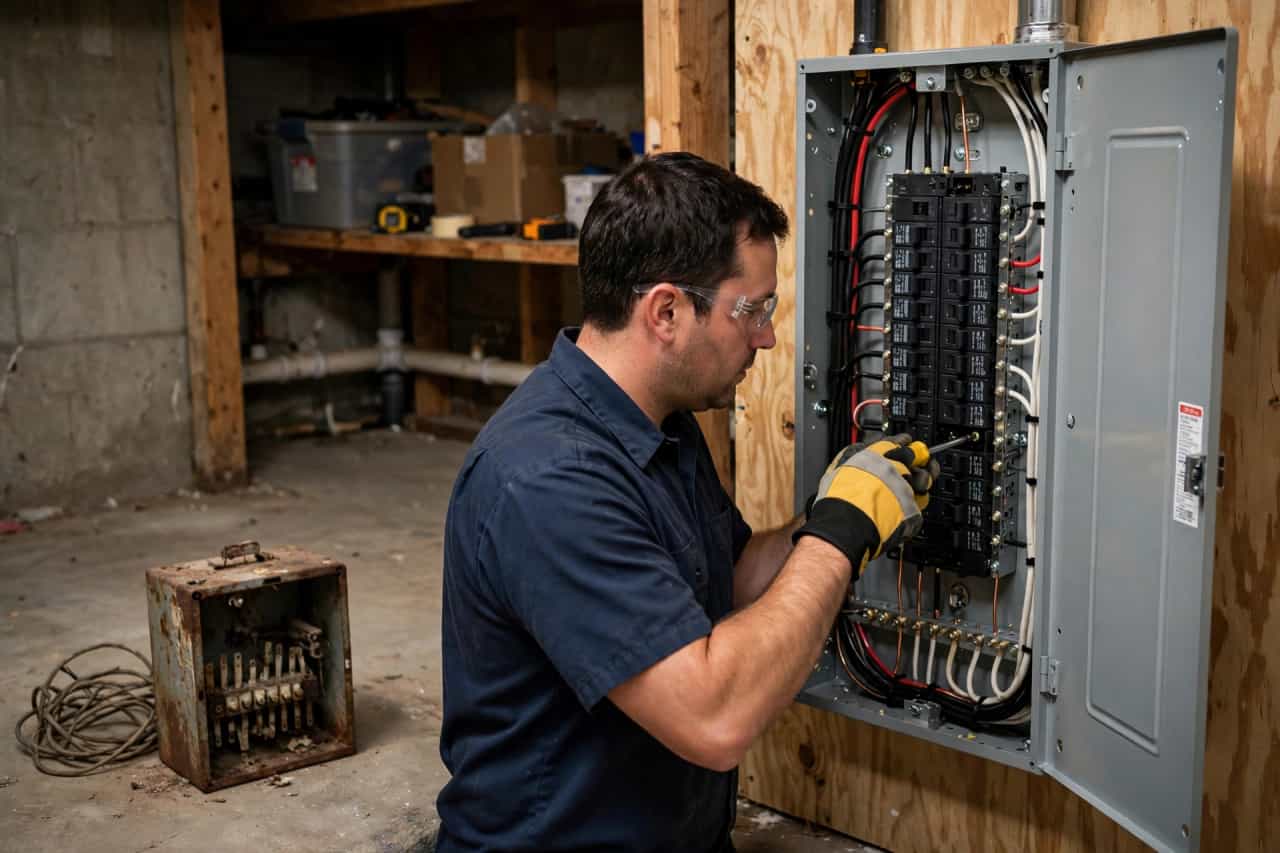
Ranch houses from the 1950s through the 1970s line streets in Winter Park, Pine Valley and around Long Leaf Park. Many still carry their original 100-amp panels, and some from the late 1960s and early 1970s used aluminum branch wiring. Aluminum circuits are not automatically dangerous, but terminations need approved connectors, and loose connections can run hot behind receptacles and switches.
Ogden, Porters Neck and northern growth
Along the northern stretch of Market Street, Ogden and Porters Neck, both largely outside city limits, grew rapidly from the 1980s with subdivisions near the Intracoastal Waterway. Homes here are newer and mostly slab-built, yet many were wired before today’s arc-fault and surge requirements. Owners adding pools, outdoor kitchens, docks and lift motors need GFCI protection, bonding and circuits sized for wet locations.
Mayfaire and the Military Cutoff corridor
The Mayfaire development along Military Cutoff Road added shops, apartments and townhomes from the early 2000s, and surrounding streets keep filling in. Condo and townhome owners rarely touch the main service but ask for lighting upgrades, smart switches and charger circuits in garages. Homeowners associations often have rules about exterior fixtures, so check covenants before mounting anything outside.
Monkey Junction and the south end
Monkey Junction, where College Road meets Carolina Beach Road, anchors a busy south end with subdivisions spreading toward Myrtle Grove and the Cape Fear. Part of this area lies outside city limits but uses the same county permitting office. Newer homes there frequently need second subpanels for detached shops, generator inlets and outdoor living spaces added after closing.
Sandy soils and grounding electrodes
Coastal New Hanover County sits on sandy soils that drain fast and can dry out in summer. Dry sand raises the resistance of ground rods, and an electrician may add a second rod or check bonding to water lines when upgrading a service. Proper grounding matters for lightning and surge protection, which both see plenty of use during summer thunderstorms.
Summer thunderstorms and surge protection
Warm, humid afternoons along the coast regularly build lightning storms between June and September. Nearby strikes can send surges through the service and cable lines, damaging HVAC boards, appliances and electronics. A whole-house surge protector installed at the panel, paired with point-of-use units for sensitive equipment, is a common upgrade for Wilmington homeowners.
Sunny-day tidal flooding along Water Street
Downtown streets near the Cape Fear riverfront flood at high tides even without rain, a pattern that has grown more frequent in recent decades. Buildings along Water Street and the lower blocks of Market and Dock streets should keep electrical equipment above expected water levels. Ground-level outlets and basement panels in this area deserve a hard look during renovations.
Fran and Floyd in the late 1990s
Hurricane Fran in September 1996 and Floyd in September 1999 both struck southeastern North Carolina, with Fran knocking out power widely and Floyd producing historic river flooding inland. Many Wilmington homeowners who lived through those storms installed generator inlets afterward. Older portable setups should be checked for interlocks, since backfeeding through a dryer receptacle can endanger line workers.
Port of Wilmington and riverfront commerce
The state port on the Cape Fear, south of downtown, supports warehouses, trucking yards and industrial businesses along the river. Restaurants, breweries and shops downtown and in the Brooklyn Arts District need commercial work too, from three-phase kitchen equipment to sign lighting and emergency egress fixtures. Commercial permits go through the same county building safety office.
UNC Wilmington rentals near College Road
UNC Wilmington draws students to rentals around College Road, Kerr Avenue and Wrightsville Avenue. Houses leased room by room carry heavy loads from window units, space heaters and electronics. Landlords commonly replace worn receptacles, add circuits for shared kitchens and install interconnected smoke alarms during the summer turnover between leases.
Heat pumps and humid summers
Most Wilmington homes heat and cool with electric heat pumps, which work hard through long, humid summers. Replacing an older unit with a larger or variable-speed system can change the breaker and conductor size required. Disconnects outside should be rated for the location and kept free of corrosion, especially within sight of salt water.
Electric vehicles in garages and driveways
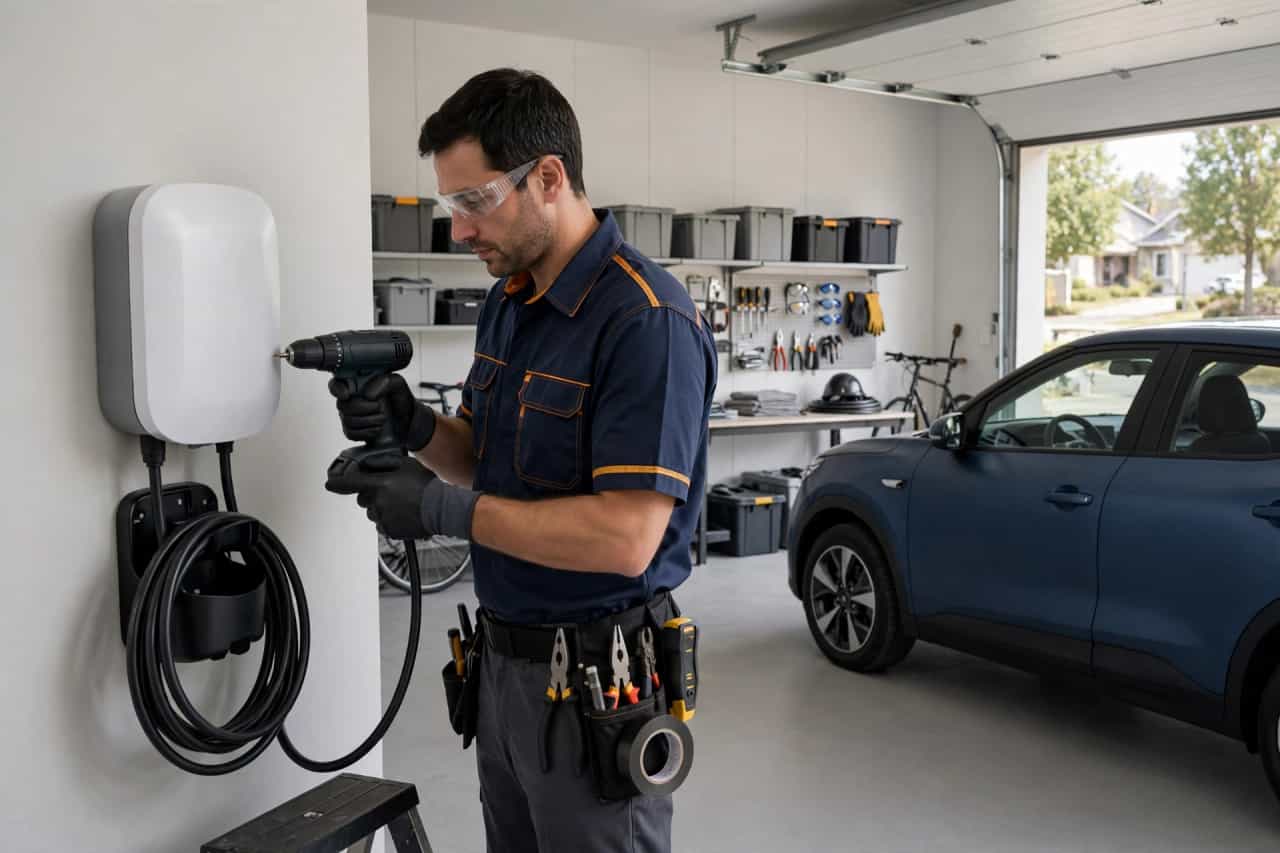
Many newer Wilmington subdivisions have attached garages that make Level 2 charging straightforward. Older downtown homes with on-street parking are harder, though rear lots and alley access sometimes allow a charger. An electrician checks panel capacity first, since a 40- or 50-amp charging circuit can push a 100-amp service past its limit.
Termites, moisture and crawlspace wiring
Many older Wilmington houses sit on crawlspaces where humidity, standing water and pests take a toll. Cable stapled to joists in damp crawlspaces can deteriorate, and rodents chew insulation. Junction boxes left open under the floor are common findings. An inspection of the crawlspace is worth doing before any sale or major remodel.
Preparing before hurricane season
Atlantic hurricane season runs June through November, and the weeks before it are the easiest time to schedule generator installs, surge protection and service mast repairs. Once a storm is forecast, electricians and supplies get stretched thin. Planning early also leaves time for permitting and for the utility to schedule any meter work.
Questions
Questions from Wilmington, NC homeowners
Is there a 24 hour emergency electrician in Wilmington, NC?+
Yes. Call (855) 679-2483 any time, day or night, and you are connected with an independent licensed electrician who covers Wilmington, including Downtown Historic District, Forest Hills, Carolina Place. For sparks, smoke or a hot panel, call 911 first.
Who handles electrical repair and generator installation in Wilmington?+
Licensed electrical contractors working in New Hanover County handle outlet and switch repair, circuit troubleshooting, panel work and standby generator installation. Permits go through New Hanover County Building Safety (Planning and Land Use), which issues building and electrical permits and performs inspections inside Wilmington city limits.
Who issues electrical permits in Wilmington, North Carolina?+
New Hanover County Building Safety issues electrical permits and handles inspections for properties inside Wilmington. Licensed electricians normally pull the permit for the work they perform.
Who do I call if my power is out in Wilmington?+
Report the outage to Duke Energy Progress first, since it owns the lines and meters. If your neighbors have power and you do not, or only part of your house is dark, call (855) 679-2483 to be connected with a licensed electrician.
What should I do if my panel smells like it is burning in Wilmington?+
Keep everyone away from the panel and call 911 if you see smoke or flames. Switch off the main only if you can reach it safely, never remove the cover, then call (855) 679-2483 to reach an electrician.
By calling, you agree to be connected with an independent electrician, who may call or text you back about your request at the number you call from. Calls may be recorded for quality and routing. Consent is not a condition of any purchase, and you can opt out at any time; message and data rates may apply. Privacy policy.
Free to call
Explain the problem in plain words
Connect with an independent licensed electrician near you
Smoke, flames or sparking? Leave the building and call 911 first.
Pronto Electrician is a free referral service. The electricians you are connected with are independent contractors, not employees or agents of Pronto Electrician. Pronto Electrician does not perform electrical work, and the electrician you choose sets the price, schedule, permits and warranty.
By calling, you agree to be connected with an independent electrician, who may call or text you back about your request at the number you call from. Calls may be recorded for quality and routing. Consent is not a condition of any purchase, and you can opt out at any time; message and data rates may apply. Privacy policy.