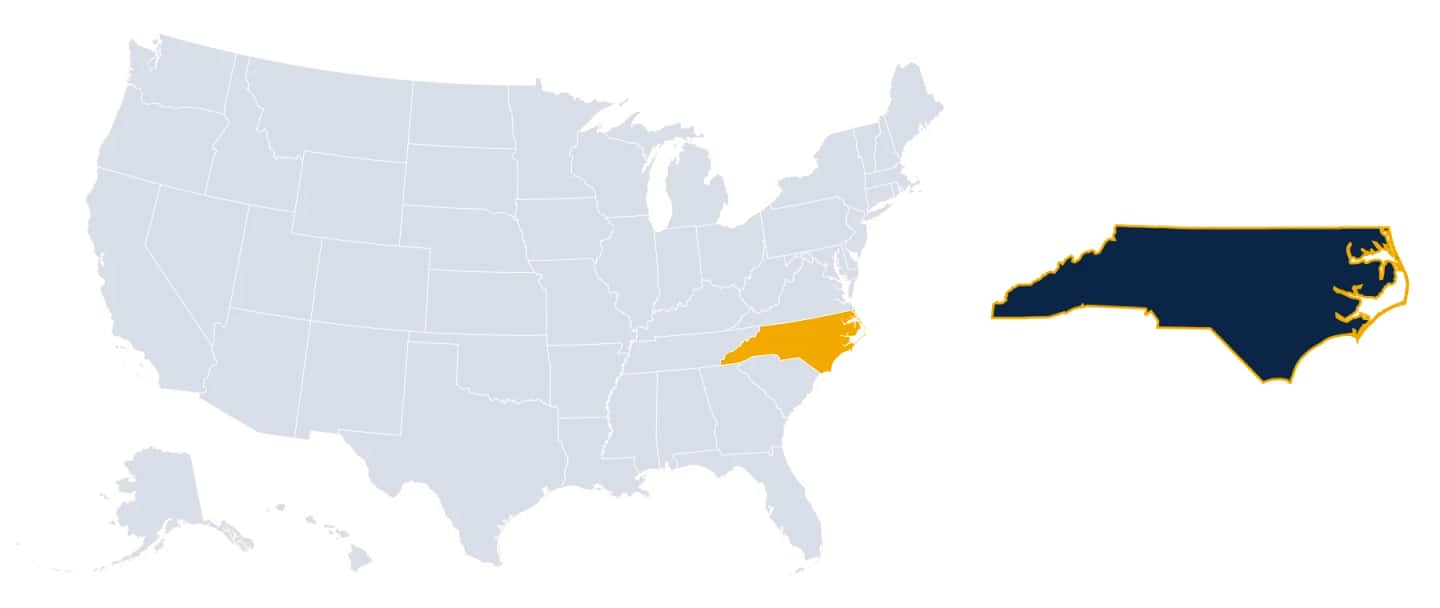
Durham County (small portions in Wake and Orange counties) · North Carolina
Electricians in Durham, NC
Durham grew on tobacco. The Duke family and the American Tobacco Company turned a railroad depot into the Bull City, and that money later built Duke University and helped start the power company that still serves it, Duke Energy Carolinas. Today the city mixes Victorian streets, tobacco-era bungalows and mill houses with fast-growing south Durham near Research Triangle Park. Its storm memory runs from Hurricane Fran in 1996 to the first rolling blackouts in Duke Energy’s history on Christmas Eve 2022.
Trinity Park, Duke Park and Watts-Hillandale are full of bungalows and foursquares from the 1910s through the 1930s, while Old North Durham and Cleveland-Holloway keep late-1800s Victorians. Small mill houses survive in Edgemont, East Durham and Old West Durham. Forest Hills and Hope Valley added larger houses in the 1920s and 1930s. Woodcroft and most of south Durham date from the 1980s onward, much of it built on Triassic Basin clay.
Problems that come up again and again in local homes, and the service that fixes each one.
01
Tobacco-era houses near downtown
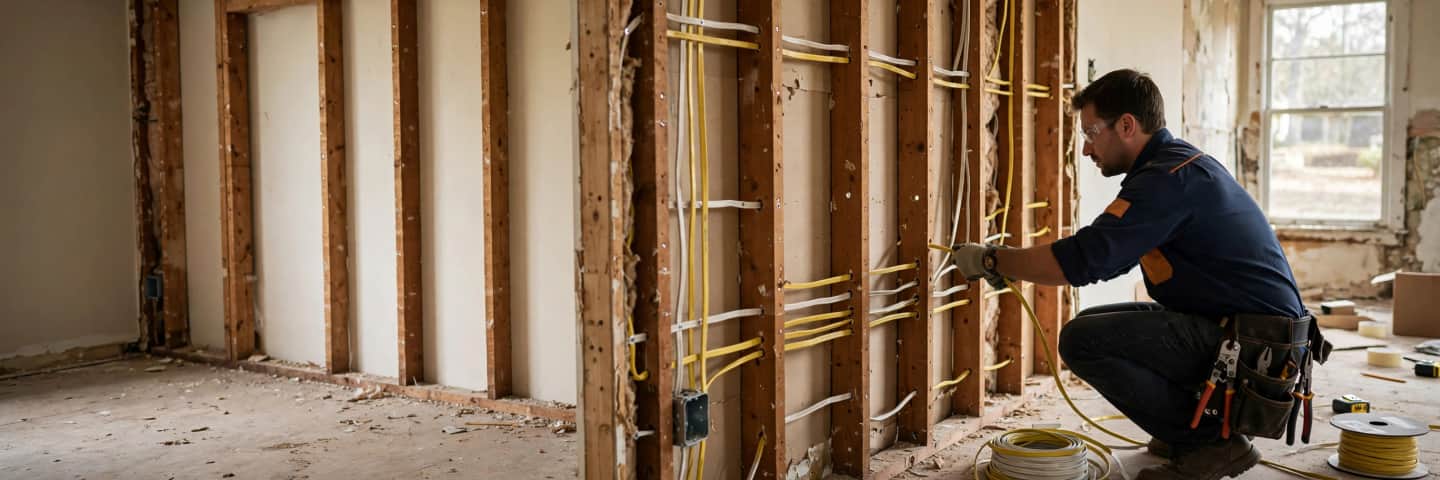
Bungalows and Victorians in Trinity Park, Old North Durham and Cleveland-Holloway can still hide knob-and-tube or cloth-sheathed cable that has been extended by several owners. Renovations often start with a rewire.
Triassic Basin soils swell when wet and shrink in drought. Over time that movement can tilt equipment pads and strain buried feeders, outdoor receptacles and conduit to pools, sheds and condensers.
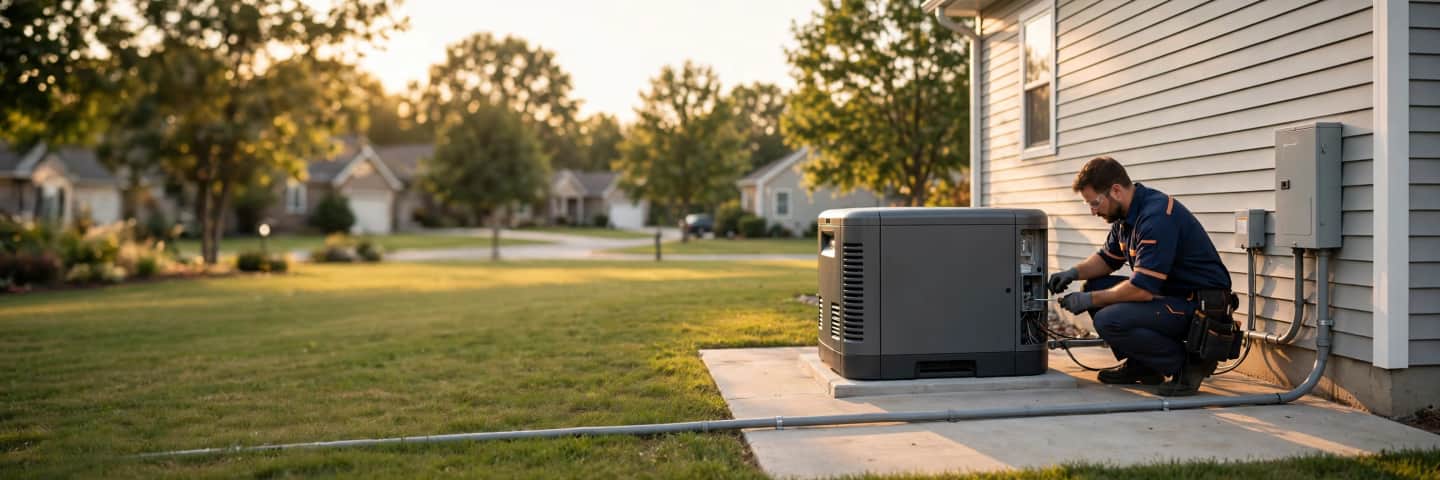
The rotating outages during Winter Storm Elliott left homes with heat pumps cold on the morning of Christmas Eve. Many Durham owners have since added generators or battery systems with proper transfer equipment.
History, housing, weather and rules that shape electrical work in Durham, NC.
From railroad stop to Bull City
Durham began as a stop on the North Carolina Railroad in the 1850s. After the Civil War, soldiers who had passed through around the surrender at Bennett Place in April 1865 went home with a taste for the local bright-leaf tobacco, and orders followed. Bull Durham Smoking Tobacco made the town famous, and the bull logo gave Durham the nickname it still uses for its baseball team.
The Dukes, tobacco and a power company
Washington Duke and his sons built a tobacco business that became the American Tobacco Company in 1890. James B. Duke and his brother Benjamin later founded the Southern Power Company in 1905, which grew into Duke Power and eventually Duke Energy. That history is why Durham sits in Duke Energy Carolinas territory today, unlike Raleigh next door, which belongs to the Duke Energy Progress system that came from Carolina Power and Light.
Brightleaf and the American Tobacco Campus
Durham’s brick tobacco warehouses and factories sat empty for years before being converted. The Brightleaf Square buildings and the American Tobacco Campus, beside the Durham Bulls Athletic Park, now hold offices, restaurants and apartments. Work in these buildings means routing new distribution through massive masonry walls and heavy timber floors, and it is the kind of commercial project that requires permits, drawings and careful coordination.
The 2019 North Duke Street gas explosion
On April 10, 2019, a crew boring to install underground cable in the Brightleaf District struck a natural gas line on North Duke Street. Gas collected inside a building, and the blast killed two people and injured twenty-five, including firefighters. For homeowners the lesson is simple: anyone trenching for a feeder, post light or EV charger should request utility locates through NC 811 first.
Trinity Park beside East Campus
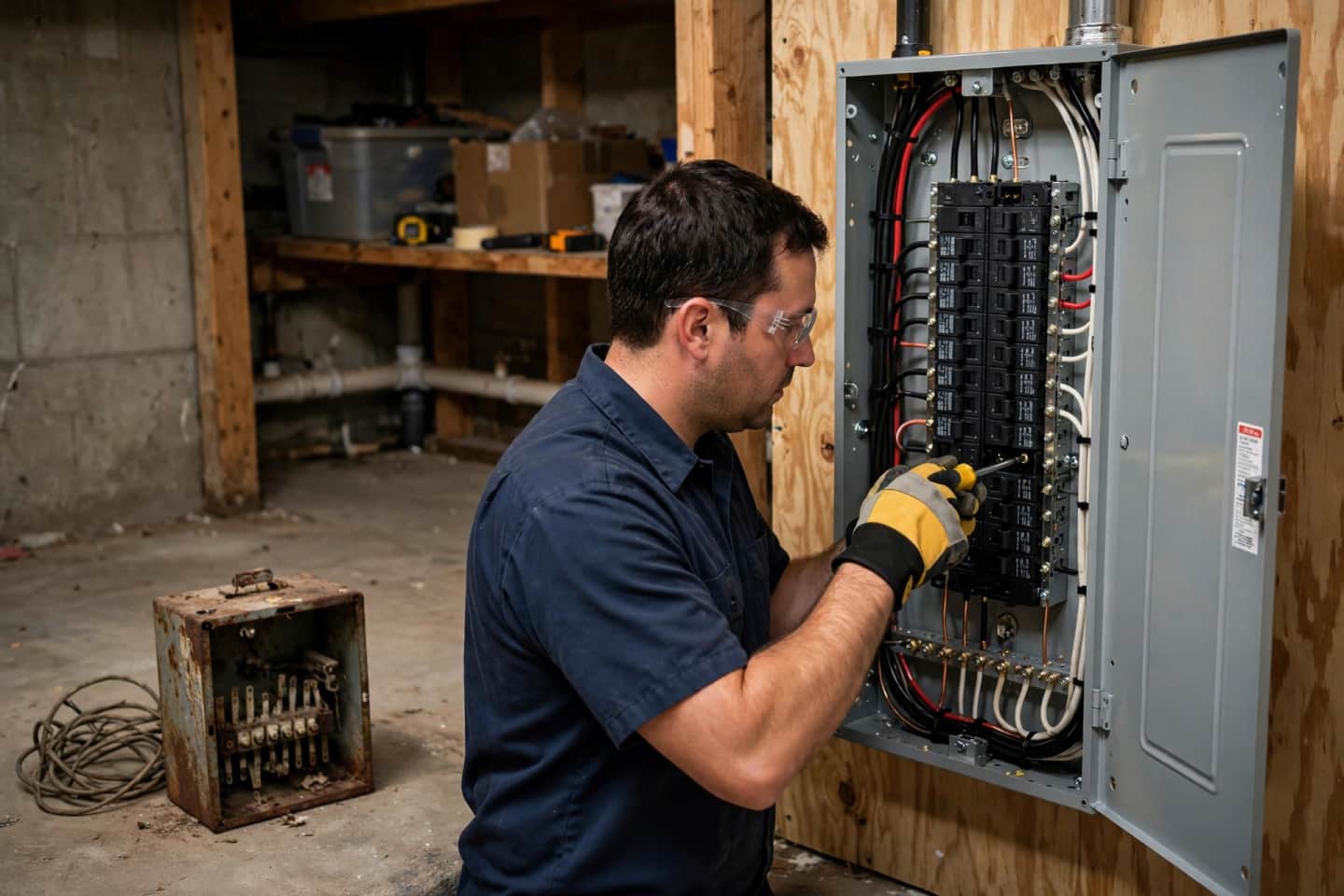
Trinity College moved from Randolph County to Durham in 1892 and became Duke University in 1924. Trinity Park grew up beside what is now East Campus, with bungalows, foursquares and Colonial Revival houses for faculty and merchants. Many still have undersized services and circuits that wander through several rooms, so kitchen and bath remodels there usually bring a new panel and dedicated appliance circuits.
Cleveland-Holloway and Old North Durham Victorians
Just east and north of downtown, Cleveland-Holloway and Old North Durham keep some of the city’s oldest houses, built in the late 1800s by tobacco and textile families. After decades as rentals, many have been restored. Expect balloon framing, tall plaster walls and mixed generations of wiring, including knob-and-tube spliced into newer cable. A careful survey of the existing wiring should come before any plaster repair or painting.
Erwin Mills and Old West Durham
Erwin Cotton Mills opened in the 1890s west of Trinity College, and the company built rows of frame houses for workers along streets near today’s Ninth Street. The mill buildings are now apartments, and the houses have been sold, renovated and sometimes enlarged. Small kitchens, shared circuits and two-prong outlets are typical of the original stock, and many owners have rewired from the crawl space.
Edgemont and the East Durham mill streets
East of downtown, the Golden Belt factory and nearby hosiery and textile mills supported Edgemont and the streets of East Durham. These modest houses were often wired once and patched for decades afterward. Investors and first-time buyers renovating them commonly find ungrounded circuits, overloaded panels and amateur additions, and a full rewire with a new 200-amp service is a frequent outcome.
Hayti, Parrish Street and the Durham Freeway
Durham’s Hayti community and the Black-owned businesses on Parrish Street, home to North Carolina Mutual Life Insurance, earned the area the name Black Wall Street. Urban renewal and construction of the Durham Freeway in the 1960s and 1970s cleared much of Hayti. Surviving houses nearby are often older frame homes now being rehabilitated, where new wiring and smoke alarms are part of making them safe again.
Forest Hills and Hope Valley in the 1920s
Forest Hills was laid out in the 1920s on rolling land south of downtown, and Hope Valley followed with its golf club later in the decade. The large Tudor and Colonial Revival houses there have generally had several service upgrades, but subpanels added for wings, finished basements and pool houses do not always match. Owners planning major remodels benefit from a review of the whole system.
Hurricane Fran’s eye over Durham
On September 5, 1996, Hurricane Fran came ashore on the southern North Carolina coast and kept enough strength that its eye crossed Duke Forest’s Durham Division. Saturated ground let huge numbers of trees topple across the Triangle, and about 1.7 million North Carolina customers lost power. Duke Forest calls it the most significant natural disturbance in its history, and parts of the forest stayed closed for up to six months.
Christmas Eve 2022 rolling blackouts
When Winter Storm Elliott pushed demand past available supply on December 24, 2022, Duke Energy cut power in rotating blocks across the Carolinas, interrupting about half a million customers. It was the first time the company had used rolling blackouts. Durham homes that rely on heat pumps cooled quickly, and many owners have since asked about generators, batteries and interlocks.
Triassic Basin clay in south Durham
Southern Durham County sits on the Durham Triassic Basin, where reddish sandstone and mudstone weather into clay that swells when wet, shrinks in drought and drains poorly. The movement shifts condenser pads, cracks sidewalks and stresses buried pipes and conduit. Electricians working there pay attention to conduit expansion fittings, burial depth and support for outdoor equipment so that connections do not loosen over time.
Research Triangle Park commuters
Research Triangle Park opened in 1959, and most of it lies in Durham County. Many people who work there live in south Durham, Woodcroft and the townhome communities along NC 54 and Fayetteville Road. Short commutes make electric vehicles practical, but townhome owners may need HOA approval and a careful route for a charging circuit from the panel to a garage or assigned parking space.
Woodcroft and the newer subdivisions
Woodcroft, begun in the 1980s, and the subdivisions that followed around Southpoint are mostly two-story houses with 200-amp services. Even so, builder-grade panels fill up once owners finish bonus rooms, add a second heat pump, install a hot tub or put solar panels on the roof. Planning these additions together, with a single load calculation, avoids paying twice for panel work.
Rentals near Duke and NC Central
Duke University and North Carolina Central University, a historically Black university founded in 1910, keep strong demand for rental housing in Walltown, Burch Avenue and the streets around NCCU. Older rentals often depend on extension cords and power strips because outlets are scarce. Landlords commonly add receptacles, kitchen circuits, GFCI protection and hardwired smoke alarms between leases, when the units are empty and walls can be opened.
North Durham, the Eno and well pumps
North of Interstate 85, Durham opens into wooded country along the Eno River and around Lake Michie, the city reservoir. Many homes there are outside city water and depend on wells and septic systems. Losing power means losing water, so owners often want a generator sized to start the well pump, connected through a transfer switch or listed interlock so it cannot backfeed the utility line.
Permits at City Hall Plaza
Durham’s combined city and county building department reviews applications, issues electrical permits and schedules inspections online through its land development system. Because the city’s boundary is irregular and extends into small parts of Wake and Orange counties, the right office for an address is not always obvious. A licensed contractor normally pulls the permit, schedules the rough-in and final inspections and meets the inspector on site.
Questions
Questions from Durham homeowners
Who handles electrical permits in Durham?+
Durham’s City-County Building & Safety Department, long known as City-County Inspections, issues electrical permits for both the city and unincorporated Durham County from offices at 101 City Hall Plaza. Chapel Hill, Raleigh, Cary and Morrisville each run their own inspections, so an address close to a town or county line is worth confirming before work begins.
Is Durham served by Duke Energy Carolinas or Duke Energy Progress?+
Durham is in Duke Energy Carolinas territory, while Raleigh and much of Wake County are served by Duke Energy Progress. The difference matters for rebate programs, rate schedules and the phone number your electrician uses to schedule a disconnect for a panel or meter change.
What license should a Durham electrician hold?+
Electrical contracting in North Carolina requires a license from the State Board of Examiners of Electrical Contractors. A Limited, Intermediate or Unlimited license covers general work up to a project value, while an SP-SFD license is restricted to single-family homes. Confirm the license is active on the board’s site before signing.
Connect with an independent licensed electrician near you
Smoke, flames or sparking? Leave the building and call 911 first.
Pronto Electrician is a free referral service. Calls are answered by independent licensed electricians in your area. Pronto Electrician does not perform electrical work, and the electrician you choose sets the price, schedule, permits and warranty.