01
Ice storms and fallen trees
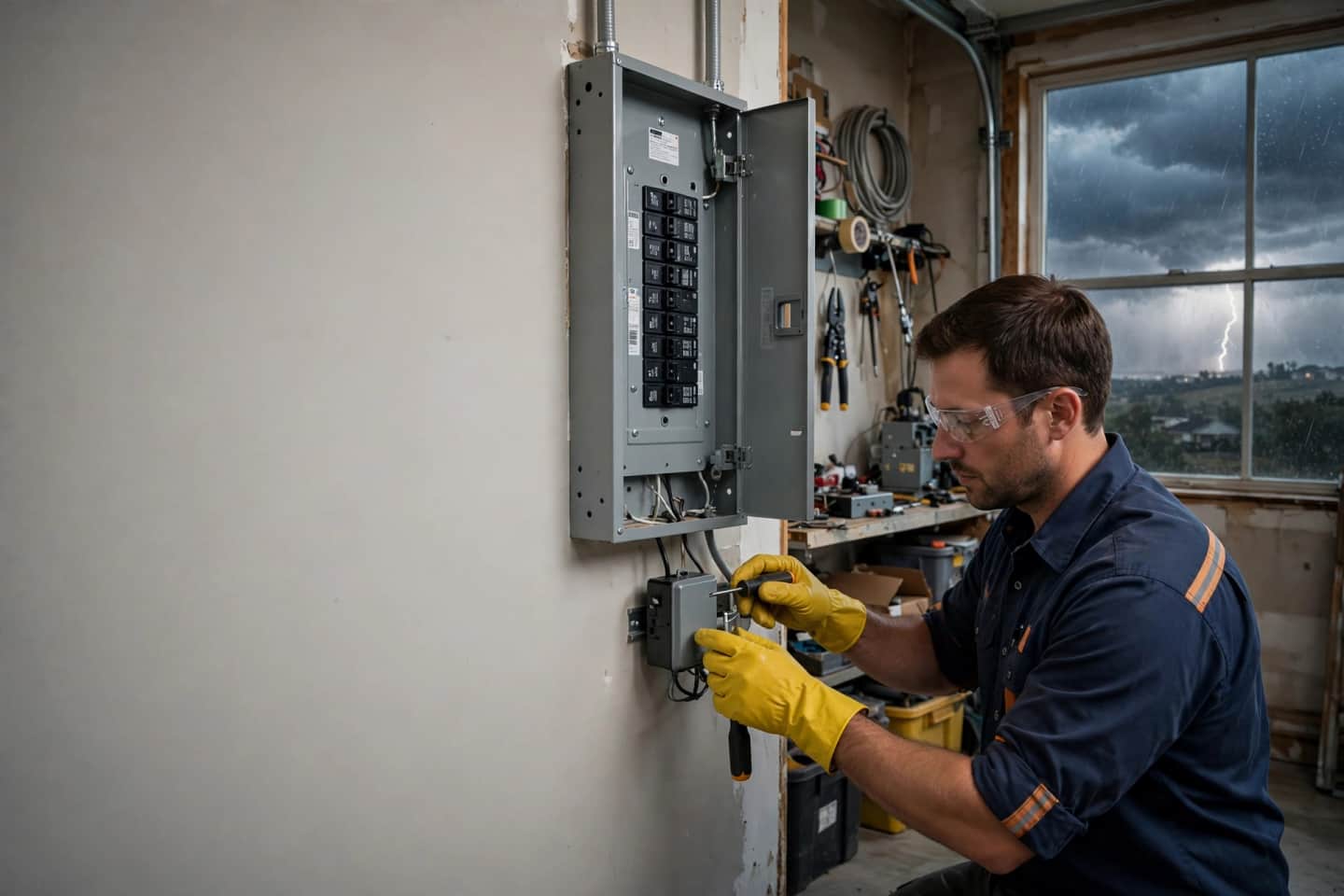
The December 2002 ice storm brought down trees across Raleigh and left most of the city without power, some for over a week. Damaged service masts must be repaired before Duke reconnects.
Emergency Electrician
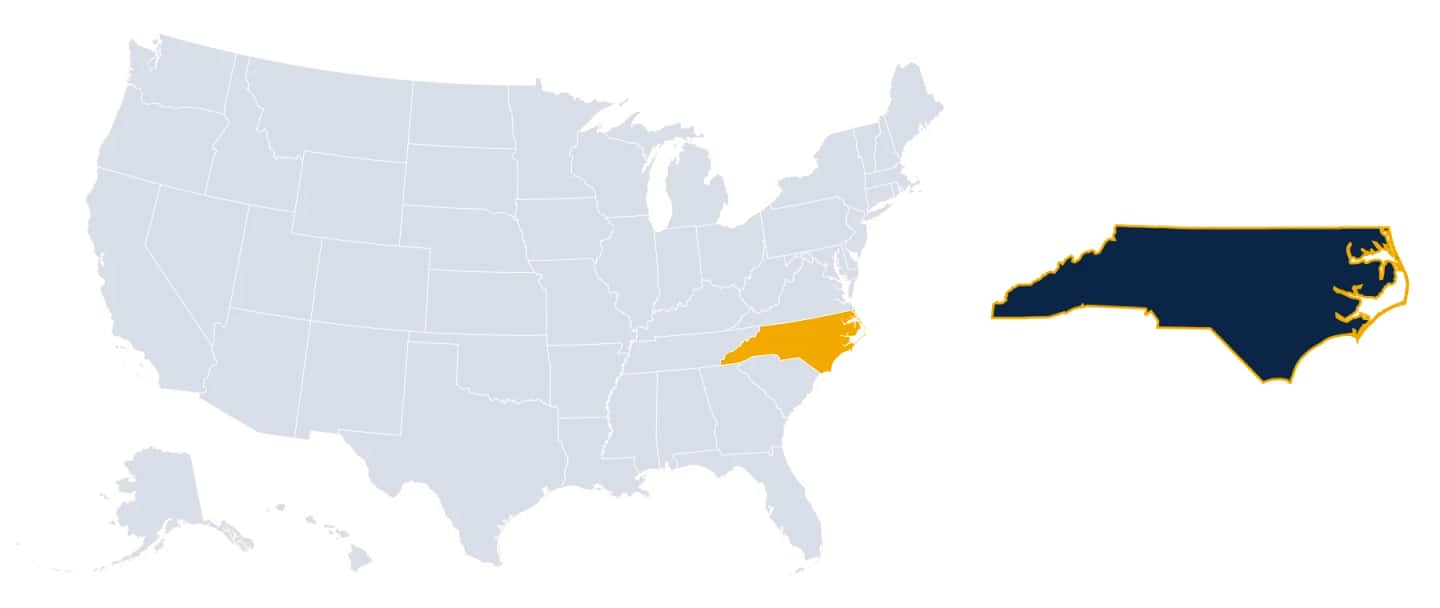
Raleigh, North Carolina’s capital, is nicknamed the City of Oaks for its tall hardwood canopy, and it is one of the fastest-growing metro areas in the country thanks to Research Triangle Park and its universities. Duke Energy Progress supplies power. Hurricanes that reach inland, ice storms, tornadoes and summer thunderstorms test homes here, and the city’s housing ranges from Victorian homes in Oakwood to brand-new subdivisions.
Free to call · Independent licensed electricians
Serving Oakwood, Mordecai, Five Points, Hayes Barton, Boylan Heights, North Hills and every other Raleigh neighborhood.
Raleigh at a glance
Electrical services in Raleigh
The calls Raleigh homeowners make most, followed by every service independent licensed electricians handle here.
Not sure which service you need? Describe the problem and an electrician will tell you.
Call for Electrical Service in RaleighHousing and wiring
Oakwood and Mordecai have Victorian and early-1900s homes. Boylan Heights, Glenwood-Brooklyn, Five Points and Hayes Barton have bungalows and period revival homes from the 1910s through the 1940s. Post-war ranches fill inner-beltline neighborhoods, and the outer city and suburbs grew rapidly from the 1980s onward.
Neighborhoods we cover
Local issues
Problems that come up again and again in local homes, and the service that fixes each one.
The December 2002 ice storm brought down trees across Raleigh and left most of the city without power, some for over a week. Damaged service masts must be repaired before Duke reconnects.
Emergency ElectricianHurricane Fran in 1996 toppled thousands of trees in Raleigh. Generators and surge protection are common upgrades.
Generator InstallationOakwood and Mordecai homes often have knob-and-tube wiring and small services, and exterior changes need historic review.
House RewiringLocal guide
History, housing, weather and rules that shape electrical work in Raleigh, NC.
Raleigh’s willow oaks, white oaks and loblolly pines give it one of the heaviest tree canopies of any large Southern city. The trees shade homes and lower cooling costs, but they also come down on service drops during hurricanes, ice storms and thunderstorms. Homeowners are responsible for trees on their property near the service drop, and keeping limbs trimmed reduces storm damage.
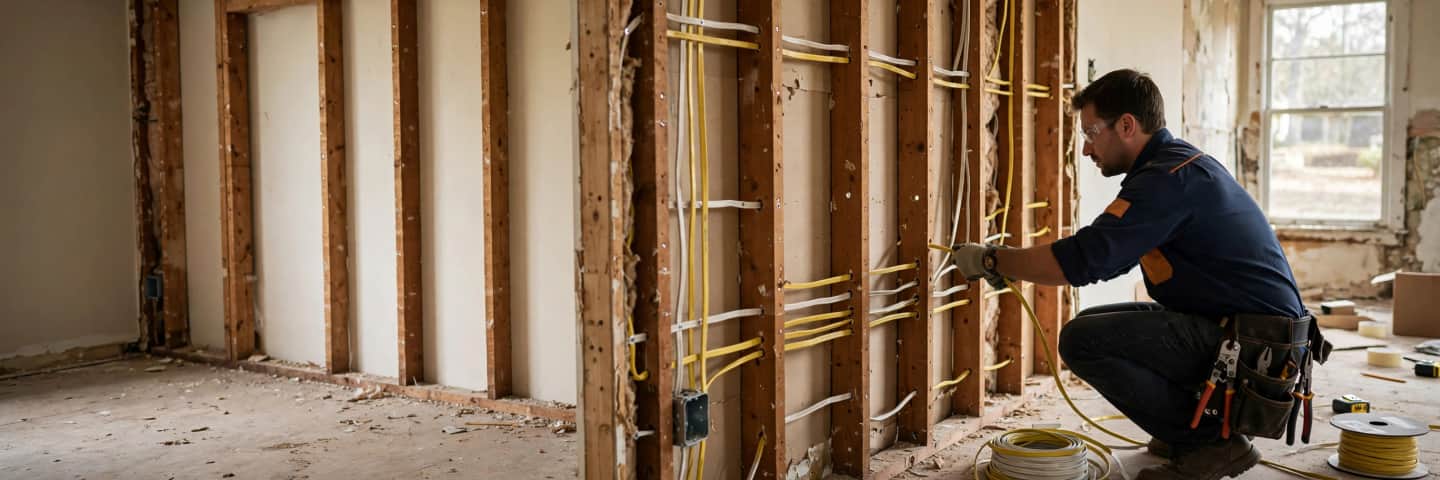
Oakwood, just east of downtown, is the largest collection of nineteenth-century homes in Raleigh, with Victorian, Queen Anne and Italianate houses. Mordecai, to its north, has homes from the late 1800s through the 1920s. Both are historic districts where exterior changes need approval. Restoring these homes typically replaces knob-and-tube wiring, consolidates panels and upgrades services.
Boylan Heights, on a hill west of downtown, and Glenwood-Brooklyn, north of downtown, have bungalows, four-squares and Queen Anne cottages from the early 1900s. Many have been renovated with additions and modern kitchens, and renovations commonly include service upgrades and rewiring through crawl spaces.
Five Points, Hayes Barton and Vanguard Park, north of downtown, have period revival homes and bungalows from the 1920s through the 1940s under mature oaks. These homes are popular with families who remodel and expand, and those projects frequently push original services past their limits.
Many neighborhoods inside the I-440 Beltline filled with brick ranch homes after World War II. Many are being torn down for larger homes, but those that remain often have original panels, ungrounded circuits and crawl space wiring that needs attention.
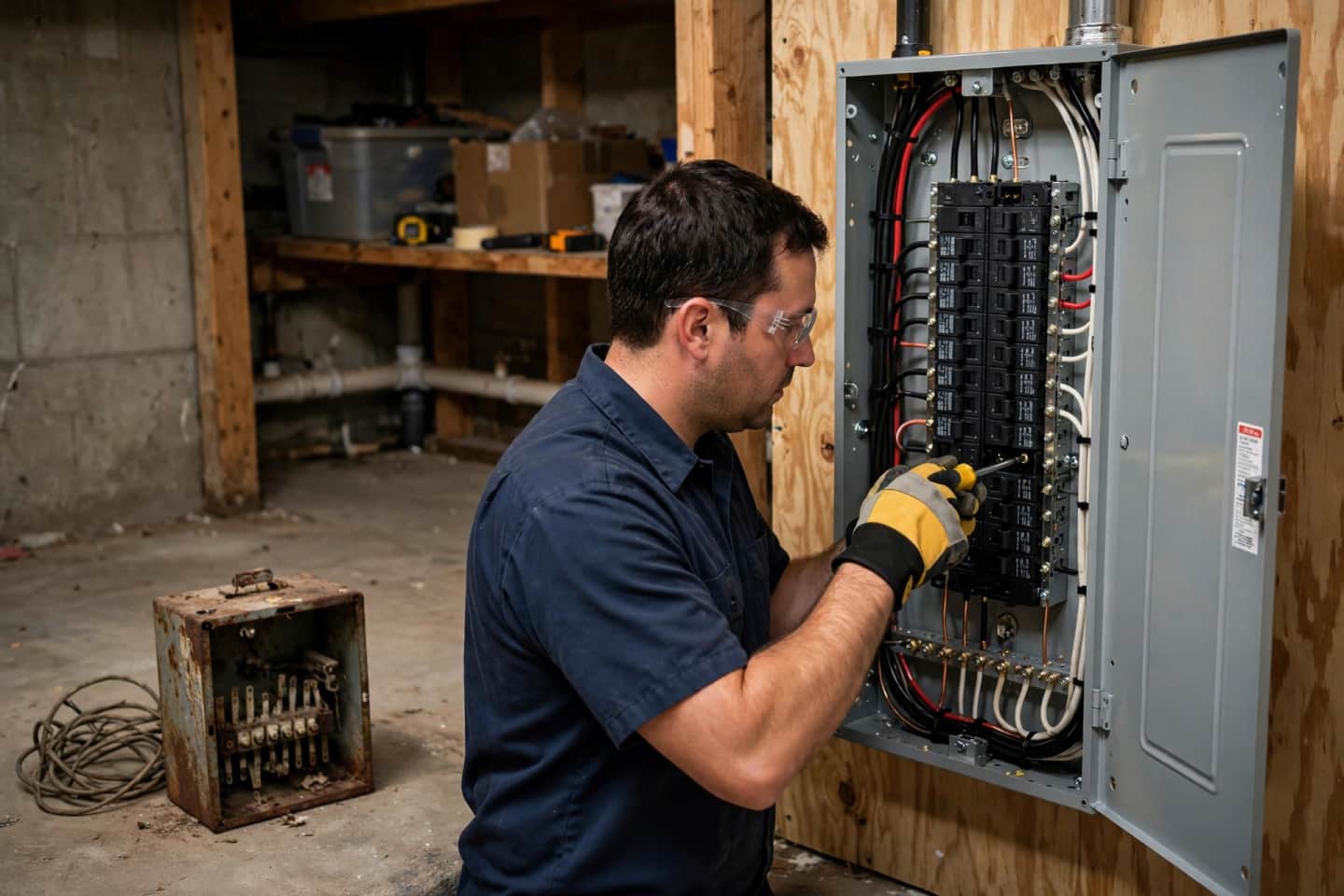
North Raleigh grew from the 1970s onward with larger homes and subdivisions, and North Hills has become a dense urban center. Homes from the 1970s and 1980s may have original panels, some from manufacturers electricians recommend replacing. Newer homes typically have 200-amp services.
On September 5 and 6, 1996, Hurricane Fran moved inland and struck Raleigh with damaging winds, toppling thousands of trees onto homes and power lines. Much of the city lost power, some for more than a week. Many homeowners added generators afterward, and the storm remains the benchmark for inland hurricane damage in the area.
In early December 2002, an ice storm coated Raleigh’s trees and lines, causing one of the largest outages in the utility’s history. Hundreds of thousands of customers in the area lost power during cold weather. Backup heat and power became priorities for many families.
Raleigh has been struck by tornadoes, including a destructive nighttime tornado in November 1988 and the April 16, 2011 outbreak, which damaged neighborhoods near downtown and a mobile home park in north Raleigh. Damaged service equipment must be inspected and repaired before reconnection.
Many Raleigh homes sit over crawl spaces, where humidity, pests and old splices create problems. Renovations frequently uncover damaged wiring, open splices and amateur work, which electricians correct while routing new circuits.
Heat pumps are the most common heating and cooling system in Raleigh. Each system needs correctly sized circuits, and backup electric heat strips draw heavy loads during cold snaps. Older homes may need panel upgrades to add or replace heat pumps.
Wake County has added hundreds of thousands of residents in recent decades. New homes are built to current codes, but owners still add EV chargers, generators, outdoor kitchens and home offices, and new subdivisions may have HOA rules for generators and solar.
North Carolina State University, Meredith College, Shaw University and others bring many renters. Landlords commonly update outlets, ground-fault protection and alarms between tenants.
From late May through August, heat and humidity build each day until thunderstorms fire over Wake County in the late afternoon. Those storms knock down pine limbs, flicker power for thousands of Duke Energy customers and send surges along service drops and cable lines. Heat pump circuit boards, well pump controllers in the outlying areas, garage door openers and smart appliances are the usual victims. A surge protective device at the main panel catches most of these spikes before they reach equipment.
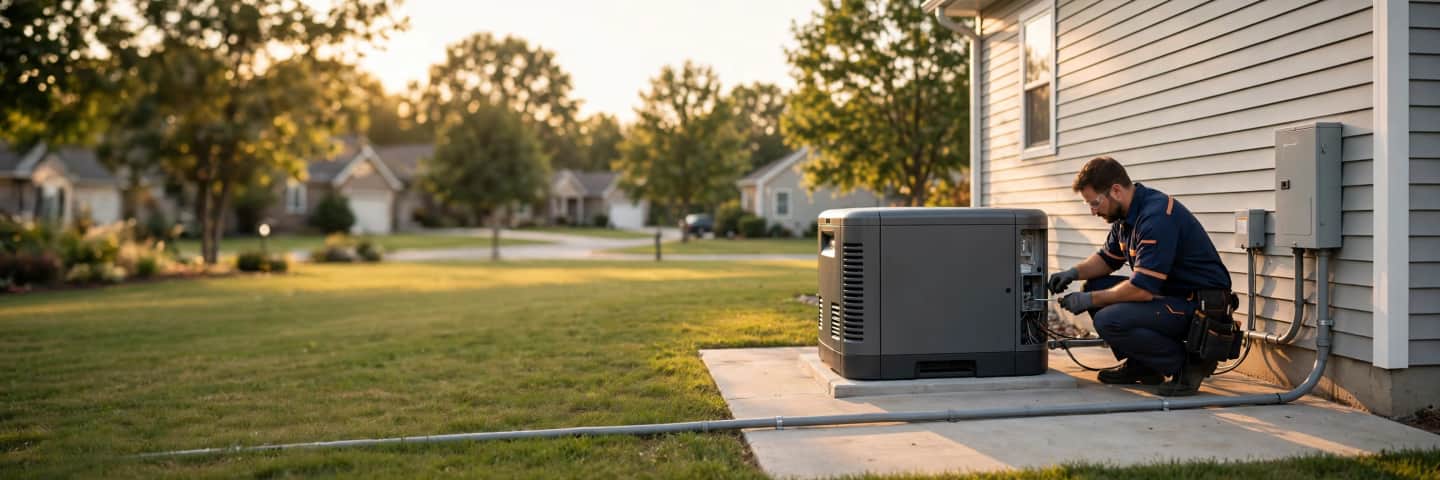
After Fran and the 2002 ice storm, many Raleigh families decided they never wanted to sit through another week without power. Natural gas standby generators are common where PSNC gas lines run, and propane units serve homes beyond the gas mains. Many subdivisions have homeowners association rules on where generators can sit and how they must be screened, and the city requires electrical permits and clearances from windows, doors and property lines. Portable generators belong outside and should feed the house only through a listed interlock or transfer switch.
Research Triangle Park employers and a tech-heavy population have made the Triangle one of the stronger EV markets in the Southeast. In newer homes with garages, a Level 2 charger is usually straightforward, while older inside-the-Beltline houses with 100-amp services may need a load calculation, a load-management device or a service upgrade. Rooftop solar is popular as well, and Duke Energy reviews interconnection applications before systems can operate.
Because the Raleigh market moves quickly, buyers often have only a short due-diligence period to evaluate a home. Electrical items that commonly appear in reports include crawl space splices without junction boxes, ungrounded outlets in older ranches, panels from manufacturers with known problems, missing ground-fault protection at kitchen and bath counters and amateur wiring in finished bonus rooms. A licensed electrician can give a written estimate within that window so buyers can negotiate repairs or credits.
Day to day, Raleigh electricians are called to restore storm-damaged masts and meter bases, install generators and interlocks, replace knob-and-tube wiring in Oakwood and Mordecai homes, upgrade small services in Beltline ranches, add heat pump and EV circuits and correct crawl space wiring found during inspections.
Raleigh’s dense red clay and the roots of big oaks make trenching for buried feeders to detached garages, workshops and backyard offices slower than in sandy soils. Conduit must be buried to the depth the code requires, and underground runs installed decades ago by previous owners are sometimes too shallow, unprotected or not rated for burial, which shows up as tripping breakers after heavy rain.
Questions
The City of Raleigh’s Development Services department issues permits inside city limits. Unincorporated areas are permitted by Wake County, and nearby towns such as Cary, Garner and Wake Forest have their own offices.
Yes. The North Carolina State Board of Examiners of Electrical Contractors licenses electrical contractors, and permits must be pulled by a licensed contractor or a qualifying homeowner.
Problem guides
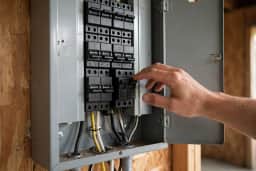 Breaker Keeps TrippingWhy does my circuit breaker keep tripping?
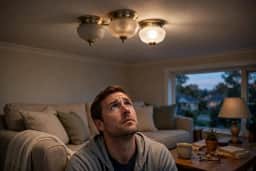 Flickering LightsWhy are the lights in my house flickering?
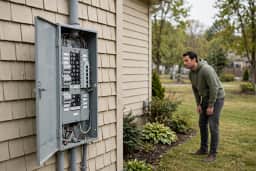 Buzzing Electrical PanelWhy is my electrical panel buzzing?
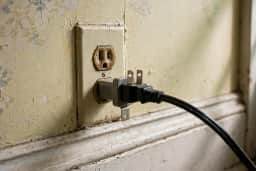 Two-Prong Ungrounded OutletsAre two-prong outlets safe?
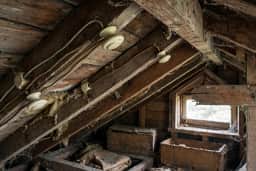 Knob and Tube WiringDo I need to replace knob and tube wiring?
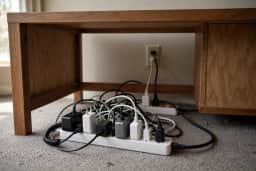 Overloaded Power StripsIs it dangerous to plug a power strip into another power strip?
Same-day help often available
Call an electrician in Raleigh
Describe the problem and your Raleigh neighborhood. Your call goes to an independent licensed electrician who works locally.
Call (855) 679-2483Smoke, flames or sparking? Leave the building and call 911 first.
Pronto Electrician is a free referral service. Calls are answered by independent licensed electricians in your area. Pronto Electrician does not perform electrical work, and the electrician you choose sets the price, schedule, permits and warranty.
Nearby
Free to call · All 50 states + DC
Describe the problem and get connected with an independent licensed electrician who serves your area.