Greensboro took the nickname Gate City from the rail lines that met here, then built its fortunes on Cone denim, insurance and five colleges. Duke Energy Carolinas supplies the power. Houses range from Fisher Park Victorians and Cone mill cottages to brick ranches in Starmount and newer subdivisions out toward Lake Jeanette. The city also carries the memory of two destructive tornadoes, one in 1936 and one in 2018, and its Piedmont red clay and winter freezing rain shape a good deal of electrical work.
Fisher Park, Irving Park and College Hill hold the oldest houses, many from the 1890s through the 1920s. Lindley Park and Sunset Hills are streetcar-era and 1920s suburbs. The Cone villages beside the White Oak, Proximity and Revolution mills added roughly fifteen hundred small frame houses, later sold to private owners. Brick ranches from the 1950s and 1960s fill large parts of the south and east, and the north side near the city lakes is mostly 1980s and newer.
Problems that come up again and again in local homes, and the service that fixes each one.
01
Mill cottages on patched wiring
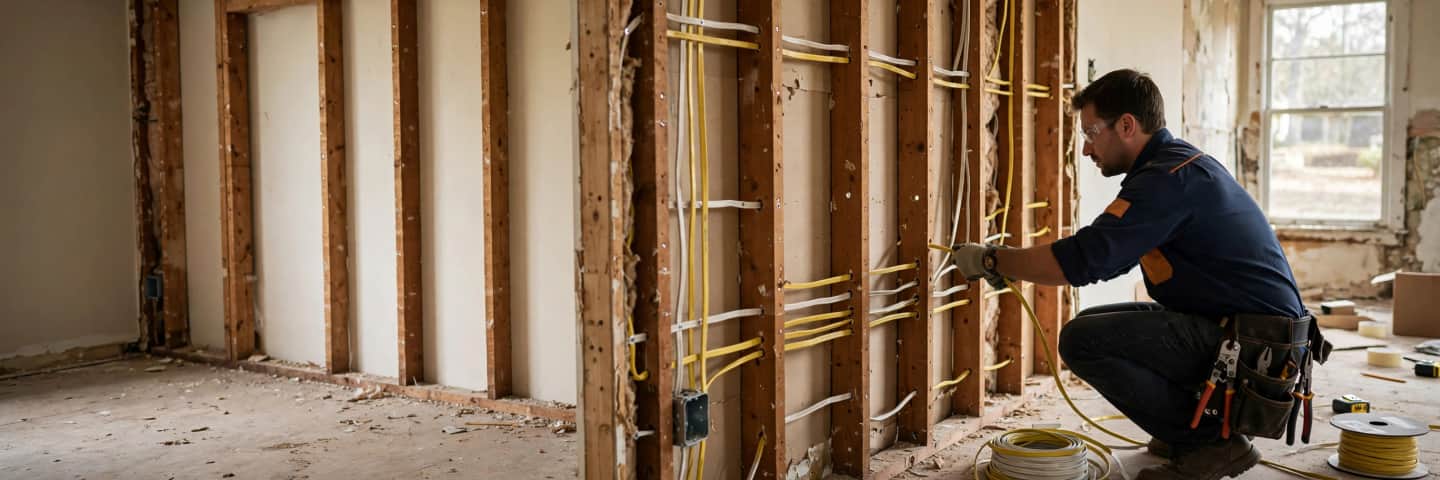
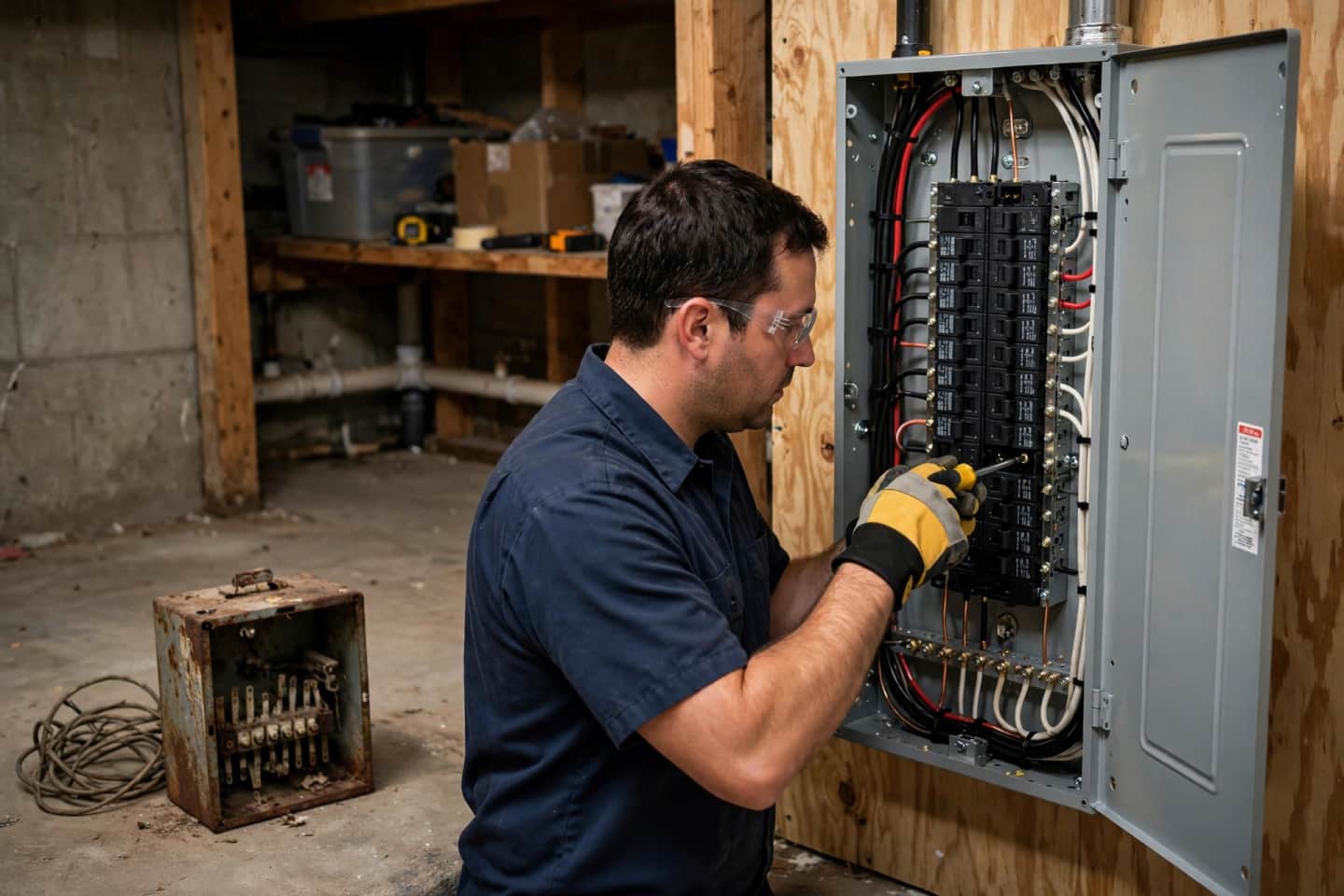
Former Cone village houses were wired for a bulb in each room and a radio. Decades of add-on circuits, window air conditioners and DIY splices make a planned rewire through the crawl space a common project.
Hundreds of east Greensboro houses were repaired quickly after the April 2018 storm. Buyers and owners often want a second look at the mast, meter base, panel and any wiring that took on rainwater.
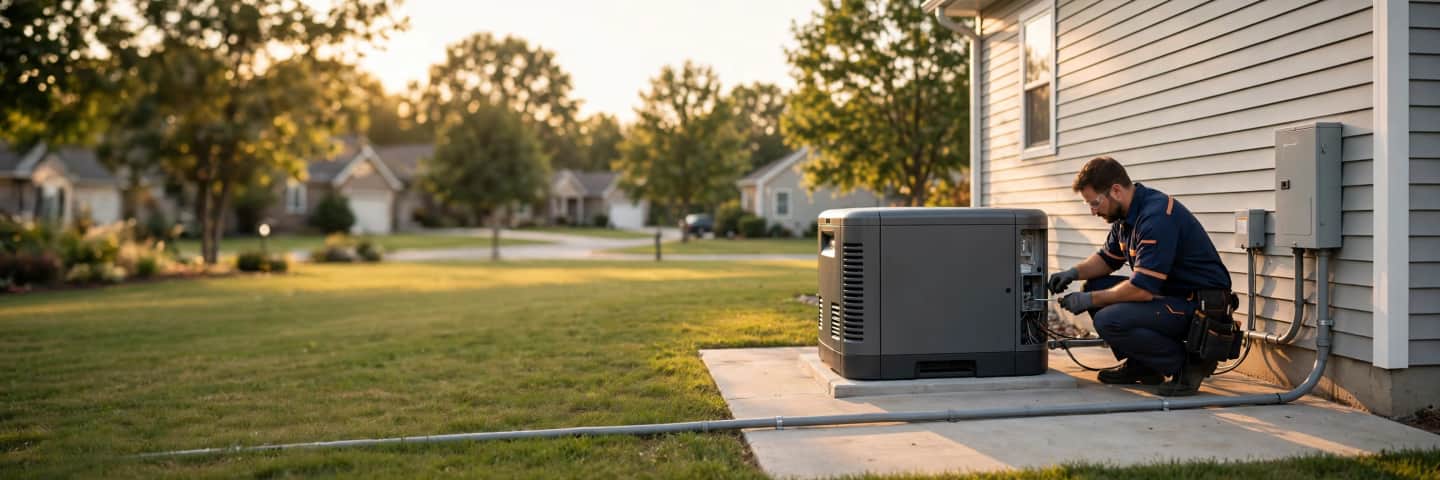
Ice loads mature willow oaks in Irving Park and Fisher Park until limbs drop onto service drops. Owners who have lost power for days often add a generator inlet or standby unit.
History, housing, weather and rules that shape electrical work in Greensboro, NC.
Why Greensboro is called the Gate City
Greensboro takes its name from General Nathanael Greene, who fought the British at nearby Guilford Courthouse in 1781, but its growth came later with the railroad. Lines converging here made it a shipping point for the Piedmont, and the Gate City nickname stuck. Brick commercial buildings along South Elm Street date from that era, and many now hold apartments upstairs, which usually means new services, separate meters and modern wiring behind historic storefronts.
Fisher Park’s Victorians and foursquares
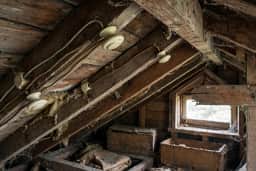
Fisher Park, just north of downtown, was laid out around a wooded stream valley in the early 1900s. Its Queen Anne, Colonial Revival and foursquare houses often still have plaster walls, and remnants of knob-and-tube wiring turn up in attics and behind baseboards. Owners renovating these homes usually rewire room by room, fishing new cable through closets and floors so that original trim and plaster can stay in place.
Irving Park and the country club houses
Irving Park grew around the Greensboro Country Club beginning in the 1910s, with large houses on curving streets under an old canopy of oaks. Many homes have been expanded several times, so it is common to find subpanels feeding additions, long circuits to detached garages and pool equipment, and service drops threaded between big limbs. Before a kitchen or garage project, a load calculation shows whether the existing service can carry it.
Cone Mills and the denim villages
Moses and Ceasar Cone opened Proximity Cotton Mills in the 1890s, partnered on Revolution Mills in 1899 and built White Oak in 1905, which became the world’s largest denim producer within a few years. Around the plants they built mill villages of roughly fifteen hundred houses, complete with stores, churches and ballfields. Beginning in the late 1940s the company sold the houses, many of them to the families already living inside.
Living in a Proximity or White Oak mill house
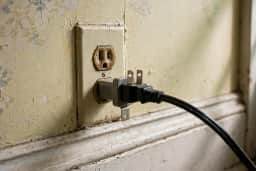
Mill houses are small, often on piers, and were never designed for modern appliances. Typical findings include two-prong outlets, a few overloaded circuits, a fuse box replaced long ago by a small breaker panel, and kitchen circuits shared with bedrooms. The open crawl space makes rewiring easier than in a slab house, and owners commonly pair new wiring with a larger service sized for central air and an electric range.
Revolution Mill and other reused factories
White Oak, the last Cone denim plant, closed at the end of 2017, but several mill buildings have found new uses. Revolution Mill has been converted into offices, studios, restaurants and apartments, and other old industrial space in north and east Greensboro has followed. These conversions call for commercial electricians who can fit new distribution, emergency lighting and fire alarm work into thick brick walls and heavy timber framing.
The 1936 tornado on the south side
On the evening of April 2, 1936, a tornado cut across the south side of Greensboro, starting near High Point Road at Elam Street and running east along Lee Street past Bennett College. It killed fourteen people, destroyed fifty-six buildings and damaged more than two hundred others along an eleven-mile path. Houses rebuilt in the following years are now close to ninety years old, and many are due for new wiring.
April 15, 2018 in east Greensboro
A high-end EF2 tornado touched down near Interstate 40 and Willow Road in southeast Greensboro late that afternoon and tracked north, reaching winds near 135 miles per hour around Hampton Elementary. County crews counted 1,007 damaged structures in Guilford County, including Hampton, Peeler and Erwin Montessori elementary schools. Masts were torn from roofs, meter bases ripped loose and rain poured into open walls, so electrical repair was a large part of the recovery.
Buying a house in the 2018 storm path
Much of the rebuilding along Cone Boulevard, Phillips Avenue and nearby streets was done under pressure, sometimes by out-of-town crews. If you are buying there, ask the seller for permit records and look up the address in the city’s permit data. An independent inspection of the panel, grounding and any wiring that was exposed to weather can catch shortcuts before they become a problem.
Ice storms across the Triad
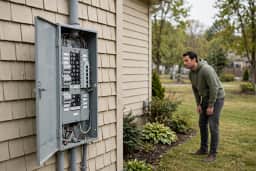
Freezing rain is the storm Greensboro residents remember most, from the December 2002 ice storm that left huge areas of the Piedmont dark to smaller events nearly every winter. Duke Energy Carolinas repairs its lines and the drop to the house, but a bent mast or torn meter base belongs to the owner. An electrician has to fix that before the utility can reconnect power.
Red clay under Guilford County lawns
Greensboro sits on dense Piedmont clay that bakes hard in August and stays soggy after long rains. That matters when running a feeder to a detached shop, landscape lighting or a hot tub, because trenching takes real effort and the cable or conduit still has to reach code depth. Grounding rods driven into dry clay can also be difficult, and electricians sometimes need extra electrodes to do it properly.
Wells near Lake Brandt and Lake Townsend
The city’s reservoirs, Lake Brandt, Lake Townsend and Lake Higgins, sit in a ring of wooded land on the north side, and many homes just beyond city water lines depend on private wells. When the power goes out, so does the water. A generator sized for the well pump, plus a transfer switch or interlock so it can be connected safely, is a common request in those neighborhoods.
Starmount and the brick ranch years
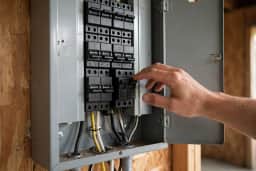
Starmount, Kirkwood and many streets in south and east Greensboro filled with brick ranches in the 1950s and 1960s. Most have grounded wiring but small services of 100 amps or less, aging panels and few kitchen circuits. Adding central air, a heat pump upgrade or an EV charger often pushes these houses to a service upgrade, which requires a permit and coordination with Duke Energy for the disconnect.
Rentals near A&T, UNCG and Guilford College
North Carolina A&T, UNC Greensboro, Guilford College, Greensboro College and Bennett College together bring tens of thousands of students to the city. Houses near campus are frequently divided into rentals, and tenants plug in more than the original circuits were sized for. Landlords commonly call for added outlets, kitchen circuits, smoke alarm updates and GFCI protection when units turn over between semesters.
The Woolworth sit-ins and a revived downtown
On February 1, 1960, four A&T students sat down at the Woolworth lunch counter on South Elm Street, starting the sit-in movement. The building is now the International Civil Rights Center and Museum. Downtown has since gained LeBauer Park, the Tanger Center and new housing, and older buildings converted to lofts and restaurants need upgraded services, new panels and careful work around historic features.
Aviation jobs at Piedmont Triad International
HondaJet production and Boom Supersonic’s aircraft factory at Piedmont Triad International Airport, along with Toyota’s battery plant at the Randolph County megasite, have brought new jobs to the region. Many new hires settle in northwest Greensboro and the surrounding towns. New construction there usually starts with a 200-amp service, and buyers increasingly ask for a garage charging circuit or generator inlet before closing.
Chargers for I-40 and I-85 commuters
Interstates 40 and 85 share a route through Greensboro, so many residents drive long distances to Winston-Salem, Burlington or the Triangle. Those commutes make home charging attractive. A Level 2 charger typically needs its own 240-volt circuit, and in older houses the deciding question is whether the panel has the capacity and the physical space for it, or whether a load management device is needed.
Summer thunderstorms and surge damage
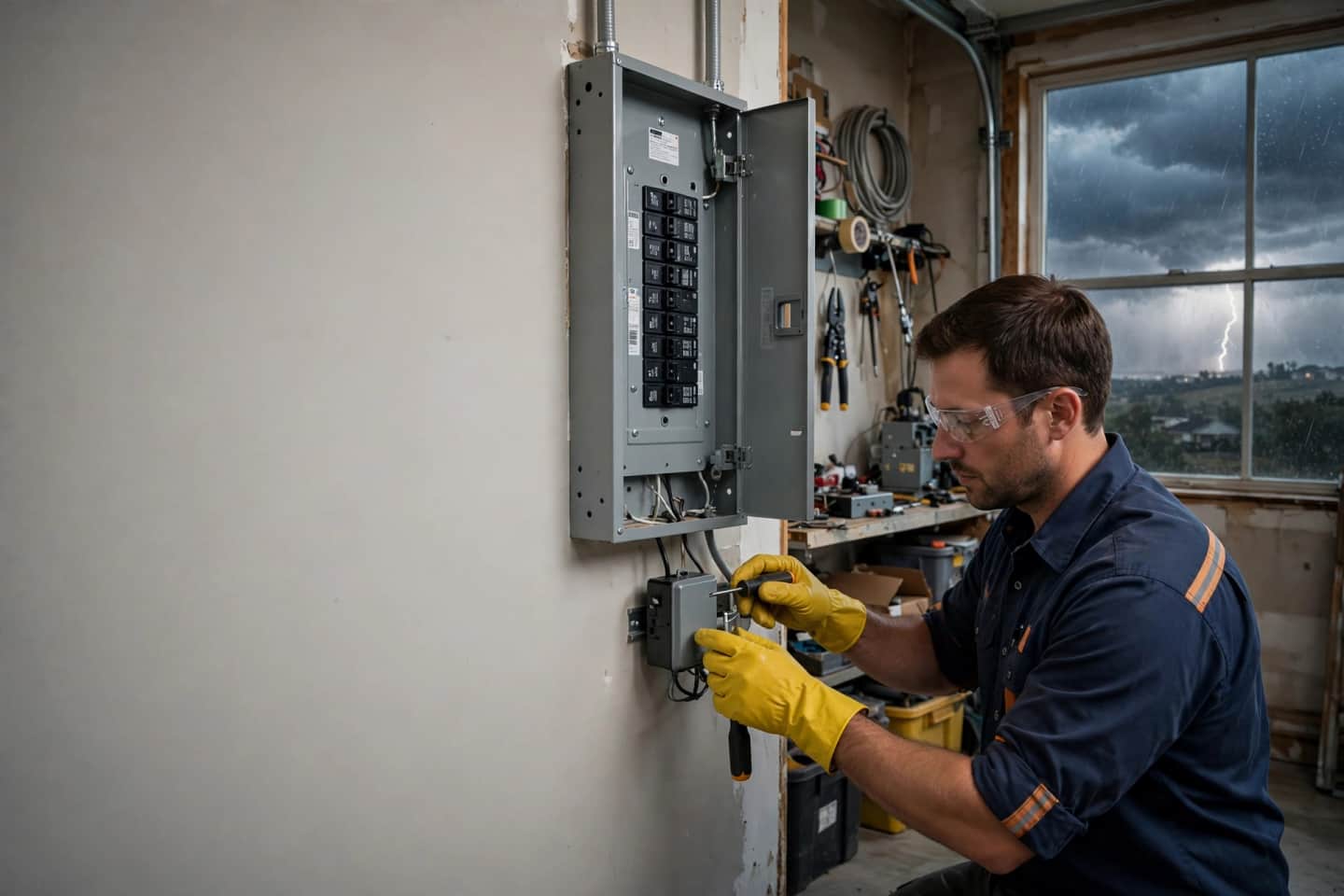
Afternoon thunderstorms roll across Guilford County through the summer, and nearby strikes can damage heat pump control boards, garage door openers and furnace electronics. A surge protective device at the panel, combined with good grounding and bonding of cable and phone lines, reduces that risk. Point-of-use strips behind computers and televisions add a second layer but do not replace whole-house protection.
Questions
Questions from Greensboro homeowners
Who issues electrical permits in Greensboro?+
Inside city limits, the City of Greensboro’s Engineering & Inspections Department issues electrical permits and sends inspectors, with applications handled through Development Services on West Washington Street. High Point runs a separate inspections office, and properties in unincorporated Guilford County go through the county instead, so check which side of a boundary a property falls on.
How are electricians licensed in North Carolina?+
The North Carolina State Board of Examiners of Electrical Contractors licenses electrical contractors. Limited, Intermediate and Unlimited licenses are tied to the value of a single project, and special restricted licenses, such as one limited to single-family dwellings, cover narrower kinds of work. The board’s website lets you look up a contractor by name or license number.
Connect with an independent licensed electrician near you
Smoke, flames or sparking? Leave the building and call 911 first.
Pronto Electrician is a free referral service. Calls are answered by independent licensed electricians in your area. Pronto Electrician does not perform electrical work, and the electrician you choose sets the price, schedule, permits and warranty.