
01
Historic Craftsman homes
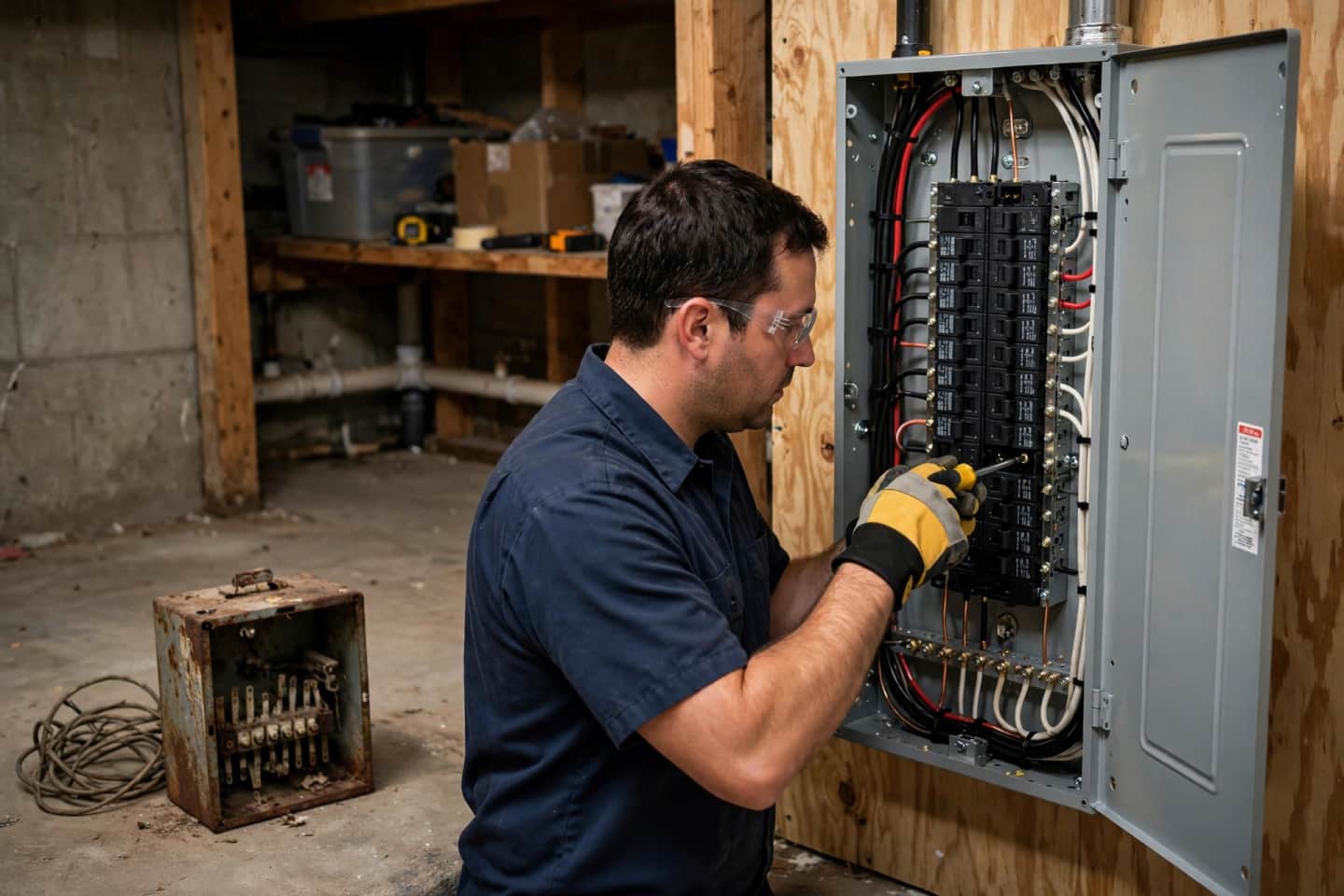
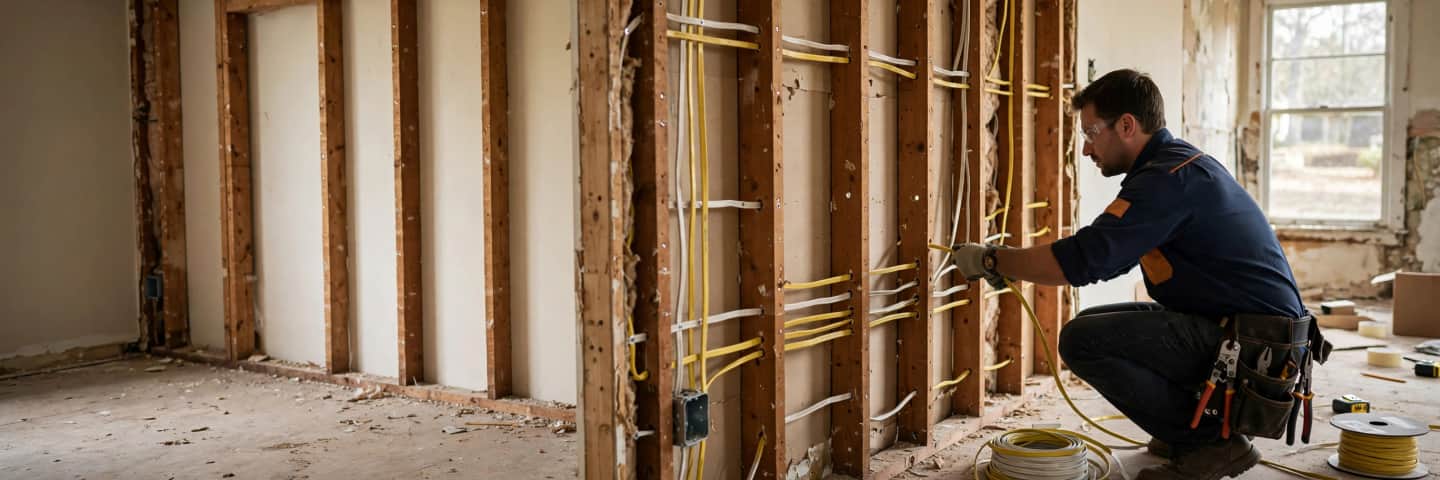
The Wood Streets and downtown districts have early-1900s homes with knob-and-tube wiring and small services that need careful updating.
House Rewiring
Riverside, birthplace of California’s navel orange industry, grew rich on citrus in the late 1800s and is now the largest city in the Inland Empire. The city runs its own electric and water utility, Riverside Public Utilities. Inland heat, Santa Ana winds, wildfire on the hillsides, earthquake risk and a housing stock ranging from Craftsman bungalows to new subdivisions shape local electrical work.
Free to call · Independent licensed electricians
Serving Wood Streets, Downtown, Canyon Crest, Arlington Heights, La Sierra, Casa Blanca and every other Riverside neighborhood.
Riverside at a glance
Electrical services in Riverside
The calls Riverside homeowners make most, followed by every service independent licensed electricians handle here.
Not sure which service you need? Describe the problem and an electrician will tell you.
Call for Electrical Service in RiversideHousing and wiring
The Wood Streets and neighborhoods around downtown have Craftsman, Victorian and Spanish Revival homes from the 1890s through the 1930s. Arlington Heights includes the citrus greenbelt with older ranch properties. Much of Riverside grew with tract homes from the 1950s through the 1970s, and Orangecrest, Mission Grove and other southern neighborhoods were built from the 1980s onward.
Neighborhoods we cover
Local issues
Problems that come up again and again in local homes, and the service that fixes each one.
The Wood Streets and downtown districts have early-1900s homes with knob-and-tube wiring and small services that need careful updating.
House RewiringSummers regularly top 100 degrees, and air conditioning loads stress older panels and outdoor connections.
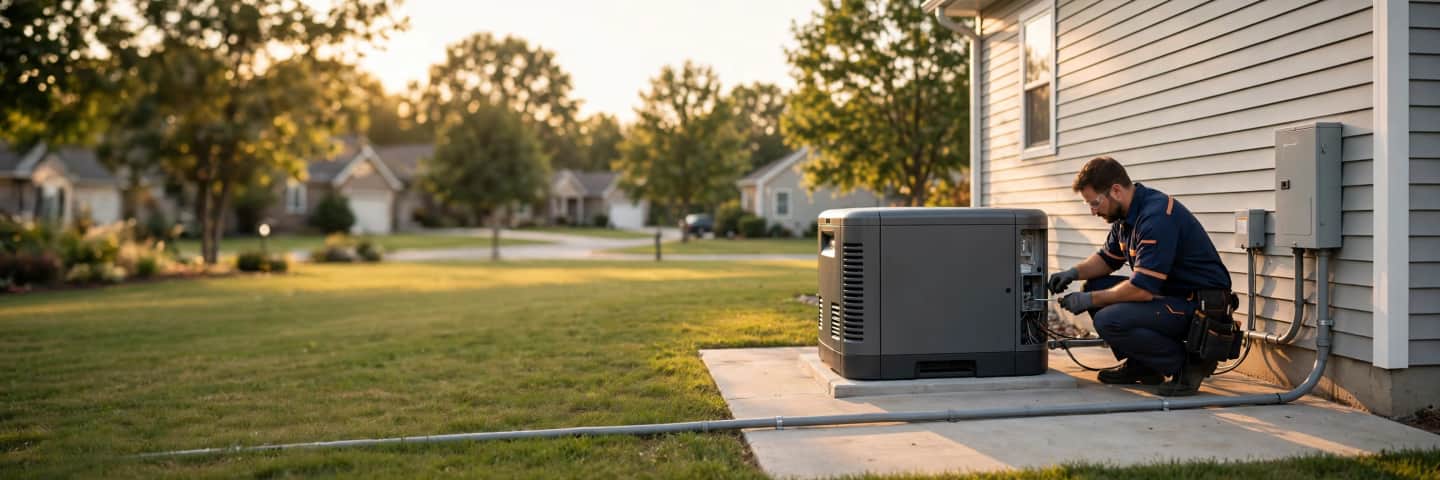
Electrical Panel UpgradeHillside neighborhoods near open space face wildfire risk when hot, dry winds blow. Backup power and clear space around equipment help.
Generator InstallationLocal guide
History, housing, weather and rules that shape electrical work in Riverside, CA.
In 1873, Eliza Tibbets planted navel orange trees in Riverside, and the city became the center of a citrus boom that made it one of the wealthiest cities per capita in the country by the 1890s. One of the original parent navel orange trees still grows in the city. That prosperity built the Mission Inn, grand homes downtown and an irrigation system of canals that shaped early neighborhoods.
Riverside has operated its own electric utility since 1895. Riverside Public Utilities sets its own rates and offers rebates for efficiency, solar and electrification. For homeowners, meter work, service upgrades and solar interconnection are coordinated with RPU, whose requirements differ in places from those of Southern California Edison, which serves many surrounding communities.
The Wood Streets, south of downtown, are named for trees such as Elm, Oak and Ramona, and lined with Craftsman bungalows and revival homes from the 1910s and 1920s. These homes are prized for their character, and restorers commonly replace knob-and-tube wiring and fuse panels, add grounded circuits for kitchens and baths, and route wiring through attics and crawl spaces to protect original woodwork.
Downtown Riverside, anchored by the Mission Inn, has Victorian homes, early apartment buildings and newer infill housing. Mount Rubidoux, with its cross and trails, overlooks the area. Older buildings downtown often have multiple meters and aging panels, and restorations require careful coordination with historic preservation rules.
Arlington Heights, along Victoria Avenue, includes a protected citrus greenbelt with groves, older ranch houses and estates. These properties have long service runs, irrigation pumps, barns and outbuildings that need properly sized feeders, motor protection and grounding.
Casa Blanca, one of Riverside’s historic Mexican American neighborhoods, grew around the citrus packing houses where many residents worked. Many homes are owned by longtime families and have been expanded over generations. Older wiring, small panels and additions built without permits are common, and panel upgrades improve safety and capacity.
Canyon Crest and the neighborhoods around the University of California, Riverside have homes from the 1960s and 1970s along with student apartments and rentals. Landlords regularly update outlets, ground-fault protection and alarms between tenants, and older homes may have aluminum branch wiring needing approved repairs.
La Sierra and Arlanza, in west Riverside, grew from the 1950s onward with tract homes, ranchettes and properties with horses. Larger lots often include detached workshops and barns that need feeders and grounding sized for their equipment.
Orangecrest and Mission Grove, in southern Riverside near March Air Reserve Base, were built mostly from the 1980s through the 2000s. These homes typically have 200-amp services, but solar, batteries, EV chargers, pools and backyard living spaces can still require load planning.
Riverside is far enough inland that summer highs often exceed 100 degrees. Air conditioning runs constantly, and connections in panels and disconnects can loosen and overheat. Checking circuits before summer and keeping condensers clear of debris helps prevent breakdowns.
In fall and winter, Santa Ana winds blow hot, dry air through the Inland Empire, toppling trees and raising wildfire danger. Neighborhoods bordering open space and hillsides, such as those near Box Springs Mountain and the La Sierra hills, should keep vegetation clear of meters and outdoor equipment and have a plan for backup power if utilities shut off lines.
Riverside lies near the San Jacinto and San Andreas fault systems. Strapping water heaters, using flexible gas connections and knowing how to switch off the main breaker are practical steps for earthquake readiness.
Riverside encourages accessory dwelling units, and many families are adding units for relatives or rental income. Each ADU needs adequate capacity, often a subpanel, and sometimes a separate meter from RPU.
Rooftop solar is common in sunny Riverside, and RPU reviews interconnection and sets its own rates for solar customers. Batteries help households keep power during outages, and older panels may need upgrades to connect solar and storage.
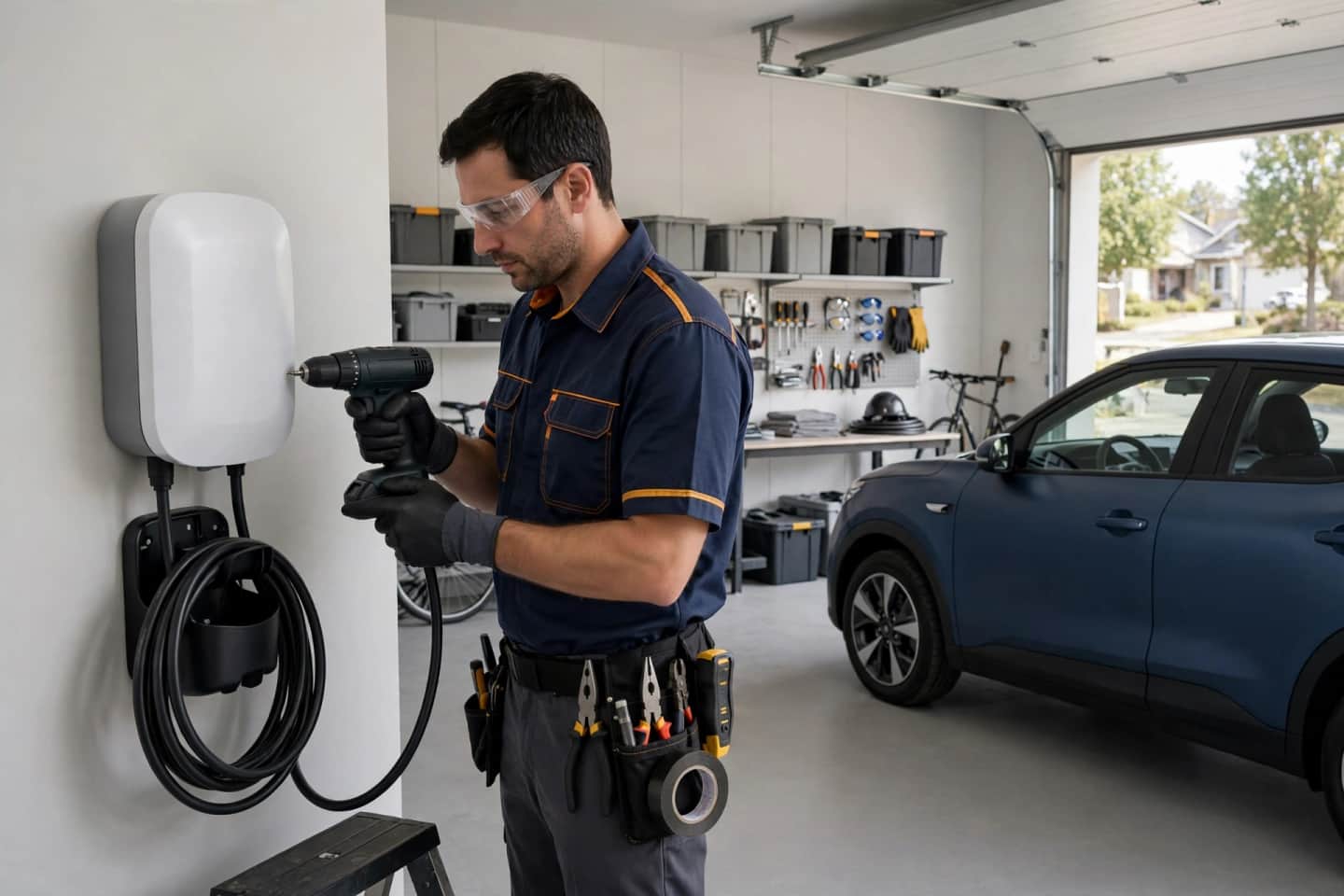
EV adoption is growing in Riverside, and RPU has offered rebates for home chargers. Older homes may need load calculations or panel upgrades before adding a Level 2 charger.
Inspection reports for Riverside homes commonly note knob-and-tube wiring in historic homes, outdated panels in tract homes, aluminum wiring, unpermitted additions and sun-damaged exterior wiring.
Typical work includes historic home rewiring, panel and service upgrades, air conditioning circuits, ADU subpanels, solar and battery connections, EV chargers and ceiling fans.
Every winter, the Mission Inn’s Festival of Lights covers the historic hotel in millions of lights and draws visitors from across Southern California. Many Riverside households decorate too. Large home displays should be spread across outdoor-rated, ground-fault-protected circuits rather than chained together from a single outlet, and timers reduce both energy use and fire risk.
Riverside’s Eastside, a historically Black and Latino neighborhood near downtown, and the Northside near the Santa Ana River have older homes from the early and mid-1900s. Many are owned by longtime families and have been added onto over the decades. Grounded circuits, panel replacements and corrections of unpermitted additions are typical needs.
Backyard pools and covered patios are common in Riverside’s hot climate. Pool equipment needs bonding and ground-fault protection, and patio fans and lighting must be rated for damp or wet locations.
Sycamore Canyon, on Riverside’s east side, mixes newer neighborhoods with a large wilderness park and nearby warehouse development along Interstate 215. Homes beside the park face elevated brush fire risk, and residents benefit from keeping vegetation clear of outdoor equipment. Truck traffic and warehouse growth have also prompted many families to run air purifiers, adding steady loads to bedroom circuits.
Riverside City College, near downtown, and California Baptist University in the La Sierra area add to the city’s student rental market. Older homes converted to rentals often need panel upgrades and updated safety devices.
Small repairs can usually be scheduled within days. Service upgrades depend on city permits, inspections and RPU scheduling for disconnects and meter work, and historic district reviews add time for exterior changes.
Questions
Riverside Public Utilities, owned by the city, provides electricity and water to most of Riverside. Service upgrades and solar interconnection go through RPU.
The City of Riverside Building and Safety Division issues permits inside city limits. Unincorporated communities nearby are permitted by Riverside County.
Problem guides
 Breaker Keeps TrippingWhy does my circuit breaker keep tripping?
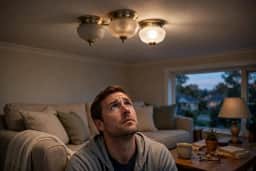 Flickering LightsWhy are the lights in my house flickering?
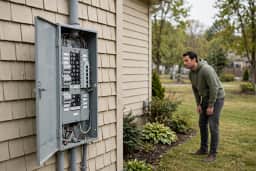 Buzzing Electrical PanelWhy is my electrical panel buzzing?
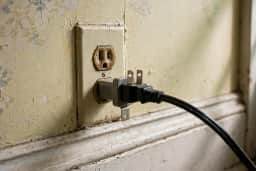 Two-Prong Ungrounded OutletsAre two-prong outlets safe?
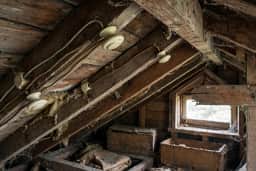 Knob and Tube WiringDo I need to replace knob and tube wiring?
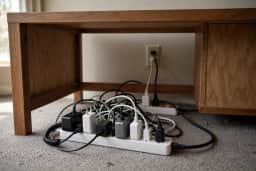 Overloaded Power StripsIs it dangerous to plug a power strip into another power strip?
Same-day help often available
Call an electrician in Riverside
Describe the problem and your Riverside neighborhood. Your call goes to an independent licensed electrician who works locally.
Call (855) 679-2483Smoke, flames or sparking? Leave the building and call 911 first.
Pronto Electrician is a free referral service. Calls are answered by independent licensed electricians in your area. Pronto Electrician does not perform electrical work, and the electrician you choose sets the price, schedule, permits and warranty.
Nearby
Free to call · All 50 states + DC
Describe the problem and get connected with an independent licensed electrician who serves your area.