24 hour emergency service, electrical repair, panel upgrades, generator installation and EV chargers in Santa Clarita. Call (855) 679-2483 and get connected with an independent licensed electrician who works locally.
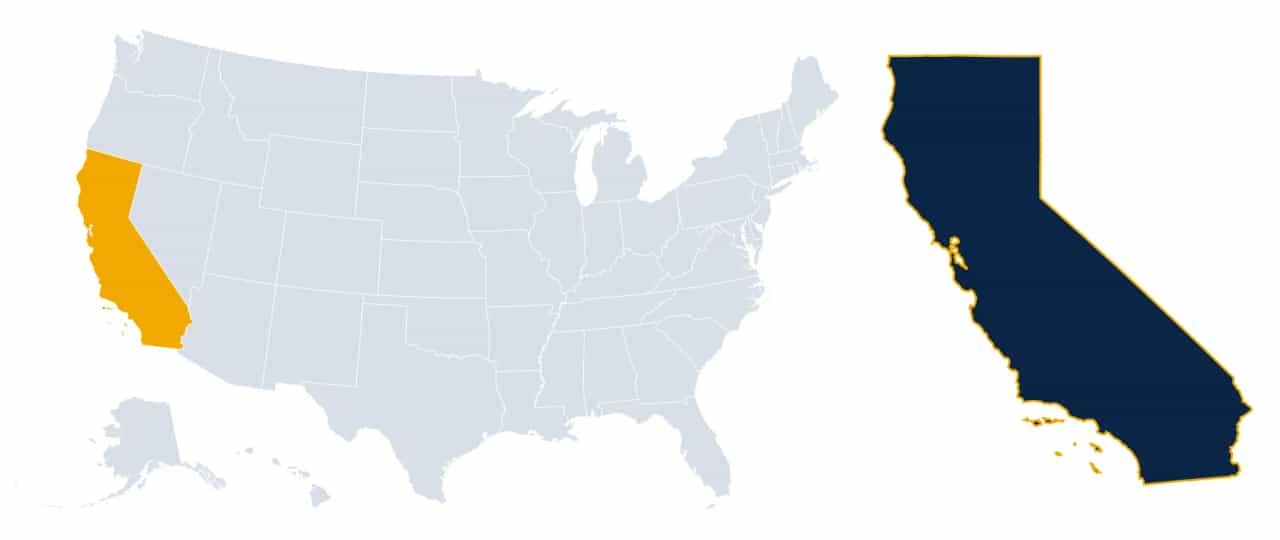
Santa Clarita fills the valley where Interstate 5 and State Route 14 meet north of the San Fernando Valley, a city formed in December 1987 from Newhall, Saugus, Valencia and Canyon Country. Southern California Edison supplies the power. Housing runs from older cottages near Old Town Newhall to Valencia tracts begun in 1967 and newer hillside subdivisions, and wind-driven fires such as the 2019 Tick Fire keep backup power and shutoff planning on residents’ minds. Call (855) 679-2483 to reach a licensed electrician.
By calling, you agree to be connected with an independent electrician, who may call or text you back about your request at the number you call from. Calls may be recorded for quality and routing. Consent is not a condition of any purchase, and you can opt out at any time; message and data rates may apply. Privacy policy.
Serving Valencia, Saugus, Newhall, Canyon Country, Fair Oaks Ranch, Sand Canyon and every other Santa Clarita neighborhood.
Santa Clarita at a glance
Electric utility
Southern California Edison (SCE) delivers electricity throughout the city
Permits and inspections
City of Santa Clarita Building & Safety Division (Community Development); unincorporated areas use LA County Public Works Building and Safety
County
Los Angeles County
ZIP codes include
91321 · 91350 · 91351 · 91354 · 91355 · 91387
Electrical services in Santa Clarita
What do you need help with in Santa Clarita, CA?
The calls Santa Clarita homeowners make most, followed by every service independent licensed electricians handle here.
Newhall’s blocks around Main Street hold the valley’s oldest homes, including pre-war cottages and 1950s ranches. Saugus and Canyon Country grew with 1960s and 1970s tracts plus several mobile home parks along Soledad Canyon Road. Valencia’s planned villages, started by Newhall Land in 1967, run from 1970s townhomes to 1990s and 2000s single-family streets, while Fair Oaks Ranch and newer hillside neighborhoods carry rooftop solar, larger services and garages already roughed in for car chargers.
Problems that come up again and again in local homes, and the service that fixes each one.
01
Shutoff days in Canyon Country and Saugus
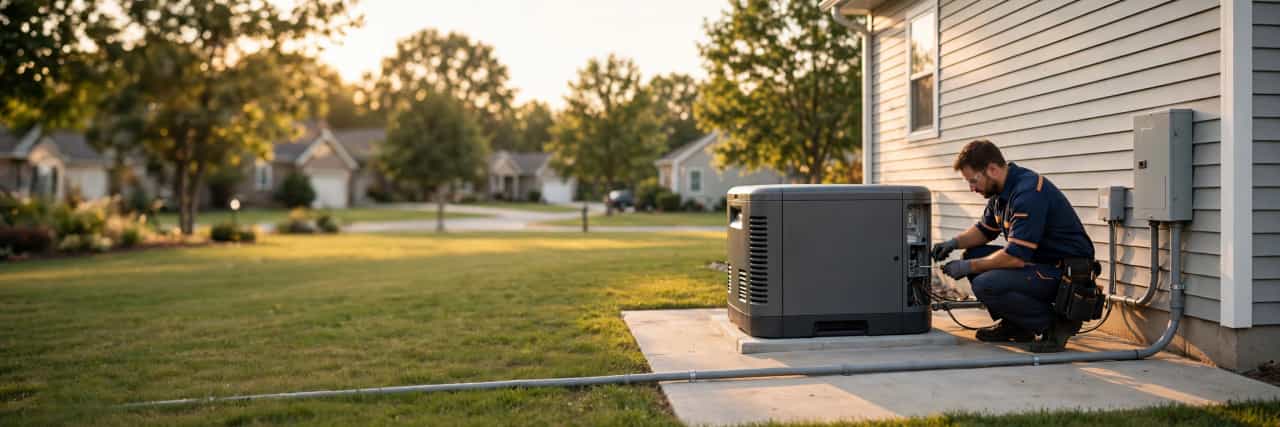
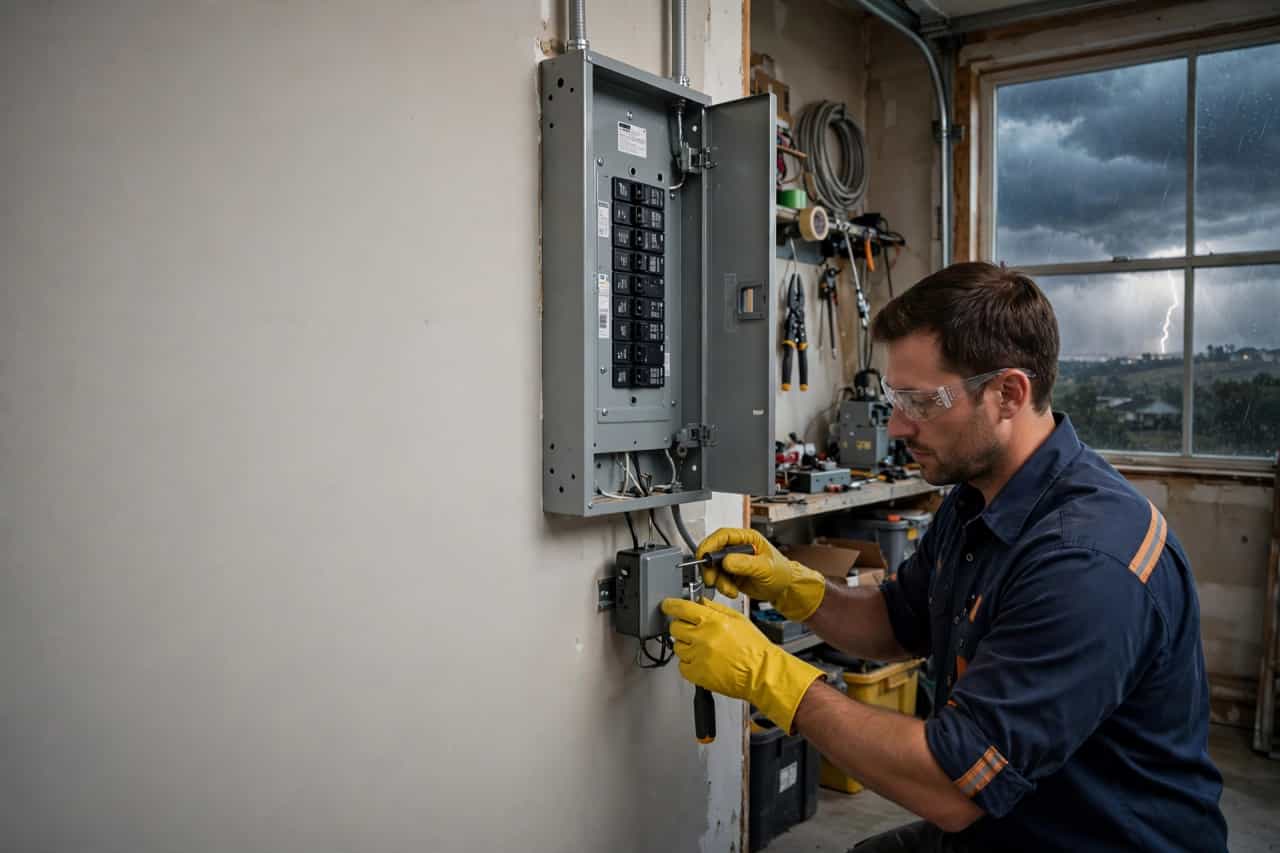
SCE de-energizes lines in high fire-risk canyons when Santa Ana winds arrive, sometimes for more than a day. A transfer switch or interlock with a properly sized generator, or a battery system, keeps refrigeration and medical equipment running without unsafe cords.
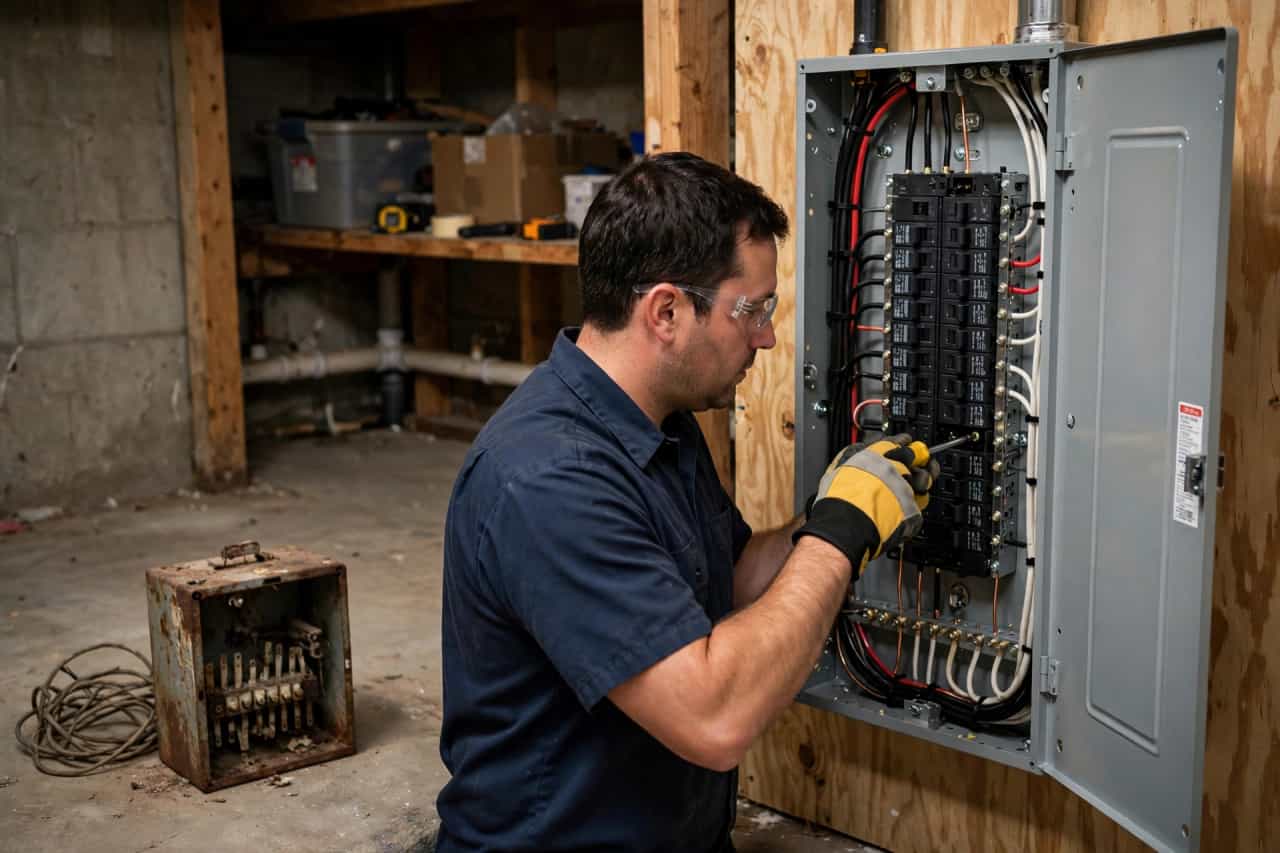
Older Newhall and Saugus homes often still run on 100-amp or smaller services that now feed central air, induction ranges and spa heaters. A load calculation shows whether the existing service can carry the new equipment or needs an upgrade.
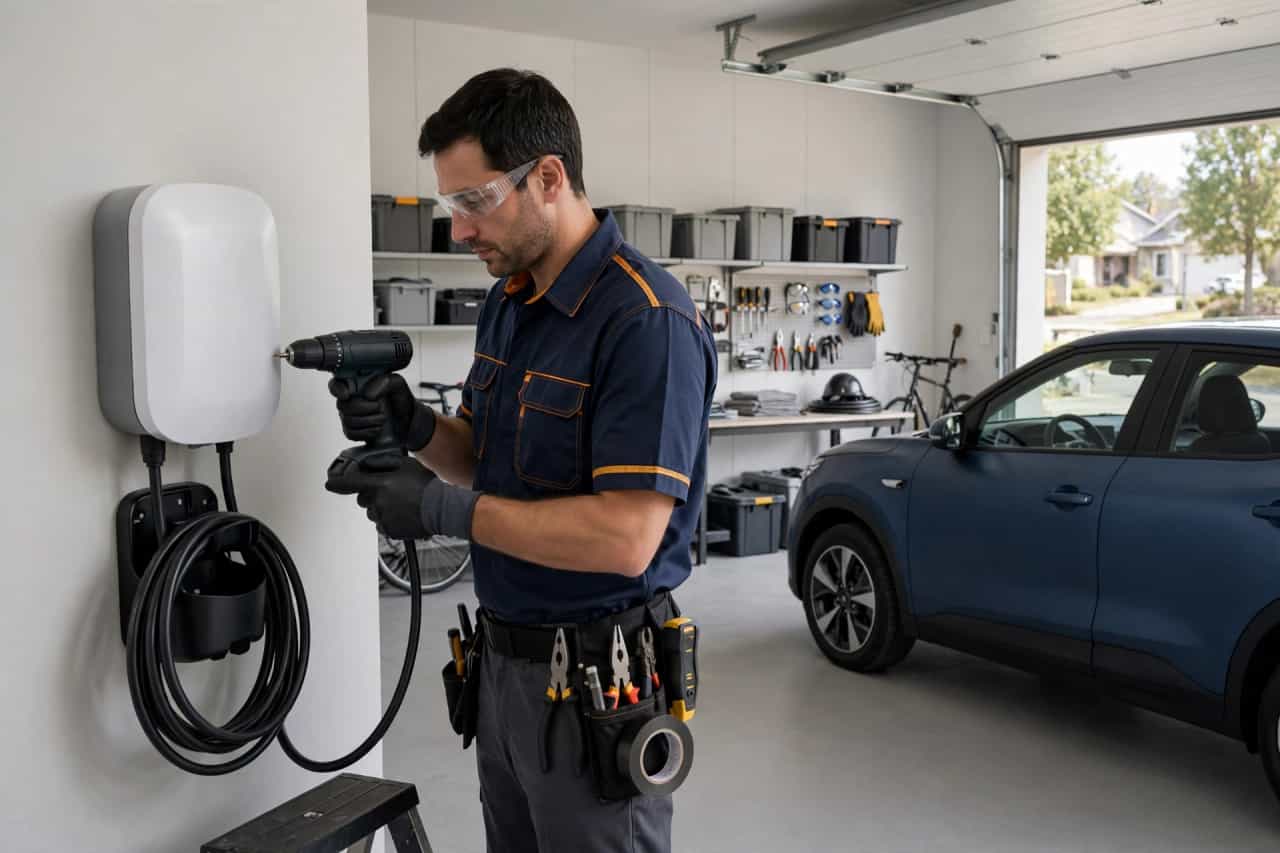
Long freeway commutes make electric vehicles popular here, and households with two of them quickly outgrow a standard outlet. A dedicated 240-volt circuit, sometimes with load management to protect the panel, is the usual fix.
History, housing, weather and rules that shape electrical work in Santa Clarita, CA.
Placerita Canyon gold, 1842
Santa Clarita claims one of California’s earliest gold discoveries. In 1842 Francisco Lopez found flakes clinging to wild onion roots in Placerita Canyon, under what is now called the Oak of the Golden Dream, six years before the famous strike at Sutter’s Mill. Placerita Canyon today is a quiet rural pocket of horse properties, where detached barns, well pumps and long driveway lighting runs are the typical electrical projects.
Pico Canyon’s 1876 oil well at Mentryville
In 1876, a well in Pico Canyon west of Newhall became one of the first commercially successful oil wells in California, and the company town of Mentryville grew around it. Oil and rail drew the first steady population into the valley. Some of the oldest wiring in town still sits in early buildings near the historic core, often extended in pieces over several decades by successive owners.
The St. Francis Dam collapse, March 1928
Shortly before midnight on March 12, 1928, the St. Francis Dam in San Francisquito Canyon failed and sent a flood down the Santa Clara River toward the sea, killing hundreds. The water destroyed Los Angeles’s Power Plant No. 2 in the canyon. City-owned hydro plants still operate there today, yet homes in Santa Clarita itself buy their electricity from Southern California Edison, not from Los Angeles.
Old Town Newhall around Main Street
Newhall is the valley’s historic center, and the blocks around Main Street and William S. Hart Park keep cottages, small bungalows and postwar ranches on modest lots. The city has invested in the Old Town Newhall arts and entertainment district, and restaurants there often need commercial kitchen circuits. At home, fuse boxes, ungrounded receptacles and cloth-insulated cable are still found in houses that have not been fully rewired.
Valencia’s first homes in 1967
The Newhall Land and Farming Company, which had long farmed and ranched the land, finished the first Valencia homes in 1967. The planned villages that followed were built around greenbelts and paseos that let residents walk under the streets. Homes from the late 1960s and 1970s often have original panels from that era, some of which are now hard to find replacement breakers for.
Paseo townhomes and association rules
Many Valencia residents live in townhomes and condominiums governed by homeowners associations. Exterior conduit, a car charger in a shared carport or a new light on a patio wall usually needs written association approval as well as a city permit. California law limits how far an association can block an EV charger, but owners still follow the approval process and arrange for the circuit to be metered to their unit.
Saugus tracts from the 1960s and 1970s
Saugus grew around the old Southern Pacific depot, and its tract neighborhoods filled in through the 1960s and 1970s with single-story and split-level homes. Those houses were wired for a lighter life: a window unit or modest central air, a gas range and few kitchen appliances. Owners adding a pool heater, an induction cooktop or a garage workshop find the service is now the limiting factor.
Mobile home parks along Soledad Canyon Road
Canyon Country holds a large share of the valley’s manufactured housing in parks off Soledad Canyon Road and Sierra Highway. Each home connects to a pedestal at its site, and the feeder, the pedestal and the connections at the home’s panel all age. Loose or corroded connections there can overheat, especially in summer heat, and the park’s management controls work on the pedestal side.
January 17, 1994, and the Newhall Pass interchange
At 4:31 a.m. on January 17, 1994, the Northridge earthquake struck with especially violent shaking in the Newhall Pass, collapsing connector ramps where the 14 meets the 5, the same interchange that had fallen in the 1971 San Fernando earthquake. Across the region, broken gas lines and toppled water heaters started fires in shifted houses. Many valley houses were repaired afterward, and some of that rushed repair work was never fully inspected.
After the next big shake
Santa Clarita sits among active faults, and residents can expect another strong earthquake eventually. After significant shaking, look for cracked stucco around the meter and panel, bent conduit or a service mast pulled from the wall. Do not open the panel or reset anything that smells hot; leave the area and call for help. Securely mounted equipment and flexible connections ride out shaking better.
The Sand Fire, July 2016
The Sand Fire started on July 22, 2016, beside the 14 Freeway near Sand Canyon Road and grew explosively in record heat, eventually burning more than 41,000 acres and destroying 18 homes. Sand Canyon and Placerita Canyon were under evacuation orders. Rebuilt homes in the canyons now follow wildfire construction rules, and owners there often pair new construction with backup power and ember-resistant exterior equipment.
The Tick Fire, October 24, 2019
On October 24, 2019, the Tick Fire started near Tick Canyon Road and raced into Canyon Country on Santa Ana winds, burning about 4,600 acres, destroying 22 buildings and damaging 27 more. Roughly 40,000 residents evacuated, the largest evacuation in the city’s history. Investigators later ruled the cause accidental and traced it to outdoor cooking, a reminder that every heat source becomes risky when the wind is up.
Edison’s Public Safety Power Shutoffs
Since SCE began using Public Safety Power Shutoffs, canyon and hillside circuits around Saugus, Canyon Country and the Bouquet Canyon area have been among those cut during red flag wind events. Edison posts address-specific alerts before a shutoff when it can. A generator that is installed with a transfer switch, or a battery system tied into a critical-loads panel, keeps essentials running while crews inspect lines before re-energizing.
Medical equipment and Edison’s Medical Baseline program
Households that rely on oxygen concentrators, home dialysis or other powered medical devices can enroll in SCE’s Medical Baseline program, which provides extra energy at a lower rate and additional outreach before planned shutoffs. Enrollment does not keep the power on, though. For those households, a backup source wired to the specific circuits that serve the medical equipment is worth planning well before fire season.
Inland summer heat in the valley
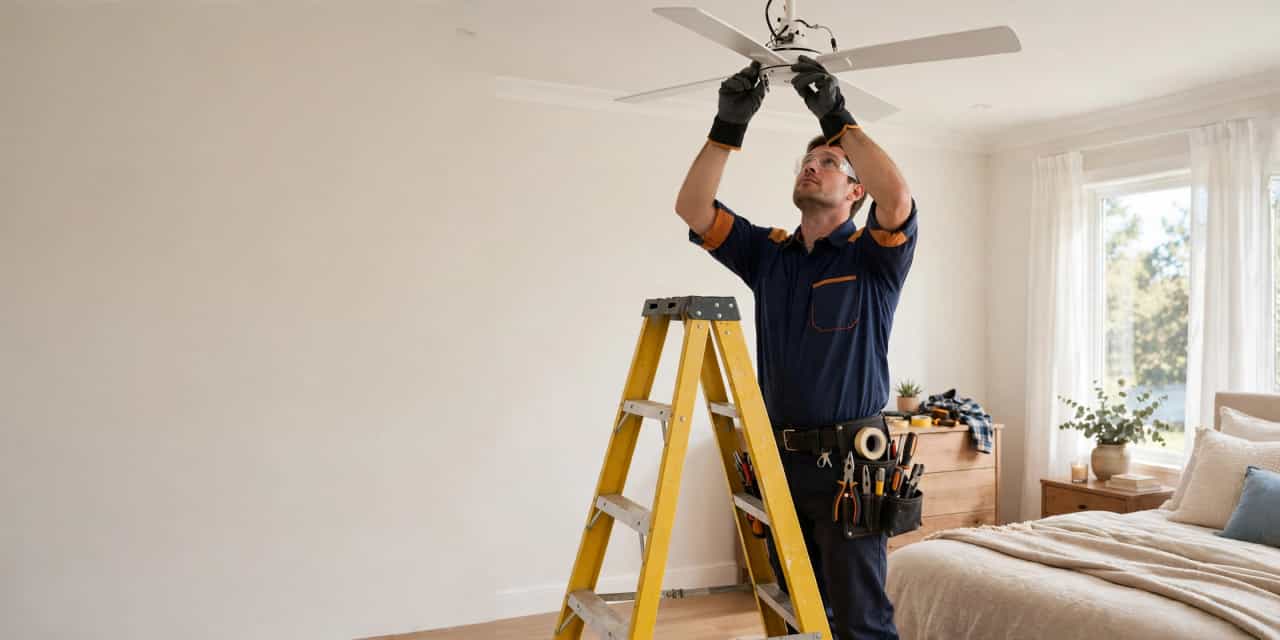
Santa Clarita is several degrees hotter than the coast in summer, and inland afternoons regularly push past 100 degrees during heat waves. Air conditioners work hard for weeks at a time, and older condensers on aging circuits are a common cause of tripped breakers and scorched disconnects. Ceiling fans in bedrooms and lofts reduce the load, and a check of connections before summer catches problems early.
Solar rules after 2020 and net billing after April 2023
California began requiring solar on most new single-family homes in 2020, so recent Santa Clarita subdivisions often arrive with panels on the roof. On April 15, 2023, the state moved new solar customers to a net billing structure that pays less for exported power, which pushed many owners toward batteries. Adding a battery or more panels can require panel upgrades and a fresh look at the busbar rating.
Fair Oaks Ranch and the newer hillside streets
Fair Oaks Ranch, off Sierra Highway in the southeast part of the city, and other hillside neighborhoods built in the 1990s and 2000s have larger homes, 200-amp services and often a spa or pool. These houses sit against open brushland, so owners think about exterior lighting that does not shower sparks, protected outdoor receptacles and backup power for the shutoffs that hit the hills first.
Instant online permits for panel upgrades
Santa Clarita’s Building & Safety Division offers instant online permits for several kinds of residential work, including a main panel upgrade and a water heater changeout. A licensed C-10 electrical contractor normally pulls the electrical permit and coordinates directly with both the city and Edison for the disconnect, inspection and reconnection. Owners mostly need to plan for a few hours without power.
Rooftop solar, storage and bigger projects
The same instant online permit list covers residential rooftop solar and energy storage systems, so a straightforward battery addition can move quickly. Bigger jobs, such as a large custom home, an accessory dwelling unit, several car chargers or major pool and spa equipment, go through the city’s online plan submittal for review before work begins, and SCE may need to upgrade its transformer or service drop as well.
Unincorporated neighbors: Castaic, Stevenson Ranch and Agua Dulce
Not every Santa Clarita Valley address is inside the city. Castaic to the north, Stevenson Ranch to the west and Agua Dulce to the east are unincorporated, so their permits go through Los Angeles County Public Works Building and Safety rather than City Hall. The electrical code is the same statewide, but the application process, fees and inspectors differ, so confirm jurisdiction before scheduling work.
Questions
Questions from Santa Clarita, CA homeowners
Is there a 24 hour emergency electrician in Santa Clarita, CA?+
Yes. Call (855) 679-2483 any time, day or night, and you are connected with an independent licensed electrician who covers Santa Clarita, including Valencia, Saugus, Newhall. For sparks, smoke or a hot panel, call 911 first.
Who handles electrical repair and generator installation in Santa Clarita?+
Licensed electrical contractors working in Los Angeles County handle outlet and switch repair, circuit troubleshooting, panel work and standby generator installation. Permits go through City of Santa Clarita Building & Safety Division (Community Development); unincorporated areas use LA County Public Works Building and Safety.
Who issues electrical permits in Santa Clarita?+
The City of Santa Clarita’s Building & Safety Division issues them for addresses inside city limits, and residential main panel upgrades can be issued as instant online permits. The licensed C-10 electrical contractor normally pulls the permit and coordinates the disconnect and reconnection with SCE. Castaic, Stevenson Ranch and Agua Dulce are unincorporated, so those addresses go to Los Angeles County Public Works Building and Safety.
Who do I call if my power goes out during a shutoff in Santa Clarita?+
Southern California Edison handles outages and Public Safety Power Shutoffs, and you can sign up for its address alerts to hear about a shutoff in advance. If your neighbors have power and you do not, or one part of the house keeps losing power, call (855) 679-2483 for a licensed electrician. If you see sparking, smell burning or notice smoke, move away, call 911, and turn off the main only when it is safe to reach.
How can I check a California electrician’s license?+
Use the Contractors State License Board’s online lookup; electrical contractors hold a C-10 classification, and the license should be active with current workers’ compensation coverage on file. Electricians working for a contractor also need state certification from the Department of Industrial Relations.
By calling, you agree to be connected with an independent electrician, who may call or text you back about your request at the number you call from. Calls may be recorded for quality and routing. Consent is not a condition of any purchase, and you can opt out at any time; message and data rates may apply. Privacy policy.
Free to call
Explain the problem in plain words
Connect with an independent licensed electrician near you
Smoke, flames or sparking? Leave the building and call 911 first.
Pronto Electrician is a free referral service. The electricians you are connected with are independent contractors, not employees or agents of Pronto Electrician. Pronto Electrician does not perform electrical work, and the electrician you choose sets the price, schedule, permits and warranty.
By calling, you agree to be connected with an independent electrician, who may call or text you back about your request at the number you call from. Calls may be recorded for quality and routing. Consent is not a condition of any purchase, and you can opt out at any time; message and data rates may apply. Privacy policy.