Colorado guide
Electrical Panel Upgrade in Colorado: what to know
Licensing for Colorado panel work
Colorado licenses master, journeyman and residential wiremen electricians and registers electrical contractors through the State Electrical Board, part of the Department of Regulatory Agencies. A panel change is service work that must be performed by a registered contractor using licensed electricians. Before work begins, look up the contractor and the electrician on DORA’s online license verification, which shows whether the registration is active.
Who issues the permit in Colorado
Denver, Colorado Springs, Aurora, Fort Collins, Boulder, Lakewood and most other larger cities and many counties run their own electrical permit and inspection programs. Where a town or county does not, the State Electrical Board issues permits and sends state inspectors. Either way, the permit is required before the utility will reconnect a replaced service, and the inspector checks grounding, bonding, breaker types and working clearances.
Xcel Energy and other Colorado utilities
Xcel Energy serves the Denver metro area, much of the Front Range and parts of the Western Slope. Black Hills Energy serves Pueblo and parts of southern Colorado, Colorado Springs Utilities serves its city, and Fort Collins, Longmont, Loveland and other towns run municipal utilities. Rural customers are often served by cooperatives such as United Power, Poudre Valley REA, Intermountain REA and Holy Cross Energy. Each sets its own meter and service requirements, and increasing service size needs the utility’s approval.
Electrification in Colorado homes
State and utility programs have encouraged cold-climate heat pumps, heat pump water heaters and EV charging. Those loads can push a 100-amp service to its limit, especially in homes that also have an electric dryer and range. A load calculation shows whether the home needs 200 amps or whether load management can keep it within the existing service. Utility and state incentives for electrification change often, so check current programs before buying equipment.
Hail and wind damage to service equipment
The Front Range has some of the most frequent damaging hail in the country. Hail can crack meter covers and weatherheads, and spring and chinook winds bring down branches onto service drops. After storms, look for a leaning mast, torn insulation on the service drop or a damaged meter socket. Repairs to the owner’s side of the service need a licensed electrician before the utility restores a damaged connection.
Wildfire risk and backup power
Wildfires such as the 2021 Marshall Fire in Boulder County showed how quickly suburban neighborhoods can be affected. Utilities may de-energize lines during extreme fire weather in high-risk areas. Mountain and foothill homeowners often add a generator inlet and interlock, a standby generator or a battery system when upgrading a panel, so backup power can be connected safely.
Snow load and winter work
Heavy snow can bend service masts on older homes and bury meter sockets in drifts. Winter panel upgrades are common, but the electrician plans for the house being without heat during the outage. Homes with electric or heat pump heating need a short, well-scheduled shutdown, and pipes in unheated spaces should be protected.
Colorado housing eras and their panels
Post-war bungalows in Denver and older homes in Pueblo and mining towns may have fuse boxes or 60-amp services. Suburban homes from the 1970s and 1980s often have 100 or 150-amp services and panels that are now full. Some contain brands inspectors flag, such as Federal Pacific or Zinsco. Newer homes along the I-25 corridor usually have 200-amp services but may still need space for new circuits.
High altitude and equipment ratings
Electrical equipment and generators are affected by altitude. Generators lose output as elevation rises, so a backup system sized for sea level may fall short in mountain towns. The electrician considers derating when sizing generators connected to a new panel.
Signs a Colorado panel needs an upgrade
Common reasons include no open breaker spaces, planned heat pumps or EV chargers, a hot tub addition, an old or flagged panel brand, breakers that trip during cold snaps when space heaters run, and corrosion or water inside the panel from snowmelt. Burning smells or scorch marks need immediate attention.
What the upgrade day involves
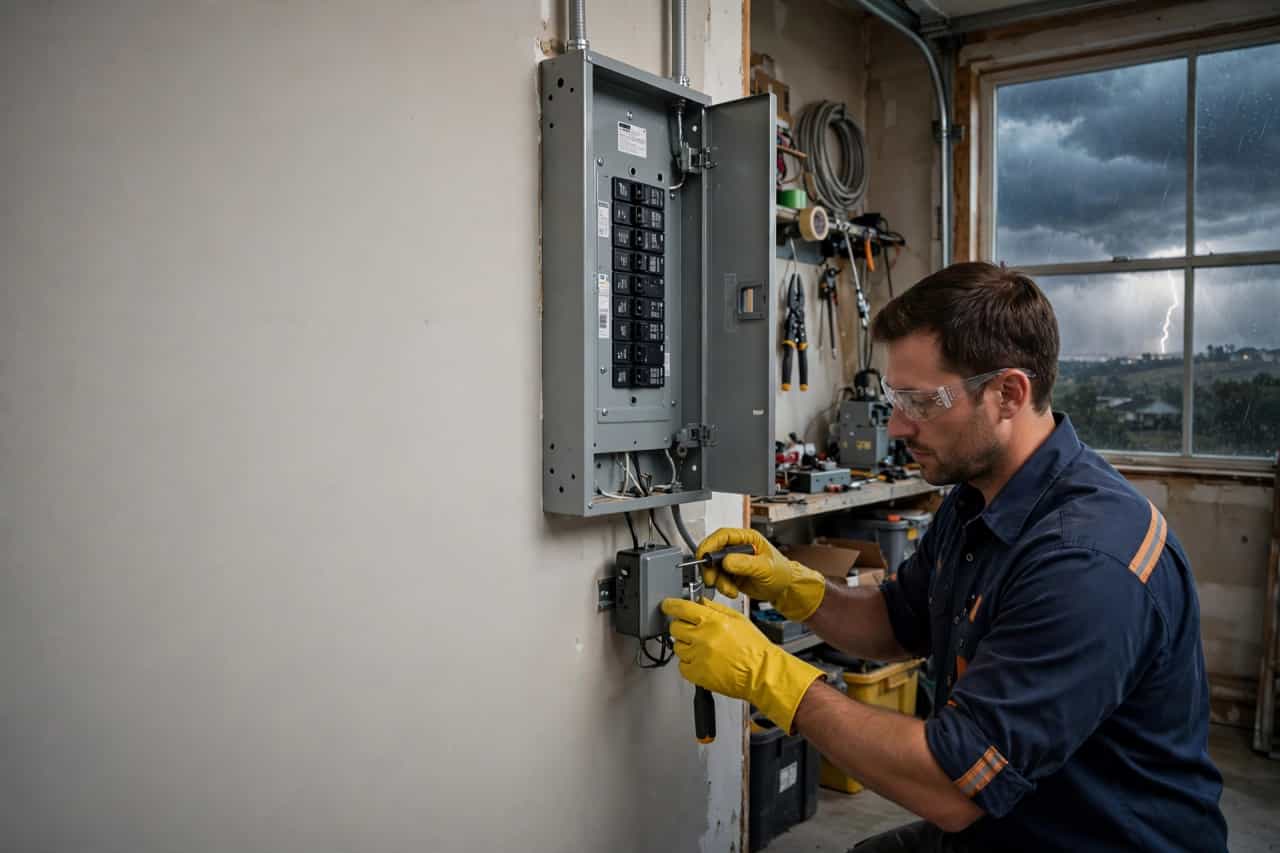
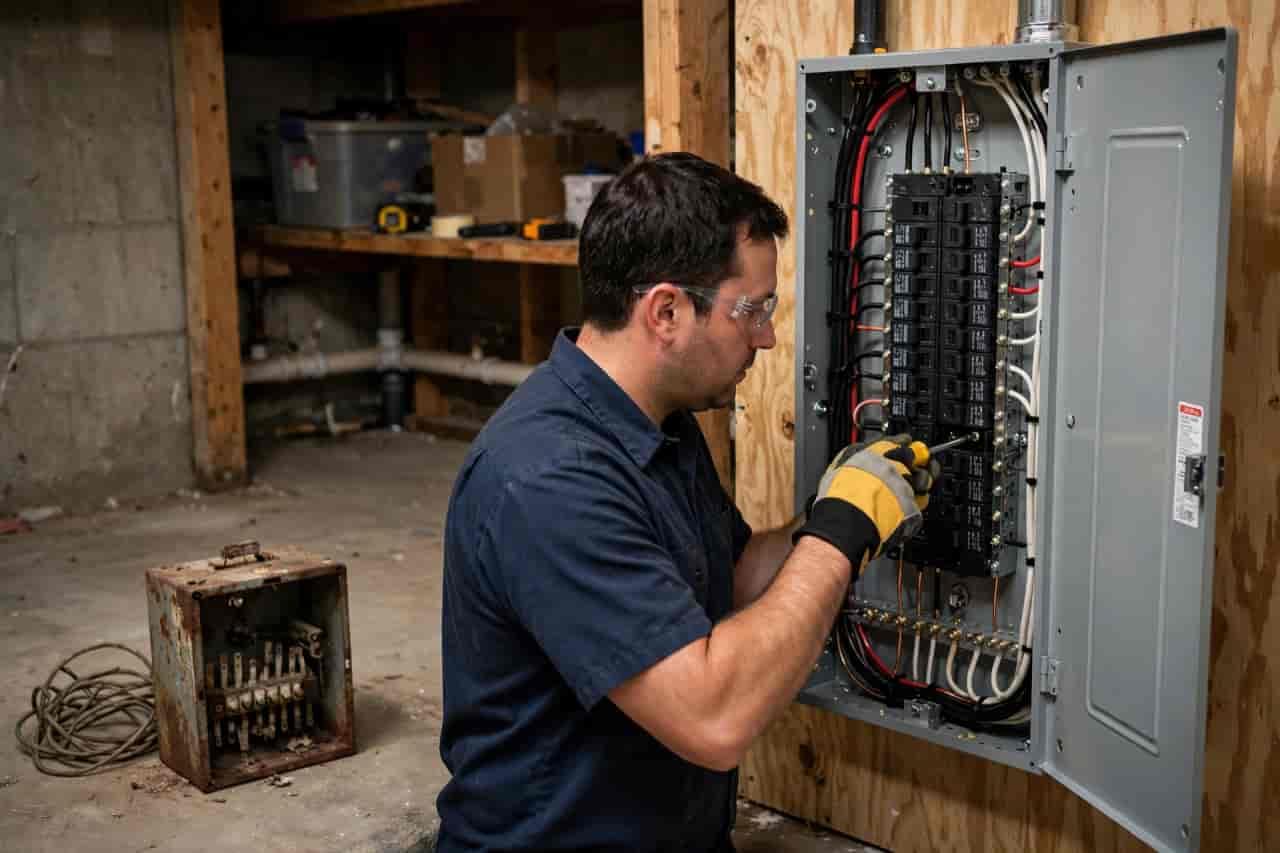
The utility disconnects power, the electrician replaces the panel and meter socket if the service size changes, updates grounding, labels circuits and adds required AFCI and GFCI protection. After inspection, power is restored. Most upgrades take most of a day without power.
Basements, hot tubs and garages
Finished basements, hot tubs and detached garages are common Colorado projects. Hot tubs need a dedicated GFCI-protected circuit and disconnect; detached garages often get a subpanel. Planning these during a panel upgrade avoids reopening the panel later.
Safety before the electrician arrives
If the panel is hot, buzzing or smells burnt, switch off the main breaker if it is safe to reach and keep people away. If a storm has damaged the meter or service drop, stay clear and call the utility.
Radon fans, heat tape and other Colorado circuits
Many Colorado homes have radon mitigation fans running around the clock, heat tape on roofs and pipes to fight ice dams and freezing, and engine block heater outlets in garages. None of these are large loads alone, but together with space heaters during cold snaps they fill older panels. A panel upgrade is a chance to give each its own labeled circuit with the GFCI protection heat tape and outdoor outlets require.
Solar on Colorado rooftops
Abundant sunshine has made rooftop solar common along the Front Range. Solar inverters connect through the panel, and the busbar rating limits how much backfed current is allowed. Homeowners planning solar or batteries should mention it before a panel upgrade, so the new panel has a busbar large enough or the electrician plans a supply-side connection.
Choosing a Colorado panel contractor
Confirm the contractor’s registration and the electrician’s license on DORA, ask for a written scope with the panel brand, service size, grounding and meter work, and confirm the permit will be pulled under the contractor’s registration. Ask whether surge protection is included, since current code requires it for new dwelling services.
Licensing, permit and code requirements are set by Colorado and local authorities and can change. The electrician confirms what applies to your project. How electrical panel upgrade works · Electricians in Colorado