Arkansas guide
Electrical Panel Upgrade in Arkansas: what to know
Who may replace a panel in Arkansas
Arkansas licenses master and journeyman electricians and electrical contractors through the Board of Electrical Examiners, which sits within the Arkansas Department of Labor and Licensing. A panel change involves the service equipment that every circuit in the house depends on, so it belongs with a licensed contractor rather than a general handyman. Ask for the contractor’s license number and check it on the state’s online license lookup before agreeing to a date. The license holder is also the person who normally takes out the permit and meets the inspector.
Permits and inspections across Arkansas
Larger cities such as Little Rock, Fort Smith, Fayetteville, Springdale, Rogers, Jonesboro and Conway run their own building or electrical inspection offices, and a panel replacement there needs a city permit. In many unincorporated and rural areas, electrical inspections are handled through the state rather than a city office. Either way, the inspector looks at grounding, bonding, conductor sizing, breaker types and working clearance in front of the panel before the utility is cleared to restore full service.
Entergy Arkansas, SWEPCO and OG&E service changes
Entergy Arkansas serves much of the central, eastern and southern state, Southwestern Electric Power Company serves parts of the northwest and southwest, and Oklahoma Gas and Electric serves the Fort Smith area. Each publishes its own service requirements covering meter socket types, mast heights and who may break a meter seal. Raising a home from 100 to 200 amps usually requires an application with the utility, and their scheduling for disconnect and reconnect often sets the date of the job.
Electric cooperatives in rural Arkansas
A large share of rural Arkansas is served by member-owned electric cooperatives such as Carroll Electric, Ozarks Electric, First Electric, Petit Jean Electric and others. Cooperatives have their own member service rules and may need to upsize a transformer or service drop when a farmhouse or shop moves to a larger service. On long rural runs, the electrician and cooperative together decide whether the meter stays on a pole with a feeder to the house or moves onto the dwelling.
Tornado country and storm-damaged service equipment
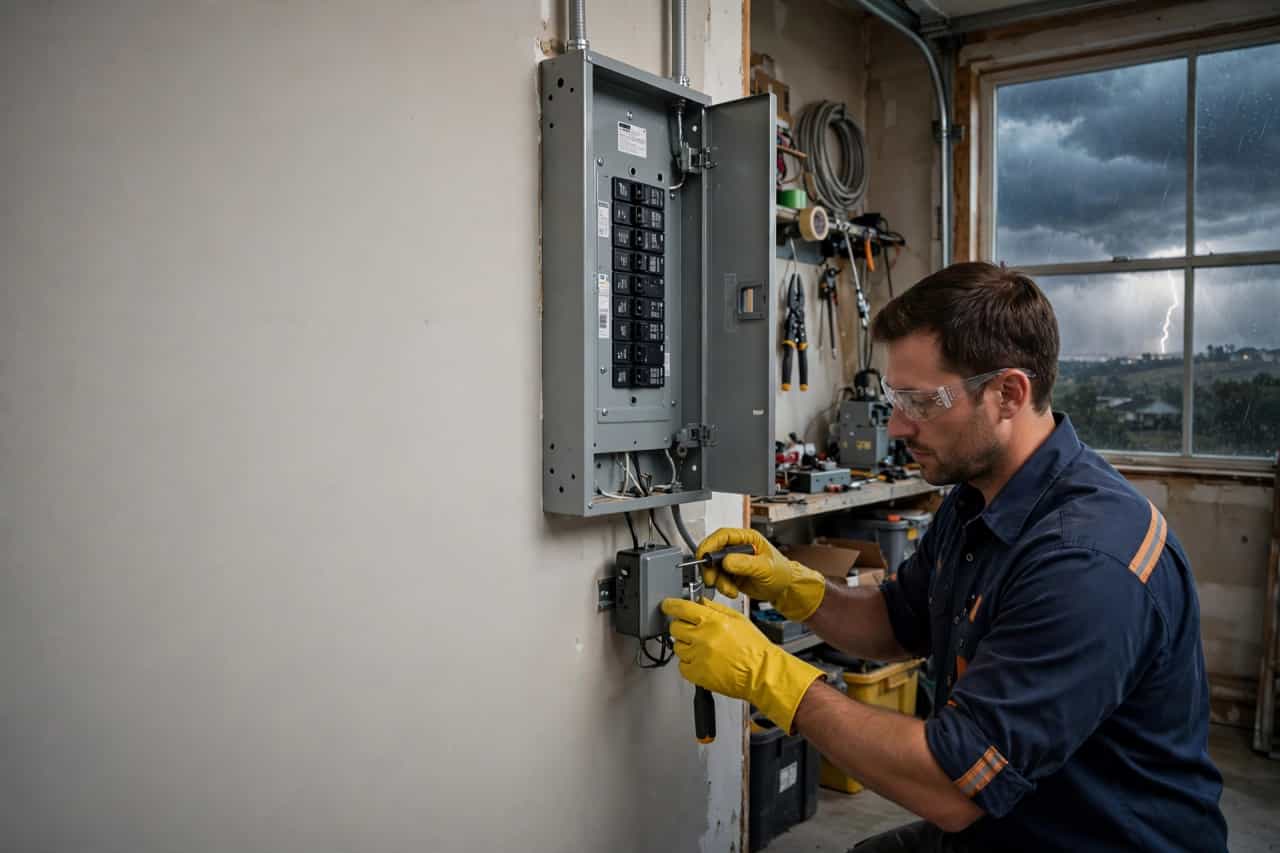
Arkansas sits on the edge of the most active tornado region in the country and sees severe spring storms most years. High winds and falling limbs tear service drops off houses, bend masts and crack meter sockets. When that happens, the utility restores its line only after the homeowner’s side is repaired and, in many jurisdictions, inspected. Storm repairs are often the moment owners of older panels decide to upgrade rather than patch the old equipment.
Ice storms and long outages
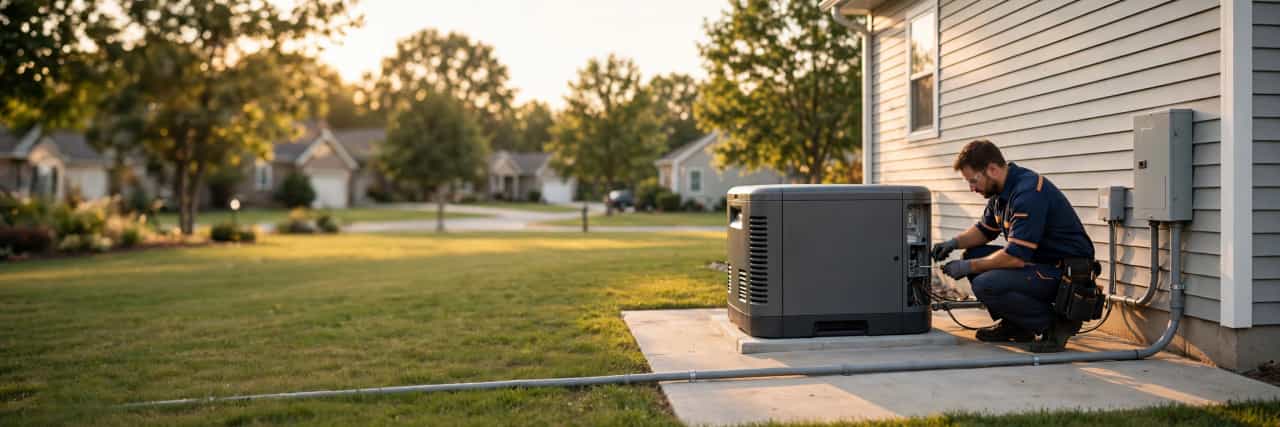
Ice storms in northern and central Arkansas can leave neighborhoods without power for days. Homeowners who have lived through one often want a generator inlet and interlock or a transfer switch added during a panel upgrade. Planning that at the same time is cheaper than reopening the panel later, and the new panel can be chosen with a listed interlock kit in mind.
Housing eras and the panels they left
Arkansas has many ranch homes from the 1950s through the 1970s with 60 or 100-amp services, and older homes in Little Rock, Hot Springs and Eureka Springs with fuse boxes or early breaker panels. Some of those homes have panels that inspectors and insurers flag, such as Federal Pacific Stab-Lok or Zinsco equipment. Newer subdivisions in Benton and Washington counties usually have 200-amp services but may be adding loads quickly.
Cooling loads in Arkansas summers
Long, humid summers make air conditioning the biggest electrical load in most Arkansas homes. Replacing an old central air unit with a larger one or adding a mini-split for a converted garage can push a 100-amp service to its limit. A proper load calculation includes the cooling equipment’s minimum circuit ampacity from its nameplate, not just a rough guess, so the panel and service are sized correctly.
Signs an Arkansas panel needs attention
Lights that dim when the air conditioner starts, a main breaker that trips on hot afternoons, breakers that feel warm, rust streaks inside the panel from a leaking mast, and a panel with no spaces left are the usual reasons homeowners call. Scorch marks or a burning smell at the panel need a call the same day, with the main breaker switched off if it is safe to reach.
Repair or replace
A single failed breaker in a sound, current panel is a repair. Replacement makes more sense when the panel brand is no longer supported, the bus bars show heat damage, corrosion has reached the interior, or the service is too small for the home’s loads. The electrician should explain which of these applies and show photos of what they found.
What the day of the upgrade looks like
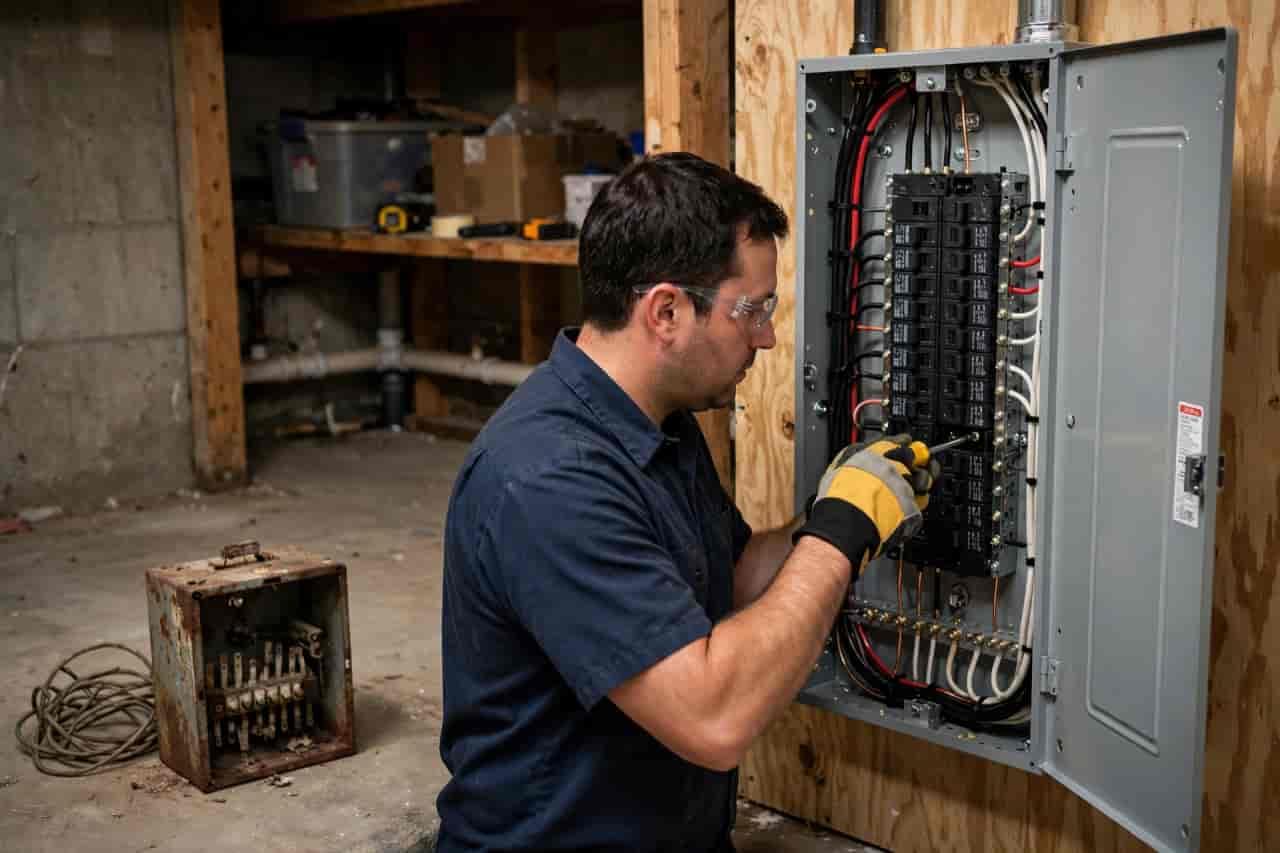
On the day, the utility or cooperative disconnects power, the electrician removes the old panel, mounts the new one, transfers and labels each circuit, updates the grounding electrode system and installs a new meter socket if the service size is changing. After inspection, the utility reconnects. Most homes are without power for much of a working day, so refrigerators should stay closed and anyone relying on medical equipment needs a backup plan.
Insurance and home sales in Arkansas
Insurers writing policies on older Arkansas homes increasingly ask about the panel brand and age. Home inspectors routinely flag fuse boxes, double-tapped breakers and panels with known reliability concerns, which can stall a sale. A permitted replacement with a passed inspection gives sellers and buyers documentation that settles the question.
Adding EV chargers and shop circuits
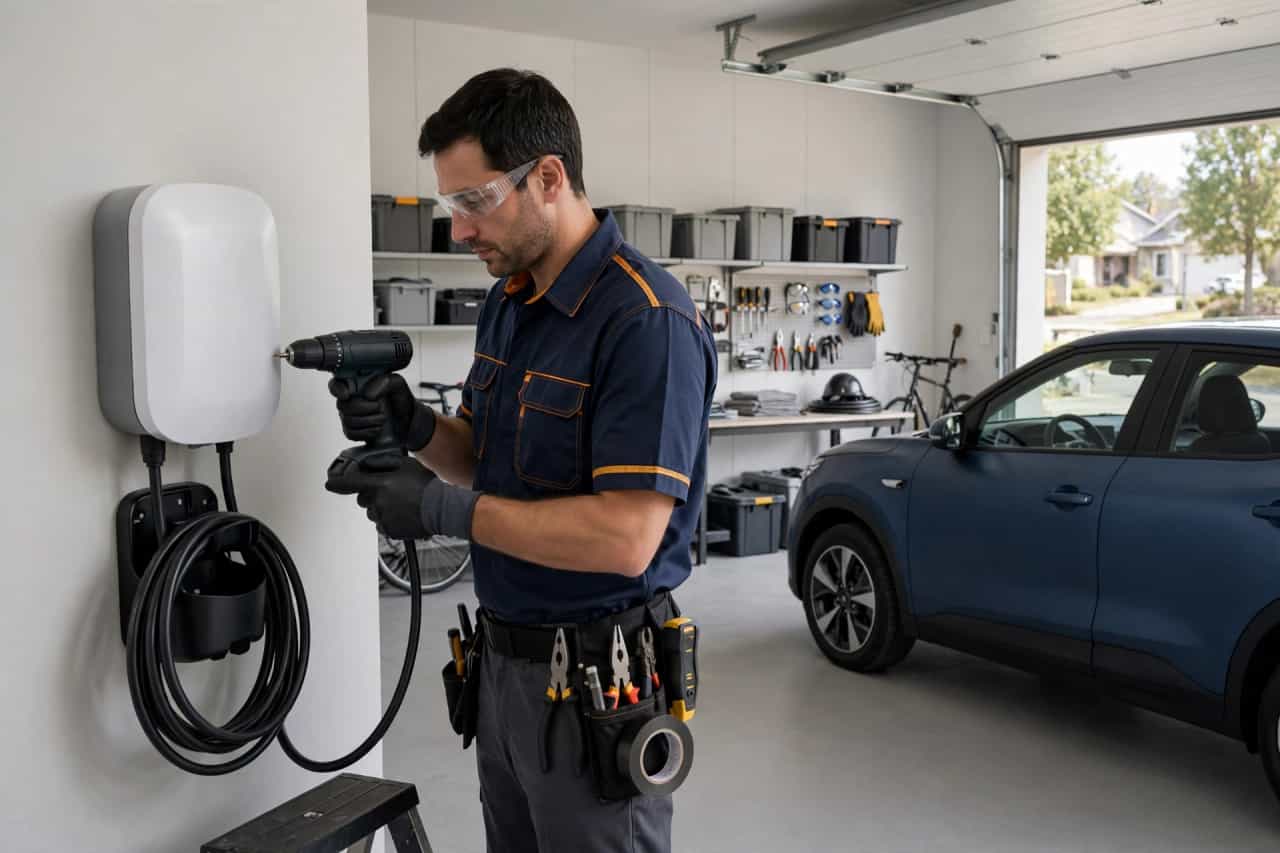
Growth in northwest Arkansas has brought more electric vehicles, and rural owners often want a shop or barn subpanel for welders and compressors. Both are easier with a 200-amp service and spare breaker spaces. The electrician can plan a subpanel feeder or an EV circuit as part of the panel project rather than squeezing it in later.
Staying safe before the electrician arrives
If the panel is hot, buzzing or smells burnt, keep people away and switch off the main breaker only if the area is dry and you can do it without touching damaged parts. Do not remove the panel cover. If the meter or mast was torn by a storm, stay clear and call the utility’s outage line, because the service drop may still be energized.
Choosing an Arkansas panel contractor
Look for a state-licensed electrical contractor who will pull the permit, coordinate with your utility or cooperative, explain the load calculation and give a written scope listing the panel brand, service size, grounding work and any meter base replacement. Ask how they handle patching around the panel and whether surge protection is included.
Licensing, permit and code requirements are set by Arkansas and local authorities and can change. The electrician confirms what applies to your project. How electrical panel upgrade works · Electricians in Arkansas