Alabama guide
Electrical Panel Upgrade in Alabama: what to know
Who may do panel upgrades in Alabama
Alabama licenses electrical contractors and journeyman electricians at the state level through the Alabama Electrical Contractors Board, so a panel replacement is not a job for an unlicensed handyman. The licensed contractor is usually the party that applies for the permit, and the inspector will expect that license number on the paperwork. Before anyone schedules a shutdown, ask for the contractor’s state license number and look it up on the board’s public search. A homeowner who hires an unlicensed installer can end up with a failed inspection, a utility that refuses to reconnect, and an insurance question after a loss.
How Alabama cities and counties handle electrical permits
Permitting for a service change happens locally. Birmingham, Huntsville, Montgomery, Mobile, Tuscaloosa and many smaller towns run their own building or inspection departments, while some unincorporated areas have limited or county-level review. Each jurisdiction chooses which edition of the National Electrical Code it enforces and may add local amendments, which is why requirements for grounding, surge protection or arc-fault breakers can differ between neighboring towns. A local electrician already knows which office reviews the job, what the rough and final inspections look like, and how much lead time the department needs.
Alabama Power’s role in disconnecting and reconnecting service
Across central and southern Alabama, Alabama Power delivers electricity to most homes, and a panel upgrade that changes the meter base or service entrance requires the utility to cut power at the meter or the pole, then reconnect after the work passes inspection. Your electrician typically coordinates that release with the utility and the inspection office. If the upgrade raises the service size, the utility may need to verify that its drop or transformer can carry the added load. Ask your contractor how scheduling works for your address so the house is not left dark longer than necessary.
TVA distributors and cooperatives in north and rural Alabama
North Alabama is served largely by local distributors of Tennessee Valley Authority power, such as Huntsville Utilities and municipal systems in the Shoals and Decatur area, while rural electric cooperatives serve much of the countryside statewide. Each of these providers has its own service rules, meter base specifications and reconnection process. A contractor working in Madison County follows different utility paperwork than one working in Baldwin County or the Wiregrass. When you call, mention who sends your power bill so the electrician can plan around the right utility from the start.
Tornado and storm damage driving Alabama panel replacements
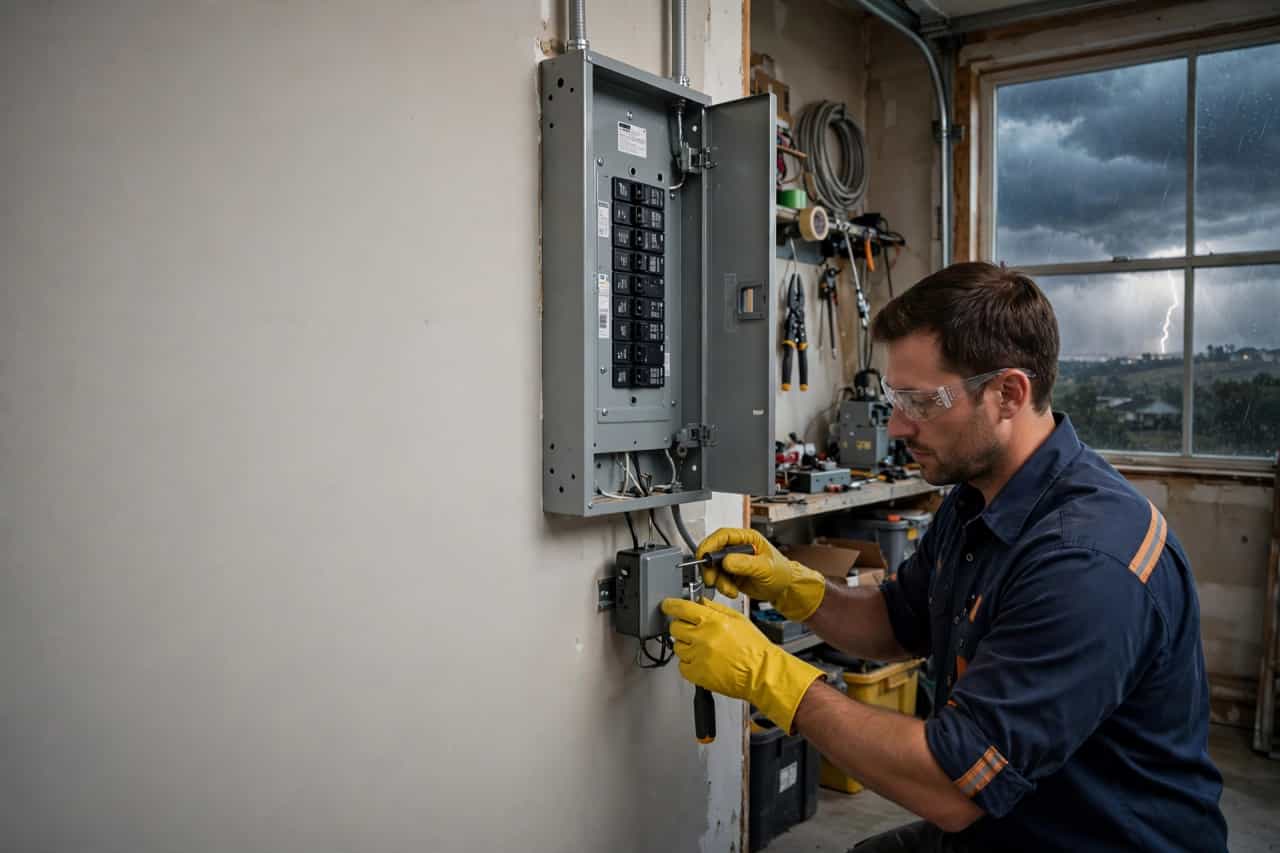
Alabama sees frequent severe storms and tornadoes, particularly in spring and again in late fall. Wind damage can tear a service mast off the wall, pull the drop loose, crack a meter base or let water into the panel. Lightning strikes and utility surges can also scorch breakers and bus bars. After a storm, a damaged service entrance usually has to be repaired to current code before the utility will restore power, and that repair often becomes a full panel upgrade. Stay away from downed lines, and do not touch a meter or panel that has been knocked loose or soaked.
Gulf Coast humidity and hurricane exposure in Mobile and Baldwin County
Along the coast, salt air and constant humidity corrode exterior meter bases, lugs and breaker connections faster than inland. Hurricanes and tropical storms bring wind-driven rain and storm surge that can flood garages and lower floors where panels are often mounted. A panel that has been underwater should be evaluated and generally replaced rather than dried out and reused. Coastal electricians frequently recommend relocating equipment above expected flood levels where the local code and layout allow, and using enclosures and fittings suited to a corrosive environment.
Alabama housing eras and the panels they left behind
Alabama’s housing ranges from early twentieth-century mill villages and Birmingham bungalows to postwar ranch homes and fast-growing subdivisions around Huntsville, Auburn and the Eastern Shore. Older homes often still have 60- or 100-amp service, fuse boxes, or panels from manufacturers that inspectors and insurers now treat with caution. Mid-century houses added air conditioning, electric water heaters and appliances one circuit at a time, leaving crowded panels with doubled-up breakers. Newer homes generally have adequate capacity but may need work when owners add an EV charger, a pool or a detached shop.
Air conditioning and heat pump loads in Alabama summers
Long, humid Alabama summers mean central air runs for months, and many homes heat with electric heat pumps in winter as well. Upgrading to a larger heat pump or adding a mini-split for a bonus room can push an older 100-amp service past what a load calculation allows. Electric resistance backup heat strips add significant demand on cold mornings. When an HVAC contractor says the panel cannot take another circuit, an electrician can run a load calculation to decide whether a panel upgrade, a service increase, or simply a reorganized panel is the right answer.
Warning signs Alabama homeowners notice before an upgrade
Common reasons people call include breakers that trip when the AC and dryer run together, lights that dim when large appliances start, a panel cover that feels warm, buzzing or crackling from the panel, rust streaks inside the enclosure, and fuses that blow regularly. Home inspectors in Alabama real estate transactions often flag outdated or recalled panel brands, missing breaker labels, and double-tapped breakers, which can delay a closing. Any of these symptoms deserves a professional look. Scorch marks, a burning smell or a hot panel should be treated as urgent rather than something to watch.
Repairing versus replacing an Alabama load center
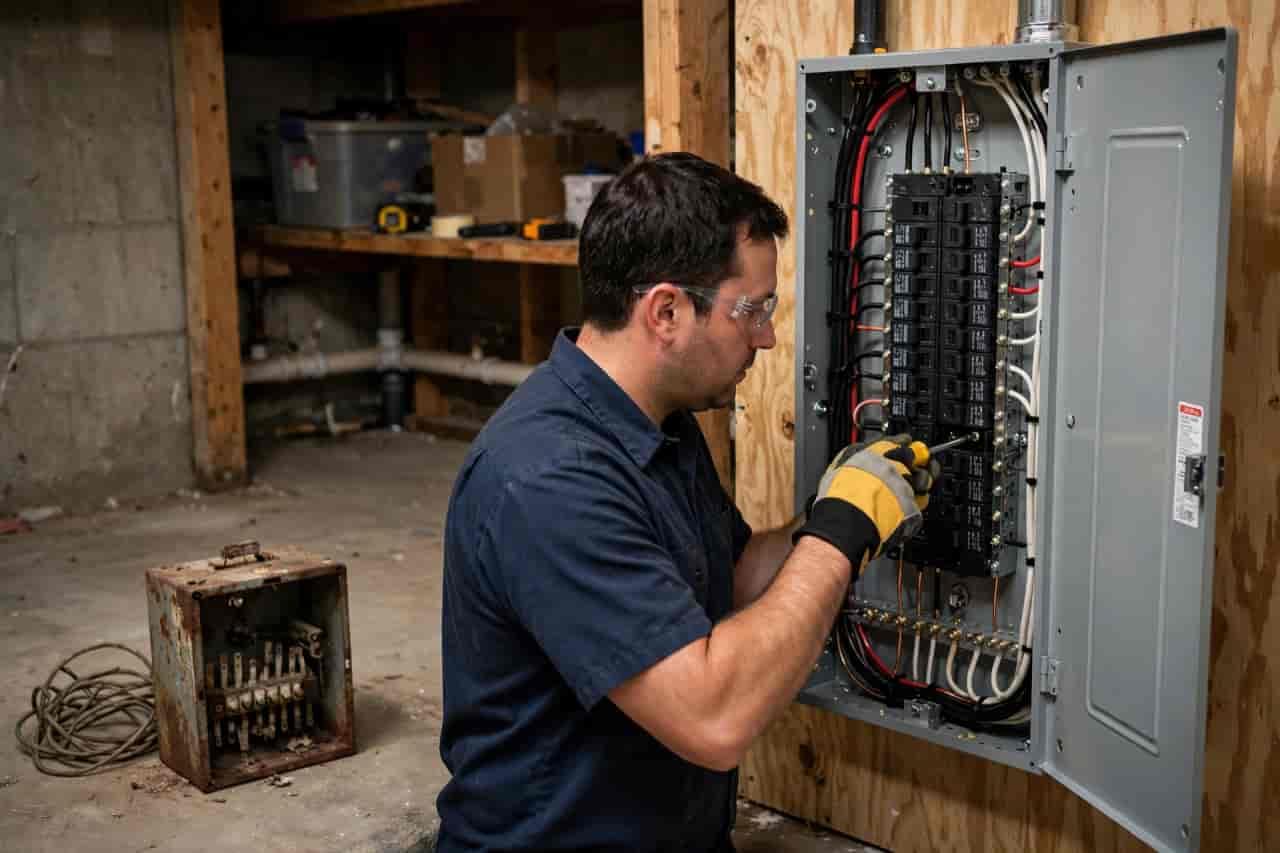
Not every panel problem requires a complete replacement. A single failed breaker, a loose neutral or a corroded lug can sometimes be repaired if the panel itself is sound, still manufactured and has room. Replacement makes more sense when the bus bars are damaged, the brand has a poor safety history, parts are no longer available, the enclosure is rusted through, or the household simply needs more capacity than the service can provide. A licensed electrician should explain which category your panel falls into and why, so you can weigh the cost of a repair against a longer-term fix.
What a typical panel upgrade day looks like in Alabama
On the day of the work, the electrician confirms the utility disconnect, removes the old panel, and installs the new enclosure, breakers and any new meter base or service entrance cable required. Grounding and bonding are brought up to the standard the local inspector enforces, which may mean new ground rods or bonding to water and gas piping. Circuits are relabeled as they are landed in the new panel. The inspector visits, and once the work is approved the utility restores service. Plan on the home being without power for much of the day.
Insurance and real estate pressure on older Alabama panels
Some homeowners first hear about their panel when an insurance carrier or a buyer’s inspector raises it. Insurers may ask about fuse boxes, certain older panel brands or aluminum branch wiring before writing or renewing a policy. In a sale, a buyer may request a credit or a replacement before closing. If you are facing a deadline, tell the electrician when you call so the permit and utility coordination can be scheduled realistically. Keep the permit and final inspection paperwork, since an insurer or future buyer may ask for proof the work was done properly.
Adding generators and EV chargers to Alabama services
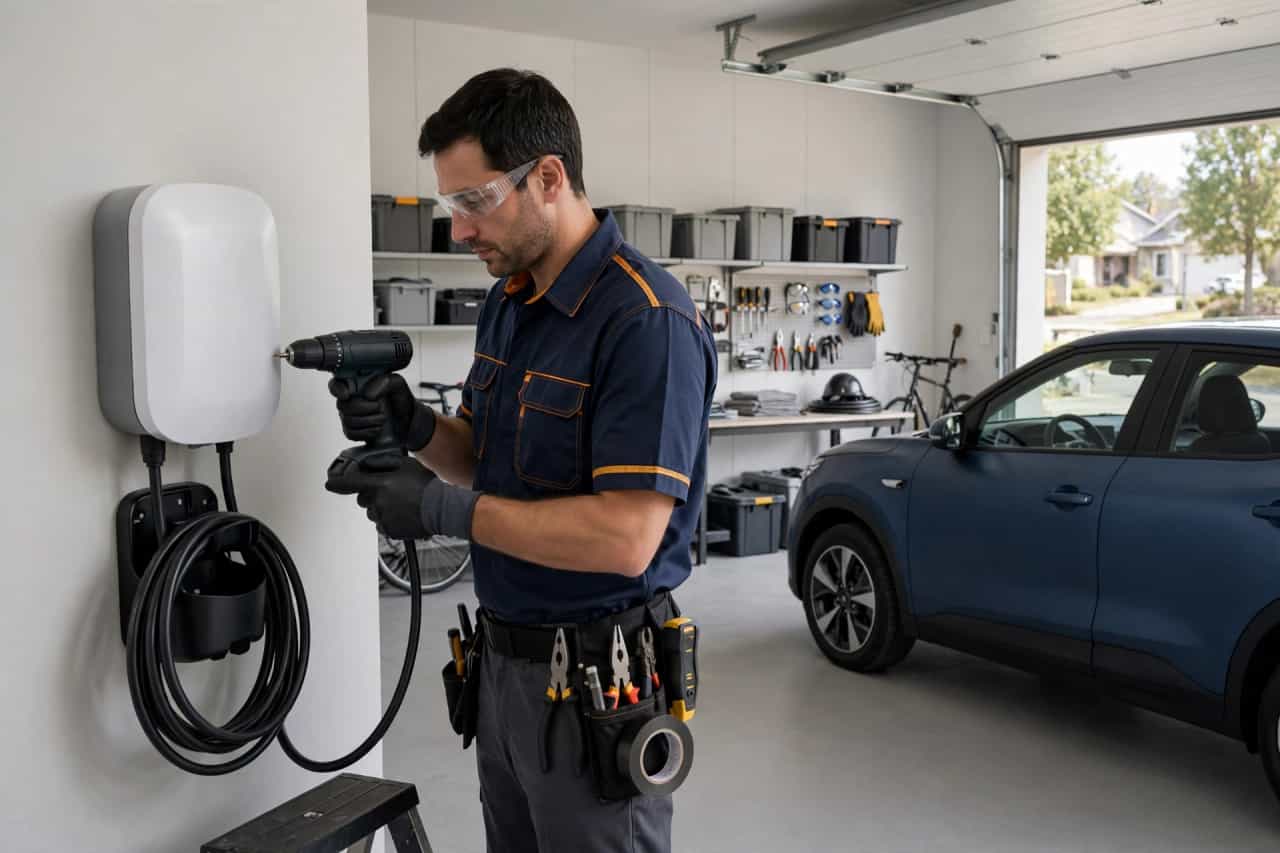
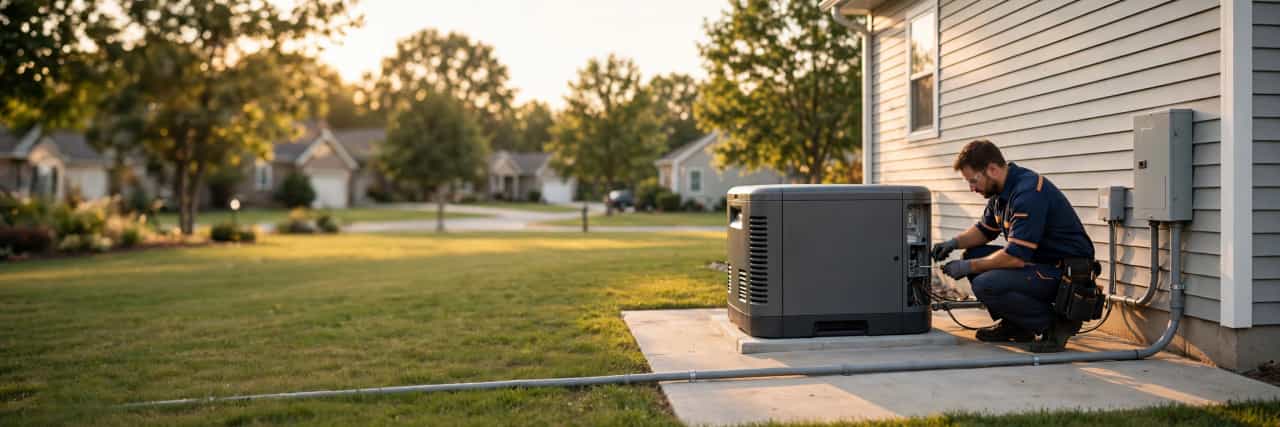
Because storms cause extended outages in parts of Alabama, many owners pair a panel upgrade with provisions for a standby or portable generator. A properly installed transfer switch or interlock prevents backfeeding the utility lines, which can endanger line workers restoring power. Electric vehicle chargers are another common reason to upgrade, especially in the Huntsville and Birmingham suburbs. Planning both at the time of the panel change avoids paying for a second permit and shutdown later, and lets the electrician size the new panel with spare spaces for future circuits.
Safety around Alabama panels before the electrician arrives
If you see smoke, flames, sparking or arcing, or smell burning plastic near the panel, keep everyone away and call 911. If the panel is hot, buzzing loudly or wet, do not touch it. Switch off the main breaker only if you can reach it safely without standing in water or touching damaged equipment, then call an electrician. Never remove the panel cover or try to tighten connections yourself; the service conductors entering the panel stay energized even with the main breaker off, and only the utility can de-energize them.
Rural Alabama properties, shops and long service runs
Outside the metro areas, many Alabama homes sit on acreage with barns, workshops, well pumps and mobile homes fed from a single meter pole. Upgrading these properties can involve a new service at the pole, feeders to multiple buildings, and grounding at each structure. Long runs may need larger conductors to limit voltage drop. Cooperative utilities often have specific requirements for meter poles and disconnects. An electrician familiar with rural work will look at the whole property rather than only the panel inside the house.
Choosing a licensed panel contractor in Alabama
When you speak with an electrician, confirm the Alabama Electrical Contractors Board license, ask who will pull the permit, and ask whether the price includes utility coordination, grounding updates, surge protection and patching around the panel. Ask how they handle surprises such as damaged service cable or aluminum wiring. A written scope helps you compare options fairly. Pronto Electrician does not perform work itself; calling (855) 679-2483 connects you with independent licensed electricians who can answer these questions for your address.
Planning ahead in growing Alabama metro areas
Huntsville, Madison, the Birmingham suburbs and Baldwin County have seen steady construction, and busy seasons can stretch inspection and utility scheduling. Spring storm season and the peak of summer cooling demand are when panel problems surface most often. If your panel is aging but working, planning the upgrade during a milder month gives you more flexibility and avoids being without air conditioning in July. Call early, describe what you plan to add over the next several years, and let the electrician size the service with that in mind.
Licensing, permit and code requirements are set by Alabama and local authorities and can change. The electrician confirms what applies to your project. How electrical panel upgrade works · Electricians in Alabama