Arizona guide
Electrical Panel Upgrade in Arizona: what to know
Arizona Registrar of Contractors licensing for panel work
Arizona does not issue a statewide license to individual journeyman electricians. Instead, the business performing the work must hold an appropriate contractor license from the Arizona Registrar of Contractors, commonly called the ROC. For a panel upgrade, look for a licensed electrical contractor and verify the license number on the ROC website, where you can also see its classification and any complaint history. Hiring an unlicensed contractor in Arizona limits your options if something goes wrong and can cause problems with permits and inspections.
Phoenix, Tucson and county permit offices
Electrical permits in Arizona are issued locally. Phoenix, Mesa, Chandler, Scottsdale, Gilbert, Glendale, Tucson and other cities each run their own development services departments, and Maricopa and Pima counties handle unincorporated areas. Each jurisdiction adopts its own edition of the National Electrical Code with local amendments, so rules can vary across the Valley. A panel change or service upgrade generally needs a permit and inspection before the utility will restore service. Your contractor will know the process for your address and the typical wait for inspection.
APS, SRP and TEP service requirements
Arizona Public Service serves much of the state, including parts of the Phoenix area and many rural and northern communities. Salt River Project serves a large portion of metro Phoenix, and Tucson Electric Power serves the Tucson area. Each utility sets requirements for meter sections, service entrance equipment and clearances, and each must disconnect and reconnect service when a panel or meter base is replaced. Many Arizona homes have combination meter-main panels on the exterior wall, so a panel upgrade often means replacing the whole meter and main assembly in coordination with the utility.
Solar interconnection and Arizona panel capacity
Rooftop solar is common in Arizona, and adding it is one of the most frequent reasons for a panel upgrade. Connecting a system through a breaker in the main panel is limited by the panel’s busbar rating, and many older panels cannot accept the solar breaker without an upgrade or a different connection method. APS, SRP and TEP each have their own interconnection application and approval steps. When a solar installer says the main panel must be upgraded, ask a licensed electrician to explain the options, which may include a main breaker derate, a supply-side connection, or a new panel.
Desert heat and the load on Arizona electrical services
Phoenix-area summers bring long stretches of extreme heat, and air conditioning often runs nearly around the clock. Many homes have two AC units, plus pool pumps, electric dryers and ranges. That sustained demand stresses breakers and connections far more than short peaks. Panels mounted on west- or south-facing exterior walls also sit in direct sun, raising their internal temperature. A breaker that trips repeatedly on a hot afternoon, or a main breaker that feels hot, is a sign the service needs evaluation by a licensed electrician.
Monsoon storms, dust and lightning across Arizona
Summer monsoon season brings strong winds, dust storms, sudden heavy rain and frequent lightning. Wind can damage overhead service drops and masts, and lightning or utility surges can damage breakers and electronics. Fine desert dust works into exterior enclosures, and rain driven sideways can enter a panel with a damaged cover or failed gasket. After a storm, look from a safe distance for damage to the service entrance or meter. Do not touch equipment that is wet, scorched or pulled from the wall, and call an electrician.
Arizona housing booms and their electrical legacy
Arizona has grown in waves, and its housing reflects each era. Central Phoenix and older Tucson neighborhoods include homes from the 1940s and 1950s with small services, some with fuse boxes. The 1970s and 1980s brought large subdivisions, some built with panel brands that inspectors and insurers now question, and some with aluminum branch wiring. More recent master-planned communities in the East Valley, West Valley and around Tucson generally have 200-amp service but may still need upgrades for solar, EV chargers or casitas.
Pools, casitas and accessory buildings
Backyard pools with pumps, heaters and lighting are a major load in Arizona homes, and casitas and detached garages often get their own subpanels. Adding a guest house or converting a garage into living space can push a service beyond its capacity. Pools also bring specific bonding and grounding requirements that must be met when equipment is changed. If you are planning one of these projects, an electrician can perform a load calculation and determine whether the main service must be upgraded or whether a subpanel from the existing service is enough.
Common signs an Arizona panel needs attention
Arizona homeowners often call because breakers trip when both AC units run, the main breaker is hot to the touch, lights dim when the compressor starts, there is buzzing from the meter-main, or the exterior enclosure is rusted at the bottom from irrigation spray. Home inspectors frequently flag older panel brands, double-tapped breakers, missing knockouts, and inadequate grounding. A burning smell, scorch marks or sparks are emergencies. Even without obvious symptoms, a panel that is several decades old in a home with modern loads is worth having evaluated.
Deciding between repair and replacement in Arizona
A panel that is sound but has a failed breaker or loose connection may only need a repair. Replacement is generally the better option when the panel brand is obsolete or has known safety concerns, when the bus is pitted or burned, when the enclosure is corroded, or when the home needs more capacity for solar, an EV charger or a second AC unit. With combination meter-main panels common in Arizona, a replacement often includes the meter section as well. A licensed contractor should explain why one approach fits your home better than the other.
What happens during an Arizona panel replacement
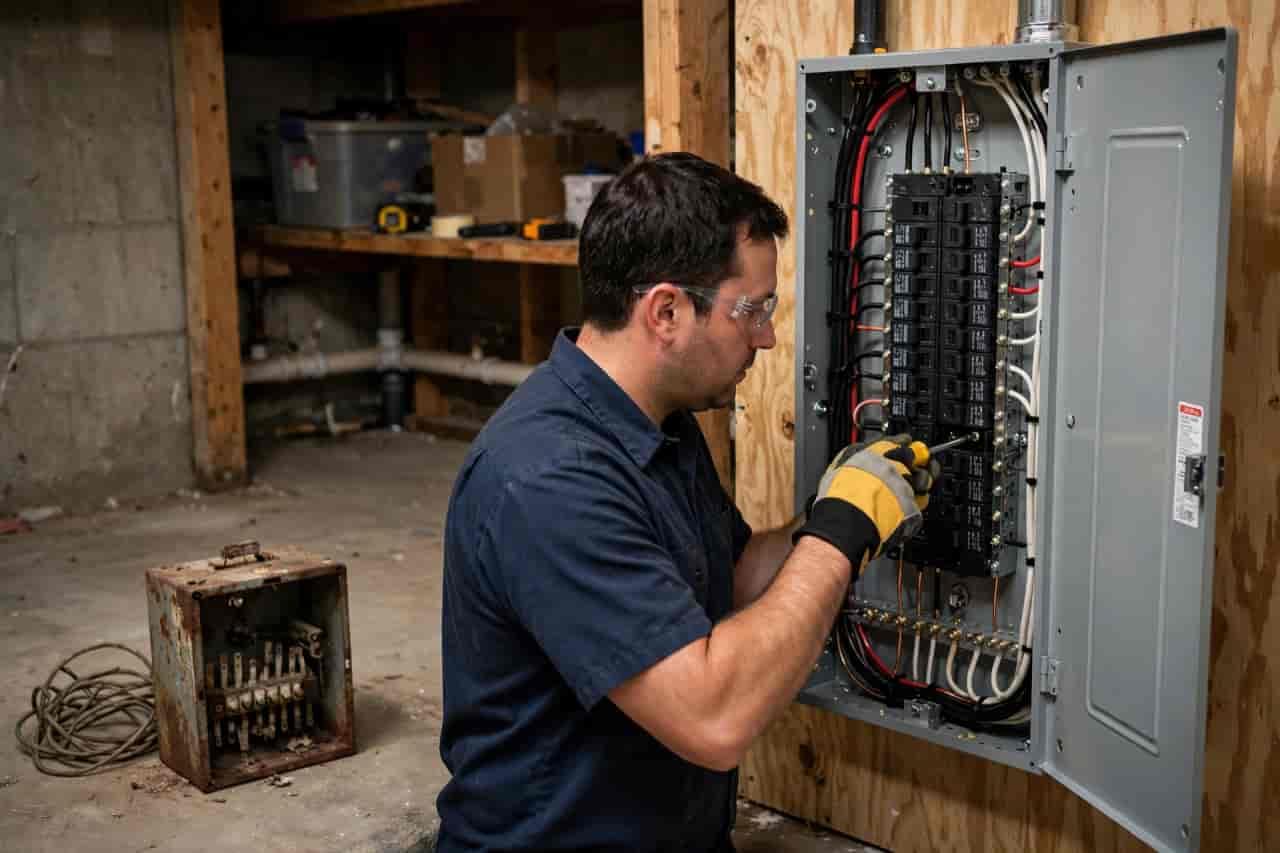
After the permit is issued, the contractor schedules the utility disconnect, removes the old meter-main or panel, and installs the new equipment along with any updated grounding and bonding. Branch circuits are reconnected and labeled. In some cases stucco must be cut and patched around a surface-mounted or recessed panel. The city or county inspector reviews the work, and once it passes, the utility reconnects and sets the meter. Because the work often happens outdoors, many contractors start early in the morning during summer to avoid the worst of the afternoon heat.
Scheduling around Arizona heat
A day without air conditioning in July is not just uncomfortable; it can be dangerous for children, older adults, people with medical conditions and pets. If your upgrade is planned, consider scheduling it between October and April. If an urgent failure forces summer work, plan to have vulnerable household members stay somewhere cool during the outage. Ask the contractor how long power will be off and whether inspections and utility reconnection can be scheduled the same day where your jurisdiction allows.
EV chargers and electrification in the Valley and Tucson
Electric vehicles have become common across metro Phoenix and Tucson, and a Level 2 charger is one of the largest loads a home can add. Combined with heat pumps, induction ranges and pool equipment, it can exceed what a 100- or 125-amp service can support. Some owners consider load management devices that allow an EV charger without a full service upgrade, while others choose a larger panel. A licensed electrician can run the numbers and explain which approach your utility and local code accept.
Northern Arizona and high-country differences
Flagstaff, Prescott, Payson and the White Mountains have a very different climate from the low desert, with snow, freezing temperatures and wildfire risk. Homes there are more likely to use electric heat or have wood stoves with electric backup, and snow can damage service masts. Many high-country areas are served by APS or rural electric cooperatives. Panel upgrades in these regions may be driven by heating loads, generator connections for winter outages, or wildfire recovery, and timing may depend on weather and access.
Panel safety for Arizona homeowners
If you see smoke, fire, sparking or arcing at the panel, or smell burning, keep everyone back and call 911. If the panel is hot, buzzing or wet from storms or irrigation, stay away from it. Switch off the main breaker only if you can safely reach it, then call an electrician. Do not remove the panel cover or open the meter section; the utility side remains energized even with the main off. In summer heat, focus on keeping people cool and safe while you wait for help.
How to choose an ROC-licensed electrical contractor
Before hiring, verify the contractor’s license on the Arizona Registrar of Contractors website and check its classification. Ask who pulls the permit, whether the price includes the utility coordination, meter section, grounding upgrades and stucco repair, and how they handle surprises. Get the scope in writing. Pronto Electrician does not perform electrical work; calling (855) 679-2483 connects you with independent licensed electricians who can review your Arizona home and explain your options.
Licensing, permit and code requirements are set by Arizona and local authorities and can change. The electrician confirms what applies to your project. How electrical panel upgrade works · Electricians in Arizona