Aurora is Colorado’s third-largest city, stretching east from Denver across three counties onto the high plains. Xcel Energy supplies power. Hail, Front Range windstorms, heavy spring snow, expansive soils and some of the fastest suburban growth in the state shape electrical work here, from 1950s ranch homes near Colfax to brand-new subdivisions on the southeastern edge.
Original Aurora, near East Colfax Avenue, has homes from the 1920s through the 1950s. Hoffman Heights and Del Mar Parkway grew with post-war ranch homes, central and southern Aurora filled with split-levels and two-story homes from the 1970s through the 1990s, and the southeast, including Saddle Rock, Southlands and Tallyn’s Reach, was built mostly after 2000.
Problems that come up again and again in local homes, and the service that fixes each one.
01
Hail and outdoor equipment
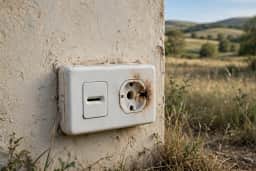
Aurora sits in one of the most hail-prone corridors in the country. Hail cracks condensers, meter covers, light fixtures and rooftop solar, and damaged equipment should be checked before the next storm.
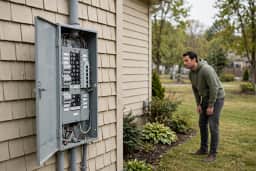
Hoffman Heights and nearby neighborhoods have 1950s homes with small services, ungrounded outlets and original panels that limit kitchen remodels, air conditioning and EV chargers.
New homes in southeast Aurora often add chargers, solar, batteries and finished basements within a few years, filling panels faster than owners expect.
History, housing, weather and rules that shape electrical work in Aurora, CO.
One city, three counties
Aurora grew from a small town called Fletcher in the 1890s into a city that now crosses Arapahoe, Adams and Douglas counties. For homeowners, that means county lines do not decide who issues an electrical permit: inside city limits, Aurora’s own Building Division handles it. Addresses just outside the boundary, in unincorporated Arapahoe or Adams County, follow county rules, so confirming jurisdiction is the first step for any project.
Original Aurora and East Colfax
The oldest part of the city lies along East Colfax Avenue, once the main highway into Denver. Homes there date from the 1920s through the 1950s, and many have been renovated several times. Electricians commonly find small fuse or breaker panels, ungrounded two-prong outlets and wiring extended room by room as owners added bedrooms and baths. The corridor is also home to immigrant families from dozens of countries, and many older rentals here need updated panels and safety devices.
Hoffman Heights
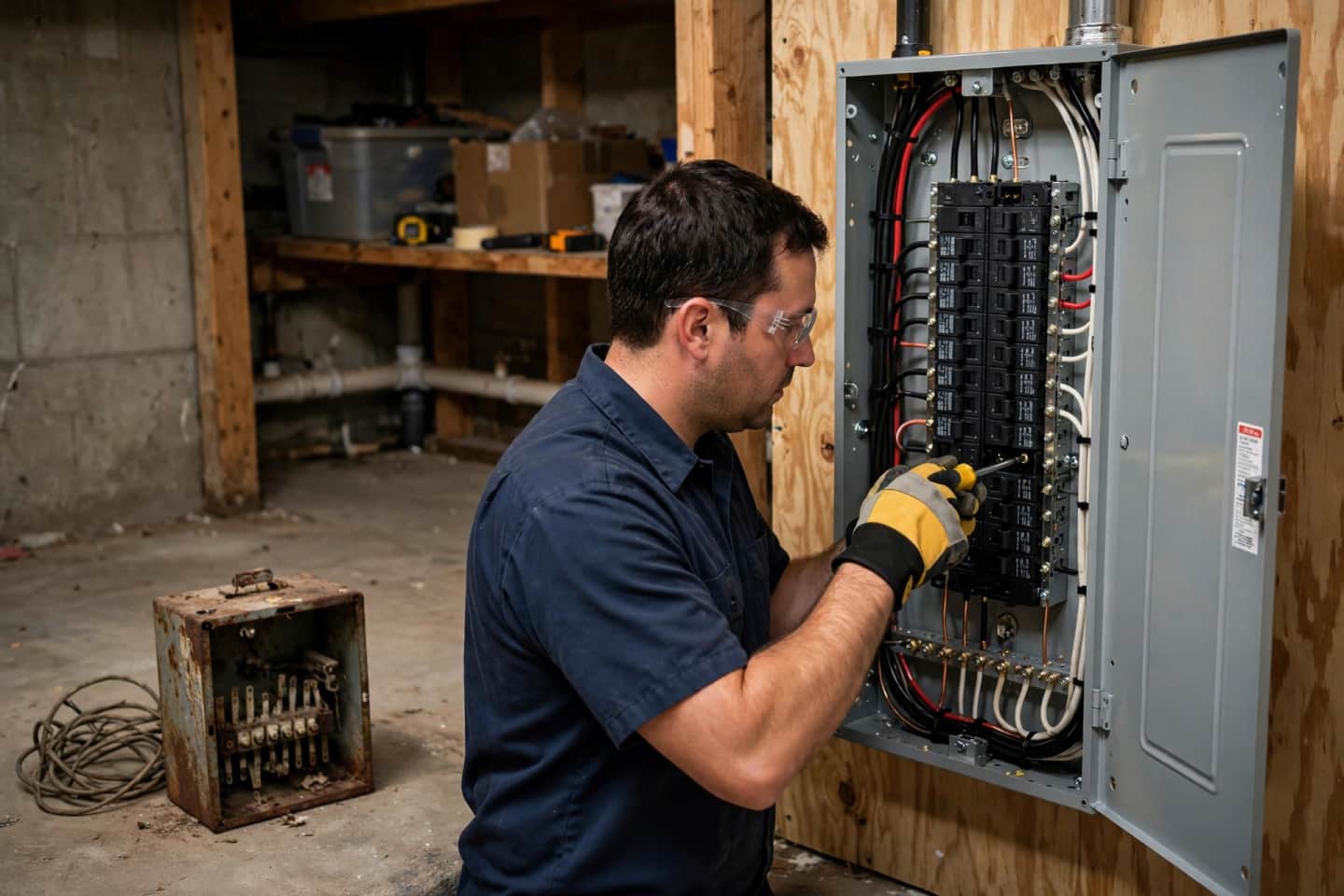
Hoffman Heights, built in the 1950s as one of Aurora’s first large subdivisions, is full of modest brick ranch homes on uniform lots. Original electrical systems in these homes were sized for a few lights and a refrigerator. Owners adding central air, a modern kitchen or a car charger usually need a panel replacement and often a service upgrade from Xcel. Grounding upgrades and kitchen ground-fault protection are typical additions.
Del Mar Parkway and central Aurora
Neighborhoods around Del Mar Parkway, with its long green median, and other central areas grew in the 1950s and 1960s. Many homes have basements that owners are finishing, and finished basements need permitted circuits, arc-fault protection, egress and smoke and carbon monoxide alarms. Older aluminum service conductors and tired meter bases are also common findings.
Southeast Aurora growth
Saddle Rock, Southlands, Tallyn’s Reach and other southeastern communities were built mostly since 2000, often with homeowners associations. These homes have 200-amp services and modern wiring, but solar, batteries, two EV chargers, hot tubs and finished basements can fill a panel quickly. Load calculations and smart panels help owners add equipment without unnecessary service upgrades.
Northeast Aurora and new development
Northeast Aurora near Denver International Airport and along the E-470 corridor is seeing large new master-planned communities. New homes there are built to current codes, but owners frequently add garage circuits, outdoor living spaces and backup power in their first years.
Anschutz and the Fitzsimons campus
The former Fitzsimons Army hospital site has become the Anschutz Medical Campus, one of the largest medical campuses in the region. Thousands of healthcare workers and students rent nearby, and landlords keep rental homes safe with updated outlets, ground-fault protection and working alarms.
Buckley and military families
Buckley Space Force Base brings military families who often rent or buy in east Aurora. Frequent moves mean many homes change hands, and buyers commonly order electrical evaluations before closing.
Front Range hail
Hailstorms regularly hit Aurora from May through August, sometimes with stones large enough to destroy roofs and siding across whole neighborhoods. Air conditioning condensers, meter covers, outdoor outlets, light fixtures and solar panels are all vulnerable. After a storm, an electrician can inspect outdoor electrical equipment and document damage for insurance claims.
Windstorms and service masts
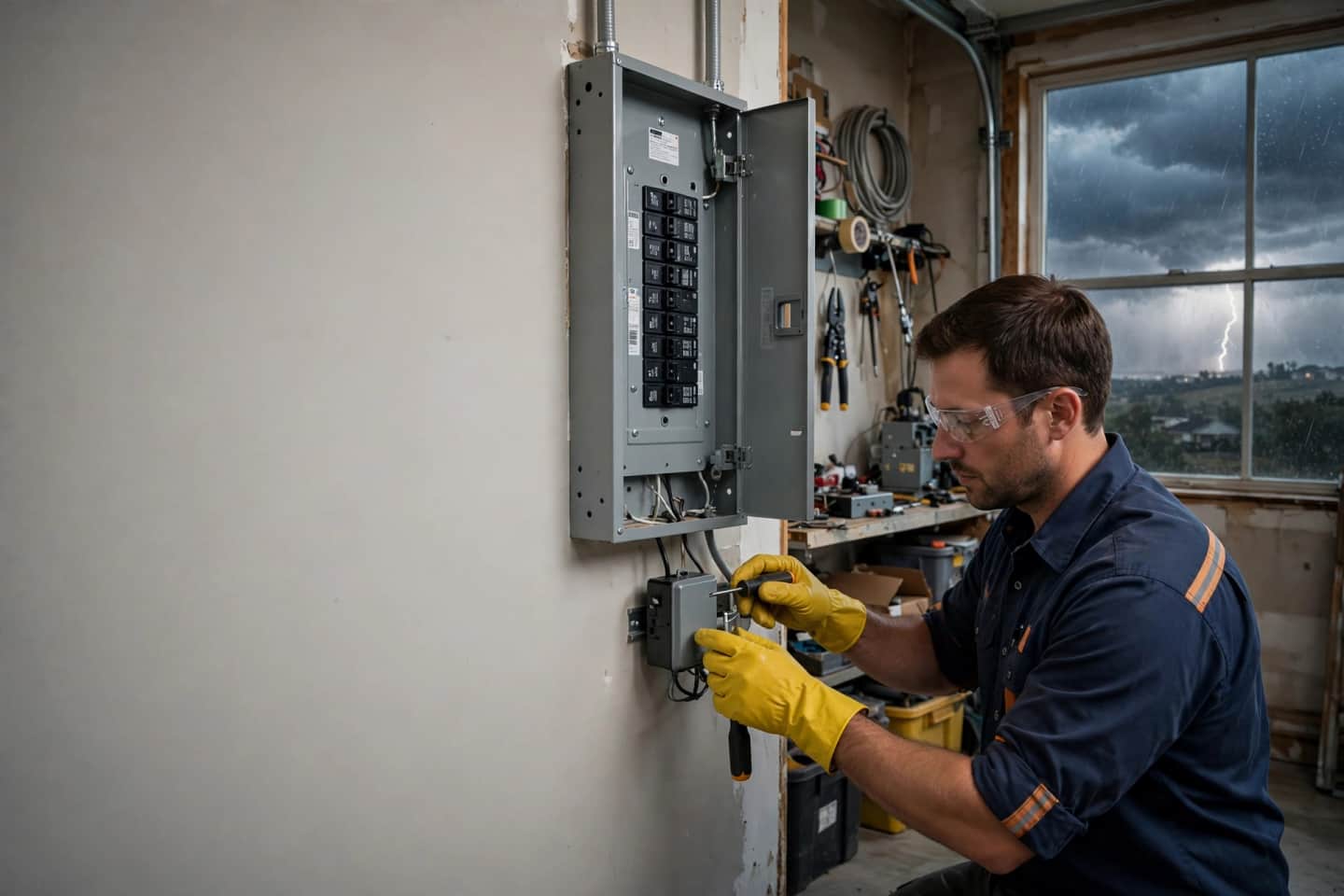
Strong downslope winds and spring storms can gust above 70 miles per hour along the Front Range, bending service masts and tearing service drops from homes. Xcel will not reconnect a damaged service until an electrician repairs the mast and meter base, so a quick call after a windstorm shortens the outage.
Spring snow and cold snaps
March and April often bring Aurora’s heaviest, wettest snowstorms, which can break tree limbs and bring down lines. Cold snaps push furnaces and heat tape hard, and space heaters plugged into old circuits are a common cause of overloads. Dedicated circuits for heaters in cold basements are a safer solution.
Expansive soils
Much of the Denver metro sits on expansive clay soils that swell and shrink with moisture, cracking foundations and shifting slabs. Movement can stress conduit, buried feeders to detached garages and exterior boxes. After foundation repair, it is worth checking that exterior electrical equipment and grounding are still intact.
Grassland fire on the eastern edge
Aurora’s eastern edge borders open grassland, where wind-driven grass fires can spread quickly in dry weather. Homes near open space benefit from keeping vegetation clear of outdoor electrical equipment and from having a backup power plan if utilities shut off lines during extreme fire weather.
Radon fans
Colorado has elevated radon levels in many areas, and many Aurora homes have mitigation systems with fans that run continuously. Each fan needs a properly installed circuit and a disconnect, and failed fans should be replaced promptly.
Solar, batteries and Xcel
Colorado’s sunshine makes rooftop solar popular in Aurora, especially in newer neighborhoods. Systems need city permits and Xcel interconnection approval, and battery storage adds backup during outages. Hail-rated panels and careful conduit routing on the roof reduce storm damage.
EV adoption in Colorado
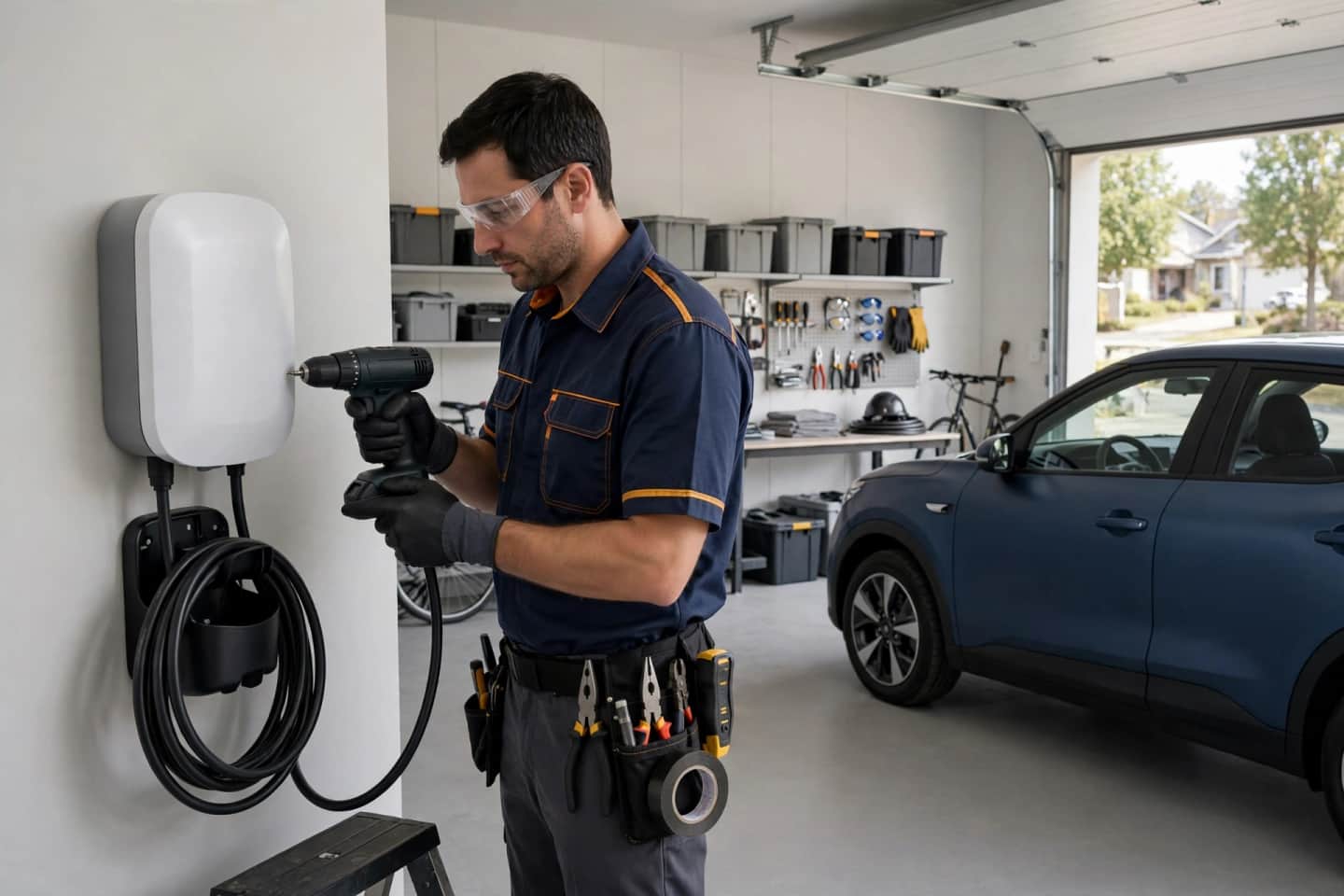
Colorado has strong EV incentives, and Aurora drivers are adding home chargers quickly. Newer homes usually have room for a Level 2 charger, while older ranch homes may need a load calculation, a load-management device or a service upgrade.
What Aurora inspections reveal
Inspection reports for Aurora homes commonly note ungrounded outlets and small panels in post-war houses, panels from manufacturers electricians recommend replacing in 1970s homes, unpermitted basement finishes and hail-damaged exterior equipment.
Common Aurora projects
Typical work includes panel and service upgrades in older neighborhoods, EV chargers, hail damage repairs, basement finishing circuits, radon fan wiring, solar and battery connections and surge protection.
Cherry Creek and the reservoir neighborhoods
Neighborhoods near Cherry Creek State Park and the Aurora Reservoir mix 1980s and 1990s homes with newer builds on larger lots. Owners there add hot tubs, landscape lighting, detached workshops and RV pads, each of which needs a correctly sized circuit or feeder. Detached shops built by previous owners sometimes run on undersized buried cable that trips under load, and replacing it with a properly sized feeder in conduit solves the problem for good.
Altitude, sun and outdoor gear
At about 5,400 feet, Aurora gets intense ultraviolet light that ages plastic outlet covers, light fixtures and cable jackets faster than at sea level. Replacing cracked covers and sun-faded fixtures is simple maintenance that keeps water out of boxes before the next storm.
Questions
Questions from Aurora homeowners
Who issues electrical permits in Aurora?+
The City of Aurora’s Building Division issues permits and inspects work inside city limits, even though the city spans three counties. Unincorporated areas nearby are handled by the county.
Does Colorado license electricians?+
Yes. The Colorado State Electrical Board licenses electricians and electrical contractors, and permits are required for most panel, circuit and service work.
Connect with an independent licensed electrician near you
Smoke, flames or sparking? Leave the building and call 911 first.
Pronto Electrician is a free referral service. Calls are answered by independent licensed electricians in your area. Pronto Electrician does not perform electrical work, and the electrician you choose sets the price, schedule, permits and warranty.