Madison grew around a narrow isthmus between Lake Mendota and Lake Monona, where the state Capitol and the University of Wisconsin–Madison still set the tone of the city. Madison Gas and Electric (MGE) delivers electricity. Long winters, a housing mix running from 1850s sandstone mansions to new subdivisions on the far east and west sides, and the August 2018 deluge that pushed the lakes over their banks all shape the electrical work homeowners call about.
Mansion Hill holds sandstone and brick homes from the 1850s onward, many converted to apartments. Williamson Street, Tenney-Lapham, Vilas and Dudgeon-Monroe are full of early 1900s frame houses and two-flats, often with knob-and-tube in walls and attics. Westmorland, Hill Farms and Midvale Heights grew between the 1920s and the 1950s, and newer subdivisions now ring the city on both its east and west edges.
Problems that come up again and again in local homes, and the service that fixes each one.
01
Heat cable and ice dam circuits
Snow that melts and refreezes at the eaves creates ice dams on many older Madison roofs. Roof and gutter heating cable needs a ground-fault-protected outdoor circuit, not an extension cord dropped from a window.
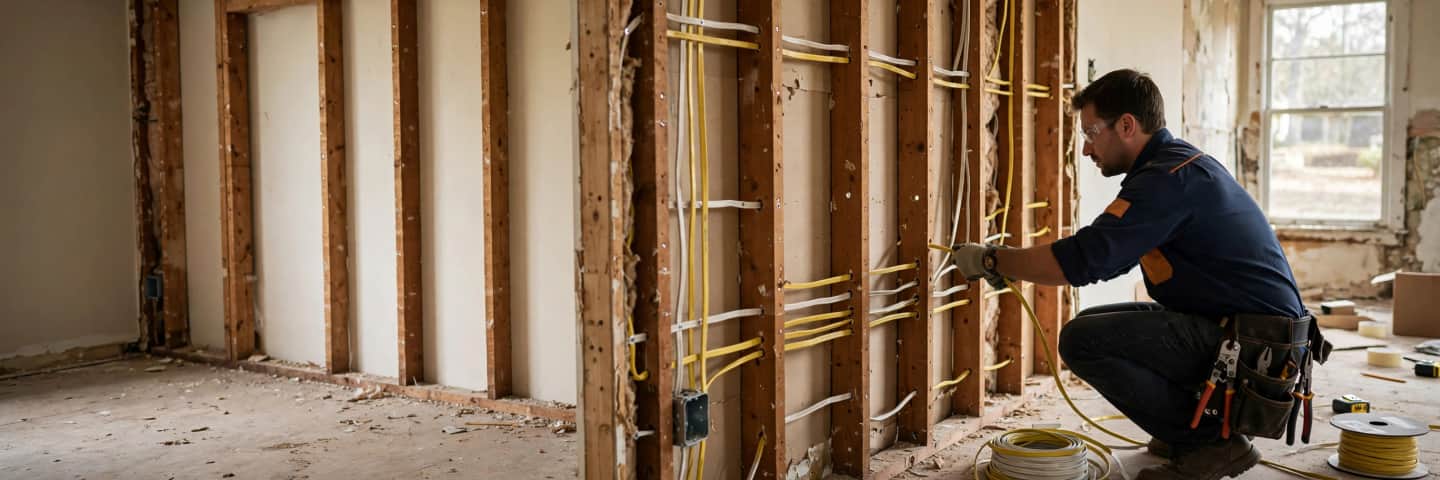
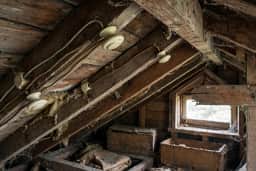
Frame houses near the Capitol and in Tenney-Lapham and Vilas commonly still have knob-and-tube or cloth-covered cable, sometimes buried in blown-in attic insulation where it can overheat.
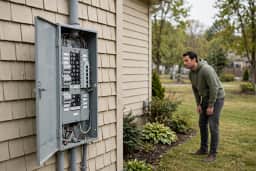
Owners moving to cold-climate heat pumps, induction ranges and electric vehicles often find their 60- or 100-amp service cannot carry the new load without an upgrade coordinated with MGE.
History, housing, weather and rules that shape electrical work in Madison, WI.
Living on the isthmus
Downtown Madison squeezes between two lakes on a strip less than a mile wide in places, with the Capitol dome at its center. State law limits building heights near the Capitol to keep views of the dome open, so the isthmus combines older houses, mid-rise apartments and new buildings on tight lots. Electrical work here often means limited access, shared walls, street parking for crews and close coordination with tenants.
Mansion Hill sandstone
Mansion Hill, just north of the Capitol toward Lake Mendota, has some of the oldest houses in the city, including sandstone mansions built in the 1850s. Most were divided into apartments long ago, which left buildings with multiple meters, stacked panels and wiring added unit by unit over a century. Consolidating panels, labeling circuits and replacing deteriorated feeders are common projects, and exterior changes in the historic district may need landmark review.
Williamson Street’s frame houses
The Marquette neighborhood along Williamson Street grew as a working-class area near the railroad and the Yahara River, and its narrow lots carry modest frame houses and two-flats from the late 1800s and early 1900s. Balloon framing in many of these houses lets wires be fished from basement to attic, which helps rewiring. Owners frequently find knob-and-tube still energized in upstairs rooms and porches added without proper circuits.
August 2018 and the rising lakes
On August 20 and 21, 2018, a stalled storm dropped 11 to 15 inches of rain on parts of western Dane County, with unofficial reports above 15 inches near Cross Plains. The Yahara chain of lakes rose to unusually high levels in the following weeks, and low blocks of the isthmus around Tenney Park and East Washington Avenue flooded. Basement panels, water heaters and laundry circuits in those areas needed evaluation after the water receded.
Groundwater, sump pumps and backup power
Groundwater across Dane County stayed at record levels a year after the 2018 flood, and wet springs since then have kept many sump pumps busy. A pump on a dedicated circuit, with a battery backup or a generator inlet for outages, protects finished basements. Electricians also check that sump and ejector pumps are on outlets with the protection current code requires and that cords are not running across damp floors.
Vilas and Dudgeon-Monroe
Near the UW Arboretum and Henry Vilas Zoo, the Vilas and Dudgeon-Monroe neighborhoods are built up with 1910s and 1920s houses, many with plaster walls, built-in cabinetry and leaded glass that owners want to protect. Electricians working here favor fishing wire through closets and floors instead of opening walls. Kitchen remodels, added bathroom circuits and replacement of original porch and exterior fixtures come up regularly.
Student houses near campus
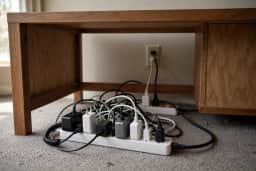
Blocks around the University of Wisconsin–Madison, including the Regent and Greenbush areas, hold older houses carved into student apartments. Space heaters, mini fridges and gaming setups load circuits never meant for them. Landlords can head off problems with dedicated kitchen circuits, ground-fault protection where water is present, tamper-resistant outlets and interconnected smoke and carbon monoxide alarms checked at every August turnover.
The Jacobs House in Westmorland
Frank Lloyd Wright’s first Usonian house, built in 1937 for Herbert and Katherine Jacobs, stands in the Westmorland neighborhood on the near west side. Around it are modest 1920s through 1940s homes that have aged well but still carry early wiring, small panels and few outlets per room. Owners updating these houses often combine rewiring with insulation work, since opening attics and walls once serves both jobs.
Hill Farms on old university land
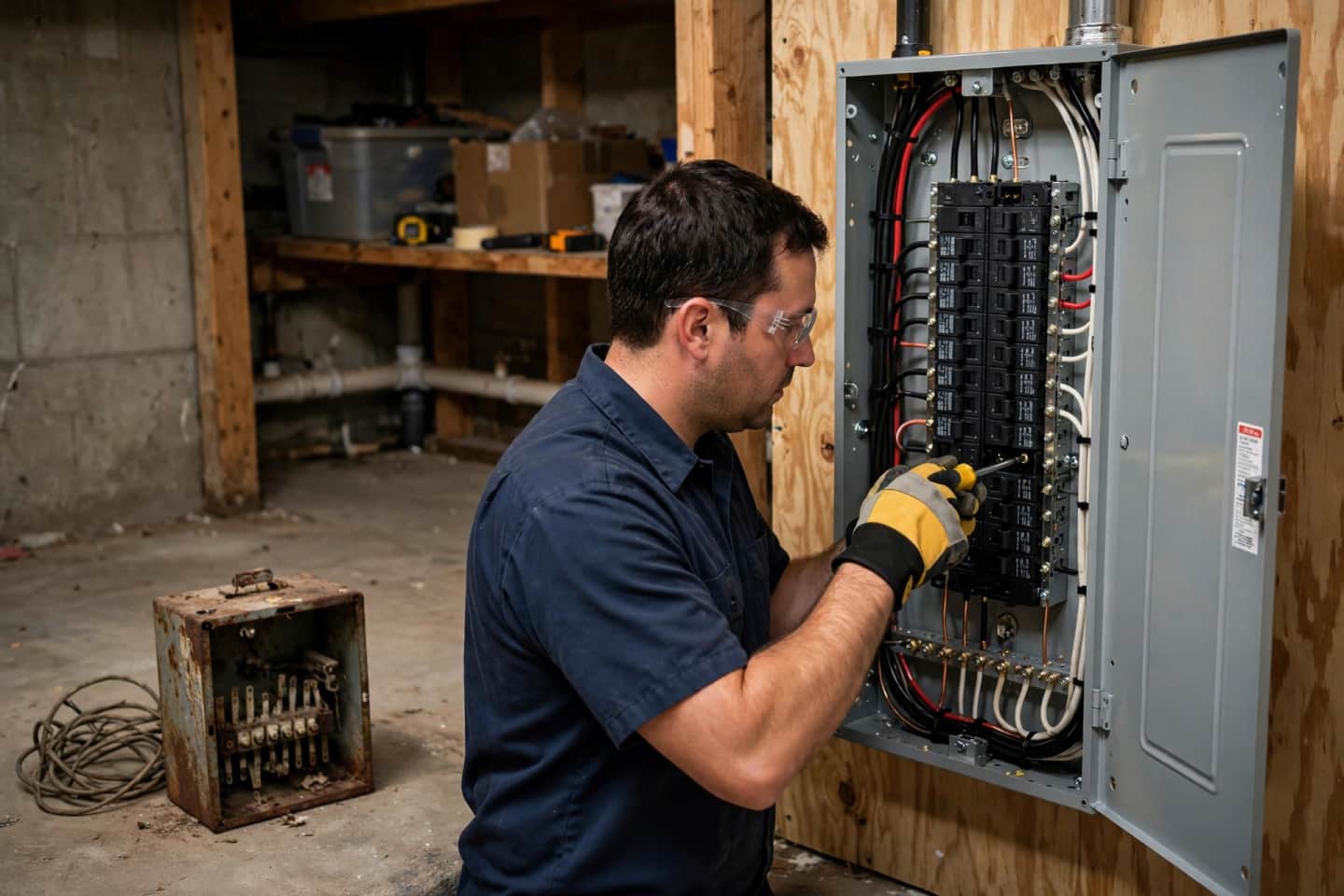
Hill Farms was laid out in the 1950s on former University of Wisconsin experimental farmland west of campus, and it is filled with ranches and split-levels from that era. Original 60- and 100-amp services, two-wire circuits and early breaker panels are common. Adding a garage charger, central air or a heat pump usually leads to a panel replacement and, in many cases, a larger service from MGE.
East side bungalows near the Oscar Mayer site
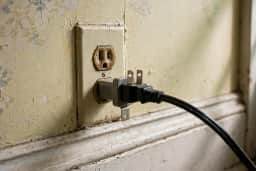
Neighborhoods such as Eken Park and Emerson East grew up near the Oscar Mayer plant, which closed in 2017 and has since been redeveloped. Their 1920s to 1950s bungalows and capes are popular with first-time buyers. Typical findings include ungrounded outlets, basement wiring added by past owners and undersized services, so a pre-purchase electrical inspection is a worthwhile step in these neighborhoods.
Ice dams on Madison roofs
Southern Wisconsin winters bring repeated thaws and refreezes, and older houses with limited attic insulation lose enough heat to melt snow that refreezes at the eaves. Heat cable on roofs and in gutters can help, but it must be on a ground-fault-protected circuit sized for its length. Ice that forms around the service mast or weatherhead can also strain the connection and should be checked after severe storms.
Winter outages and furnace power
A gas furnace still needs electricity for its blower and controls, so a winter outage can leave a house cold within hours. Some Madison homeowners install a generator inlet and interlock that powers the furnace, sump pump and refrigerator, while others choose a standby generator. Either option requires a permit and correct grounding, and generators must sit away from windows and air intakes.
Heat pumps and the city’s climate goals
The City of Madison has committed to 100 percent renewable energy and net-zero carbon operations, and MGE has set its own net-zero goal for 2050. Many homeowners are following with cold-climate heat pumps, heat pump water heaters and induction cooking. Each adds sizable electrical loads, so a load calculation should come first. Smart panels or circuit sharing can sometimes avoid a full service upgrade.
EV charging in the Dane County commute
Commutes from Madison to employers across Dane County, including the large Epic campus in nearby Verona, make electric vehicles practical, but cold weather slows charging and cuts range. A Level 2 charger in a garage helps cars precondition before morning drives. Detached garages are common in older neighborhoods, which can mean trenching a feeder or adding a subpanel, both of which need a city permit.
When the Town of Madison dissolved
The old Town of Madison, a scattered set of unincorporated pockets, officially dissolved on October 31, 2022, under a 2003 agreement. About 5,000 of its residents joined the City of Madison, while roughly 1,400 became part of Fitchburg. Homeowners in those former town areas now pull electrical permits from the city that absorbed their parcel, and records from before the change may sit with the old town files.
Shorewood Hills and Maple Bluff
Two independent villages are surrounded almost entirely by Madison: Shorewood Hills on the west, beside the university, and Maple Bluff on the northeast shore of Lake Mendota, home to the governor’s residence. Each runs its own permitting arrangements apart from the city. Contractors working in Madison sometimes assume the city covers these villages, so homeowners should check the municipality before scheduling inspections.
East Washington’s apartment corridor
East Washington Avenue, the main approach to the Capitol from the northeast, has filled with new apartment and mixed-use buildings over the past decade. That growth brings commercial electrical work in ground-floor shops, restaurants and offices, along with parking garage charging stations. Small business owners leasing space should confirm who is responsible for panels and lighting before signing and should permit any buildout through the city.
Grandview Commons and newer edges
On the far east side, Grandview Commons and nearby subdivisions were built mostly after 2000, and newer neighborhoods also extend the far west side. These homes have modern wiring, but owners still add finished basements, backyard lighting and garage chargers. Finished basements need arc-fault protection, egress-compliant layouts and smoke and carbon monoxide alarms, and the work must be permitted and inspected.
Summer storms off the prairie
Summer thunderstorms rolling in from the west can bring lightning, hail and straight-line winds that topple mature trees onto service drops in older tree-lined neighborhoods. When a limb tears the line, MGE handles its side, but a bent mast or damaged meter socket on the house must be repaired by an electrician. A whole-home surge protector is also worth considering for furnaces and heat pump controls.
Questions
Questions from Madison homeowners
Who issues electrical permits in Madison?+
The City of Madison Building Inspection Division, at 215 Martin Luther King Jr. Boulevard, issues electrical permits and performs inspections inside city limits. Neighboring Monona, Middleton and Fitchburg, and the villages of Shorewood Hills and Maple Bluff, are separate municipalities with their own permit arrangements, so confirm which one your address falls in.
How are electricians licensed in Wisconsin?+
The Wisconsin Department of Safety and Professional Services licenses both individual electricians, from apprentices and journeymen to master electricians, and electrical contractors. Credentials can be checked in the department’s online lookup.
Connect with an independent licensed electrician near you
Smoke, flames or sparking? Leave the building and call 911 first.
Pronto Electrician is a free referral service. Calls are answered by independent licensed electricians in your area. Pronto Electrician does not perform electrical work, and the electrician you choose sets the price, schedule, permits and warranty.