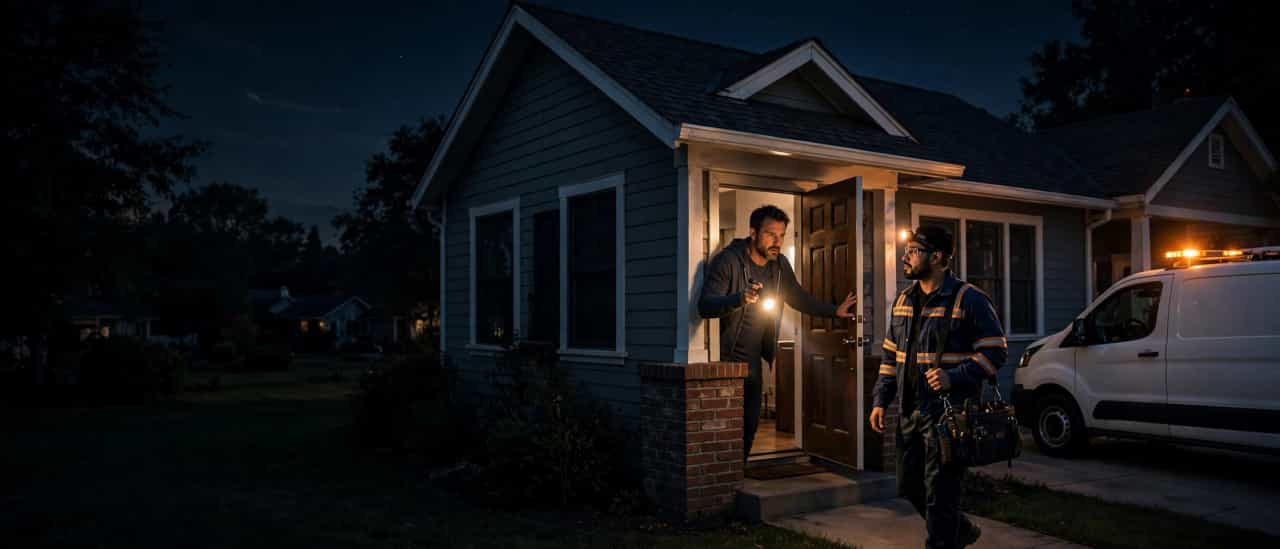
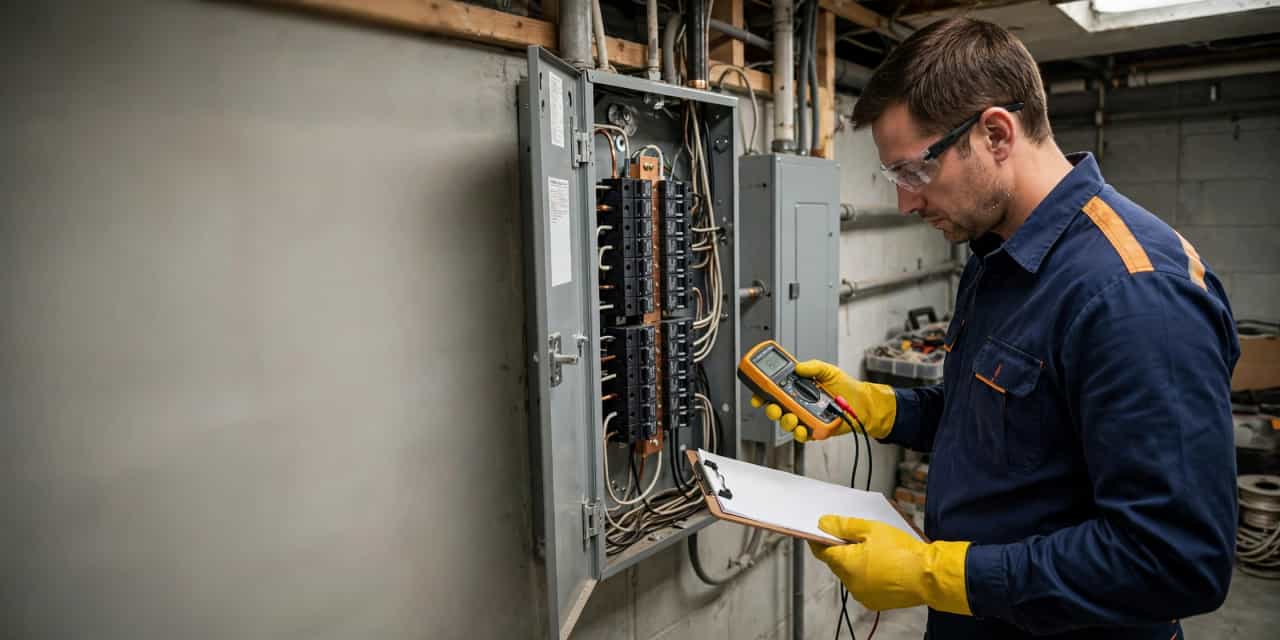
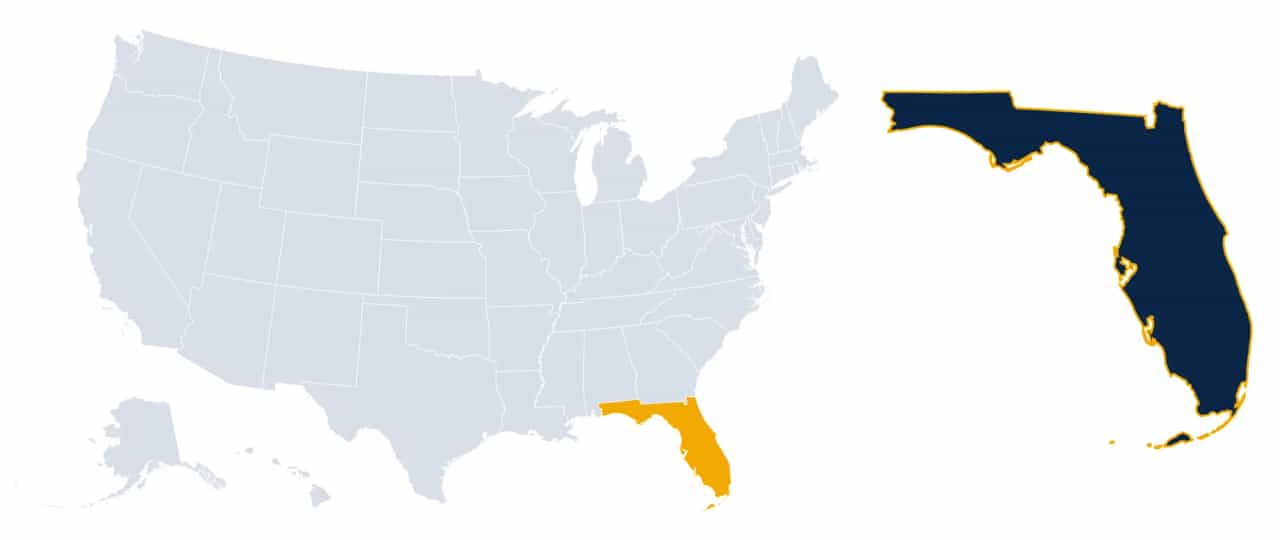
24 hour emergency service, electrical repair, panel upgrades, generator installation and EV chargers in Cape Coral. Call (855) 679-2483 and get connected with an independent licensed electrician who works locally.
Cape Coral sits on a peninsula between the Caloosahatchee River and Matlacha Pass in Lee County, a city that began in 1957 when Leonard and Jack Rosen’s Gulf American Land Corporation started dredging what became more than 400 miles of canals. LCEC, the Lee County Electric Cooperative, delivers the power. Most homes are single-story concrete block on filled lots, and Hurricane Ian’s September 2022 surge and winds changed how owners think about panels, generators and pool wiring. Call (855) 679-2483 to reach a licensed local electrician.
By calling, you agree to be connected with an independent electrician, who may call or text you back about your request at the number you call from. Calls may be recorded for quality and routing. Consent is not a condition of any purchase, and you can opt out at any time; message and data rates may apply. Privacy policy.
Serving Southeast Cape (Yacht Club area), Pelican, Cape Harbour, Tarpon Point, Northwest Cape, Northeast Cape and every other Cape Coral neighborhood.
Cape Coral at a glance
Electric utility
LCEC (Lee County Electric Cooperative), a member-owned cooperative, serves Cape Coral
Permits and inspections
City of Cape Coral Department of Development Services (Permitting Services Division issues permits; Building Division reviews plans and inspects)
County
Lee County
ZIP codes include
33904 · 33909 · 33914 · 33990 · 33991 · 33993
Electrical services in Cape Coral
What do you need help with in Cape Coral, FL?
The calls Cape Coral homeowners make most, followed by every service independent licensed electricians handle here.
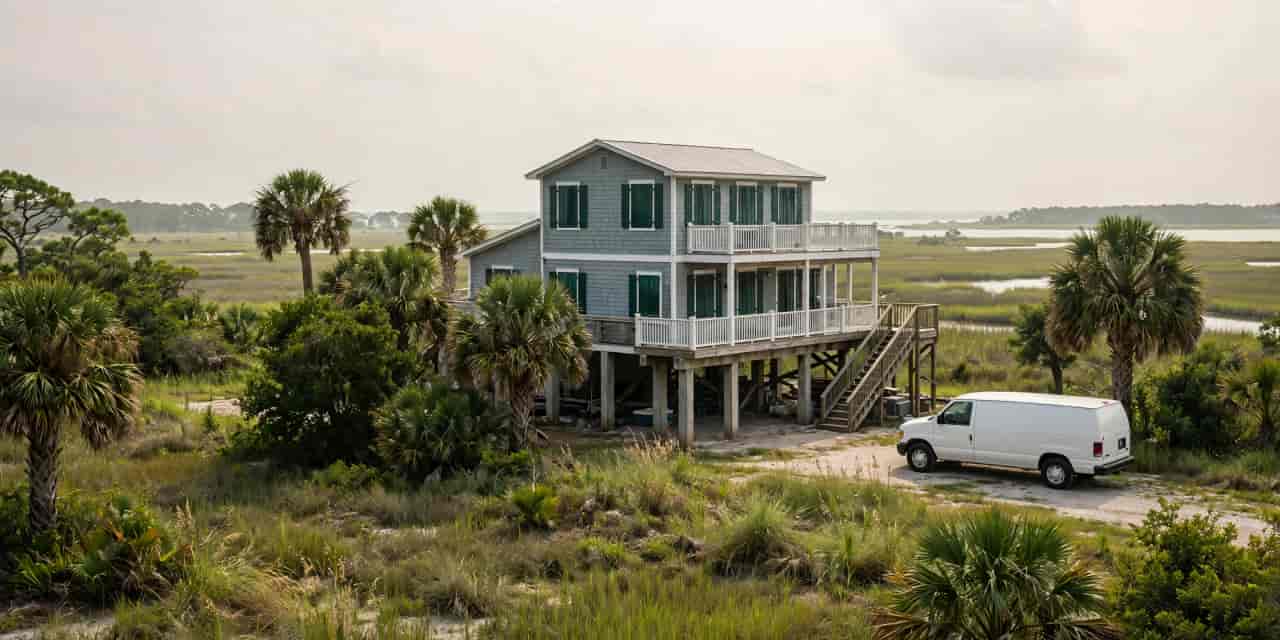
The Southeast Cape around the Yacht Club holds the oldest houses, beginning with a handful built on Riverside and Flamingo drives in 1958 and followed by 1960s and 1970s block ranches. The Southwest, including Pelican, Cape Harbour and Tarpon Point, carries larger canal homes from the 1980s onward. North of Pine Island Road, the Northwest and Northeast quadrants filled with post-2000 houses on long-vacant lots, many with pools, screened lanais and boat lifts.
Problems that come up again and again in local homes, and the service that fixes each one.
01
Salt water in Southwest Cape garages
Ian pushed Gulf water up the canals and into garages where panels, washers and pool timers sit. Breakers, receptacles and wiring that sat in salt water corrode from the inside and should be replaced rather than dried out and reset.
Lift motors, dock receptacles and post lights live in spray and humidity all year. Corroded terminals, missing ground-fault protection and cables chafing against seawall caps are common findings once someone opens the boxes.
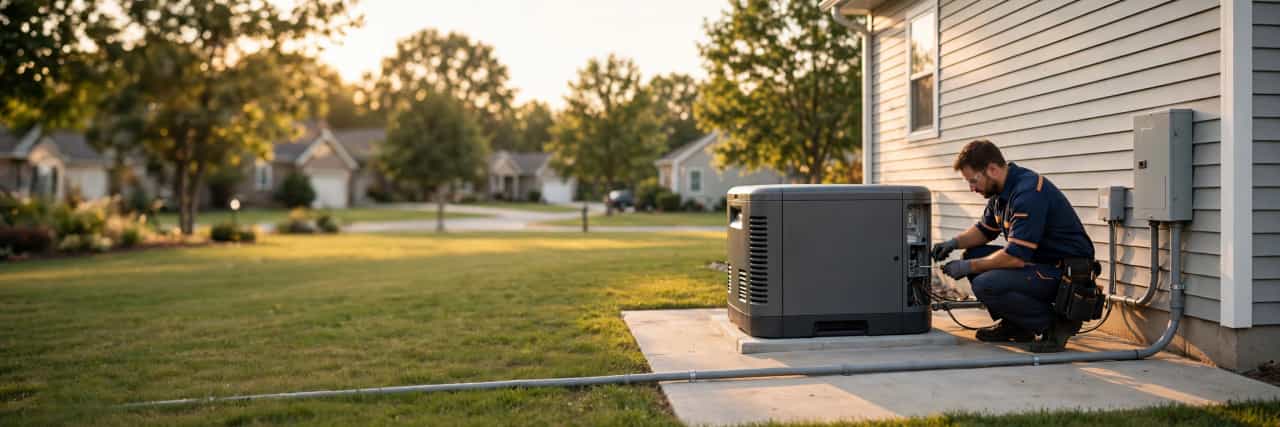
After Ian, many owners stopped relying on portable units and extension cords. A permanently installed standby generator or a properly interlocked inlet keeps refrigeration, fans and well or lift pumps running without backfeeding LCEC’s lines.
History, housing, weather and rules that shape electrical work in Cape Coral, FL.
Redfish Point and the Rosen brothers’ 1957 purchase
Cape Coral started as a land deal. In 1957 Baltimore brothers Leonard and Jack Rosen bought the swampy tract called Redfish Point across the river from Fort Myers and formed the Gulf American Land Corporation to sell it lot by lot, often to buyers up north who had never seen it. The city incorporated in 1970. That sales-first origin explains the endless grid of small residential lots, many of which sat empty for decades before anyone built on them.
Canal fill over shallow limestone
Dredges carved more than 400 miles of canals, and the spoil was spread across neighboring lots to raise them. The result is a thin layer of sandy fill over limestone and shell that can sit only a few feet down. Electricians trenching for a generator feeder, a detached garage or a dock circuit often hit rock, and grounding electrodes sometimes need extra attention to reach adequate contact with the soil.
The first eight houses on Riverside and Flamingo drives
In 1958 the first handful of single-family homes went up on Riverside Drive and Flamingo Drive in what is now the Yacht Club area of the Southeast Cape. Some early houses from that era still stand beside modern rebuilds. Original services were small, sized for a refrigerator, a range and a few lamps, and any survivor that has not been rewired or upgraded deserves a careful look before new air conditioning goes in.
Block ranches of the 1960s and 1970s
As sales took off, the Southeast Cape filled with modest concrete-block ranch houses with low-pitched roofs and carports later enclosed as rooms. Homes wired between the mid-1960s and early 1970s may contain aluminum branch wiring, which needs proper connectors at every device. Many also carry decades of owner-installed additions, such as a lanai fan spliced into a bedroom circuit, that never passed an inspection.
Pelican’s wide boulevards and canal grid
Pelican, in the Southwest, is a large established neighborhood of canal-front and dry-lot homes laid out along wide streets, popular because many canals there offer access toward the Gulf. Houses range from 1980s ranches to recent rebuilds after Ian. Typical projects include moving the panel out of a flood-prone garage, adding a dedicated circuit for a boat lift, and replacing pool equipment wiring that has rusted in the salt air.
Cape Harbour and Tarpon Point near the river mouth
At the southern tip of the city, Cape Harbour’s marina village and Tarpon Point’s resort grounds beside the Westin mix condominiums, townhomes and large waterfront houses. Condo owners usually need association approval before touching anything outside their unit, and the main service often belongs to the building. Inside the unit, the common requests are lighting updates, kitchen circuits and surge protection for electronics exposed to frequent summer storms.
Ian’s landfall at Cayo Costa, September 28, 2022
Hurricane Ian came ashore at Cayo Costa as a powerful Category 4 storm on the afternoon of September 28, 2022, just west of Cape Coral. Southwest Cape neighborhoods took storm surge pushed up the canals, while wind damage reached across the whole city. Afterward, many houses could not be safely re-energized until an electrician checked equipment that had been soaked, and in some cases the building department required an inspection first.
More than 650 snapped poles and LCEC’s long rebuild
More than 650 wooden power poles were snapped in Cape Coral during Ian, and LCEC added hundreds of outside line workers and tree-trimming crews while Florida Power & Light sent replacement poles and workers to help. Some customers were back on within days and others waited weeks. That experience is why many residents now ask about transfer switches, generator sizing and which loads, such as a refrigerator or a medical device, really need to stay on.
Substantial damage and the 50 percent rule
Under the National Flood Insurance Program, a building in a flood zone whose repair or improvement cost reaches half its market value must be brought up to current flood rules, which can mean elevating the house or its equipment. After Ian, Cape Coral owners learned that a big electrical rebuild counts toward that total. Discussing scope with the building department early avoids surprises midway through a renovation.
Holding on to the 25 percent flood insurance discount
In 2024 FEMA reviewed how Lee County communities had enforced floodplain rules after Ian and moved to downgrade several of them. Cape Coral submitted a corrective action plan, and in November 2024 the city kept its Class 5 rating and the 25 percent discount on federal flood policies. Unpermitted repairs threaten that standing for everyone, which is one more reason to keep electrical work on the permit record.
Milton’s tornadoes in October 2024
Hurricane Milton made landfall near Siesta Key on October 9, 2024, well north of the Cape, but its outer bands spun up tornadoes across the state, including an apparent tornado that damaged a Cape Coral convenience store. LCEC had warned members to prepare for extended outages. Short, violent wind events like that can rip a weatherhead or meter mast off a house, and that damage needs an electrician before the utility will reconnect.
Irma’s pass through Southwest Florida in 2017
Five years before Ian, Hurricane Irma crossed Southwest Florida in September 2017 after landfall at Marco Island, knocking out power across much of Lee County. Irma prompted many owners to buy portable generators, and some still run them through cords stretched under doors or, worse, plugged into a dryer outlet. Backfeeding a house that way can energize lines that crews believe are dead, so an interlock or transfer switch is the safe route.
The North Cape building boom on long-empty lots
North of Pine Island Road, lots sold in the 1960s often sat as scrub for forty years. Building surged there after 2000 and again after 2020, producing streets where a brand-new house stands beside a vacant parcel. Newer homes generally have 200-amp services and breaker panels, though some builders installed only the minimum receptacles, so outdoor kitchens, garage refrigerators and lanai heaters often need new circuits.
Wells, septic and the Utilities Extension Project
Much of the North Cape was built on private wells and septic systems, and the city’s Utilities Extension Project has been extending water and sewer lines quadrant by quadrant. When a home connects, the well pump and its pressure switch may stay on for irrigation or be retired. Either way, the pump circuit should be checked, and abandoned wiring should be removed or properly terminated rather than left live in the yard.
Pools, screened lanais and equipotential bonding
A large share of Cape Coral houses have a pool under a screen cage, along with pumps, heaters, salt chlorinators and lights. Pool bonding connects metal parts so a fault cannot create a shock path, and it is often damaged during resurfacing or deck work. A tingle in the water or at the screen frame is a warning sign: keep everyone out of the pool and have the system tested before swimming again.
Burrowing owls on vacant lots
Cape Coral is known for its burrowing owls, a protected species that nests in the city’s open lots and lawns, where volunteers often mark burrows with stakes. Trenching for a generator fuel line, a detached shop feeder or a dock circuit needs to stay well clear of an active burrow. Checking the route before digging, and adjusting it when owls are present, saves both the birds and the project schedule.
Summer lightning over the Caloosahatchee
From late spring through September, afternoon thunderstorms build almost daily over Southwest Florida, and lightning strikes on canals, docks and tall palms are part of life. Strikes nearby send surges through service lines, phone and cable wiring and irrigation controllers. A surge protective device at the panel, combined with point-of-use protection for televisions and computers, handles the bulk of that risk, and it matters most for pool and lift controls.
Wind-rated mounting for outdoor equipment
Florida’s building code treats Lee County as a high-wind area, so outdoor equipment has to be anchored to resist hurricane loads. Standby generators, air handlers on pads, disconnects and EV chargers mounted outside all need proper fastening, and in flood zones they may also need to sit above the design flood elevation. Placement decisions made on paper during the permit stage save costly changes later.
Snowbird homes that sit empty half the year
Many Cape Coral houses belong to seasonal residents who leave for the summer. A home closed up from May to November still needs air conditioning or dehumidification to control moisture, and a tripped breaker can mean a moldy house by October. Smart thermostats, leak sensors and a whole-house surge device, wired and set up before departure, let owners watch from afar and send someone if something fails.
Pine Island Road and Del Prado shopfronts
Commercial life in Cape Coral runs along Pine Island Road, Del Prado Boulevard and the Cape Coral Parkway corridor, where strip centers house restaurants, marine supply stores, salons and medical offices. Tenant improvements there often require new lighting, dedicated kitchen circuits and three-phase equipment. Business owners usually prefer work scheduled after hours, and the permit and inspection steps run through the same city Development Services office.
Questions
Questions from Cape Coral, FL homeowners
Is there a 24 hour emergency electrician in Cape Coral, FL?+
Yes. Call (855) 679-2483 any time, day or night, and you are connected with an independent licensed electrician who covers Cape Coral, including Southeast Cape (Yacht Club area), Pelican, Cape Harbour. For sparks, smoke or a hot panel, call 911 first.
Who handles electrical repair and generator installation in Cape Coral?+
Licensed electrical contractors working in Lee County handle outlet and switch repair, circuit troubleshooting, panel work and standby generator installation. Permits go through City of Cape Coral Department of Development Services (Permitting Services Division issues permits; Building Division reviews plans and inspects).
Who issues electrical permits in Cape Coral?+
The City of Cape Coral’s Department of Development Services does: its Permitting Services Division takes electrical permit applications through the city’s online EnerGov portal, and the Building Division reviews plans and performs inspections. Addresses outside city limits, such as Matlacha or North Fort Myers, go to Lee County instead, and the licensed contractor normally pulls the permit.
Who do I call if my power keeps going out in Cape Coral?+
If your whole street is dark, report it to LCEC, the cooperative that serves Cape Coral; if only your house or a few circuits keep failing, call (855) 679-2483 to reach a licensed electrician. Repeated breaker trips, flickering lights or warm outlets point to a problem inside the home. If you smell burning or see sparks or smoke, get everyone away, call 911, and shut off the main only if you can reach it safely.
How do I check an electrician’s license in Florida?+
Look the contractor up on the Florida Department of Business and Professional Regulation’s online license search. The state’s Electrical Contractors’ Licensing Board issues certified licenses valid statewide and registered licenses tied to local competency cards, and the license number should appear on your permit.
By calling, you agree to be connected with an independent electrician, who may call or text you back about your request at the number you call from. Calls may be recorded for quality and routing. Consent is not a condition of any purchase, and you can opt out at any time; message and data rates may apply. Privacy policy.
Free to call
Explain the problem in plain words
Connect with an independent licensed electrician near you
Smoke, flames or sparking? Leave the building and call 911 first.
Pronto Electrician is a free referral service. The electricians you are connected with are independent contractors, not employees or agents of Pronto Electrician. Pronto Electrician does not perform electrical work, and the electrician you choose sets the price, schedule, permits and warranty.
By calling, you agree to be connected with an independent electrician, who may call or text you back about your request at the number you call from. Calls may be recorded for quality and routing. Consent is not a condition of any purchase, and you can opt out at any time; message and data rates may apply. Privacy policy.