24 hour emergency service, electrical repair, panel upgrades, generator installation and EV chargers in Tallahassee. Call (855) 679-2483 and get connected with an independent licensed electrician who works locally.
Tallahassee is Florida’s capital, home to Florida State and Florida A&M, and a city known for rolling red-clay hills and a dense oak canopy. Most homes buy power from City of Tallahassee Utilities, a municipal system, while Talquin Electric Cooperative serves many areas beyond the city. That canopy is beautiful and also the main reason outages here can be long: Hurricane Hermine in 2016, Hurricane Michael in 2018 and the May 2024 tornadoes all brought down trees and lines across town.
By calling, you agree to be connected with an independent electrician, who may call or text you back about your request at the number you call from. Calls may be recorded for quality and routing. Consent is not a condition of any purchase, and you can opt out at any time; message and data rates may apply. Privacy policy.
Serving Midtown, Myers Park, Frenchtown, Betton Hills, Killearn Estates, Southwood and every other Tallahassee neighborhood.
Tallahassee at a glance
Electric utility
City of Tallahassee Utilities (municipal electric) serves most of the city; Talquin Electric Cooperative serves many outlying Leon County areas
Permits and inspections
City of Tallahassee Growth Management Department (Building Inspection); Leon County Development Support & Environmental Management for unincorporated areas
County
Leon County
ZIP codes include
32301 · 32303 · 32308 · 32309 · 32312 · 32317
Electrical services in Tallahassee
What do you need help with in Tallahassee, FL?
The calls Tallahassee homeowners make most, followed by every service independent licensed electricians handle here.
Myers Park, Frenchtown and the streets around downtown hold houses from the early and mid-1900s, some with older wiring and small panels. Midtown and Betton Hills are full of 1940s through 1960s ranch and cottage homes. Killearn Estates on the northeast side grew from the 1960s onward, and Southwood is a planned community built since the early 2000s. Student rentals near both universities add a large stock of older apartments and duplexes.
Problems that come up again and again in local homes, and the service that fixes each one.
01
Trees on lines after storms
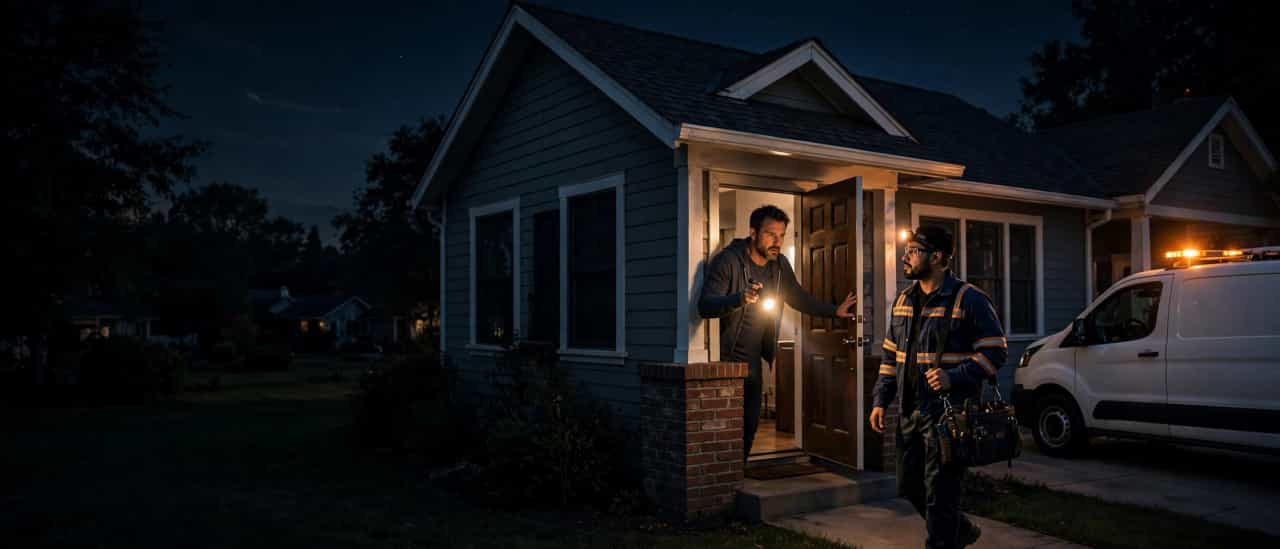
Falling oaks and pines regularly tear service drops off houses and bend masts. Stay away from any downed line, report it to the utility and call 911 if anything is sparking or burning; an electrician then repairs the mast and meter base on the house side.
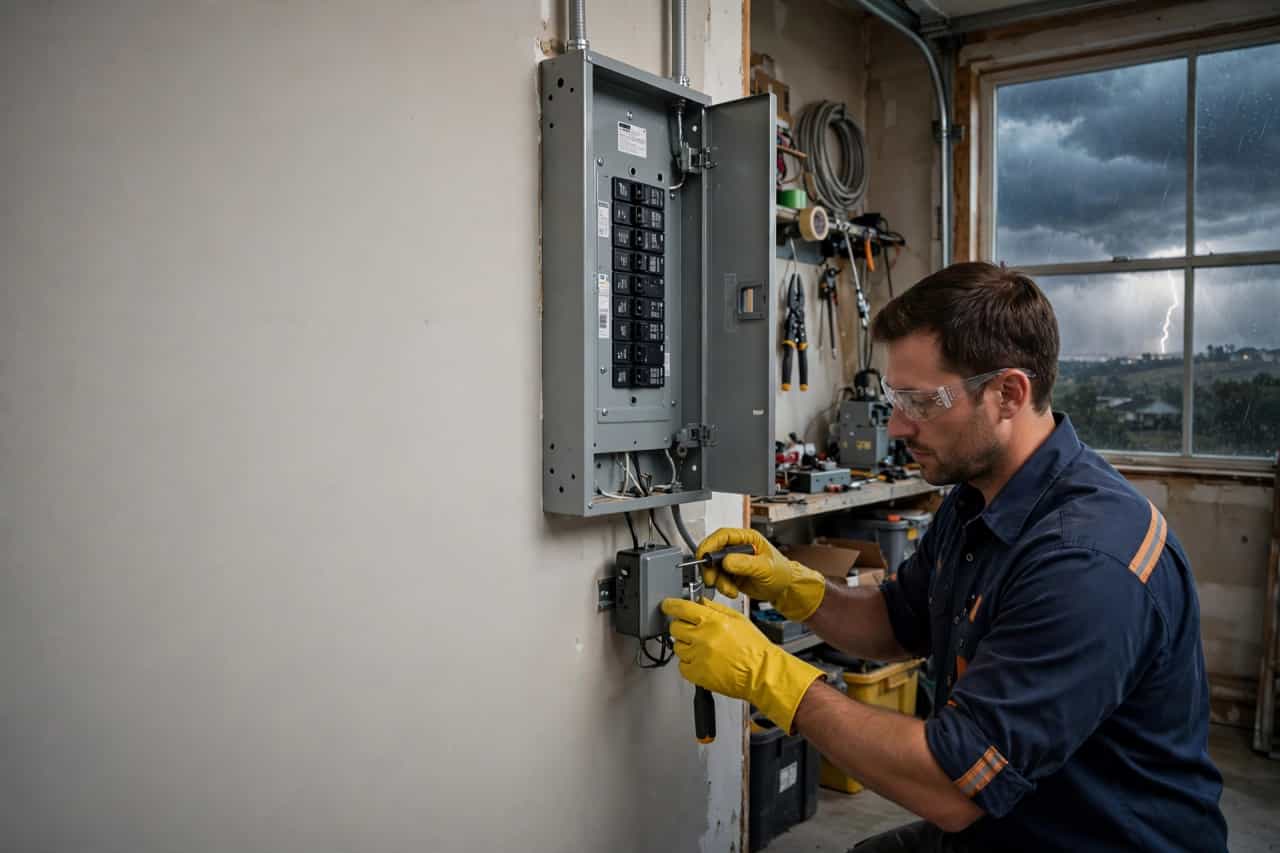
Long restoration times after Hermine, Michael and the 2024 tornadoes pushed many households toward generators. A transfer switch or interlock keeps a generator from back-feeding utility lines and endangering line crews.
Pre-1970 houses and rentals near FSU and FAMU can have ungrounded outlets, aging panels and circuits overloaded by window units and modern electronics.
History, housing, weather and rules that shape electrical work in Tallahassee, FL.
A city-owned electric utility
Unlike most Florida cities, Tallahassee owns its electric utility. City of Tallahassee Utilities runs generation, lines and billing for most addresses in town, so outage reports, new service connections and meter questions go to the city. Talquin Electric Cooperative covers many rural and suburban areas outside the city limits. Knowing which provider you have matters when you plan a service upgrade, because each sets its own meter and connection requirements.
Canopy roads and overhead lines
Tallahassee protects a network of designated canopy roads, where live oaks draped in Spanish moss arch over the pavement. Those trees define the city, and they also share space with overhead power lines throughout older neighborhoods. Limbs that touch a service drop wear its insulation and can pull it from the house in wind. Utility crews handle their lines; homeowners should have a licensed tree service work near drops and an electrician check the mast afterward.
Hurricane Hermine in 2016
Hurricane Hermine came ashore in the Big Bend in early September 2016, the first hurricane to make landfall in Florida in more than a decade. Tallahassee lost power across most of the city as trees fell on lines, and some neighborhoods waited several days for restoration. Many homeowners learned then that portable generators need a safe connection method, not a cord plugged into a dryer outlet, which can back-feed lines and endanger crews.
Hurricane Michael in 2018
Hurricane Michael made landfall near Mexico Beach in October 2018 as one of the strongest storms ever to hit the Florida Panhandle. Tallahassee was well inland but still saw widespread tree damage and outages. The storm reminded the region that a home’s weak points are often the service mast and meter base, which can be torn away when a tree takes down the drop. Repairs on the house side require a licensed electrician before reconnection.
The May 2024 tornadoes
On May 10, 2024, several tornadoes tore through Tallahassee in a single morning, damaging homes, toppling large trees and knocking out power for a large share of city customers. Damage from that event included crushed meter bases, ripped service drops and water entering panels through broken roofs. After any storm, if the panel or wiring got wet, leave it off and have it inspected before power is restored.
Red clay hills and underground runs
Tallahassee sits on the Red Hills, a region of rolling terrain and dense red clay quite different from sandy coastal Florida. Clay holds water after heavy rain, and sloped lots channel runoff toward foundations and buried conduit. Underground feeders to pools, detached garages and workshops need proper burial depth and sealed fittings. Older direct-buried cable can deteriorate in wet clay and cause hard-to-find faults that trip breakers.
Myers Park and Frenchtown history
Myers Park, south of downtown, has houses dating to the 1920s and 1930s on hilly, shaded lots. Frenchtown, one of the city’s oldest historically Black neighborhoods, holds homes from the late 1800s onward alongside newer infill. In both places, original knob-and-tube or cloth-insulated wiring may still be in use, often extended over time. A thorough inspection is the smart first step before buying, renovating or adding major appliances.
Midtown and mid-century ranch homes
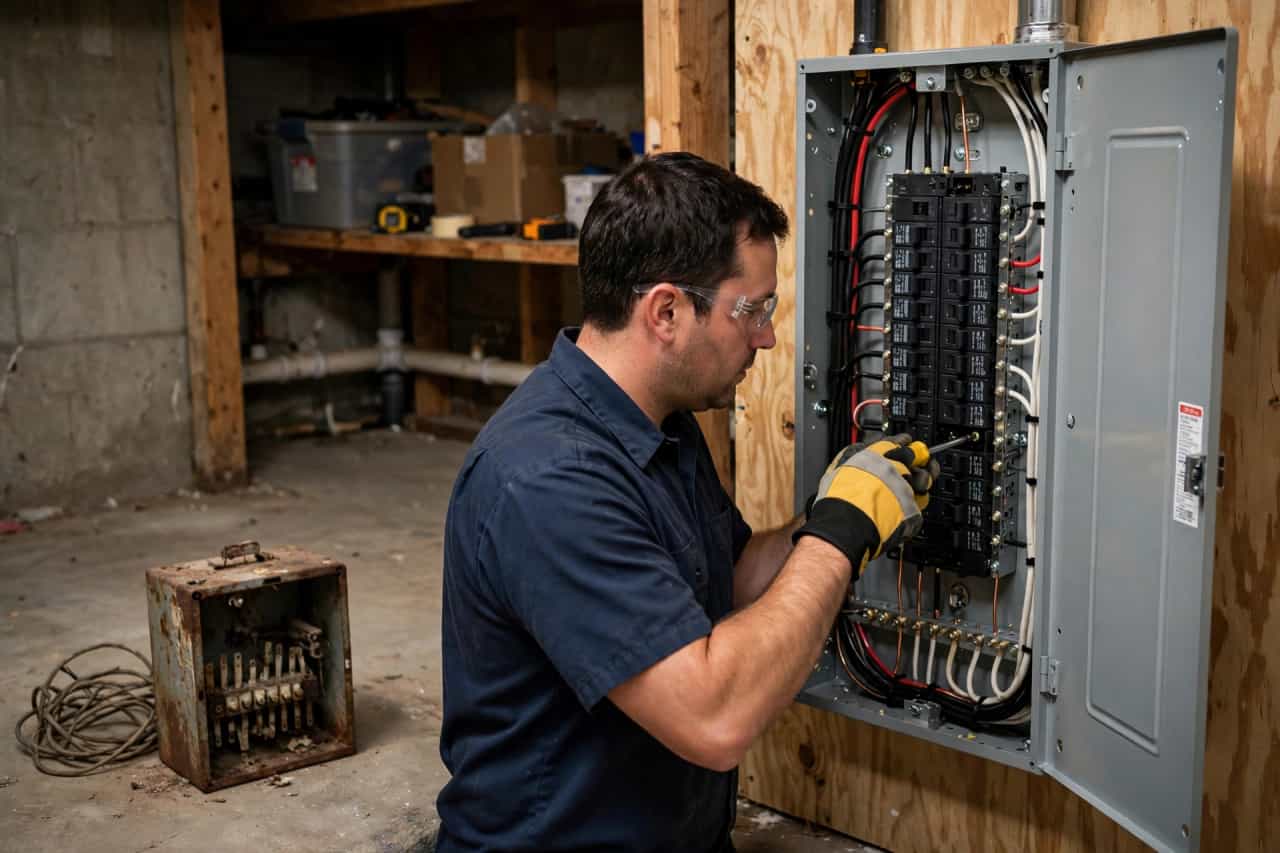
Midtown and nearby Betton Hills grew in the decades after World War II with brick and frame ranch homes on generous lots. Many still have 100-amp services and a few original two-prong outlets. With central air running much of the year, plus modern kitchens and home offices, these panels can be near capacity. A load calculation tells you whether you can add circuits or need a service upgrade coordinated with the city utility.
Killearn Estates and the northeast
Killearn Estates began in the 1960s as a large planned community around a golf course and lakes on the northeast side. Homes range from the 1960s through the 1990s, and some from the 1970s carry aluminum branch wiring or panel brands that are now commonly replaced. Mature trees over the lots also make backup power a common request. Generators and whole-home surge protection are frequent projects here.
Southwood and newer construction
Southwood, on the southeast side near the state government offices, is a planned community built mostly since the early 2000s. Homes there generally have modern 200-amp panels with arc-fault protection, so work tends toward additions rather than repairs: EV chargers, smart lighting, outdoor kitchens and generator inlets. Even newer homes need permits for these upgrades, and the city inspects the work before it is finished.
Student rentals near FSU and FAMU
With Florida State and Florida A&M close to downtown, thousands of renters live in older duplexes, small apartment buildings and converted houses. Window air conditioners, space heaters, gaming rigs and many chargers on circuits designed decades ago lead to tripped breakers and warm outlets. Landlords preparing units between leases often schedule inspections, add circuits and replace worn receptacles and GFCI devices in kitchens and baths.
Year-round lightning
North Florida sees frequent summer thunderstorms, and Tallahassee is no exception. Lightning striking nearby can send surges through utility, cable and phone lines into a house, damaging HVAC boards, pool pumps and electronics. A surge protective device at the panel handles most of those events, and point-of-use protectors add a second layer. Both work best when the home’s grounding and bonding are in good shape.
Humidity, attics and ceiling fans
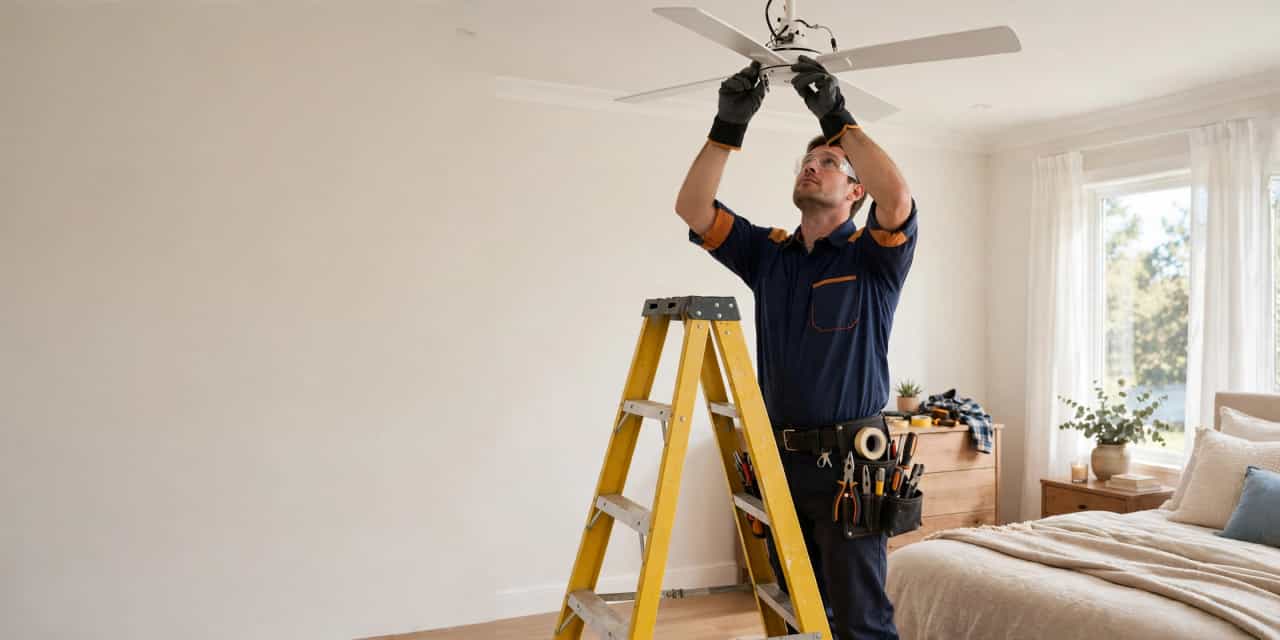
Long, humid summers make ceiling fans one of the most requested installs in Tallahassee homes. Every fan needs a fan-rated box properly fastened to framing, which many older ceiling boxes are not. Hot attics also bake old wiring insulation, so a fan or light installation is a good chance to look at what is up there. Exterior fans on porches need damp- or wet-rated fixtures and GFCI protection where required.
Generators done the safe way
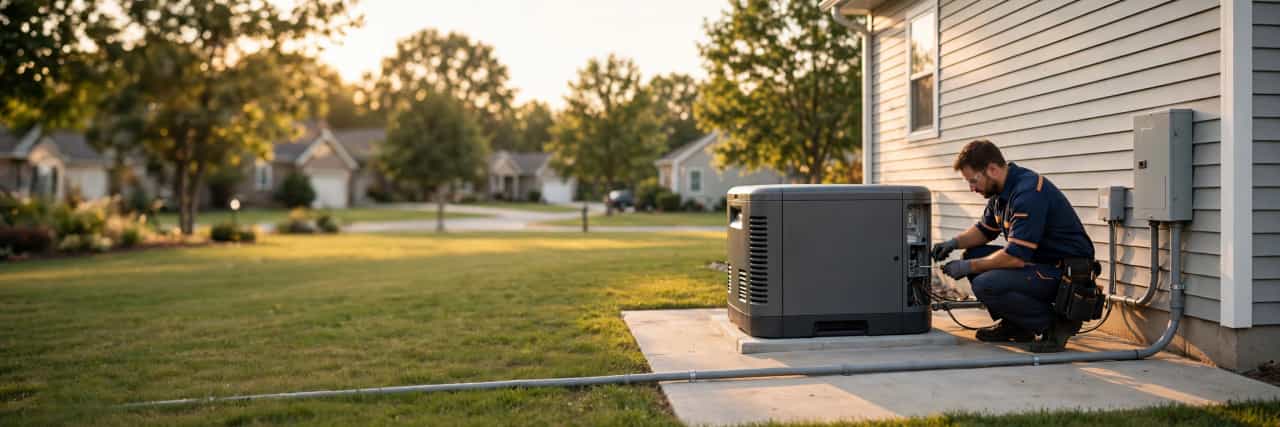
After repeated multi-day outages, standby generators with automatic transfer switches have become common in Tallahassee, especially in heavily wooded neighborhoods. Portable units can work well too, connected through a listed interlock and inlet. Natural gas or propane standby units also involve gas permits and placement clearances. Never run a generator in a garage or near windows, and never plug it into a household outlet.
Flooding in low areas
Parts of Tallahassee, including low spots along drainage areas on the south and east sides, are prone to flooding during heavy rain and tropical storms. Water that reaches outlets, panels or HVAC equipment creates shock and fire hazards. If water is near electrical equipment, stay out of it, keep the power off at the main only if you can reach it from a dry spot, and have an electrician inspect before anything is turned back on.
Permits in the city and county
Inside city limits, the Growth Management Department reviews and inspects electrical work, while unincorporated Leon County uses the county’s Development Support and Environmental Management office. Florida requires electrical contractors to be state licensed or locally registered. Panel changes, service upgrades, generator connections and new circuits usually need a permit, and the utility will not reconnect an upgraded service until it passes inspection.
State government and office buildings
As the capital, Tallahassee has many office buildings, law firms and agencies, along with restaurants and shops in areas like College Town and Midtown. Commercial tenants often need lighting retrofits, added circuits for equipment and updated emergency lighting. Work in occupied buildings is typically scheduled around business hours, and plan review applies for larger tenant improvements. A commercial electrician coordinates with building management and inspectors.
Warning signs that need a call
Burning smells, smoke, sparks, buzzing panels, hot outlets or a shock from a fixture are reasons to act now. Keep everyone away, turn off the main breaker only if it is safe to reach, and call 911 if there is smoke or fire. Do not open the panel. When the situation is safe, call (855) 679-2483 to be connected with a licensed Tallahassee electrician.
Questions
Questions from Tallahassee, FL homeowners
Is there a 24 hour emergency electrician in Tallahassee, FL?+
Yes. Call (855) 679-2483 any time, day or night, and you are connected with an independent licensed electrician who covers Tallahassee, including Midtown, Myers Park, Frenchtown. For sparks, smoke or a hot panel, call 911 first.
Who handles electrical repair and generator installation in Tallahassee?+
Licensed electrical contractors working in Leon County handle outlet and switch repair, circuit troubleshooting, panel work and standby generator installation. Permits go through City of Tallahassee Growth Management Department (Building Inspection); Leon County Development Support & Environmental Management for unincorporated areas.
Who issues electrical permits in Tallahassee?+
The City of Tallahassee Growth Management Department issues building and electrical permits inside the city. Properties in unincorporated Leon County go through Leon County Development Support and Environmental Management, and a licensed electrician usually pulls the permit.
Who do I call if my power keeps going out in Tallahassee?+
Call your utility first, either City of Tallahassee Utilities or Talquin Electric, if the outage covers your street. If only your home or certain rooms keep losing power, call (855) 679-2483 to be connected with a licensed local electrician.
Is my Tallahassee home on city power or Talquin?+
It depends on your address: most homes inside city limits are on City of Tallahassee Utilities, while many outlying Leon County areas are served by Talquin Electric Cooperative. Your electric bill shows which one you have.
By calling, you agree to be connected with an independent electrician, who may call or text you back about your request at the number you call from. Calls may be recorded for quality and routing. Consent is not a condition of any purchase, and you can opt out at any time; message and data rates may apply. Privacy policy.
Free to call
Explain the problem in plain words
Connect with an independent licensed electrician near you
Smoke, flames or sparking? Leave the building and call 911 first.
Pronto Electrician is a free referral service. The electricians you are connected with are independent contractors, not employees or agents of Pronto Electrician. Pronto Electrician does not perform electrical work, and the electrician you choose sets the price, schedule, permits and warranty.
By calling, you agree to be connected with an independent electrician, who may call or text you back about your request at the number you call from. Calls may be recorded for quality and routing. Consent is not a condition of any purchase, and you can opt out at any time; message and data rates may apply. Privacy policy.