Alaska guide
Emergency Electrician in Alaska: what to know
Alaska’s Certificate of Fitness for Electricians
Alaska requires electricians to hold a certificate of fitness issued through the Mechanical Inspection section of the Department of Labor and Workforce Development, and an electrical contractor must be registered with the state and employ a licensed electrical administrator through the Division of Corporations, Business and Professional Licensing. When someone arrives to handle an urgent problem, ask to see their certificate card and the registration of the company they work for. These credentials are what separate trained electricians from well-meaning neighbors with tools.
Permits and Inspections in Anchorage, Fairbanks and Juneau
Larger municipalities such as Anchorage run their own permit and inspection programs, while much of rural Alaska has no local building department at all. In an emergency, the electrician’s first job is to make the system safe; follow-up permits, where they apply, can usually be filed afterward. Ask whoever responds which office oversees your address, since requirements in the Municipality of Anchorage, the Fairbanks North Star Borough or a remote village can be very different.
How the Electrical Code Is Applied in Alaska
Alaska uses the National Electrical Code as the basis for electrical work, and some municipalities add their own amendments. Because editions and local rules change over time, the edition that applies to your repair is best confirmed with the electrician or the local office rather than assumed. What matters after an emergency is that a rebuilt service, new panel or replaced feeder is grounded and protected properly, especially in homes where freezing ground and permafrost complicate grounding.
Railbelt Utilities and Reconnection After Damage
The Railbelt from the Kenai Peninsula through Anchorage and the Mat-Su to Fairbanks is served by utilities including Chugach Electric, Matanuska Electric Association, Homer Electric Association and Golden Valley Electric Association. Each utility owns its lines to the meter, but the meter base, mast and house wiring are the owner’s responsibility. If wind or snow load damages your service entrance, the utility may disconnect it until a licensed electrician repairs your equipment and it is safe to restore.
Village Power Systems and Off-Road Communities
Many communities off the road system rely on small local utilities running diesel generation or hybrid systems. Parts, electricians and inspectors often arrive by plane or barge, so an emergency in a remote village may require a temporary safe disconnect while a qualified electrician travels in. Report problems to the local utility operator quickly, keep people away from damaged equipment, and avoid improvised repairs that could create a fire risk in a home where firefighting resources are limited.
Subzero Cold and Failing Heating Circuits
In Interior Alaska, winter temperatures can plunge far below zero, and an electrical failure that stops a furnace blower, boiler control or heat-trace line is a true emergency. Pipes and occupants are both at risk. If heat stops working and you suspect an electrical cause, check whether a breaker has tripped, reset it once only, and call for help if it trips again. Do not run fuel-burning heaters indoors without proper ventilation while waiting.
Earthquake Damage Around Southcentral Alaska
Alaska experiences frequent earthquakes, and the magnitude 7.1 event near Anchorage in November 2018 is a reminder of how strongly homes can shake. A quake can loosen conduit, crack a meter base, pull a panel away from framing or damage underground feeders. After strong shaking, check for burning smells or sparking before restoring circuits. If anything looks damaged, keep the main off and ask an electrician to inspect before power is restored.
Frost Heave, Snow Load and Service Entrances
Freezing and thawing ground shifts foundations, posts and pedestals, which can stress underground conductors and meter bases. Heavy snow sliding off a roof can bend a service mast or tear the drop from the house. These failures may show up as flickering lights, a partial outage or a buzzing sound at the meter. Do not knock snow or ice off electrical equipment yourself. Report damage to the utility and call an electrician to repair the house side.
Generators and Backfeeding During Long Alaska Outages
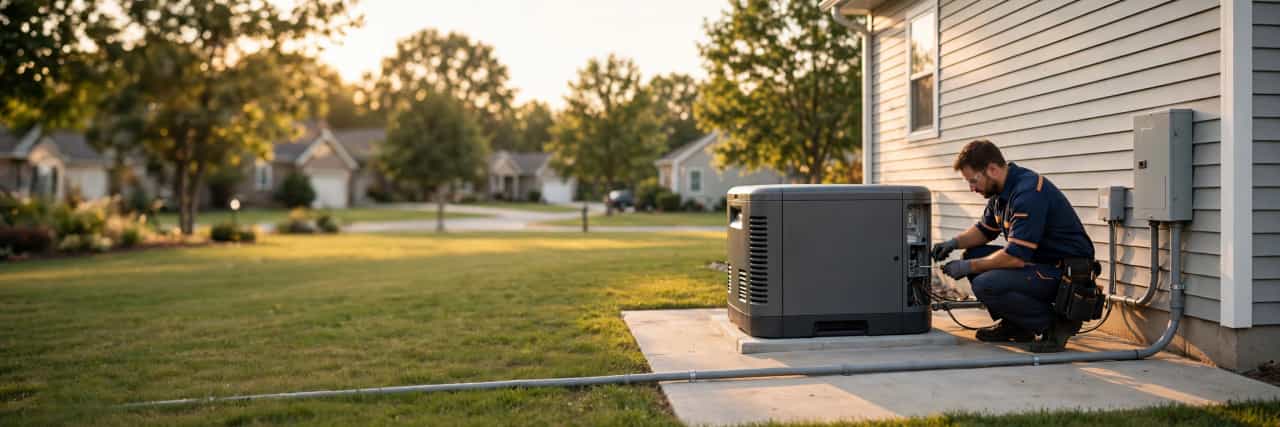
Long outages after windstorms in Anchorage’s Hillside or in the Mat-Su lead many households to use portable generators. Plugging a generator into a dryer outlet or wiring it directly into a panel without a transfer device can backfeed utility lines and endanger line crews. It also risks damaging the generator and your appliances. If you rely on a generator, an electrician can install an interlock or transfer switch so that the house is isolated safely.
Cabins, Log Homes and Pipeline-Era Houses
Alaska’s housing includes homes built during the pipeline boom of the 1970s, modern subdivisions in Eagle River and Wasilla, older log homes and owner-built cabins. Additions and do-it-yourself wiring are common in older properties, and some have been extended many times. Emergency calls in these homes often trace back to undersized extension wiring, overloaded subpanels or splices hidden in walls. Telling the electrician about past additions speeds up the search for the fault.
Southeast Alaska Rain and Coastal Moisture
In Juneau, Ketchikan, Sitka and the rest of Southeast Alaska, heavy rainfall and salt air are the main enemies of electrical equipment. Water can enter meter bases, exterior outlets and weatherheads, causing corrosion and tripping GFCI devices. A breaker that trips every time it rains points to water intrusion somewhere outdoors. Turn off the affected circuit if you can do so safely and have a licensed electrician trace and seal the entry point.
Signs an Alaska Home Needs Urgent Electrical Help
Call promptly if you notice a hot or discolored panel cover, a burning odor, outlets that spark when plugs are inserted, lights that brighten and dim unpredictably, or a tingle from a sink or appliance. In cold weather, also watch for heat-trace cables that are visibly damaged or circuits supplying heating equipment that will not stay on. These symptoms can indicate loose connections, lost neutrals or ground faults that can worsen quickly.
Temporary Fixes Versus Full Replacement in Remote Alaska
Not every emergency calls for a new panel. Often the electrician isolates the damaged circuit, replaces a burned device and restores heat and lights to the rest of the home. When a panel has been shaken loose, soaked or shows heat damage across the bus, replacement may be necessary, and in remote areas that may mean ordering parts. A good electrician will explain what can be safely done now and what should follow.
What an Emergency Call Looks Like in Alaska
On arrival, the electrician will usually inspect the service entrance and meter, then check the panel and the circuit where the problem appeared. They test with proper meters, look for heat damage and confirm which equipment is affected. In winter they will prioritize restoring heating circuits safely. Expect a clear explanation of what failed and what was done, and ask for a written record in case of insurance or follow-up work.
Staying Safe in an Alaska Home While You Wait
If there is smoke or fire, leave the house and call 911. If you see sparks or feel heat from the panel, keep people away and turn off the main only if you can reach it safely and the floor is dry. Never remove the panel cover. Keep a flashlight handy, avoid candles where possible, and make sure carbon monoxide alarms work if you are running any fuel-burning appliance.
Travel Distances and Response in Rural Alaska
Distances across Alaska are vast, and in many rural areas the nearest licensed electrician may be hours away by road or require a flight. For homes on the road system, an electrician can often reach you the same day, depending on weather and demand. Be ready to describe the problem in detail when you call, including photos if possible, so the electrician can bring the right parts and advise on safe steps meanwhile.
Choosing a Qualified Electrician in Alaska
Before work begins, confirm the electrician holds an Alaska certificate of fitness and works for a registered electrical contractor, ask about after-hours charges and travel costs, and ask whether a permit will be needed for the repair. Experience with cold-weather systems such as heat trace and boiler controls is valuable here. Calling (855) 679-2483 connects you with independent licensed electricians, and you are free to ask these questions before agreeing to anything.
Licensing, permit and code requirements are set by Alaska and local authorities and can change. The electrician confirms what applies to your project. How emergency electrician works · Electricians in Alaska