24 hour emergency service, electrical repair, panel upgrades, generator installation and EV chargers in Tacoma. Call (855) 679-2483 and get connected with an independent licensed electrician who works locally.
Tacoma wraps around Commencement Bay at the southern end of Puget Sound, with Mount Rainier on the skyline and the Port of Tacoma spread across the tideflats. Electricity comes from Tacoma Power, the city’s own utility, which draws much of its supply from dams it built on the Cowlitz, Nisqually and Skokomish rivers. Homes range from Stadium District mansions of the 1890s to post-war ramblers in South Tacoma, and Pacific gales such as the November 2024 bomb cyclone still drop trees onto lines across town.
By calling, you agree to be connected with an independent electrician, who may call or text you back about your request at the number you call from. Calls may be recorded for quality and routing. Consent is not a condition of any purchase, and you can opt out at any time; message and data rates may apply. Privacy policy.
Serving Stadium District, Proctor District, Hilltop, McKinley Hill, South Tacoma, Northeast Tacoma and every other Tacoma neighborhood.
Tacoma at a glance
Electric utility
Tacoma Power, the city-owned electric division of Tacoma Public Utilities
Permits and inspections
Tacoma Power Electrical Permitting & Inspections (Tacoma Public Utilities), 3628 South 35th Street; applications run through the City of Tacoma’s Accela permit portal
County
Pierce County
ZIP codes include
98403 · 98405 · 98406 · 98407 · 98408 · 98422
Electrical services in Tacoma
What do you need help with in Tacoma, WA?
The calls Tacoma homeowners make most, followed by every service independent licensed electricians handle here.
North Tacoma and the Stadium-Seminary historic district hold two- and three-story houses from the decades around 1900, some with knob-and-tube remnants behind lath and plaster. Hilltop and McKinley Hill mix late-1800s cottages with recent infill townhomes. South Tacoma and the East Side filled in with small bungalows and post-war ramblers, while Northeast Tacoma is mostly split-levels and subdivisions from the 1970s onward. Plenty of homes heat with electricity, which weighs heavily on older, smaller services.
Problems that come up again and again in local homes, and the service that fixes each one.
01
Firs and maples over the service drop
Tall Douglas firs and bigleaf maples shade many North End and South End streets. When a winter gale drops a limb on the line to the house, Tacoma Power restores its side, but a bent mast or torn meter base is the owner’s repair.
Stadium District and Proctor homes from before 1930 often carry several generations of wiring. Tracing which original runs are still energized comes before opening walls or adding kitchen and bath circuits.
Baseboard heaters, electric water heaters and newer heat pumps were frequently added to bungalows that started with small services. A load calculation shows whether a heat pump or car charger needs a bigger panel first.
History, housing, weather and rules that shape electrical work in Tacoma, WA.
A utility that inspects its own territory
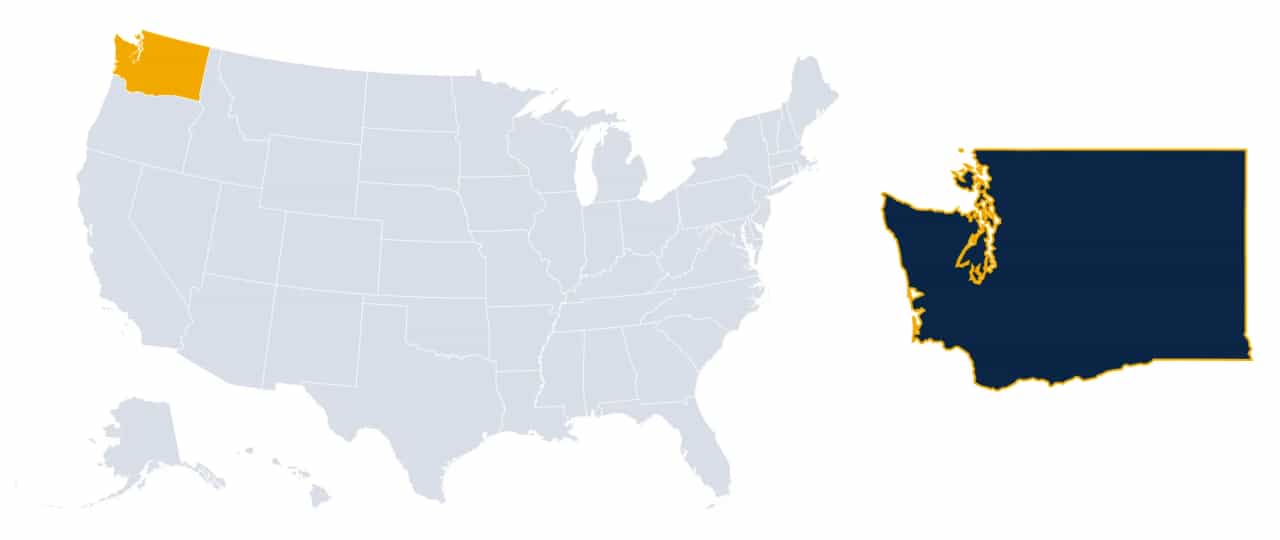
Most Washington homeowners deal with the state Department of Labor and Industries for electrical permits, but Tacoma is different. Tacoma Power’s Electrical Permitting and Inspections office on South 35th Street issues permits and sends inspectors for the properties it serves, and L&I does not inspect there. That includes Fircrest, University Place, Fife and pockets of Lakewood and Steilacoom, so the utility bill is often the quickest clue to where a permit belongs.
Permits through the Accela portal
Tacoma Power handles electrical permits through Accela, the City of Tacoma’s online permitting system, so applications, payments and inspection scheduling run through the same portal used for building permits. A licensed electrician normally pulls the permit and books the inspection. Services rated above 600 amps need drawings submitted for plan review first, which matters for apartment buildings, shops on the tideflats and larger commercial remodels downtown.
Power from the Cowlitz, Nisqually and Skokomish
Tacoma Power’s hydroelectric plants include Cushman No. 1 and No. 2 on the North Fork Skokomish, Alder and LaGrande on the Nisqually, Mayfield and Mossyrock on the Cowlitz, and a powerhouse at Wynoochee. Mossyrock, completed in 1968, stands 606 feet from its foundation and is the tallest dam in the state. Those plants, along with power bought from the Bonneville Power Administration, kept rates low for decades, which is part of why electric heat became so common in the city.
Stadium-Seminary homes on the bluff
On the bluff above Commencement Bay, the Stadium-Seminary historic district covers dozens of blocks of substantial two- and three-story houses in Queen Anne, Shingle, Mission and Colonial Revival styles, most of them built in the late 1800s and early 1900s. Houses that size often carry knob-and-tube in upper floors, cloth cable from a 1940s update and modern cable from a recent kitchen, all feeding one panel that may be undersized.
Proctor District foursquares and Tudors
Around North 26th and Proctor, where a small business district of older storefronts anchors the neighborhood, the surrounding streets are lined with Victorians, Craftsman bungalows, Tudors and American foursquares. Owners here tend to restore rather than gut, which means fishing new circuits through attics and basements while keeping original plaster and trim intact. Pre-wiring for a heat pump or car charger during a restoration avoids opening the same walls twice a few years later.
Hilltop’s 1880s cottages and new infill
Hilltop filled in early as Tacoma grew in the late 1800s, and a few modest houses from that era still stand among newer apartments and townhomes. The neighborhood has changed quickly with light rail and infill construction. Older cottages there often have small services, scattered two-prong receptacles and additions wired by previous owners, while new townhomes typically need only car chargers, lighting changes or added circuits.
McKinley Hill above the Tacoma Dome
McKinley Hill is one of Tacoma’s oldest neighborhoods, perched on the slope above the Tacoma Dome with views across the tideflats toward the bay. Its older homes sit on steep lots where service drops cross long spans and detached garages sit well below the house. Feeding a garage workshop or charger on a sloped lot means planning trench routes and conduit carefully, and sometimes upsizing the main service first.
South Tacoma bungalows and ramblers
South Tacoma and the South End filled in with modest early-1900s bungalows, then with post-war ramblers on larger lots. Many still run on their original or second panel, with the laundry, an electric range and baseboard heat sharing a service sized decades ago. Common requests are panel replacements, extra kitchen circuits and new receptacles in rooms that were built with only one or two.
Northeast Tacoma on the bluff
Across the Hylebos Waterway, Northeast Tacoma developed largely from the 1970s onward, with split-levels, ramblers and newer subdivisions on wooded lots facing the water. Many services are underground, so a damaged feeder takes locating and digging rather than a quick overhead fix. Owners often want landscape and deck lighting, hot-tub circuits and backup power, since tall trees between homes still take down distribution lines during autumn storms.
The Hanukkah Eve windstorm, December 14–15, 2006
On December 14 and 15, 2006, a powerful windstorm swept western Washington and Oregon, leaving about 1.8 million customers in the region without power and contributing to eighteen deaths. The Tacoma Narrows Bridge closed for the first time in its history. Saturated soil let shallow-rooted firs topple onto lines. In the cold days after, carbon monoxide from generators and grills used indoors proved as dangerous as the wind. Portable generators belong outside, well away from doors and windows.
The bomb cyclone of November 19, 2024
On November 19, 2024, a rapidly deepening low pushed damaging gusts across Puget Sound, topping 70 miles per hour in places such as Enumclaw, and outages across western Washington reached roughly 650,000 at the peak. Afterward, electricians in Tacoma saw a rush of requests for generator inlets, interlocks and transfer switches, along with repairs to masts and meter bases pulled loose by falling limbs.
After the Nisqually earthquake of 2001
The magnitude 6.8 Nisqually earthquake on February 28, 2001, shook the whole South Sound and cracked masonry chimneys and older brick buildings around Tacoma. Electrical damage from earthquakes is often hidden: a service mast tugged by a chimney, conduit pulled from a box, or a water heater that shifted on its strapping. After any strong shaking, a quick check of the meter base and panel attachment is worthwhile.
Digging in smelter plume soil
The Asarco copper smelter at the Ruston border operated for nearly a century before closing in the 1980s, and its emissions spread arsenic and lead across a plume of roughly 1,000 square miles. The state Department of Ecology has found yards in North Tacoma and elsewhere in the plume with soil above cleanup levels, mostly near the surface. Trenching for a garage feeder, landscape lighting or a charger post should follow Ecology’s handling guidance for excavated dirt.
Rain, moss and outdoor receptacles
From October through spring, Tacoma stays damp, and moss grows on roofs, eaves and the tops of meter bases. Outdoor receptacles without in-use covers collect water, which trips GFCI devices or slowly corrodes contacts. On older homes, the weatherhead and service entrance cable can crack after decades in the rain. Weather-resistant devices, bubble covers and a sealed service entrance prevent most nuisance trips.
The heat dome of late June 2021
In the last days of June 2021, a heat dome pushed Puget Sound temperatures well past 100 degrees, records in a region where many homes had never needed cooling. In Tacoma, that heat wave pushed many owners toward ductless heat pumps that also heat in winter. Each outdoor unit needs a dedicated circuit and disconnect, and older 100-amp services with electric ranges and dryers do not always have room.
Heat pumps replacing baseboard heat
Because hydropower kept rates low for generations, many Tacoma homes were built or converted with baseboard heaters in every room. Swapping them for a heat pump frees capacity but adds a large compressor circuit, and owners often keep a few baseboards as backup. Sequencing that work properly, with the right breaker sizes and abandoned circuits removed or capped, keeps the panel clear and the inspection simple.
Chargers on a city-owned grid
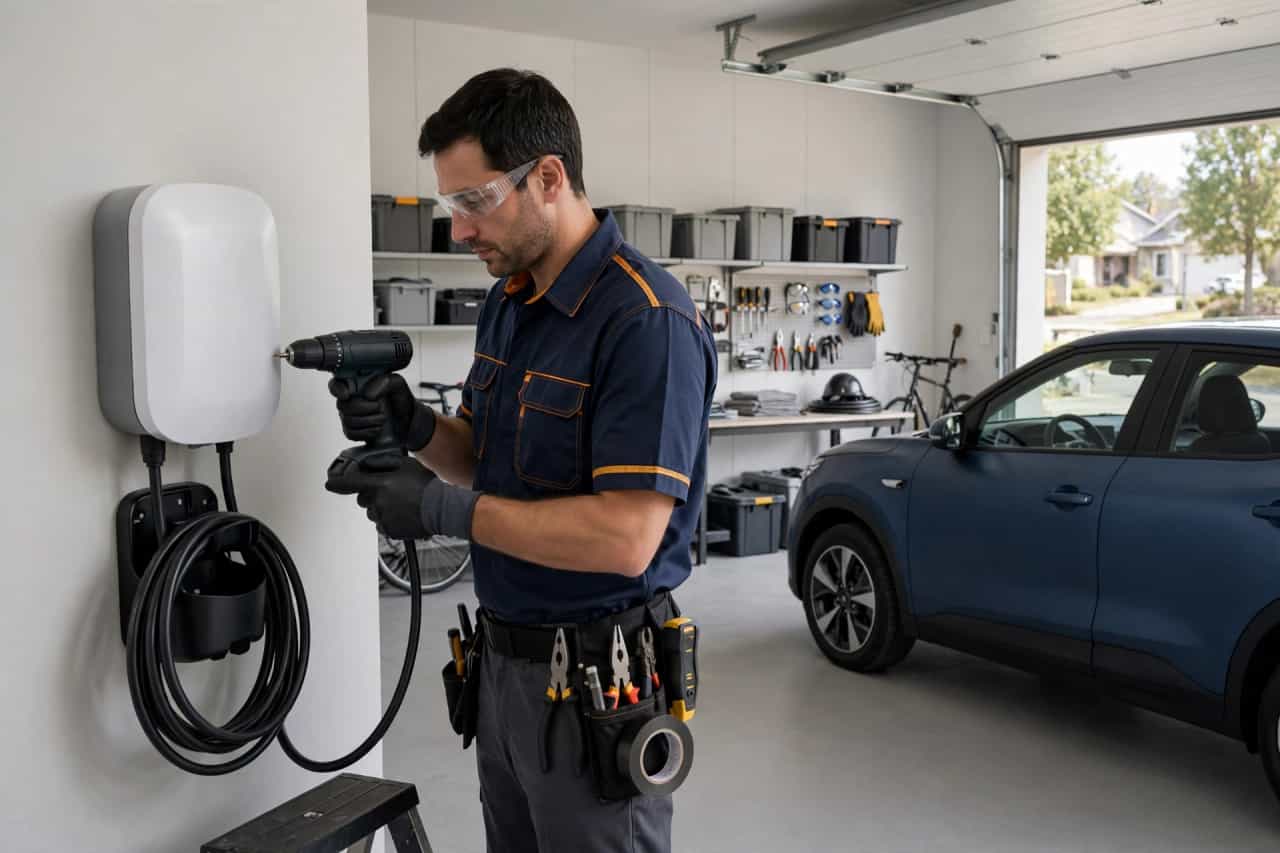
Electric vehicles are increasingly common on Tacoma streets, and most owners want a 240-volt charger in a garage or by the driveway. Before installing, check whether Tacoma Power currently offers any rebate or rate for home charging, since programs change. Many older homes need a load calculation, and some need a service upgrade, which Tacoma Power must coordinate because it owns the meter and the drop.
Rentals near Puget Sound and UW Tacoma
The University of Puget Sound in the North End and the University of Washington Tacoma downtown draw students into older houses rented by the room. Several space heaters, mini-fridges and microwaves on circuits sized for one family can overheat receptacles and connections. Landlords often use the summer turnover to add bedroom circuits, replace worn devices and install interconnected smoke alarms.
Shops and warehouses on the tideflats
The Port of Tacoma and the tideflats industrial area support container terminals, warehouses, fabrication shops and truck yards. Small businesses there need three-phase equipment hookups, shop lighting, welder circuits and service work that holds up to salt air and vibration. Larger services require plan review before a permit is issued, so scheduling an electrician early prevents delays on tenant improvements or equipment moves.
Old Town and the Ruston Way waterfront
Old Town, along the shoreline northwest of downtown, is where Tacoma’s first settlement took hold in the 1860s, and its hillside streets now mix restored older homes with newer view houses above Ruston Way. Salt spray and wind reach exterior fixtures there, and long steps between the street and the front door make good path lighting important. Corroded outdoor fixtures and boxes are routine replacements on these lots.
Backup power without backfeeding
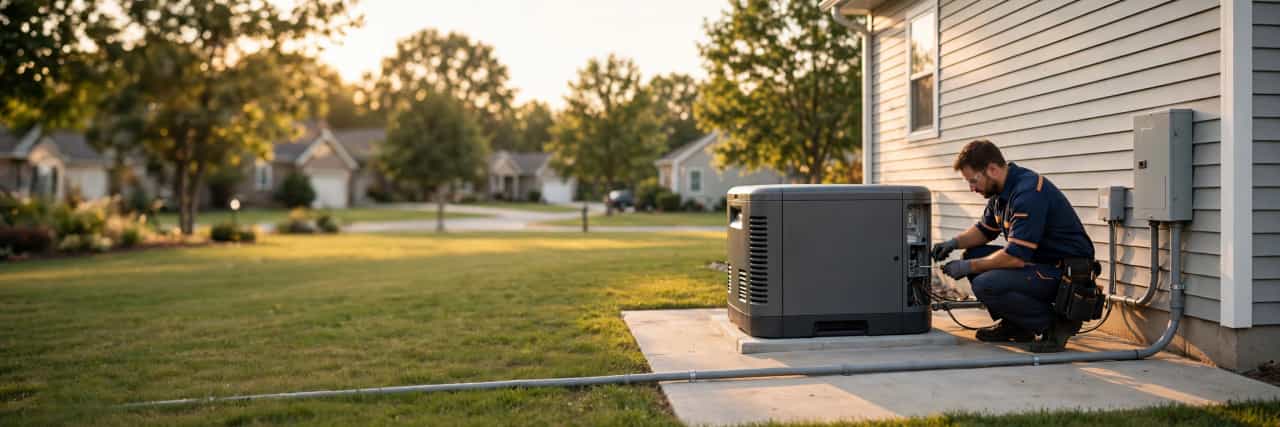
Because Tacoma storms can leave neighborhoods dark for a day or more, many owners add generators. A portable unit must connect through a listed interlock or transfer switch, never through a dryer receptacle, so it cannot backfeed the line Tacoma Power crews are repairing. Standby generators need a permit, a proper gas connection and placement away from windows, doors and neighboring homes.
Questions
Questions from Tacoma, WA homeowners
Is there a 24 hour emergency electrician in Tacoma, WA?+
Yes. Call (855) 679-2483 any time, day or night, and you are connected with an independent licensed electrician who covers Tacoma, including Stadium District, Proctor District, Hilltop. For sparks, smoke or a hot panel, call 911 first.
Who handles electrical repair and generator installation in Tacoma?+
Licensed electrical contractors working in Pierce County handle outlet and switch repair, circuit troubleshooting, panel work and standby generator installation. Permits go through Tacoma Power Electrical Permitting & Inspections (Tacoma Public Utilities), 3628 South 35th Street; applications run through the City of Tacoma’s Accela permit portal.
Who issues electrical permits in Tacoma?+
Tacoma Power does, through its Electrical Permitting and Inspections office at 3628 South 35th Street, rather than the state Department of Labor and Industries. Applications and inspection requests go through the City of Tacoma’s Accela portal, and the same office also covers properties Tacoma Power serves in Fircrest, University Place, Fife and parts of Lakewood, Steilacoom and unincorporated Pierce County.
Who do I call if my power keeps going out in Tacoma?+
Call Tacoma Power if the whole block is dark or a line is down, and call an electrician if neighbors have power while yours keeps dropping. Repeated outages at a single house usually point to a loose meter-base connection, a worn main breaker or a damaged service drop. If anything is smoking, sparking or smells hot, stay clear and call 911 first.
How do I check an electrician’s license in Washington?+
Search the Washington Department of Labor and Industries online lookup, which lists electrical contractor licenses and individual electrician certificates. Tacoma Power handles local permits and inspections, but licensing stays with L&I statewide, so the contractor’s number should appear there before any work starts.
By calling, you agree to be connected with an independent electrician, who may call or text you back about your request at the number you call from. Calls may be recorded for quality and routing. Consent is not a condition of any purchase, and you can opt out at any time; message and data rates may apply. Privacy policy.
Free to call
Explain the problem in plain words
Connect with an independent licensed electrician near you
Smoke, flames or sparking? Leave the building and call 911 first.
Pronto Electrician is a free referral service. The electricians you are connected with are independent contractors, not employees or agents of Pronto Electrician. Pronto Electrician does not perform electrical work, and the electrician you choose sets the price, schedule, permits and warranty.
By calling, you agree to be connected with an independent electrician, who may call or text you back about your request at the number you call from. Calls may be recorded for quality and routing. Consent is not a condition of any purchase, and you can opt out at any time; message and data rates may apply. Privacy policy.